
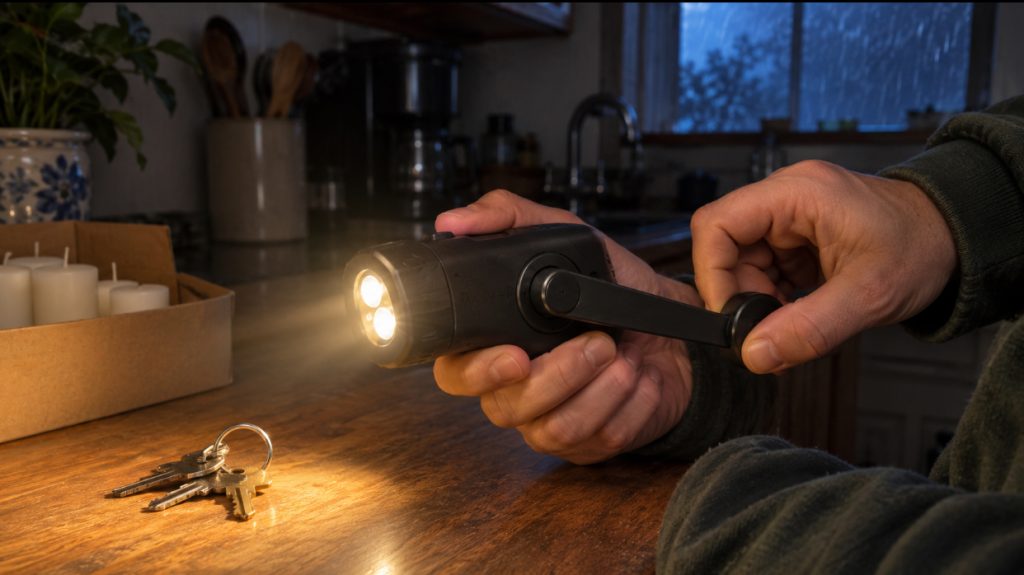
It’s the third night of the ice storm. The power went out Tuesday, the good flashlight died somewhere around Wednesday supper, and the last of the AA batteries went into the radio so everybody could hear when the road crews might get out your way. Then somebody remembers the crank flashlight in the junk drawer, the one that came free with a magazine subscription back in 2014. You wind it like you’re trying to start a stubborn lawnmower, a pale little glow comes on, and about two minutes later it fades out just as you’ve found the box of candles.
Short on time? Skip to my picks
That’s how most people meet a hand crank flashlight, and it’s why so many of them end up back in the drawer. The boxes don’t help. Nearly every one says a minute of cranking gives you an hour of light, and it does, if an hour of light the brightness of a nightlight is what you had in mind. A minute of brisk cranking makes enough power for about a minute of real flashlight brightness. Spend it slowly and it lasts much longer. Once you know that, a crank light stops being a disappointment and turns into exactly what it should be, a light that can never be dead when you need it.
Here’s my short list. The ThorFire Solar Hand Crank Flashlight is the one I’d keep in the car, since it’s sealed against rain and its little solar panel keeps it topped off on the dash. For a long outage, the Goal Zero Lighthouse 600 is a real 600 lumen lantern with a battery big enough to charge a phone, and the crank on its side means it can’t ever be truly empty. If you want something that clips to a pack, the Eton American Red Cross Clipray is slim and makes an honest claim. Right under the picks there’s a crank calculator that takes the job you need light for and how hard you plan to crank, and shows how many minutes of light you’ll really get, right next to what the box says.
Quick Picks: The Best Hand Crank Flashlights
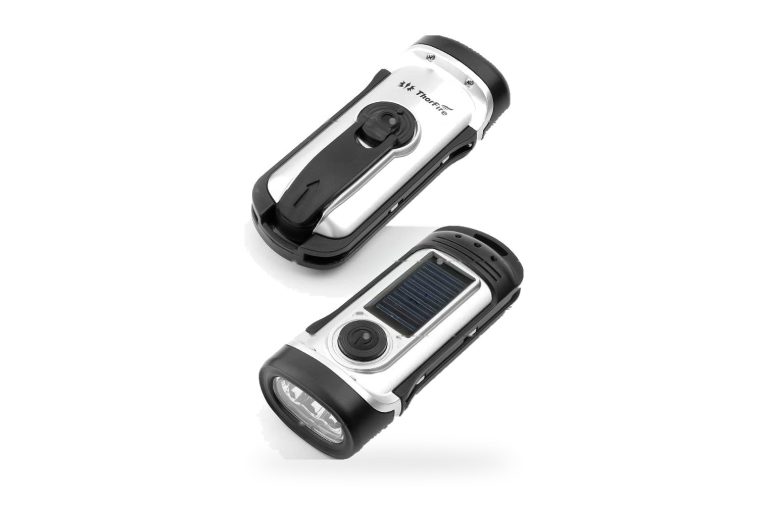
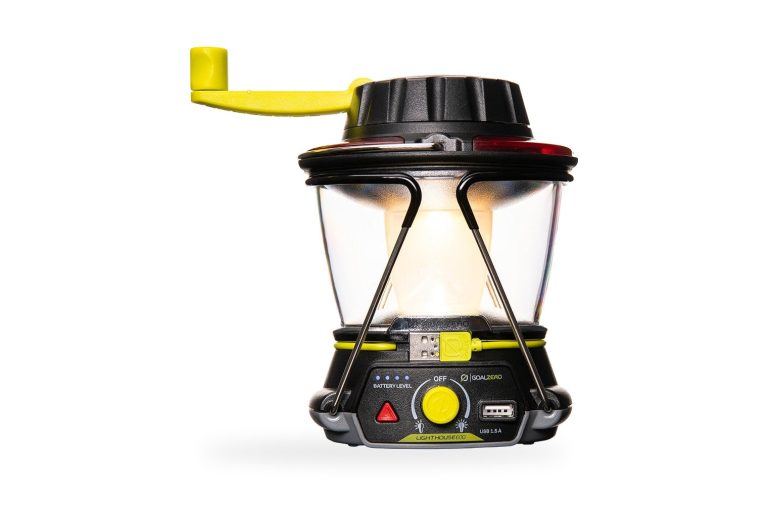
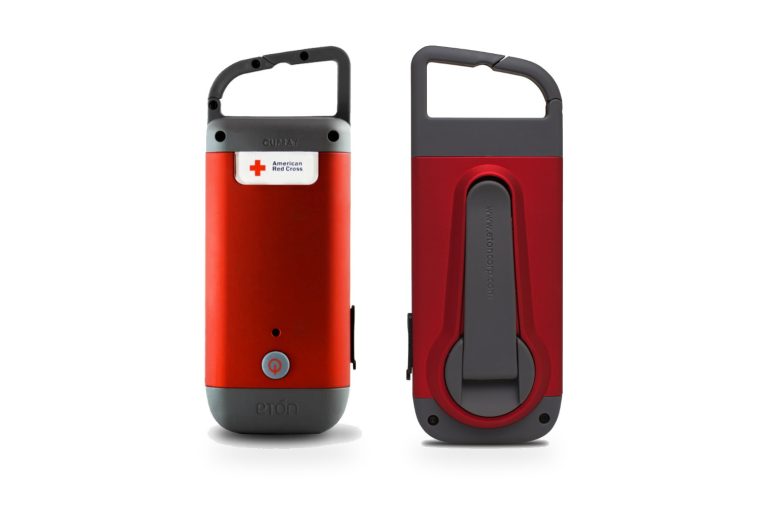
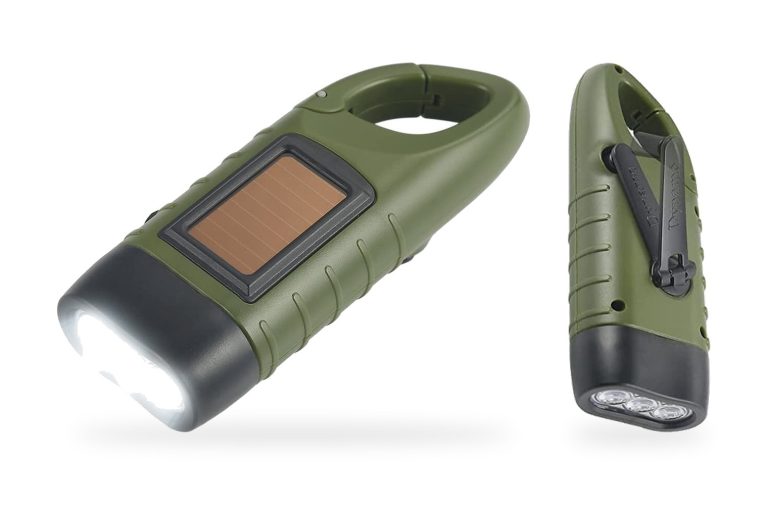
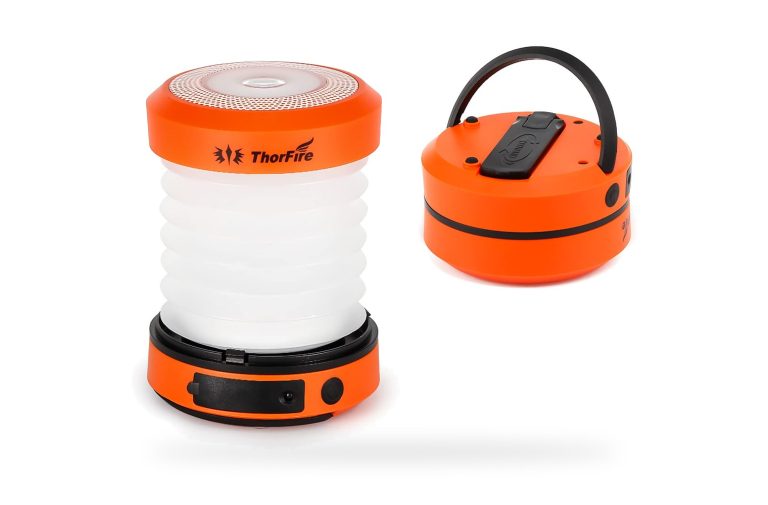
- ThorFire Solar Hand Crank Flashlight: best for most people, since it’s sealed against rain, tops itself off in the sun and gives a full night of dim light from a few minutes of cranking.
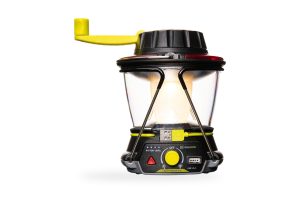
- Goal Zero Lighthouse 600: best for power outages, since it lights a whole room, charges a phone and only needs the crank once the battery runs low.
- Eton American Red Cross Clipray: best for clipping to a pack, with an honest 10 minutes of light per minute of cranking and a USB port for an emergency phone top-up.
- Simpeak Hand Crank Flashlight 2-Pack: best value, with two lights in the box for stocking two cars or a pair of go bags.
- ThorFire CL01 Hand Crank Lantern: best budget lantern, for a soft room light in a tent or a dark bathroom that folds down to the size of a hockey puck.
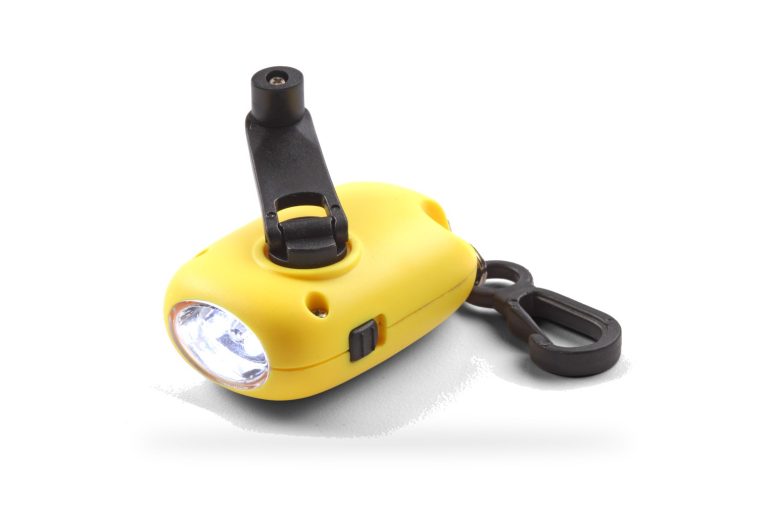
- Coghlan’s Dynamo Flashlight: best for a keychain or a glovebox, since it weighs about an ounce and makes the most honest crank claim here.
Crank Truth Calculator: How Much Light Does a Minute Buy?
The calculator starts with what you need the light for, how hard you’ll crank and for how long. Then it works out the minutes of light you’ll actually get at that brightness, sets them beside the usual box claim, shows how your arm will feel about it and gives you one pick for the job. The math comes from the two crank ratings Goal Zero publishes, 1 to 2.2 watts at a brisk 120 turns a minute, with the energy lost in the battery and the LED taken out.
Hand Crank Flashlights Compared
The crank claim box tells you less than it seems to. Each maker measures it on whatever mode stretches it the farthest, which is usually the dimmest one. Coghlan’s says 7 minutes at 10 lumens, and that lines up with what a minute of cranking can really make. ThorFire’s hour is real too, but only on a single dim LED. Goal Zero is the one brand that publishes the actual power a crank puts out, which is how you can tell the honest claims from the hopeful ones.
1. ThorFire Solar Hand Crank Flashlight: Best Overall
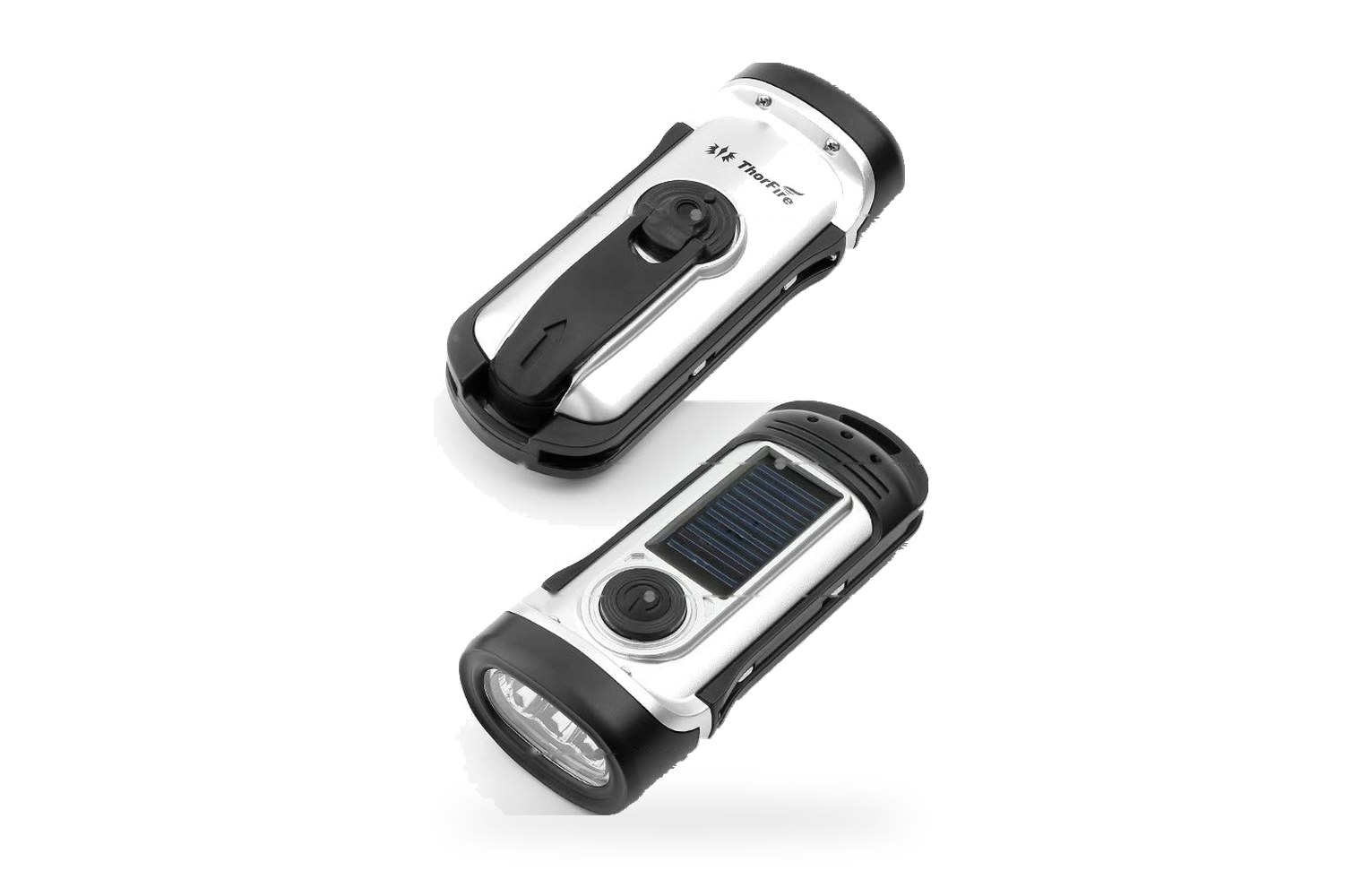
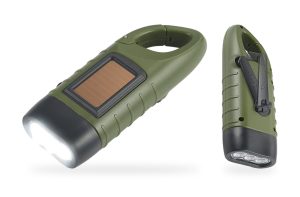
Why I chose it: This is the crank light I’d hand most people, mostly because it’s the one most likely to work after a year of being ignored. The body is sealed to IPX6, so rain and a dunk in a puddle don’t hurt it, and the solar panel on its back trickles a charge into the battery any time it sits in daylight. Parked on a dash or a kitchen windowsill, it’s topped off when the lights go out. If it isn’t, the crank folds out of the side.
You get three modes: one LED, all three LEDs and a strobe. ThorFire says a minute of cranking runs it 80 minutes on one LED or 60 minutes on all three, and an hour of sun gives you about two hours of light. The catch is the battery. It’s an 80 mAh NiMH cell, about a third of a watt-hour, and at a true 200 lumens it would be empty in roughly ten minutes. ThorFire rates the light at four hours of top runtime, so the real output sits far below the number on the box, somewhere around a bright nightlight on three LEDs. That’s still plenty to walk a dark house or find a dropped key under the seat.
Key specs
- Max output: 200 lumens (claimed)
- LEDs: 3, plus strobe
- Battery: 80 mAh NiMH, 3.6V
- Crank claim: 1 min = 60 to 80 min
- Solar: 1 hour of sun = about 2 hours of light
- Water rating: IPX6
- Weight: 6.2 oz
- Length: 5.8 in
Pros
- Sealed against rain and spray
- Solar panel keeps it charged in a window or on a dash
- A few quick cranks bring a dim beam back to full
- Light enough for a go bag or a glovebox
Cons
- Real output is far below the 200 lumen claim
- Tiny battery, so it dims within half an hour
- No USB port for charging or for a phone
In real use: Owners report the same pattern. The light stays on for about an hour after a minute of cranking, but it’s noticeably dim after 15 to 30 minutes on all three LEDs. The good news is that a couple dozen quick turns bring it back to full for a few more minutes, which is how most people end up using it, a little cranking every few minutes while they work.
Its battery is so small that about 20 minutes of steady cranking fills it from empty. That makes it a better crank light than it sounds, because you can actually get it to full by hand. A cell ten times bigger would take hours.
2. Goal Zero Lighthouse 600: Best for Power Outages
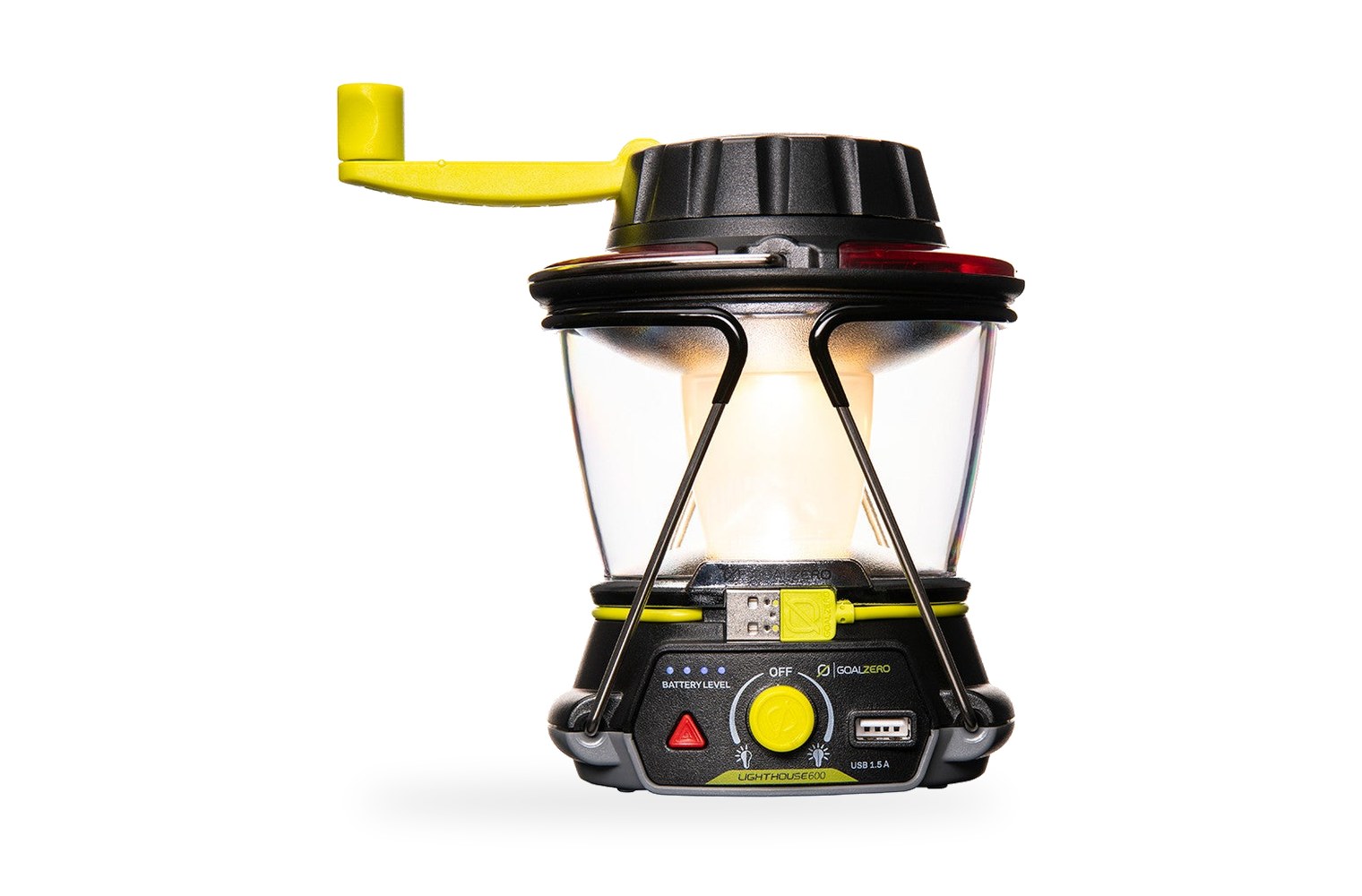
Why I chose it: If the lights are out for days, a pocket crank light isn’t what you want to live with. The Lighthouse 600 is a proper lantern first, with 600 lumens of warm 3,500 K light, folding legs, a built-in handle for hanging it from a hook and a dial that lets you light all the way around or only one side to save power. It holds a 5,200 mAh lithium battery, about 19 watt-hours, and it doubles as a USB power bank that can top off a phone.
The crank is the safety net. Goal Zero rates it at 1 watt at 120 turns a minute, which gives about 10 minutes of light on low for every minute you crank. That won’t refill a battery this size in any reasonable time, and Goal Zero doesn’t pretend it will. What it does mean is that the lantern can never be completely dead. It’s meant to be charged from the wall or a solar panel ahead of time, with the crank saved for when everything else is gone.
Key specs
- Max output: 600 lumens
- Light color: 3,500 K warm white
- Battery: 5,200 mAh (19 Wh) Li-ion
- Crank: 1 W at 120 RPM
- Crank claim: 1 min = 10 min on low
- Runtime: 2.5 hr high, up to 320 hr low
- USB out: 5V, 1.5A
- Weight: 1.1 lb
- Warranty: 2 years
Pros
- A real battery that runs for days on low
- Lights a whole room, or only half to save power
- Charges a phone from its USB port
- Two-year warranty from a known brand
Cons
- Heavy and bulky for a pocket or a go bag
- The crank only buys low-mode light
- USB input is slow, so a wall charge takes hours
In real use: The half-lantern dial is the feature I’d use most. With only the side facing the kitchen table lit, the runtime roughly doubles and nobody’s squinting at a bare LED from across the room. On low with one side lit, Goal Zero rates it at 320 hours, which is longer than almost any outage most of us will ever sit through.
Goal Zero recommends charging it every three months, and a blue LED shows the battery level. Tying that to the day the smoke detector batteries get swapped is an easy way to keep it ready for the next storm. It pairs well with the lanterns in my power outage lights guide if you’re lighting more than one room.
3. Eton American Red Cross Clipray: Best for Phone Top-Ups
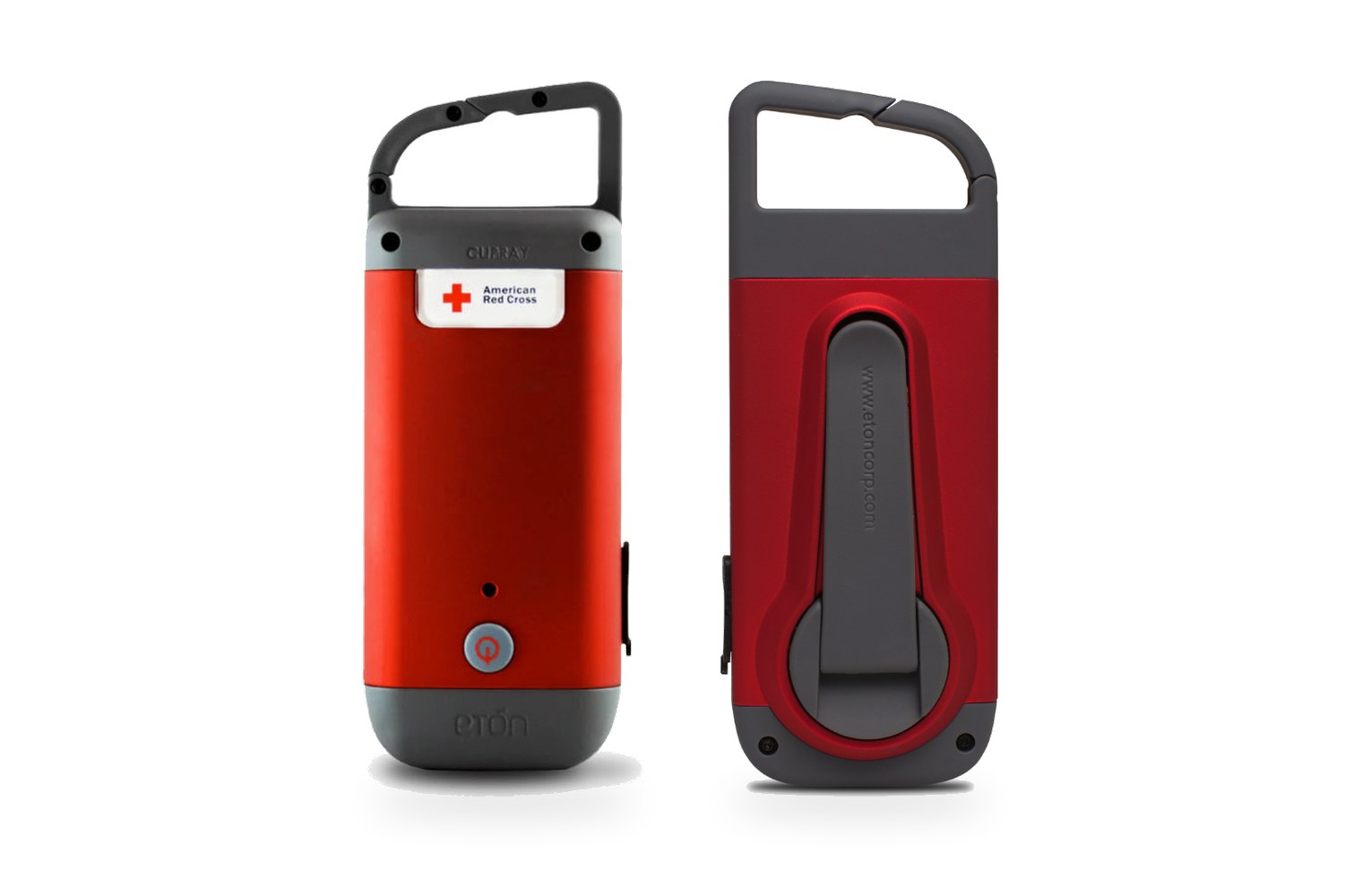
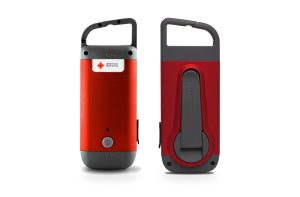
Why I chose it: Eton has made battery-free radios and lights for decades, and the Clipray is the little one it makes for the American Red Cross. It’s slim enough to ride in a back pocket, with a carabiner built into the body so it clips to a belt loop, a pack strap or the grab handle over a car door. Three LEDs sit in the head, the crank folds into the side, and a standard USB port on the bottom lets you crank power into a phone.
Eton’s claim is 10 minutes of light for a minute of cranking, and that’s believable for three small LEDs. There’s a small rechargeable cell inside, about 500 mAh, so the light keeps working for a while after you stop cranking. Eton doesn’t publish a lumen rating for it.
Key specs
- Output: 3 LEDs (no lumen rating)
- Crank claim: 1 min = 10 min
- Battery: Built-in, about 500 mAh
- USB out: Standard USB for a phone
- Clip: Built-in carabiner
- Size: 6 x 2.25 x 1.25 in
- Weight: 4.9 oz
- Warranty: 1 year
Pros
- Honest crank claim for the light you get
- Carabiner clips to a belt, pack or car handle
- USB port can push a little charge into a phone
- Slim enough for a back pocket
Cons
- Phone charging by crank is very slow
- No lumen rating from Eton
- No water rating
In real use: Owners like it as a flashlight and find it disappointing as a phone charger, and the numbers explain why. A phone battery holds somewhere around 13 to 19 watt-hours, and a minute of cranking makes about a hundredth of one. A meaningful top-up takes a long, sweaty session, enough for a short call or a text, not a full charge. For keeping a phone alive, a solar power bank does far more.
As a light, it’s a good one to clip to a go bag. The light fades as its little cell runs down, and a few turns of the crank while you walk keeps it bright.
4. Simpeak Hand Crank Flashlight 2-Pack: Best Value
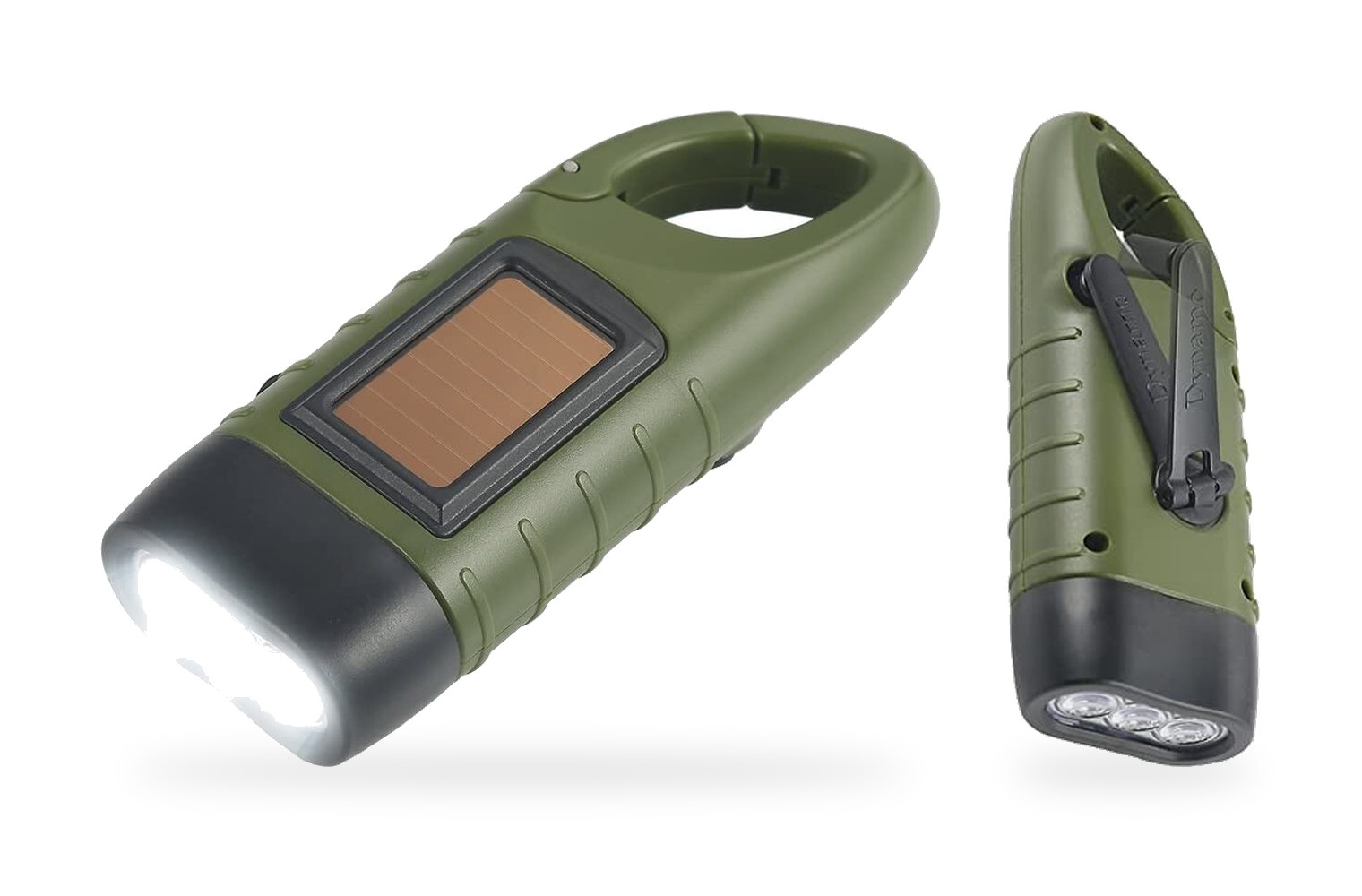
Why I chose it: Most crank lights end up as backups for somewhere: the car, the camper, the tackle box, the kid’s emergency kit at school. Simpeak puts two in a box for about what one brand-name light costs, which makes it easy to stock two places at once. Each one is about the size of a candy bar, with a carabiner clip, a fold-out crank and a small solar panel on the back.
Simpeak’s crank claim is 10 minutes or more of light per minute of cranking, at a pace of two turns a second. That’s honest enough for a single LED at modest brightness. The 200 lumen figure on the box is not. Owners describe them as solid but dim, and one called them dimmer than an old two-cell incandescent flashlight. For finding your way to the breaker box or reading a map in the car, they’re fine.
Key specs
- Max output: 200 lumens (claimed)
- Crank claim: 1 min = 10+ min
- Battery: Built-in Li-ion
- Solar: Built-in backup panel
- Clip: Carabiner
- Size: 4.9 x 1.3 x 1.8 in
- Weight: About 3 oz each
- In the box: 2 lights
Pros
- Two lights for the price of one
- Small and light enough for any kit
- Crank and solar, so it never needs a cord
- Two-year warranty from the maker
Cons
- Dimmer than the box suggests
- Clip is flimsy on some units
- Not sealed against water
In real use: Like most cheap crank lights, these stay healthiest when they get a little use. Simpeak’s own instructions say to crank them about once a month to keep the battery in shape, and owners who do that report them still working years later. A light left in a hot glovebox for three summers without a turn is the one that disappoints.
The solar panel is small, so it works as a top-off, not a charger. A week on a sunny windowsill keeps the battery healthy. A cloudy afternoon won’t do much.
5. ThorFire CL01 Hand Crank Lantern: Best Budget Lantern
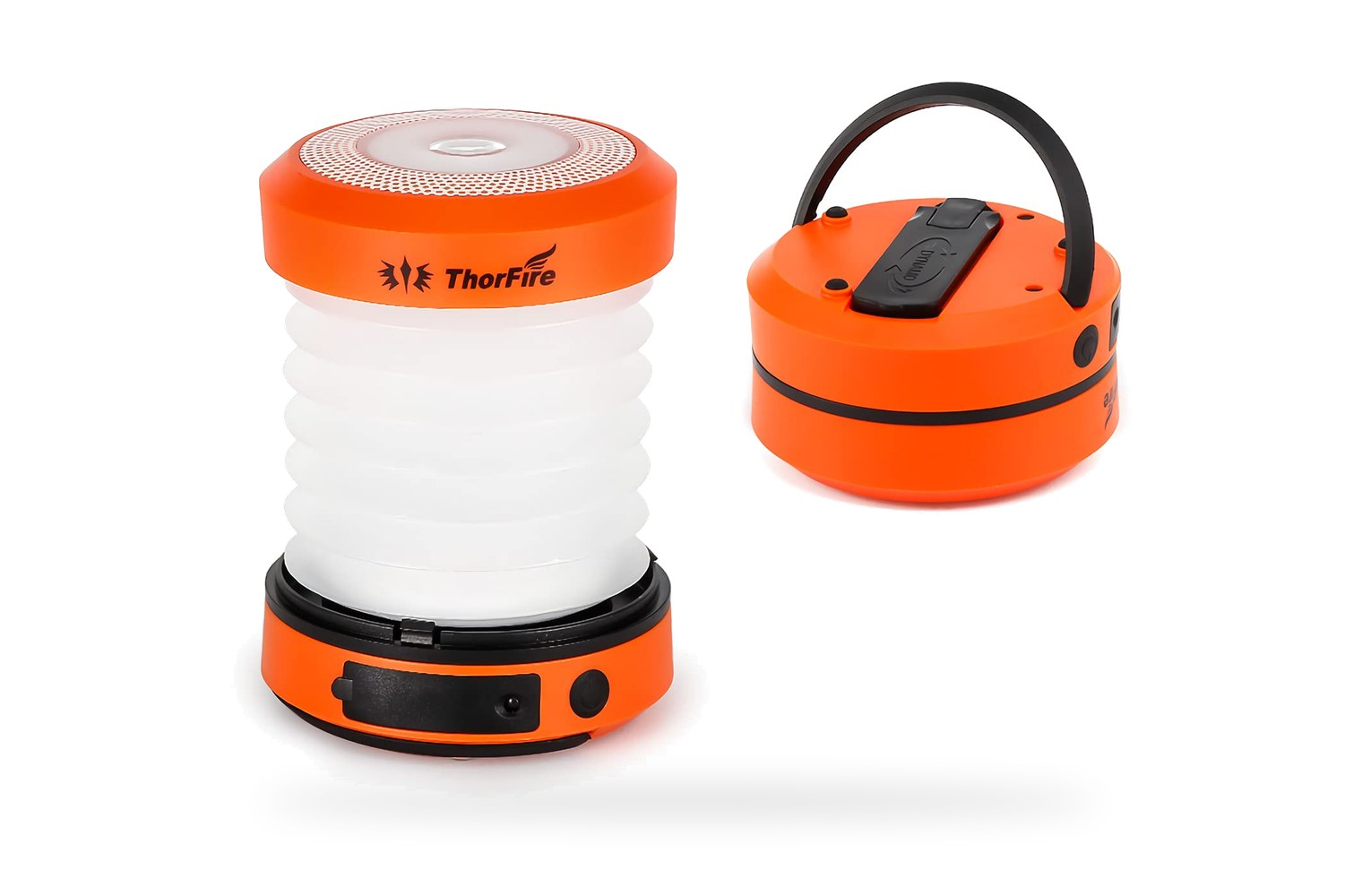
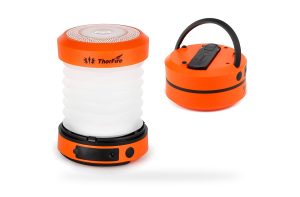
Why I chose it: A flashlight is the wrong tool for sitting in a dark bathroom or a tent, and this little ThorFire is the cheap fix. Pull the top up and it becomes a lantern that throws soft light all the way around. Push it down and it collapses to a puck under two inches tall that works as a short-range flashlight. The crank folds out of the bottom, a micro USB port charges it from the wall, and a full-size USB port can push a little power into a phone.
The box says 125 lumens on high and 30 on low, and an owner who measured it found closer to 100 and 20. ThorFire estimates that a minute of cranking at 120 turns gives about 18 minutes on high or 40 on low. That’s more than a minute of cranking can really make, so real runtimes come in shorter. Where it shines is as a room light on low, where it barely sips power and never gets warm.
Key specs
- Output: About 100 lumens high, 20 low
- Modes: High and low
- Crank claim: 1 min = 18 min high, 40 low
- Charging: Crank or micro USB
- USB out: Yes, for a phone
- Size: 1.8 in collapsed, 4.7 in open
- Weight: 5.9 oz
Pros
- Lantern and flashlight in one puck-size light
- Stays cool, so it’s safe near kids and bedding
- Wall charging plus a crank backup
- Cheap enough to buy one for every bedroom
Cons
- Crank estimates are optimistic
- Small battery won’t last a whole night on high
- Old micro USB charging port
In real use: Owners use it the way you’d hope: on the bathroom counter, hanging in a tent, on the nightstand of a kid who doesn’t want to be in the dark. Charged from the wall before a storm, the battery handles most of the evening on low, with the crank there for the last hour. It’s one of the few crank lights that a child can work easily, and it never gets hot enough to worry about.
For a big outage, I’d still put a Lighthouse 600 in the main room and use one of these in the rooms where a lantern would be overkill.
6. Coghlan’s Dynamo Flashlight: Best Glovebox Mini
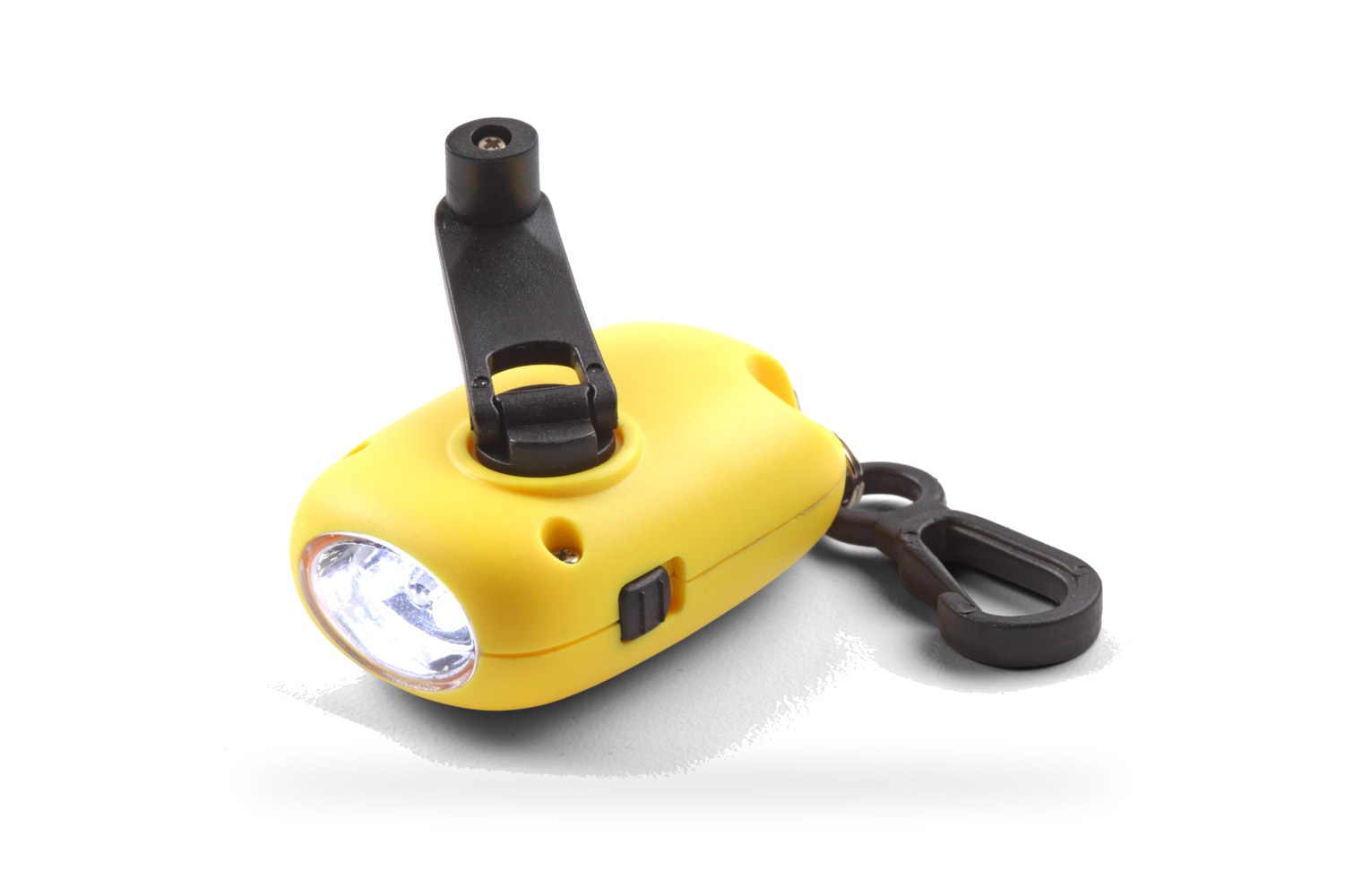
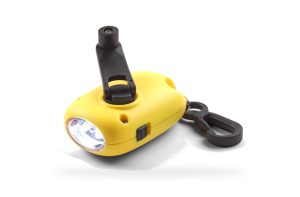
Why I chose it: Coghlan’s makes the kind of camp gadget your grandfather kept in his tackle box, and this one is about as simple as a light gets. It’s the size of a matchbox and weighs an ounce, with two LEDs, a fold-away crank handle and a clip for a keyring or a zipper pull. A minute of cranking is worth up to 7 minutes of light at 10 lumens, by Coghlan’s own rating.
That claim is the most believable of anything on this list, because it matches what a minute of cranking can actually make. Ten lumens isn’t bright, but it’s plenty for finding the keyhole, reading a fuse box label or walking to the outhouse at a campground. There are no batteries to swap or leak, so it’s happy in a glovebox for years.
Key specs
- Max output: 10 lumens
- LEDs: 2
- Crank claim: 1 min = up to 7 min
- Clip: Keyring clip
- Size: 1.75 x 1.25 in
- Weight: About 1.1 oz
Pros
- Weighs about an ounce
- Honest crank claim
- Nothing to leak or go dead in storage
- Small enough for a keychain or a wallet pocket
Cons
- Only 10 lumens
- Tiny crank is slow work
- Plastic body won’t take much abuse
In real use: This is the light that’s always there, not the one you’d pick for a long night. It lives on a keyring or in a door pocket and gets you to the real light in the closet. Owners like it for exactly that, and the common complaint is only that it’s small, which is also the whole point.
If you’d rather have something you can use with a tight grip, the squeeze lights in the section below work the same way, with a lever you pump instead of a handle you turn.
How Long Does a Hand Crank Flashlight Last?
On one minute of cranking, anywhere from about one minute to an hour, depending on how bright you run it. The honest way to think about it is lumen-minutes. A minute of brisk cranking on a decent light makes roughly 65 to 140 of them once the battery and LED take their cut. That’s 100 lumens for about a minute, 30 lumens for two to four minutes, or 5 lumens for 15 to 30 minutes. Every crank light obeys that same budget, whatever its box says.

Goal Zero is the one company that puts the raw number on paper. Its old Torch 250 was rated at 2.2 watts at 120 turns a minute, good for 2 minutes of light per minute of cranking, and the Lighthouse 600 is rated at 1 watt. Goal Zero has since stopped making the Torch 250, but those two figures are why the honest crank claims sit between 2 and 10 minutes, and why anything claiming an hour is quoting its dimmest mode.
Over the long haul, a good crank light can last for years. The LEDs outlive everything else, and what wears out is the battery inside. NiMH cells like the ThorFire’s slowly lose charge on the shelf, while lithium cells hold it far longer. Either kind stays healthier with a few turns of the crank every month or so.
Hand Crank vs Rechargeable Flashlight
A good rechargeable flashlight beats a crank light at being a flashlight, and it isn’t close. One 3,500 mAh 18650 cell holds about 12.6 watt-hours, which is somewhere around 13 to 15 hours of steady cranking. It runs a few hundred lumens for hours, and it charges from a wall in an afternoon.
What the crank gives you is a light that can’t be dead. A rechargeable light that’s been sitting in a drawer since spring may well be flat when the storm hits. A crank light comes back to life in a minute, and a solar one is often topped off already. That’s why I’d keep both: a real light from my rechargeable flashlight guide for the hard work, and a crank light in the car and the kitchen drawer as the one that never needs a cord. For a whole-house plan, my emergency flashlight guide covers the main lights.
Squeeze Flashlights: Are They Any Good?
A squeeze flashlight is a crank light with a lever instead of a handle. You pump it in your fist, a little flywheel spins a generator, and the LEDs come on. Some charge a tiny cell so they keep glowing for a bit after you stop, and some only light while you’re squeezing. Hardware stores sell them claiming 30 seconds of pumping for 30 minutes of light, which runs into the same math as every other crank claim and means the dimmest setting.
They’re good at a few things. Kids love them, they’re cheap enough to buy in a bag of five for a Scout troop or a classroom kit, and there’s nothing inside to leak. They’re tiring for more than a few minutes of steady light, and the cheap ones vary a lot in quality, so I’d treat a squeeze flashlight as a fun extra for a kid’s kit, not as the light you depend on.
Solar Crank Flashlights: What the Solar Panel Adds
The panel on a pocket crank light is tiny. ThorFire’s is rated at 20 milliamps, around a tenth of a watt in full sun, so it tops off a small battery slowly over a day or two. That’s its real job. A solar crank light left on a dash or a sunny sill stays charged for months without anyone thinking about it, which beats cranking a dead one from empty.
What it won’t do is refill a light fast on a cloudy day or charge a bigger battery in any useful time. Goal Zero’s old Torch 250 needed 23 to 46 hours of sun to fill on its built-in panel. For real solar charging, a separate panel and a power bank do the heavy lifting, and the crank light stays the backup.
Can a Hand Crank Flashlight Charge a Phone?
Some can, but slowly enough that the numbers are worth knowing first. A minute of steady cranking makes about a hundredth of a watt-hour by the time it gets through the light’s battery and USB port, and a phone holds about 13 to 19 watt-hours. A full charge by crank alone would take something like a day of nonstop cranking. What you can realistically get is a few percent in a long session, enough to send a text or make a short call when there’s no other way.
That’s why I’d keep a power bank charged for the phone and let the crank light do what it’s good at. If you want a radio, a light and a crank in one box, my hand crank radio guide covers the combo units with weather alerts and bigger batteries.
How to Choose a Hand Crank Flashlight
Battery size
The battery decides how long the light runs after you stop cranking and how long a full crank charge takes. A tiny 80 mAh cell fills in about 20 minutes of cranking but empties fast. A 5,200 mAh lantern battery runs for days but would take a full day of cranking to refill, so it’s charged from the wall or the sun and cranked only in a pinch.
Real lumens
Most crank lights put out 10 to 50 real lumens no matter what the box says. That’s enough to walk a house or find your keys. If you need to light the yard or work on a car, a crank light is the backup, not the main light.
The crank claim
Claims between 2 and 10 minutes of light per minute of cranking are believable. An hour per minute only happens on the dimmest LED. A light that publishes its crank wattage, like Goal Zero’s, is telling you the truth.
Water rating
A crank light lives in cars, boats and go bags, so a rating like IPX6 is worth having. Most cheap crank lights have no rating at all.
Storage
Lithium batteries hold a charge on the shelf for months. NiMH cells fade faster, so a solar panel or a monthly crank keeps them ready.
Extras
A USB port for a phone, a strobe for signaling and a clip or carabiner all earn their place. A built-in radio is a different kind of gadget, and the hand crank radio guide covers those.
Frequently Asked Questions
How long does a hand crank flashlight last?
One minute of cranking gives anywhere from about a minute of bright light to an hour of very dim light. The total amount of light is roughly fixed, so a crank light rated at 10 minutes per minute, like the Eton Clipray, is being honest about a modest brightness. The light itself can last for years, since only the small battery inside wears out.
Do hand crank flashlights need batteries?
Most have a small built-in rechargeable battery that stores what you crank, so the light keeps working after you stop. You never have to buy or replace batteries for them. A few tiny dynamo lights run only while you’re cranking or squeezing.
Are hand crank flashlights worth it?
Yes, as a backup that can’t be dead when you need it. They’re dimmer and more work than a rechargeable flashlight, so the best plan is a good rechargeable light for everyday use and a crank light in the car, the kitchen drawer and the go bag.
What is the best hand crank flashlight?
The ThorFire Solar Hand Crank Flashlight is the best for most people, since it’s sealed to IPX6 and its solar panel keeps it charged. For a long power outage, the Goal Zero Lighthouse 600 is the better buy, with a 5,200 mAh battery, 600 lumens and a crank for emergencies.
The Bottom Line
For most people, the ThorFire Solar Hand Crank Flashlight is the hand crank flashlight I’d buy. It’s sealed against rain, the solar panel keeps it charged on a dash or a windowsill, and a minute of cranking gets you through a dark house. For a long outage, the Goal Zero Lighthouse 600 lights a whole room for days and charges a phone, with a crank on the side for the day the battery finally gives out.
If you’d rather clip a light to a pack, the Eton American Red Cross Clipray makes an honest claim and has a USB port. The Simpeak Hand Crank Flashlight 2-Pack stocks two cars at once, the ThorFire CL01 Hand Crank Lantern is a cheap lantern for a bathroom or a tent, and the Coghlan’s Dynamo Flashlight weighs an ounce on a keyring.
The crank calculator above shows how much light your own cranking buys before you spend a dime, and it’s a fun one to try with the kids. And for the rest of the storm plan, a good hand crank radio and a power outage emergency kit cover the long nights.
Keep reading