• Skip to primary navigation
  • Skip to main content
  • Skip to primary sidebar
Best Tactical Flashlight Today

Best Tactical Flashlight Today

Tactical flashlight reviews and buying guides since 2014

  • Home
  • Flashlights
    • Top picks
      • Best Rechargeable Flashlights
      • Brightest Flashlight
      • Best EDC Flashlights
      • Best Budget Flashlights
      • Best Mini Flashlights
    • By use
      • Best UV Flashlight
      • Best Self Defense Flashlight
      • Best Firefighter Flashlights
      • Best Police Flashlights
      • Best Survival Flashlight
      • Best Flashlight for Kids
      • Best Throw Flashlights
      • Best Rechargeable Headlamps
      • Car Flashlights
      • Dog Walking Flashlights
    • Battery and size
      • Best 18650 Flashlights
      • 18650 Chargers
      • Best AA Flashlights
      • Lithium AA Batteries
      • Best Rechargeable CR123A Batteries
      • Best AAA Flashlights
      • Best Medical Penlights
      • Best Penlights
  • Weapon Lights
    • Firearm-Mounted
      • Best Pistol Lights
      • Best Shotgun Lights
      • Best AR-15 Lights
  • Power Outage
    • Outage essentials
      • Power Outage Emergency Kit
      • Bug Out Bags
      • Best Emergency Flashlights
      • Best Battery Lantern
      • Weather Alert Radios
      • Hand Crank Radios
      • GMRS Radios
    • Food and water
      • Emergency Food Supply
      • Water Storage Containers
      • Gravity Water Filters
      • Water Filter Straws
    • Backup power
      • Home Generators
      • Interlock Kits
      • Transfer Switches
      • Dual Fuel Generators
      • Portable Power Stations
      • EcoFlow vs Jackery vs Anker
      • Bluetti vs Jackery
      • Power Station vs Generator
      • Solar Power Banks
      • Solar Generators
      • Indoor Propane Heaters
      • Kerosene Heaters
      • Battery Operated Heaters
      • CPAP Battery Backup
      • CO Detectors
  • Car Emergency
    • Car Emergency Kits
    • Portable Jump Starters
    • Car Flashlights
    • Tire Inflators
    • Road Flares
  • Camping
    • Camping Stoves
    • Tent Wood Stoves
    • Rechargeable Headlamps
    • Battery Lanterns
  • Guides and Tools
    • Free tools
      • Peak Sun Hours Calculator
      • NOAA Station Finder
      • Power Outages by State
      • Dark Commute by City
    • Guides
      • Tactical Gifts
      • Candela vs Lumens
      • 18650 vs 21700 Battery
      • How to Use a Flashlight for Self Defense
  • About Us
  • Contact
  • Privacy Policy / Disclaimer
  • Free Outage Kit
Home›Guides and Tools›NOAA Weather Radio Frequencies and Station Finder

NOAA Weather Radio Frequencies and Station Finder

Last Updated: November 2, 2026 By James Levinson

James Levinson·Updated Nov 3, 2026Covering tactical and everyday carry flashlights since 2014

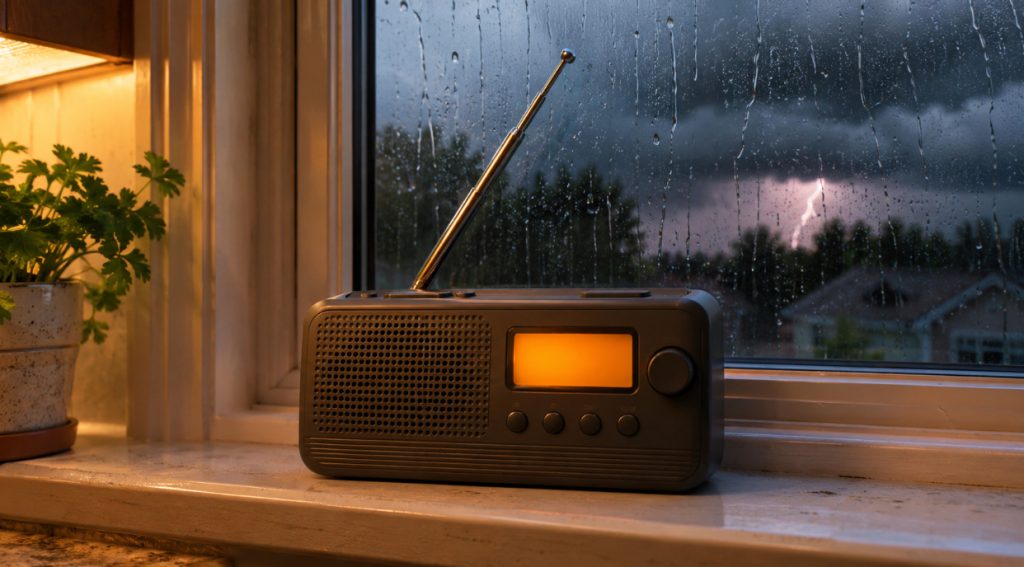
Weather radio glowing on a kitchen windowsill as a storm rolls in at dusk

In this Article

  • Find Your NOAA Weather Radio Station
  • The 7 NOAA Weather Radio Frequencies
  • NOAA Weather Radio Status Map
  • Add Your County’s Station to Your Website
  • How to Set Up a Weather Radio for Your County
    • Tune the right frequency
    • Enter your SAME code
    • Turn on alert mode
    • Listen for the weekly test
  • When Your Station Won’t Come In
  • Other Ways to Hear NOAA Broadcasts
  • Frequently Asked Questions
    • What frequency is NOAA weather radio on?
    • What channel is NOAA weather radio?
    • Can a regular radio pick up NOAA weather radio?
    • What is a SAME code on a weather radio?
  • Keep It Ready

A weather radio can only warn you if it’s tuned to a transmitter that’s on the air. Set it to the wrong frequency, or to a transmitter that’s been off the air for two weeks, and it sits there in silence while a tornado warning goes out for your county.

NOAA Weather Radio broadcasts on seven frequencies from more than a thousand transmitters run by the National Weather Service. The finder below gives you your NOAA weather radio frequency, the channel number your radio uses for it, and the six digit code a SAME radio needs. The status map further down shows which transmitters are on the air right now and which ones aren’t.

Find Your NOAA Weather Radio Station

Start typing your county and pick it from the list. You can also browse by state, or let your phone find the transmitters closest to you.

Many counties are reached by two or more transmitters. If the first one comes in weak or full of static, tap the next station in the finder and try that frequency. Near a county line, you may hear a neighboring county’s station better than your own, and that’s fine for listening. For alerts, though, your radio should be set to a station that carries warnings for your county.

The 7 NOAA Weather Radio Frequencies

Every NOAA Weather Radio station in the country uses one of these seven VHF frequencies. Neighboring transmitters are put on different ones so they don’t drown each other out, which is why the station two counties over may be on a completely different channel from yours.

162.400
MHz
Weather channel 1
WX2 on two-way radios
162.425
MHz
Weather channel 2
WX4 on two-way radios
162.450
MHz
Weather channel 3
WX5 on two-way radios
162.475
MHz
Weather channel 4
WX3 on two-way radios
162.500
MHz
Weather channel 5
WX6 on two-way radios
162.525
MHz
Weather channel 6
WX7 on two-way radios
162.550
MHz
Weather channel 7
WX1 on two-way radios

Most weather radios show a channel number from 1 to 7 instead of the frequency. Weather radios such as Midland’s number the frequencies in order, so channel 1 is 162.400 MHz and channel 7 is 162.550 MHz. Walkie-talkies, marine radios and some CB radios label them WX1 to WX7 in a different order that starts with WX1 on 162.550 MHz. Each card above shows both numbers, and so does the finder. If a channel doesn’t bring in a clear broadcast, check the frequency chart in your radio’s manual and match it to your frequency.

NOAA Weather Radio Status Map

Transmitters go off the air more often than most people realize. A lightning strike, a failed phone line to the forecast office, a tower repair or a software update can each take a station down for days or weeks. When that happens, a radio tuned to it gets no forecast and no alert, and nothing on the radio tells you so.

If your station shows as out of service, the finder will point you to another transmitter that reaches your county. If none do, keep your phone’s emergency alerts switched on and check local TV or AM radio during storms until it’s back.

Add Your County’s Station to Your Website

County emergency offices, ham radio clubs, schools and local news sites are welcome to put a live station box on their own pages. Pick a county below and copy the code. The box shows the frequency, the SAME code and any warning in effect, and it updates itself every few hours.

How to Set Up a Weather Radio for Your County

Setting up a weather radio takes about five minutes, and it’s worth doing on a calm day rather than with a storm on the way.

Tune the right frequency

Find your county in the finder and tune the frequency or weather channel it gives you. You should hear a computer voice reading the forecast for your area. If you hear a forecast for somewhere a hundred miles away, you’ve picked up a different station, so try the next one on the list.

Enter your SAME code

SAME stands for Specific Area Message Encoding. Every county has a six digit code, and the Weather Service attaches those codes to each warning it sends. The first digit is almost always 0, which means the whole county. The next two digits are your state and the last three are your county.

A SAME radio checks each alert against the codes you’ve programmed and only sounds for the ones that match. Without it, the radio goes off for every warning on that transmitter, and one transmitter can cover a dozen counties. You can program several codes into most SAME radios, so add the county where you work or where your parents live too. The National Weather Service’s SAME page covers the details for each kind of radio.

Turn on alert mode

This is the step people skip. A weather radio left playing on the weather band is just a radio. In alert mode it goes quiet, listens for the Weather Service’s warning tone, and switches itself on when one comes through. That’s what wakes you at 3 a.m. Leave it in alert mode all the time and keep fresh batteries in it, so it still works when the power goes out.

Listen for the weekly test

Most Weather Service offices send a test alert once a week, often on Wednesday around the middle of the day, though your local office sets the exact time. When your radio sounds for the test, you know it’s tuned to the right station and alert mode is working. If a week goes by with no test, check the status map, then check your settings.

When Your Station Won’t Come In

NOAA transmitters are built to reach about 40 miles, and less in hilly country. The signal is VHF, so it travels in fairly straight lines and doesn’t bend well over ridges or get through a lot of concrete.

Start with the antenna. Pull it all the way out and stand it upright. Then move the radio to a window on the side of the house facing the transmitter. The “stations near me” button in the finder shows which direction that is. Basements, metal roofs and rooms in the middle of a big building are the hardest spots.

If that doesn’t fix it, try the other stations that reach your county. Some tabletop weather radios also have a jack for an outside antenna, and a small antenna in the attic can make a weak station usable.

And if the station shows as out of service on the map, the radio isn’t the problem. Switch to a backup station until NOAA gets it back on the air.

Other Ways to Hear NOAA Broadcasts

A dedicated weather radio is still the best tool for alerts, because it’s built to sit in standby and wake you up. A lot of gear you may already own picks up the same broadcasts, though:

  • Many FRS and GMRS walkie-talkies have weather channels, and some sound an alert too.
  • Marine VHF radios on boats carry the weather channels, since NOAA covers coastal waters.
  • Police scanners and many ham radio handhelds can tune all seven frequencies.
  • Most hand crank emergency radios have a weather band, and the better ones have an alert mode.

A regular AM/FM radio can’t receive NOAA Weather Radio, because the broadcasts sit on VHF frequencies above the FM band. If you’re shopping, my weather alert radio guide covers tabletop SAME radios for the nightstand, and my hand crank radio guide covers radios that keep running through a long outage.

Your phone helps too. Wireless Emergency Alerts push the most serious warnings to phones in the affected area, and they don’t depend on a weather radio transmitter at all. Keep them switched on. They’re a good backup, but a dead phone or a cell tower knocked out by the storm can’t warn you, and a weather radio in alert mode running on batteries still can.

Frequently Asked Questions

What frequency is NOAA weather radio on?

NOAA Weather Radio uses seven frequencies: 162.400, 162.425, 162.450, 162.475, 162.500, 162.525 and 162.550 MHz. Which one you need depends on the transmitter that covers your county. Type your county into the finder at the top of this page to get yours.

What channel is NOAA weather radio?

It depends on the radio. Weather radios such as Midland’s number the seven frequencies in order, so channel 1 is 162.400 MHz and channel 7 is 162.550 MHz. Walkie-talkies and marine radios usually label them WX1 to WX7 in a different order, with WX1 on 162.550 MHz. Get your local frequency from the finder, which shows both numbers, and match it to your radio.

Can a regular radio pick up NOAA weather radio?

No. A standard AM/FM radio doesn’t tune high enough. You need a weather radio, or a radio with a weather band such as a hand crank emergency radio, a scanner, a marine VHF radio or a walkie-talkie with weather channels.

What is a SAME code on a weather radio?

A SAME code is a six digit number for your county. When you program it into a SAME weather radio, the radio only sounds for warnings that include your county instead of every warning on the transmitter. The finder gives you your county’s code with a copy button.

Keep It Ready

Look up your station now, while the sky is clear, and print the radio card from the finder so the frequency and code are on the fridge when someone else needs them. A weather radio pairs well with a plan for when the power goes out, and the free Lights Out kit has a printable one. To see how often outages hit your part of the country, the power outages by state page has the numbers. NOAA’s Weather Radio home page has more on how the network works.

Keep reading
Guides and ToolsPower Outages by State11 Years of Data, RankedGuides and ToolsThe Dark ShiftPedestrian Deaths After Clocks Fall BackGuides and ToolsPeak Sun Hours Calculator by ZIP Code (Free, With Map)

About James Levinson

James Levinson has covered tactical and everyday carry flashlights since 2014. He has evaluated hundreds of lights in that time, from budget EDC models to duty weapon lights, and knows where spec sheets tend to stretch the truth. His guides focus on what actually matters when you're choosing one: real output, runtime, build quality and long-term reliability.

Primary Sidebar

🔎 Explore Flashlights

Top Buying Guides

Gifts Tactical gifts half-wrapped in brown paper on a wooden table, including a flat flashlight, a multi-tool, a headlamp and an emergency radioTactical Gifts20 picks plus a Gift Finder
Backup Power Dual fuel inverter generator running on propane on a patio well away from the house during a winter power outageBest Dual Fuel Generators6 inverters with CO shutoffPortable generator powering a house through an inlet box during a winter power outage at duskBest Home Generators5 picks for the whole panelGenerator interlock plate on a home breaker panel, lit by a flashlight during a power outageBest Interlock Kits6 kits matched by panel brandManual transfer switch beside a home breaker panel, lit by a flashlight during a power outageBest Transfer Switches6 switches sized by circuits Portable power station for home backup running a refrigerator in a dark kitchen during a power outageBest Portable Power Stations6 picks, bedside to whole home Three portable power stations in small, medium and large sizes lined up on a kitchen floor during a snowy power outageEcoFlow vs Jackery vs AnkerSize for size, plus a brand matcher Bluetti vs JackeryBluetti vs JackerySize for size, plus a runtime race Portable power station running on a kitchen counter during a winter outage, with a gas generator in the driveway outside the windowPower Station vs GeneratorBattery or gas, plus an outage planner Solar Power BanksSolar Power Banks6 picks, plus a sun refill planner Portable power station inside a back door with its cable running to a folding solar panel in the yard after a stormBest Solar Generators6 kits plus a year-round planner CPAP machine on a nightstand running from a battery backup in a dark bedroom during a power outageBest CPAP Battery Backups6 picks, one night to a week Portable indoor propane heater glowing in a dark living room during a winter power outage, with a window cracked open for fresh airBest Indoor Propane Heaters6 indoor-safe picks for outages Indoor kerosene heater glowing in a dark living room during a winter power outage, with a window cracked open for fresh airBest Indoor Kerosene Heaters6 picks plus an outage planner Heated throw on an armchair plugged into a portable power station during a winter ice storm power outageBest Battery Operated Heaters6 picks plus a warmth planner Two GMRS handheld radios on a kitchen counter lit by a battery lantern during a nighttime power outageBest GMRS Radios6 picks plus a range plannerOpen food storage bucket of foil meal pouches on a kitchen counter, lit by a battery lantern during a winter power outageBest Emergency Food Supply6 picks ranked by real caloriesBlue square water storage jugs, stackable water bricks and a tan 5-gallon water can on a closet floor, lit by a lantern during a winter power outageBest Water Storage Containers6 picks plus a water plannerStainless steel gravity water filter on a kitchen counter filling a glass of water by lantern light during a winter power outageBest Gravity Water Filters6 picks plus a clean water planner Hand holding a blue water filter straw dipped into a clear mountain creek on a cool autumn morningBest Water Filter Straws6 picks plus a water safety checker Packed bug out bag with a headlamp and water bottle on an entryway bench by the front door at nightBest Bug Out Bags6 kits and packs plus a bag builder
Car Emergency Winter car emergency kit with jumper cables, a wool blanket and a folding shovel in an open SUV hatch on a snowy morningBest Car Emergency Kits6 kits plus a winter checklist Portable jump starter clamped to a car battery on a frosty winter morningBest Portable Jump Starters7 picks for any weather Flashlight beam lighting the lug nuts on a car’s rear wheel during a roadside tire change at duskBest Car Flashlights6 lights for heat, cold and the roadside Cordless tire inflator on a driveway with its hose connected to a car’s front tire valve on a cold morningBest Tire Inflators6 picks plus a tire pressure check Two LED road flares glowing red on a gravel shoulder behind a car with its hazard lights on at duskBest Road Flares6 picks plus a placement planner
Camping Two-burner propane camping stove cooking coffee and eggs on a picnic table at a campsite in the morningBest Propane Camping Stoves6 picks plus a fuel planner Stainless wood stove with a fire behind its glass door inside a canvas wall tent at dusk, with the stove pipe running up toward the roofBest Tent Wood Stoves6 picks plus a night planner
Flashlights Hand holding a tactical flashlight with a bright beam in a dark parking garageBest Self Defense Flashlights6 top picks compared Pistol with a weapon light illuminating a dark hallwayBest Pistol Lights7 picks for carry and home defense Pump-action shotgun with a forend weapon light shining a beam down a dark hallwayBest Shotgun Lights6 picks that fit your shotgun AR-15 rifle with a weapon light lighting a dark hallway at nightBest AR-15 Lights6 rifle lights worth mounting Flat EDC flashlight on a desk beside a pocketknife, keys and walletBest EDC Flashlights7 picks for everyday carry Long range throw flashlight beam reaching across a dark field to a distant tree lineBest Throw Flashlights7 farthest-reaching picks Person holding a large flashlight whose beam lights up a distant tree line across a dark rural fieldBrightest Flashlights7 picks, pocket to 200,000 lumens Black 18650 tactical flashlight on a slate workbench beside two spare 18650 batteriesBest 18650 Flashlights6 proven picks Lithium AA batteriesBest Lithium AA Batteries6 picks plus a battery planner Tactical flashlight on a cabin table beside spare CR123A and AA batteries and a survival kitBest Survival Flashlights6 picks with backup power Flashlight lighting a dark kitchen during a power outage, with spare AA batteries on the counterBest Emergency Flashlights7 picks for when the power goes out Three affordable flashlights on a wooden workbench, one switched on, with AA batteries and a charging cableBest Budget Flashlights6 honest picks that cost less Flashlight for dog walkingBest Dog Walking Flashlights6 picks plus a night walk planner
Best Tactical Flashlight Today
Independent flashlight and outage-prep buying guides from James Levinson, publishing since 2014.
Free Outage Kit PDF
Popular guides
  • Best Tactical Flashlights
  • Best Self Defense Flashlights
  • Best Pistol Lights
  • Best EDC Flashlights
  • Best Emergency Flashlights
  • Portable Power Stations
Free tools
  • Peak Sun Hours Calculator
  • NOAA Station Finder
  • Power Outages by State
  • Dark Commute by City
  • Lights Out Kit (PDF)
Site
  • About
  • Contact
  • Privacy Policy
  • Affiliate Disclosure
© 2014–2026 Best Tactical Flashlight TodayAs an Amazon Associate I earn from qualifying purchases.
  • Home
  • About Us
  • Contact
  • Privacy Policy / Disclaimer