
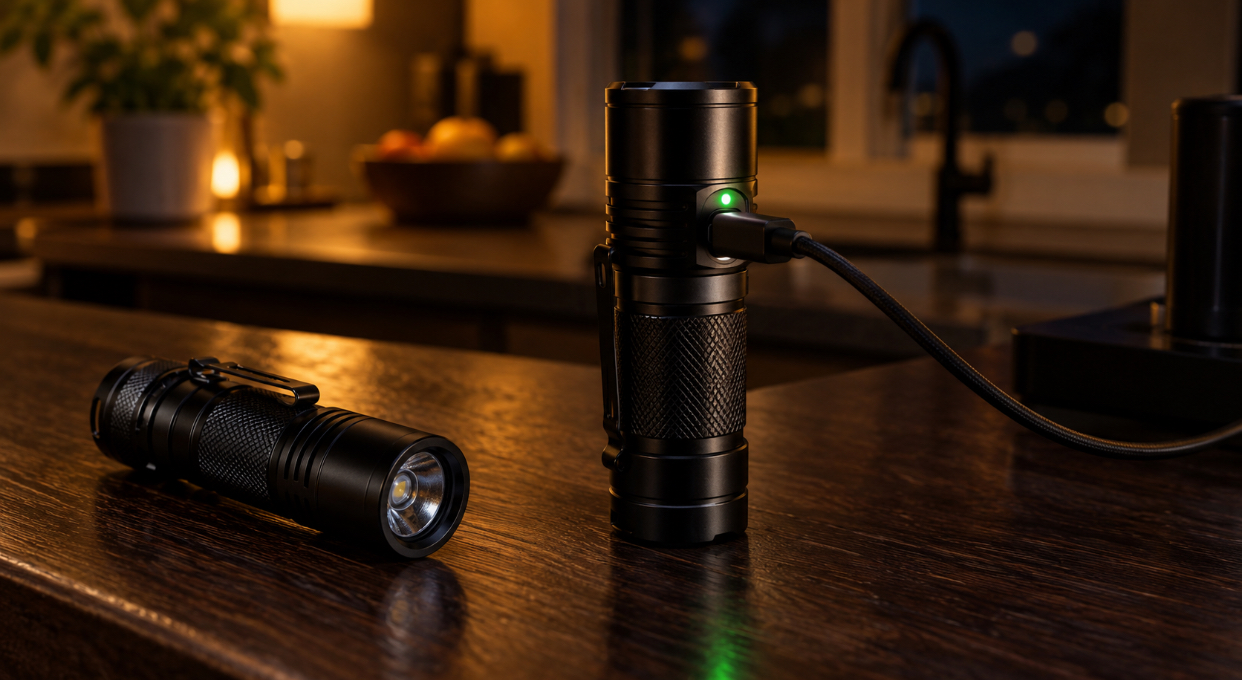
Most people buy a rechargeable flashlight for one reason. They’re done digging through a junk drawer for AA batteries that turn out to be dead or leaking.
Plugging in a light solves that, but it brings a new set of questions nobody on the box answers. Can you swap the battery when it wears out? Will it still have a charge after six months in a kitchen drawer? I picked these seven lights with those questions in mind, and I’ll show you where each one falls short as well as where it shines.
If you only want one answer, get the Fenix PD36R V2.0. It charges over USB-C, runs a standard 21700 cell you can replace in seconds, and does every job on this list reasonably well.
Quick Picks
The 7 Lights Compared at a Glance
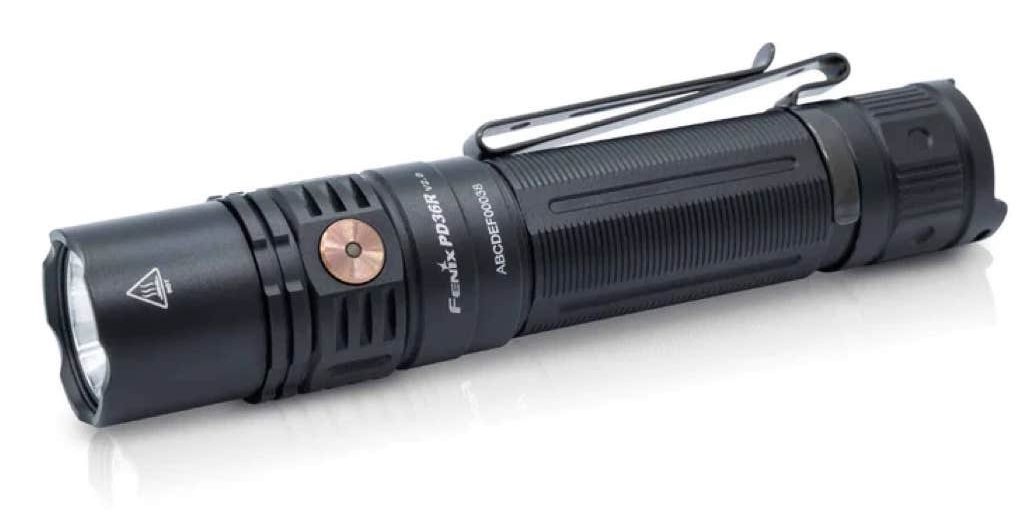
1. Fenix PD36R V2.0: Best Overall
Why I Chose It
The PD36R V2.0 does the unglamorous things right. It charges through a USB-C port on the body at up to 18W, so a phone charger brings it back fast. The battery is a 5,000mAh 21700, a standard size you can buy anywhere when the original finally wears out. A tail switch handles on and off, and a side switch steps through brightness, so you never fumble through modes to get light.
It’s best for the person who wants one light that lives in the house or the car and doesn’t need any thought.
Key Specs
- Max output: 1,700 lumens, 396 m beam (39,240 cd)
- Battery: 5,000mAh 21700, removable
- Charging: USB-C on the body, up to 18W
- Runtime: 350 lumens for 7h 45m, 5 lumens for 482 hours
- Water rating: IP68
- Size: 140.7mm, 167g with battery
Pros
- Standard 21700 cell, easy to replace years from now
- Fast USB-C charging with a battery level indicator
- Tail switch gives instant momentary light
- Long throw for a light this size
Cons
- Some charging and battery features only work with Fenix’s own ARB-L21 cells
- At 167g, it’s heavy for a shirt pocket
Performance Analysis
Fenix rates Turbo at 1,700 lumens for 3 hours 30 minutes, but that figure includes the step-down. Like every light this bright, it drops to a lower level once the head heats up and holds there. Medium at 350 lumens is the mode you’ll actually live on, and it runs close to eight hours.
The 18W charging matters more than it sounds. A light that tops up in a couple of hours gets charged. One that takes all night gets forgotten. I compare this exact light against its 18650 sibling in my 18650 vs 21700 breakdown if you want to see how the bigger cell earns its keep.
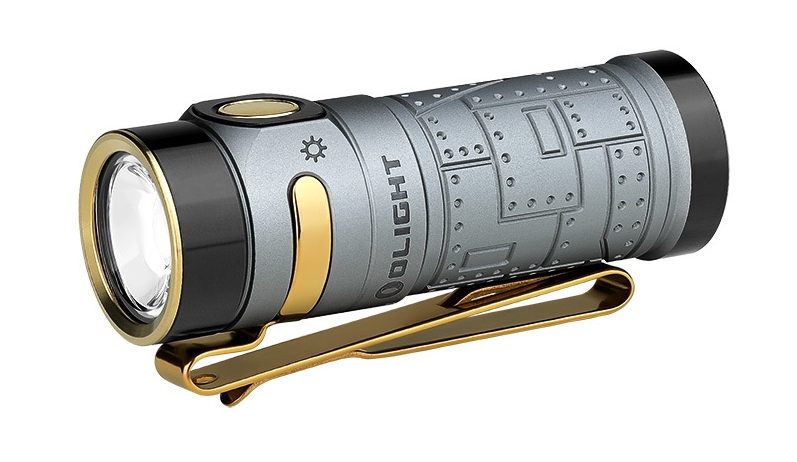
2. Olight Baton 4 Premium: Best for Pocket Carry
Why I Chose It
The Baton 4 is the light for people who hate charging things. The Premium version comes in a charging case with its own 5,000mAh battery, a bit like an earbud case. Drop the light in, and it charges. Olight says the case can refill the light about five times, and the case’s USB-C port can top up your phone too.
It’s best for everyday carry. The light alone weighs 52.5g and disappears in a pocket. For more small options, see my best mini flashlights.
Key Specs
- Max output: 1,300 lumens, 170 m beam
- Battery: Olight 16340, 650mAh, proprietary
- Charging: magnetic cable, or the Premium charging case
- Case: 5,000mAh, works as a small power bank
- Lowest mode: 0.5 lumens
- Weight: 52.5g for the light
Pros
- Tiny and light enough to carry every day
- The case keeps it charged without a cable hunt
- Case doubles as a backup phone charger
- Very low moonlight mode for dark bedrooms
Cons
- Proprietary battery, so you’re tied to Olight for replacements
- Lose the magnetic cable and the case, and you can’t charge it
Performance Analysis
A 650mAh cell is small, and the light behaves like it. Turbo starts at 1,300 lumens and steps down to 600 and then 300 fairly quickly. That’s normal for a light this size. Treat Turbo as a burst for spotting something, not a mode to walk with.
The case is what makes it work. On its own, a Baton 4 needs charging every few days of real use. With the case in a bag, you get roughly five refills before you need a wall outlet. If you’d rather avoid the proprietary cell entirely, my best EDC flashlights guide has standard-battery options.
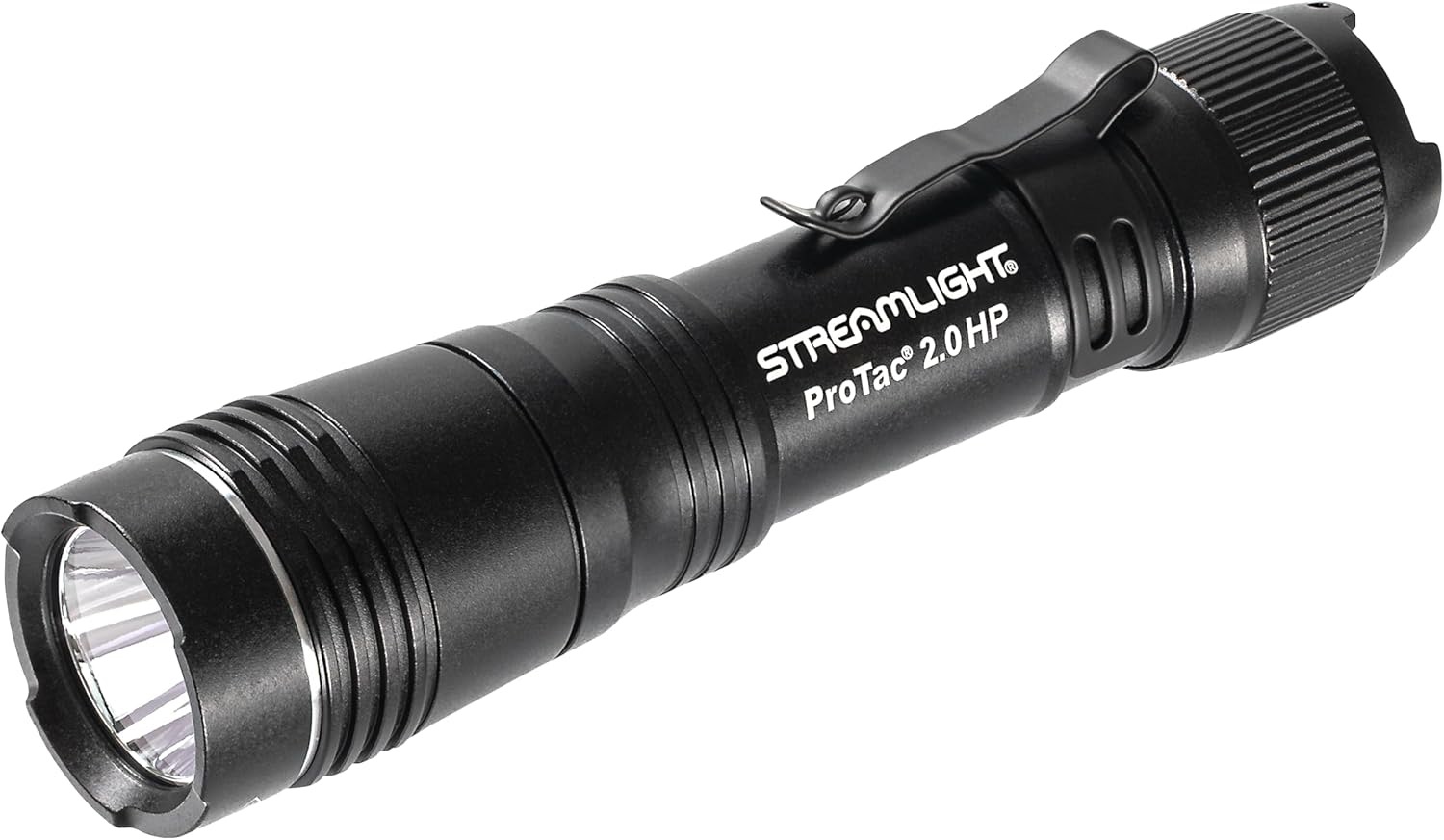
3. Streamlight ProTac 2.0: Best Tactical
Why I Chose It
Streamlight built the ProTac 2.0 for people who need a light to work the same way every time. TEN-TAP programming lets you set the tail switch to high only, high/strobe/low, or low/medium/high. Once it’s set, the first click always gives you what you trained with.
It’s best for security work and home defense. If you want more reach, Streamlight also makes the ProTac 2.0 HP, which I cover in my best tactical flashlight guide.
Key Specs
- Max output: 2,000 lumens, 262 m beam (17,300 cd)
- Battery: SL-B50 pack, 4,900mAh, proprietary
- Charging: USB-C port on the battery, in or out of the light
- Runtime: 2.5 hours on high, 25 hours on low
- Water rating: IP67, 2 m impact tested
- Size: 6.10 in, 8.25 oz
Pros
- TEN-TAP removes guesswork under stress
- Battery charges inside or outside the light
- Anti-roll head and holster included
- Limited lifetime warranty
Cons
- The light won’t take a standard 21700 in place of the SL-B50
- Heaviest of the handheld picks besides the Stinger
Performance Analysis
The SL-B50 pack is the clever part. It has its own USB-C port, so you can charge one pack on a cable while a spare runs the light. For anyone working shifts, that means the light never sits dead on a charger.
The beam is balanced rather than tight, which suits close and middle distances. Medium at 570 lumens is plenty for walking a property, and it runs four and a half hours. For more on using a light like this defensively, see my best self defense flashlight picks.
4. Fenix E35R: Best for Power Outages
Why I Chose It
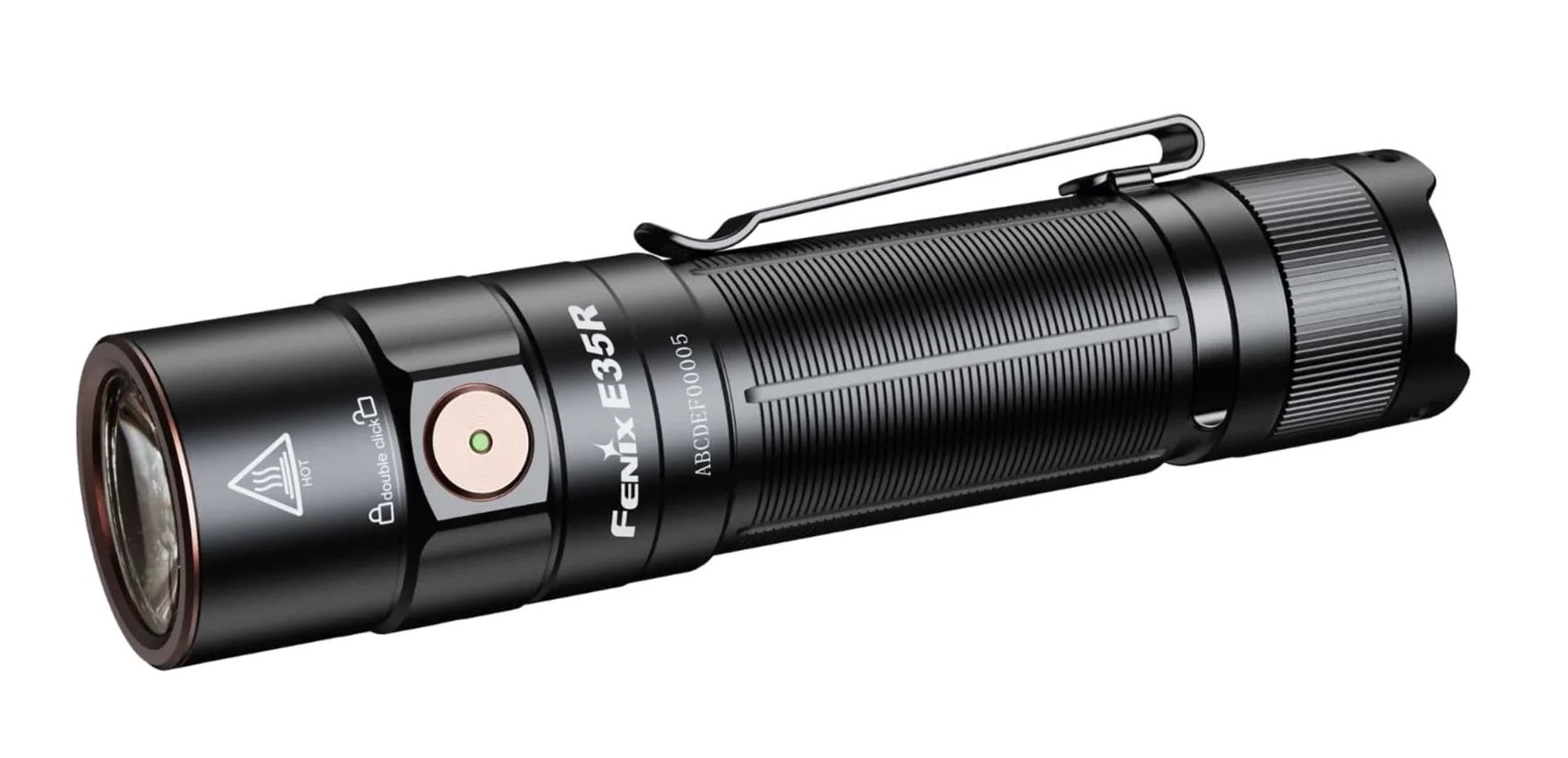
Two features earn the E35R this spot. First, a magnet in the tail lets you stick it to a fridge or a breaker box and work with both hands. Second, Fenix lets you run it on its three lowest modes while it’s plugged in. During a long outage, connect it to a power bank and it becomes a lamp that never runs dry.
It’s best for the outage kit and the junk drawer. The 3,100 lumen beam is wide, which lights a whole room instead of one spot.
Key Specs
- Max output: 3,100 lumens, 260 m beam
- Battery: 5,000mAh 21700, removable
- Charging: USB-C on the body, about 3 hours from empty
- Runtime: 350 lumens for 9h 20m, 30 lumens for 69 hours
- Water rating: IP68
- Size: 4.72 in, 148g with battery
Pros
- Magnetic tail for hands-free work
- Usable on lower modes while charging
- Electronic lockout stops it draining in a bag
- Wide, even beam fills a room
Cons
- Only a side switch, so it’s slower in a hurry than a tail-switch light
- Turbo, High and Strobe are disabled while charging
Performance Analysis
The number to look at for outages is Medium: 350 lumens for over nine hours. That’s enough to cook dinner and get the kids to bed on one charge. Eco at 30 lumens stretches to almost three days of continuous light.
Lockout is underrated here. A light rolling around a drawer or a go-bag can get bumped on and drain itself flat. Lock it, and it waits. For cheaper outage options, see my picks for flashlights for power outages.
5. Coast XP11R: Best Dual Power
Why I Chose It
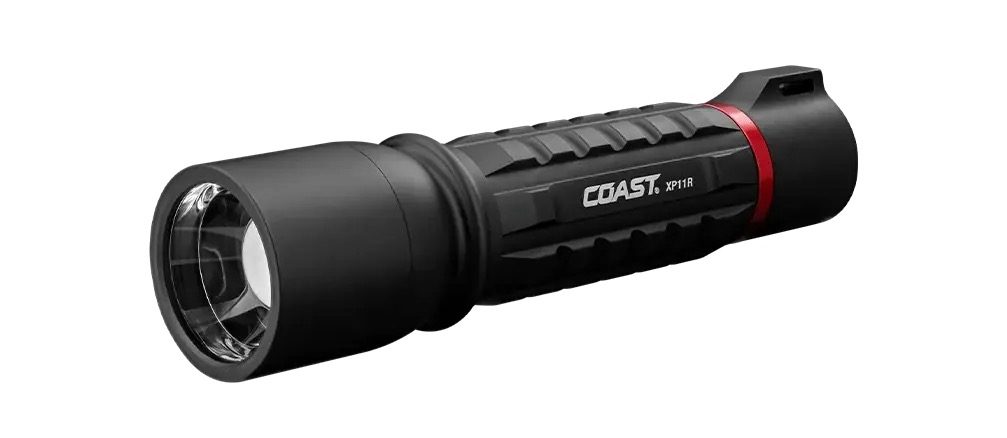
The XP11R solves the biggest worry with rechargeable lights: what if it’s dead when you need it? Coast includes a rechargeable ZX1000 battery and a separate cartridge that takes three AAA batteries. If the rechargeable is flat after months in a closet, pop in AAAs from the remote and keep going.
It’s best for the person who keeps one light for emergencies and wants a plan B. The sliding head also changes the beam from a wide flood to a focused spot.
Key Specs
- Max output: 2,100 lumens on the original spec (newer production lists more)
- Battery: ZX1000 rechargeable pack, or 3x AAA in the included cartridge
- Charging: USB-C on the body
- Runtime: 1,000 lumens for 5 hours, 75 lumens for 37 hours
- Beam: 220 m, slide focus from flood to spot
- Water rating: IP54
Pros
- Runs on AAA batteries when the rechargeable is empty
- Slide focus gives you flood or spot in one light
- Battery life indicator
- Lifetime limited warranty
Cons
- IP54 means splash resistance only, so keep it out of puddles
- Proprietary rechargeable pack
Performance Analysis
Expect less output on AAAs than on the rechargeable pack. That’s normal for any dual power light, because alkaline cells can’t deliver the same current. The point isn’t brightness. It’s having light on day four of an outage when every USB port in the house is dead.
The slide focus works well for home use. Pull it wide to light a room, push it to spot to read a breaker label across the basement. If you’d rather back up with CR123A cells, my guide to rechargeable CR123A batteries covers the safe options.
6. Wuben C3: Best Budget
Why I Chose It
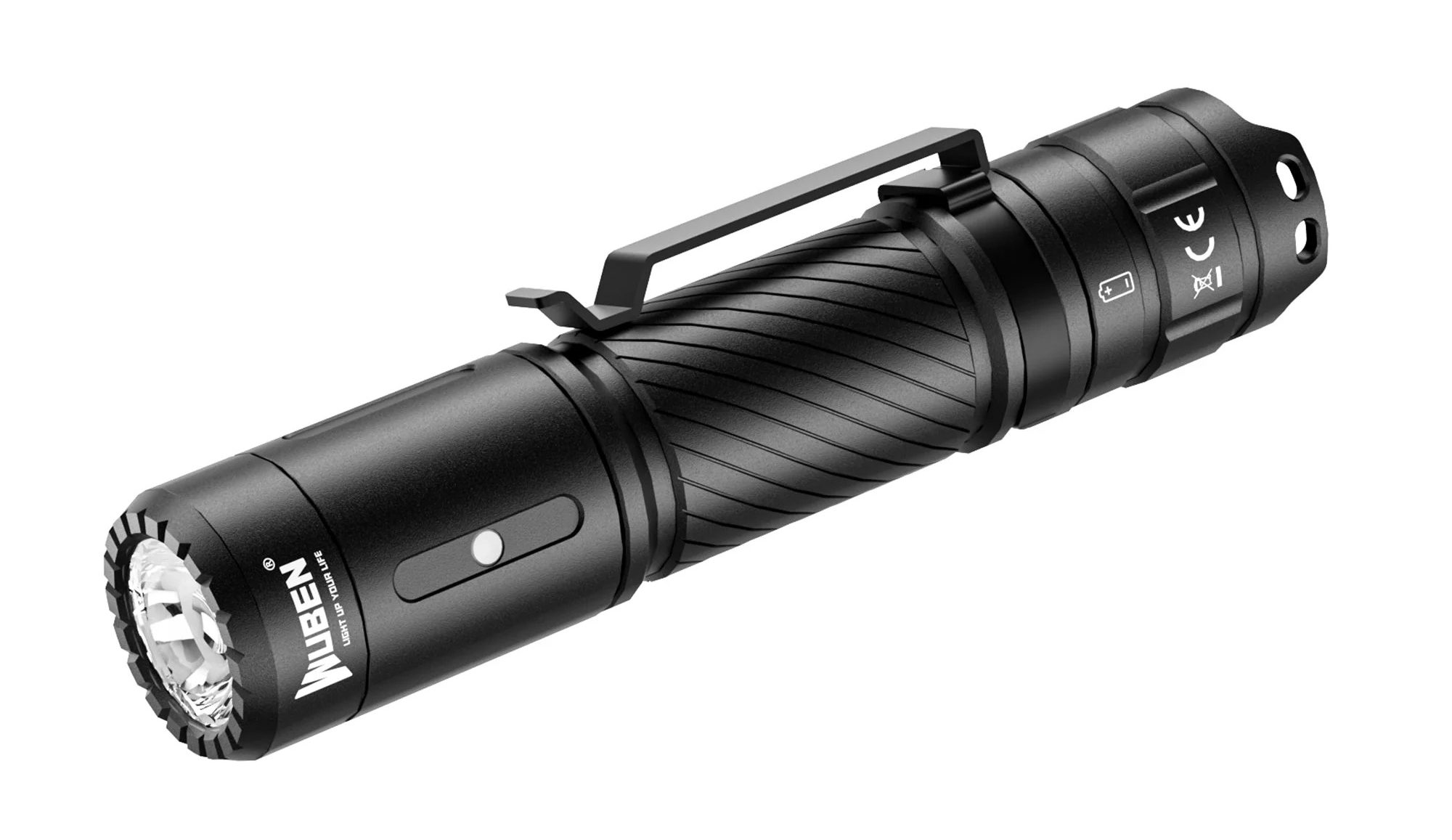
Cheap rechargeable lights usually cut corners where you can’t see them, like sealed-in batteries and inflated lumen claims. The Wuben C3 doesn’t. It runs a standard 2,600mAh 18650 that you can swap out, charges over USB-C and states its step-down plainly in its own specs.
It’s best as a second light for the car or the garage, or as a gift. For more low-cost options, see my best budget flashlights.
Key Specs
- Max output: 1,200 lumens for 1 minute, then 500 lumens
- Battery: 2,600mAh 18650, removable
- Charging: USB-C on the body
- Runtime: 400 lumens for 3.5 hours, 5 lumens for 143 hours
- Beam: 179 m
- Weight: 123g with battery
Pros
- Standard 18650 cell at a budget price
- Honest specs that show the step-down
- Simple controls anyone can use
- Includes SOS and strobe modes
Cons
- Smaller battery than the 21700 lights
- Less sustained output than the premium picks
Performance Analysis
Wuben lists High as 1,200 lumens for one minute, then 500 lumens for two and a half hours. I wish every brand were that upfront. Plenty of budget lights claim far more and hide the drop.
The 18650 inside is the real value. When it eventually wears out, a quality replacement cell keeps the light going for years. If you want to upgrade to a better 18650 light later, my best 18650 flashlight guide has the step-up options.
7. Streamlight Stinger 2020 S: Best for Work and Vehicles
Why I Chose It
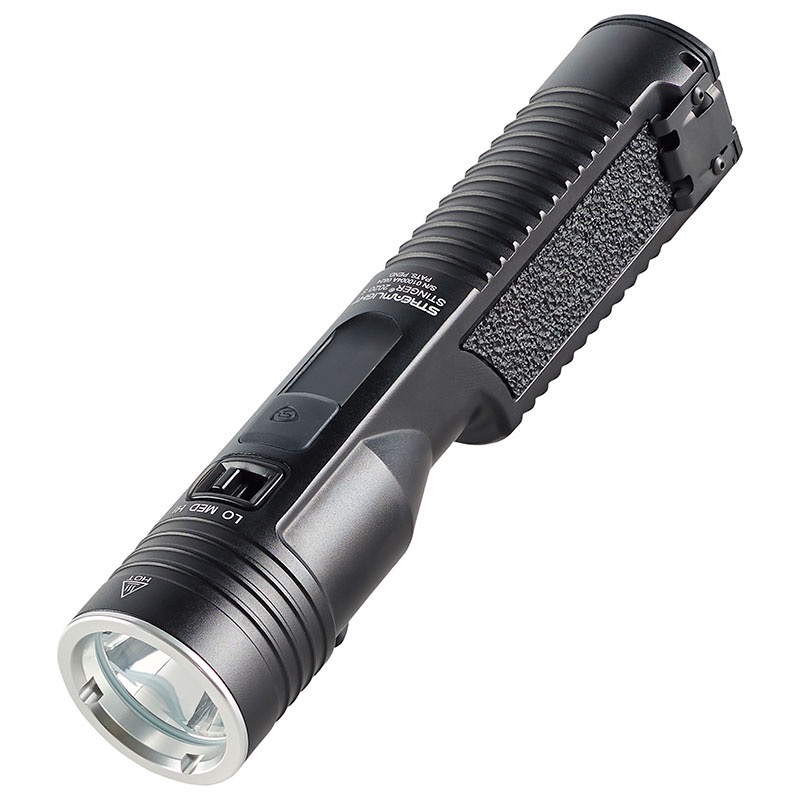
The Stinger has lived in police cars and fire trucks for decades because it charges in a holder. Mount the holder, drop the light in, and it’s always ready. The 2020 S adds a PiggyBack charging option that charges the light and a spare battery at the same time, so you can double your runtime on a long shift.
It’s best for work trucks and anyone who wants a light that lives on a wall mount. Firefighters should also see my best firefighter flashlights.
Key Specs
- Max output: 2,000 lumens, 315 m beam (25,000 cd)
- Battery: 5,200mAh pack, proprietary
- Charging: 120V AC or 12V DC holder, with a PiggyBack option
- Runtime: 2 hours on high, 4 on medium, 24 on low
- Water rating: IPX7, 2 m impact tested
- Size: 7.69 in, 12.2 oz
Pros
- Holder charging means it’s always ready
- Mode selector sets brightness once, no cycling
- Long reach for a work light
- Rugged enough for daily abuse
Cons
- Too big and heavy for carry
- Proprietary pack and holders add cost
Performance Analysis
The mode selector is the underrated feature. Set it to medium, and every press gives you 850 lumens without cycling through anything. That’s the right level for most work, and it runs four hours.
At 12.2 ounces, this isn’t a pocket light. It’s a tool that lives in a holder and comes out when the job needs it. If that’s how you’ll use a light, nothing else here is as convenient.
What to Look For in a Rechargeable Flashlight
Built-In or Removable Battery
This is the most important choice, and most buying guides skip it. A built-in battery is sealed and simple, but after several hundred charge cycles it holds less, and when it gives out the light is done. A removable battery lets you replace the cell in seconds and keep the light for a decade.
Every light on this list has a removable battery. The question is whether it’s a standard size you can buy anywhere.
Standard Cells vs Proprietary Packs
Standard 18650 and 21700 cells come from dozens of brands. Proprietary packs, like Streamlight’s SL-B50 or Olight’s 16340, only come from the maker. They often add useful features, such as a USB-C port on the battery itself. The trade is that you’re tied to one company for spares.
Watt-Hours Tell You More Than mAh
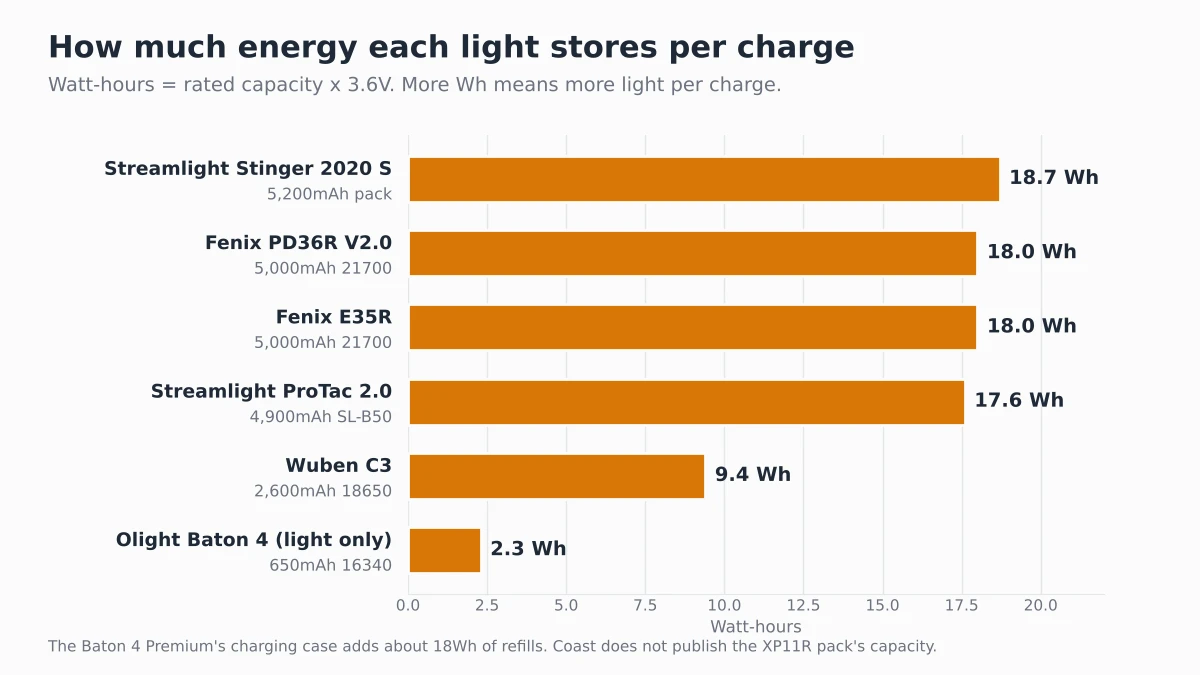
Milliamp-hours can mislead. Multiply mAh by the battery’s voltage and you get watt-hours, which is real stored energy. A 5,000mAh 21700 holds about 18Wh. The Baton 4’s 650mAh cell holds about 2.3Wh, which is why it needs its charging case. I explain the math in more detail in my 18650 vs 21700 guide.
Turbo vs Sustained Output
The biggest lumen number on the box usually lasts a minute or two before heat forces the light down. Look at the next mode down, because that’s what you’ll actually see. My candela vs lumens guide covers which numbers predict real performance.
How It Charges
USB-C on the body is the most convenient, since you already own the cable. Magnetic cables work well until you lose one. Holders and cradles suit vehicles and wall mounts. Whatever the method, charge at room temperature and not on a bed or couch, as the NFPA’s lithium-ion safety tips advise.
Lockout
A lockout mode stops the light from switching on in a bag or drawer. Without it, a rechargeable can drain itself flat before you ever need it.
Keeping a Rechargeable Light Ready for Emergencies
A rechargeable light sitting in a drawer loses a little charge every month. Set a reminder to top it off every three months, or tie it to something you already do, like changing smoke alarm batteries. Store it somewhere that stays near room temperature. Heat wears lithium-ion cells out faster, and the NFPA advises keeping batteries out of hot vehicles. If a light has to live in a truck, like the Stinger, mount it out of direct sun and expect to replace the pack sooner.
For a true emergency light, think about backup power. A dual power light like the Coast XP11R runs on AAAs when the rechargeable is empty. A light that runs while plugged in, like the Fenix E35R, can work off a power bank for days. Pair either with a small power bank and you’re covered for most outages. The Olight Baton 4 Premium’s case can do that job too, since it charges a phone as well as the light.
Want to know how often your area actually loses power? My power outages by state page ranks 11 years of data.
FAQ
Are rechargeable flashlights worth it?
Yes, if you use the light at least once a week. You’ll save on batteries and always know the charge level. For a light that sits untouched for a year, a dual power light or one that takes CR123A lithium cells is a safer bet.
How long does a rechargeable flashlight battery last?
Per charge, it depends on brightness. The Fenix PD36R V2.0 runs about eight hours at 350 lumens and 482 hours at 5 lumens. Over its life, a quality lithium-ion cell handles several hundred full charges before capacity drops noticeably. A removable cell can then be replaced.
Can you leave a flashlight plugged in all the time?
Lights built for charging holders, like the Stinger 2020 S, are designed to live in them. For USB-C lights, unplug once it’s full. The NFPA advises against continuing to charge lithium-ion batteries after they’re fully charged.
Can you use regular batteries in a rechargeable flashlight?
Only if it’s a dual power light. The Coast XP11R takes three AAAs in its included cartridge. Lights built around 18650 or 21700 cells can’t use AA or AAA batteries.
The Bottom Line
For most people, the Fenix PD36R V2.0 is the rechargeable flashlight to buy. It charges fast over USB-C and runs a standard 21700 you can replace.
If you carry a light every day, the Olight Baton 4 Premium and its charging case are hard to beat. For tactical use, get the Streamlight ProTac 2.0. For outages, the Fenix E35R works off a power bank, and the Coast XP11R runs on AAAs as a backup. The Wuben C3 is the budget pick, and the Streamlight Stinger 2020 S belongs in a work truck.
