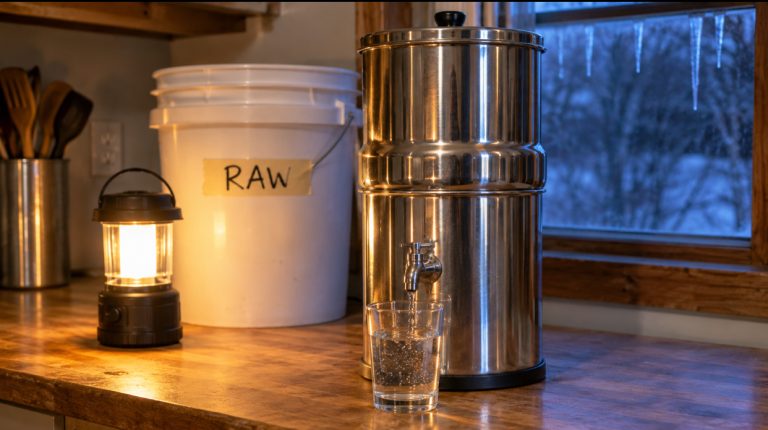

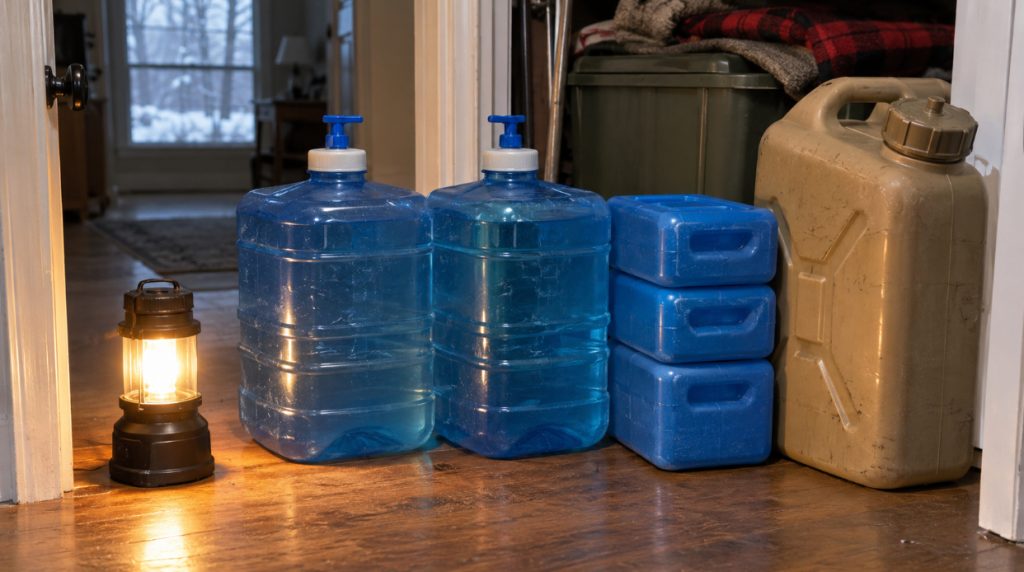
Nobody thinks about water until the faucet coughs. The ice storm takes the power out a little after two in the morning, and by breakfast somebody turns the kitchen tap and gets a gurgle, a sputter and about half a coffee cup before the line goes quiet. Out in the country that’s the well pump, which quit the same second the furnace did. In town it’s a boil notice taped to the gas station door. Either way there’s a family of four standing in a dark kitchen doing math on a case of bottled water that’s down to nine bottles, and nobody has flushed since midnight.
Short on time? Skip to my picks
I’ll save you some trouble before you load a cart with jugs. The gallon per person per day every agency quotes covers drinking and a little washing up. It doesn’t cover the toilet, which swallows a gallon or more every time somebody flushes it with a bucket. And a 7-gallon jug of water weighs about 60 pounds, same as a bag of concrete mix, which you’ll notice on the basement stairs.
Here’s my short list. The Aqua-Tainer is the jug I’d hand most families, WaterBricks stack under a bed in an apartment, and the WaterBOB turns your bathtub into a sealed tank the night before a storm. Below the picks, a planner builds your own water wall: how many containers, what they weigh, and the 40 gallons already sitting in your water heater.
Quick Picks: The Best Water Storage Containers
- Reliance Aqua-Tainer 7 Gallon: best for most families building a two-week supply on a closet floor or pantry shelf.
- WaterBrick 3.5 Gallon: best for apartments, small closets and anyone who can’t lift much more than 30 pounds.
- Scepter 5 Gallon Military Water Can: best for hauling water home from a relief point, riding in the truck and rough handling.
- WaterBOB Bathtub Water Storage: best for storms you can see coming, like hurricanes and forecast ice storms.
- WaterPrepared 55 Gallon Stackable Tank: best for well homes, big families and anyone with room on a garage or basement floor.
- Datrex Emergency Water Pouches: best for cars, go-bags and the desk drawer at work.
Water Storage Containers Compared
Water Wall Planner: How Much Water Does Your House Need?
Tell the planner who lives with you, how long you want to hold out and where your water comes from. It works out your gallons, then builds a wall of containers that fit what you can lift and where you’ll keep them. It also shows what the whole thing weighs, how much floor it takes, the extra water hiding in your water heater and bathtub, and the date to refill. You can print the plan for the pantry door when you’re done.
1. Reliance Aqua-Tainer 7 Gallon: Best Overall
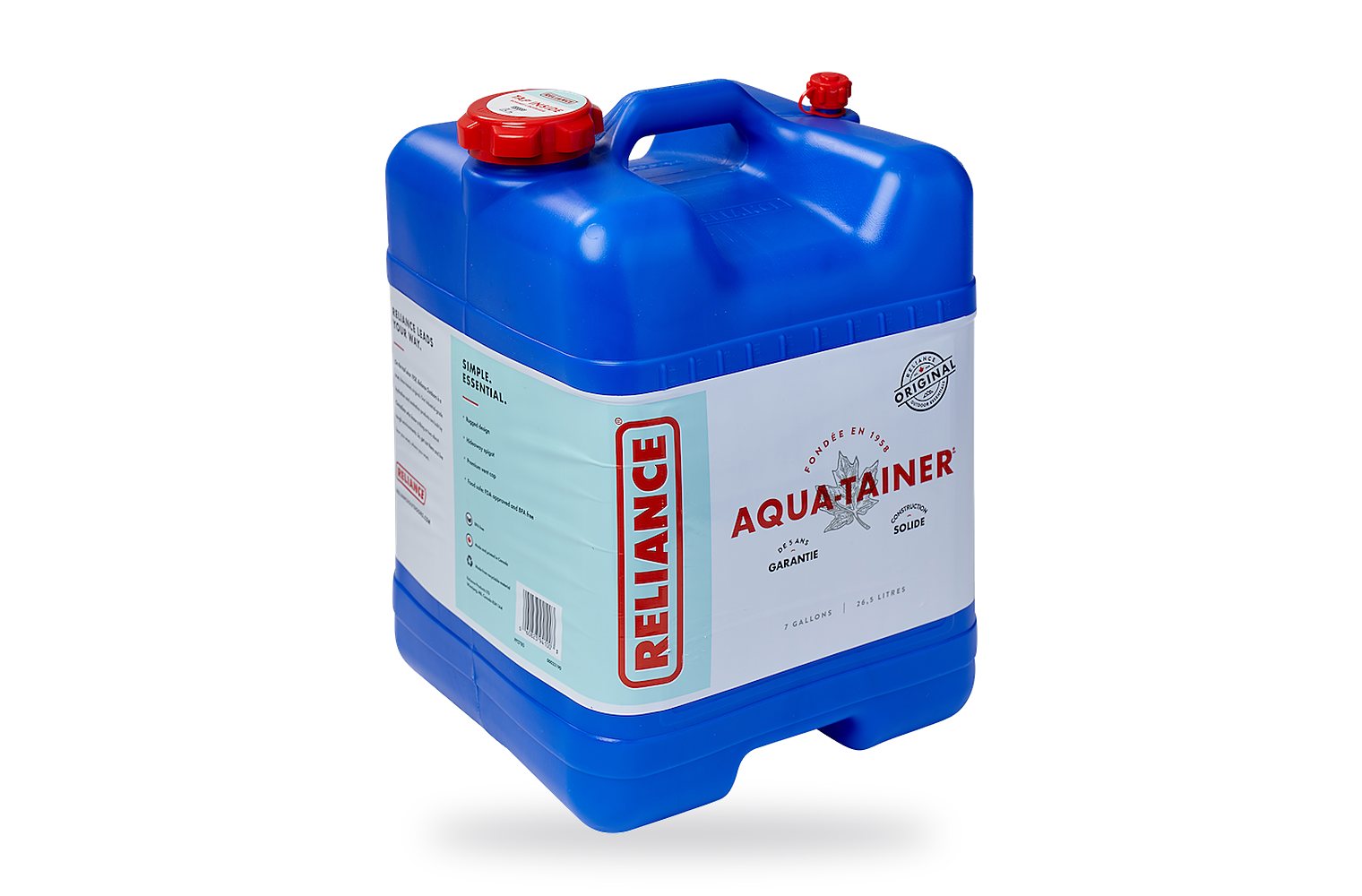
Why I chose it: If I could only stock one kind of container, it would be this one. The Aqua-Tainer has been the camp jug at half the deer camps I know for as long as I can remember. It’s a square block of BPA-free polyethylene with a molded handle and a spigot that screws out of the cap when you need it and tucks back inside when you don’t.
The square shape earns its keep. A dozen round jugs waste a good chunk of closet floor on air, while these sit shoulder to shoulder like blocks in a wall. Two of them carry a family of four for three and a half days, and the cost per gallon is about as low as it gets for anything with a spigot.
Key specs
- Capacity: 7 gallons (26.5 liters)
- Size: 11.25 x 11 x 15.25 in
- Empty weight: 2 lb
- Full weight: about 60 lb
- Spout: hideaway spigot in the cap
- Material: BPA-free polyethylene
Pros
- Square shape packs tight with no wasted floor
- Built-in spigot pours straight into a pot or cup
- Low cost per gallon for a jug with a spigot
- Easy to find, so a cracked jug is easy to replace
Cons
- About 60 pounds full, too heavy for a lot of people to carry
- The spigot can drip if the vent cap isn’t snugged down
- Made to stack when empty, so full jugs sit one high
In real use: Lay one on its side at the edge of the counter with the spigot over the sink, crack the little vent cap and it pours like an office water cooler. Keep the rest on the closet floor instead of a high shelf, and fill them where they’ll live so you aren’t lugging 60 pounds from the kitchen.
2. WaterBrick 3.5 Gallon: Best Stackable
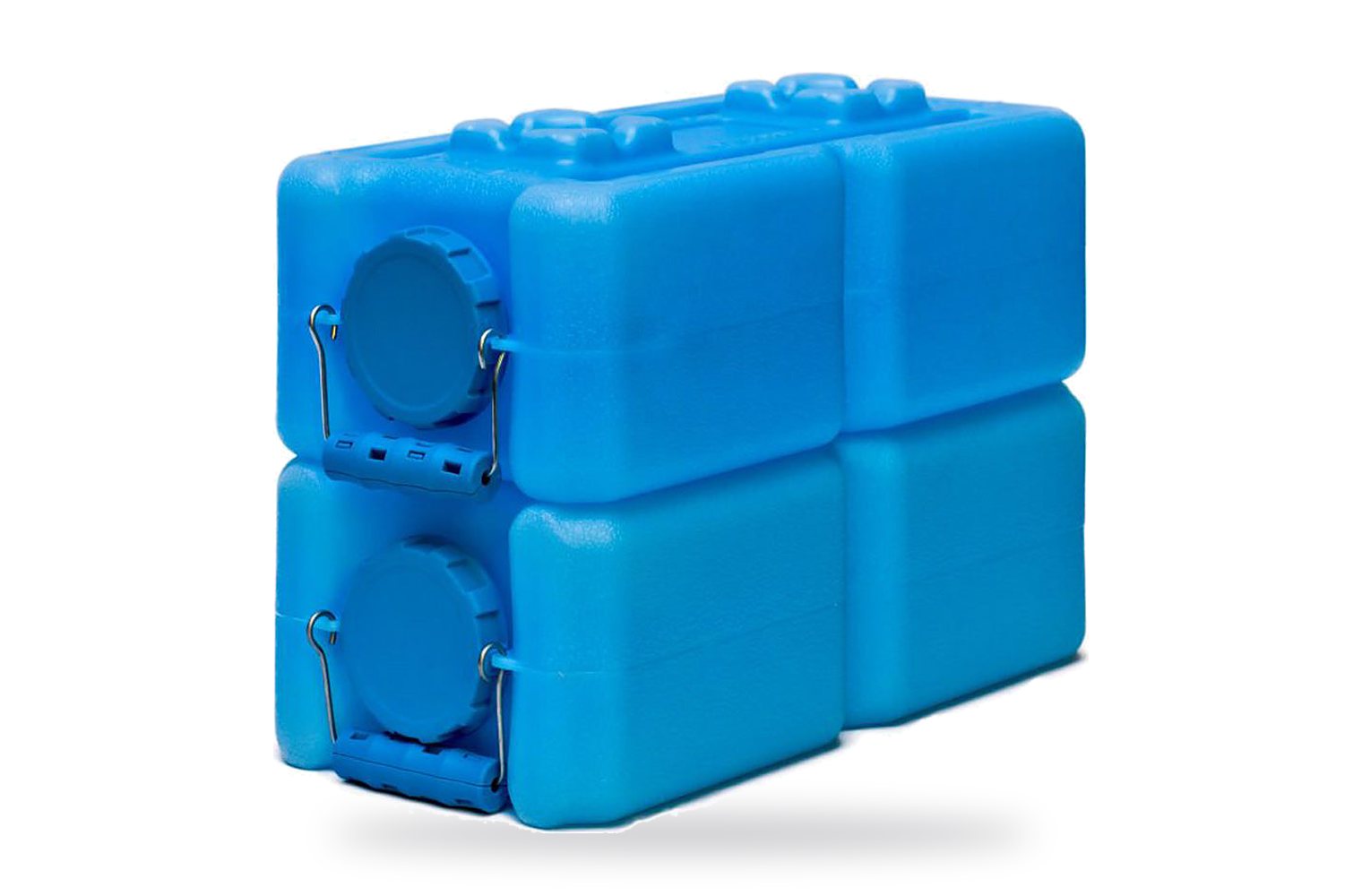
Why I chose it: WaterBricks look like oversized toy building blocks, and they stack the same way. The top of one locks into the bottom of the next, so you can cross-stack them about four feet high against a closet wall, or lay a row flat under a bed at six inches tall. For an apartment or an upstairs closet, nothing else here uses space as well.
A full brick weighs about 32 pounds, which a lot more people can carry than a 60-pound jug. The wide mouth lets you get a hand inside to scrub it, and the same bricks hold rice and beans just as happily as water.
Key specs
- Capacity: 3.5 gallons
- Size: 18 x 9 x 6 in
- Empty weight: 2.52 lb
- Full weight: about 32 lb
- Stacking: about 4 ft, cross-stacked
- Opening: 3.25 in wide mouth
- Made in: USA
Pros
- Interlocks into a steady wall that won’t tip
- Light enough for most people to carry full
- Fits under a bed or along a narrow closet wall
- Wide mouth makes cleaning easy
Cons
- Costs about twice as much per gallon as the Aqua-Tainer
- The spigot is a separate purchase
- A two-week supply takes a lot of bricks
In real use: Buy a WaterBrick spigot for every four or five bricks and keep one taped to the top of the stack. Carry the top brick to the kitchen, swap its lid for the spigot and set it at the edge of the counter. Refill from the top down so the bottom row doesn’t get forgotten for three years.
3. Scepter 5 Gallon Military Water Can: Toughest Carry Can
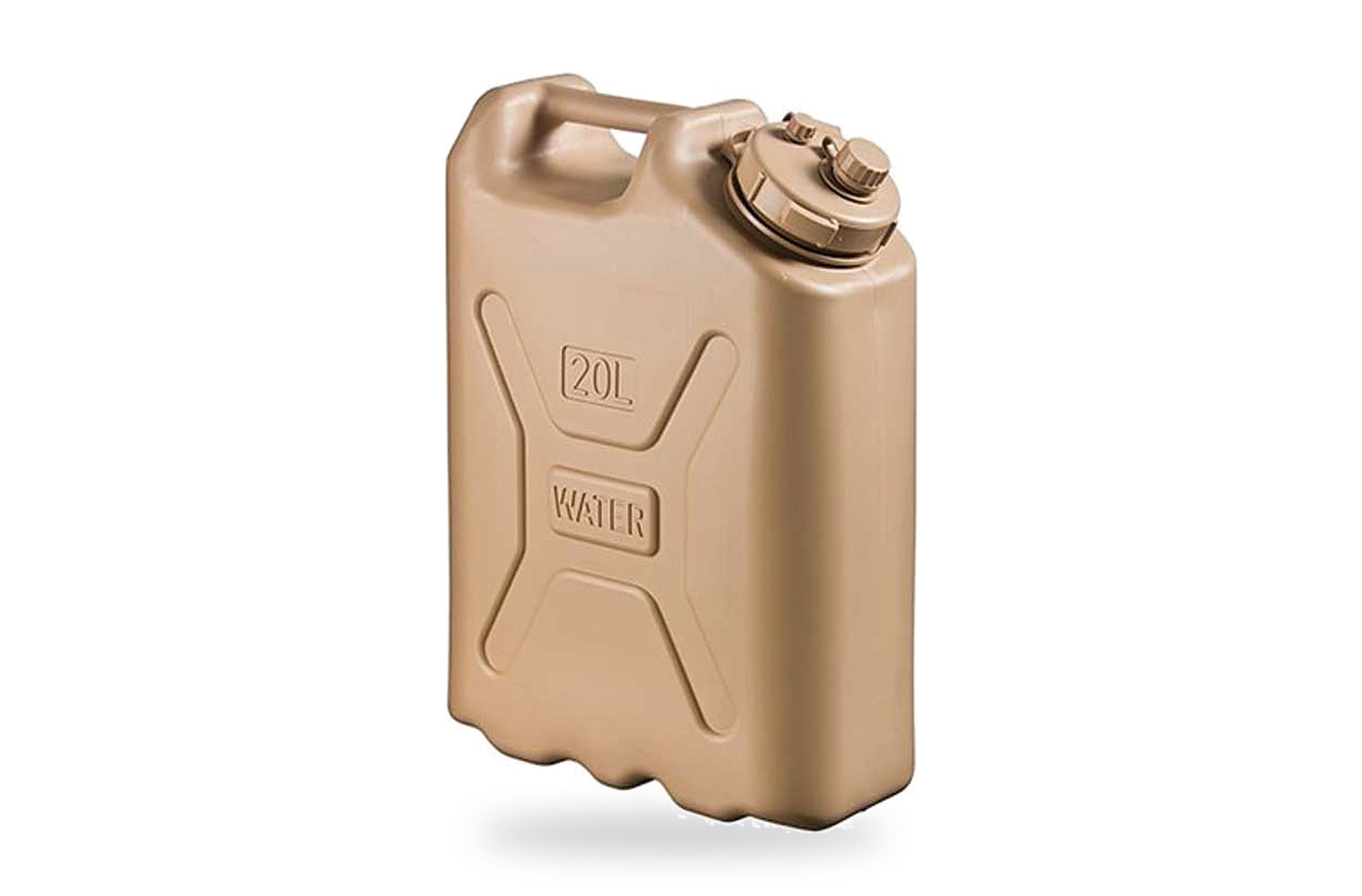
Why I chose it: This can is built to the MIL-DTL-43613E military water can standard, and it’s made like it expects to get tossed off the back of a truck. The walls are thick, the opaque tan plastic keeps light and algae out, and the cap seals with a gasket. At under 7 inches thick, it stands behind a pickup seat or wedges into a trunk without rolling.
I picked it for a job most people never plan for, which is carrying water. When a town’s water goes bad, a tanker often shows up in a school parking lot, and you need something that won’t split when it bangs against the tailgate. At about 46 pounds full, five gallons is about all one adult wants to carry.
Key specs
- Capacity: 5 gallons (20 liters)
- Size: 18.8 x 13.7 x 6.8 in
- Empty weight: about 4.3 lb
- Full weight: about 46 lb
- Standard: MIL-DTL-43613E
- Material: BPA-free HDPE
- Made in: Canada
Pros
- The toughest container on this list by a wide margin
- Opaque plastic keeps light and algae out
- Narrow enough for vehicles and tight shelves
- A comfortable weight to carry full
Cons
- The pour spout is sold separately
- Costs more than a civilian-style 5-gallon jug
- The rounded military shape wastes a little shelf space
In real use: Get the Scepter 10266 spout with it. It screws onto the cap and has a lever, so you can fill a glass without dumping a quart on your boots. Keep one can full on a garage shelf and one empty in the truck for the tanker run.
4. WaterBOB Bathtub Water Storage: Best Last-Minute Storage
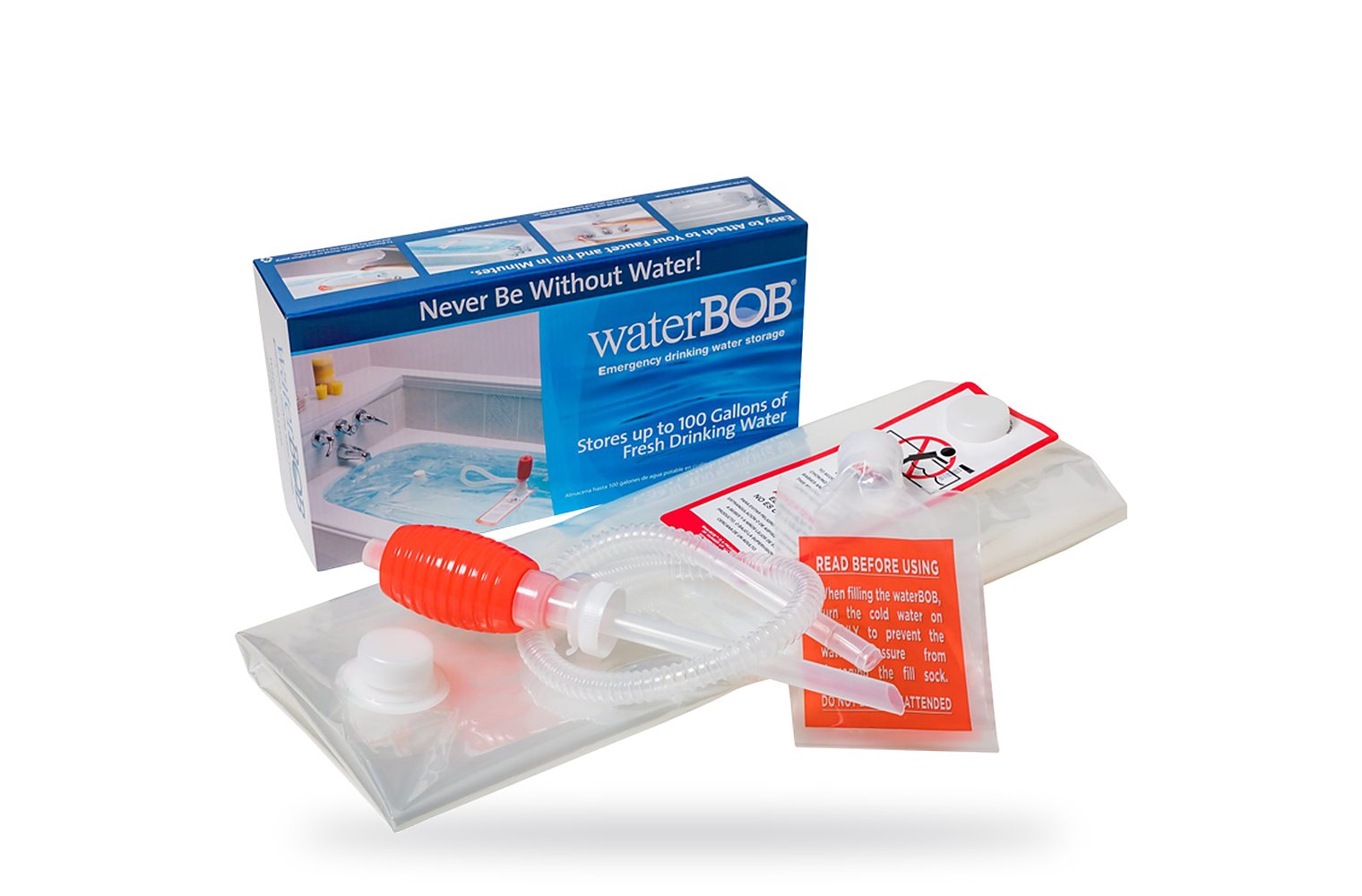
Why I chose it: Most storms that knock out water show up on the forecast days ahead, and the WaterBOB is made for that window. It’s a heavy food-grade liner that lies in your tub. Hook the fill sock to the faucet, run the water about 20 minutes, and the bathtub becomes a sealed tank with no dust or soap scum in your drinking water. A siphon pump in the box fills pitchers and pots.
The maker says the water stays fresh for up to 16 weeks, and the liner folds into a small box until the night you need it. One thing to know: an ordinary 5-foot tub won’t hold the full 100 gallons. Figure on roughly 40 to 60 gallons in a standard tub and the whole hundred in a big soaking tub.
Key specs
- Capacity: up to 100 gallons
- Fill time: about 20 minutes
- Stays fresh: up to 16 weeks
- Material: 10 mil BPA-free food-grade plastic
- Includes: fill sock and siphon pump
- Use: one time
Pros
- A big pile of water for very little money
- Keeps tub water sealed and clean enough to drink
- Takes up no space until you need it
- The siphon pump means no bucket dipping
Cons
- One-time use, so you buy another one after
- Only helps when you see the storm coming
- The siphon gets slow near the bottom of a deep tub
- Ties up the bathtub until you drain it
In real use: Fill it the evening the warnings go out, because pressure can drop or a boil notice can land once the storm hits. If you have a second bathroom, fill that tub plain for flushing and keep the bag water for drinking and cooking.
5. WaterPrepared 55 Gallon Stackable Tank: Best Big Reserve
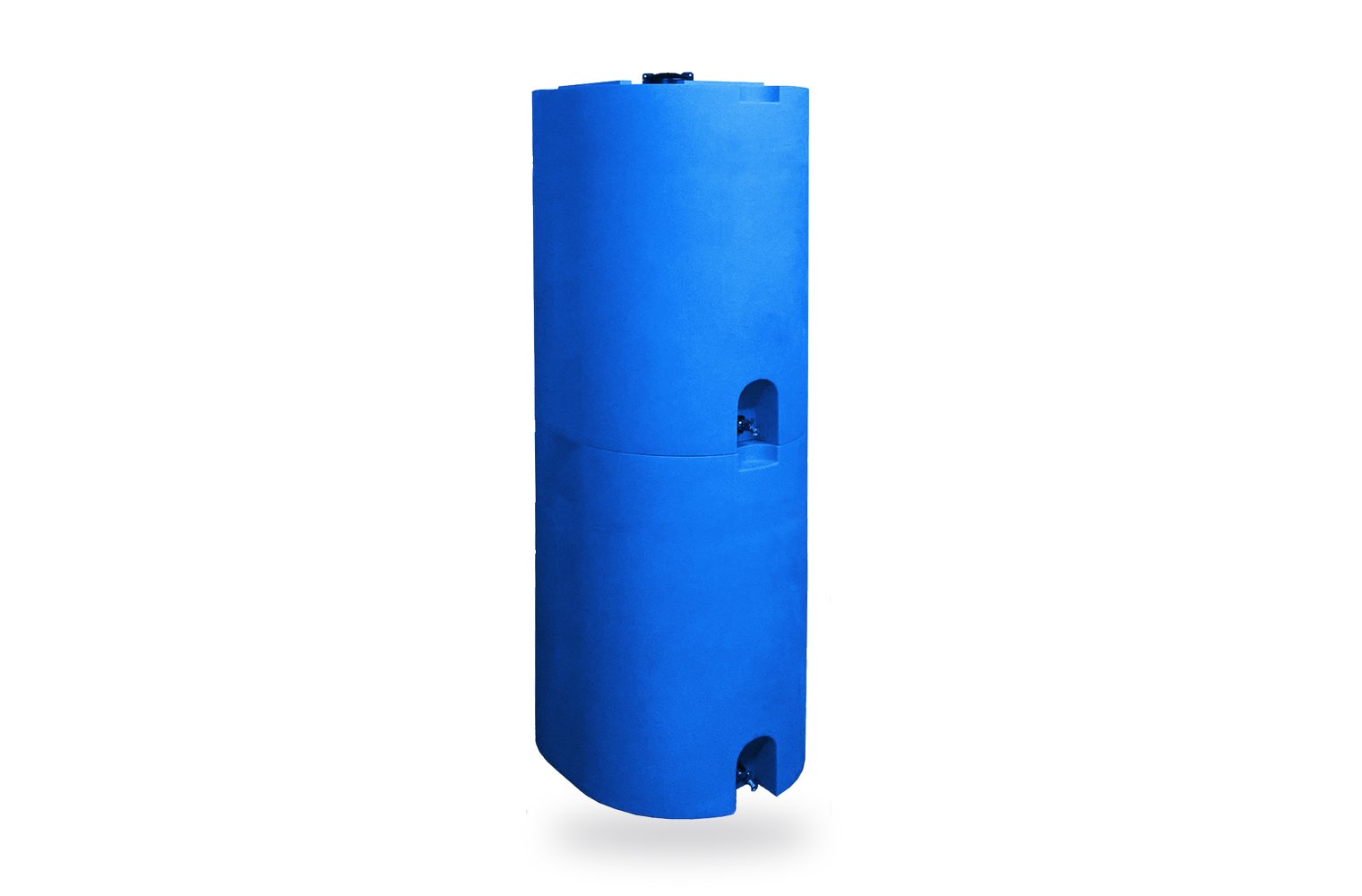
Why I chose it: A family of four on a well can go through a hundred gallons a week once you count the toilet, and that’s barrel territory. I like the WaterPrepared tank over a plain blue drum for one reason: the lead-free brass spigot at the bottom. You turn a valve and water comes out, with no siphon pump and no bung wrench. A 5-inch vented lid on top makes filling easy.
It’s shaped so one tank sits on top of another, and the food-grade HDPE has UV inhibitors mixed in. If you’d rather have a classic drum, the Augason Farms 55 Gallon Water Storage Kit comes with the barrel, a siphon pump, a bung wrench and Aquamira treatment drops.
Key specs
- Capacity: 55 gallons
- Size: 22 x 28 x 30 in
- Empty weight: about 22 lb
- Full weight: about 480 lb
- Spigot: lead-free brass, hose thread
- Lid: 5 in, vented and threaded
- Material: food-grade HDPE, UV inhibitors
Pros
- The spigot means no pump or siphon
- Stacks to double the water on one footprint
- Thick plastic with UV protection
- Two weeks of water for a small household in one tank
Cons
- Once it’s full, it isn’t going anywhere
- The spigot sits low, so the tank needs blocks under it for a bucket
- Costs a lot more than a plain drum
In real use: Set it on a garage slab or basement floor before you fill it, never an upstairs floor. Put it on a couple of patio blocks so a bucket fits under the spigot, add a bottle of water preserver concentrate if you want five years between refills, and write the date on the lid.
6. Datrex Emergency Water Pouches: Best for Car and Go-Bag
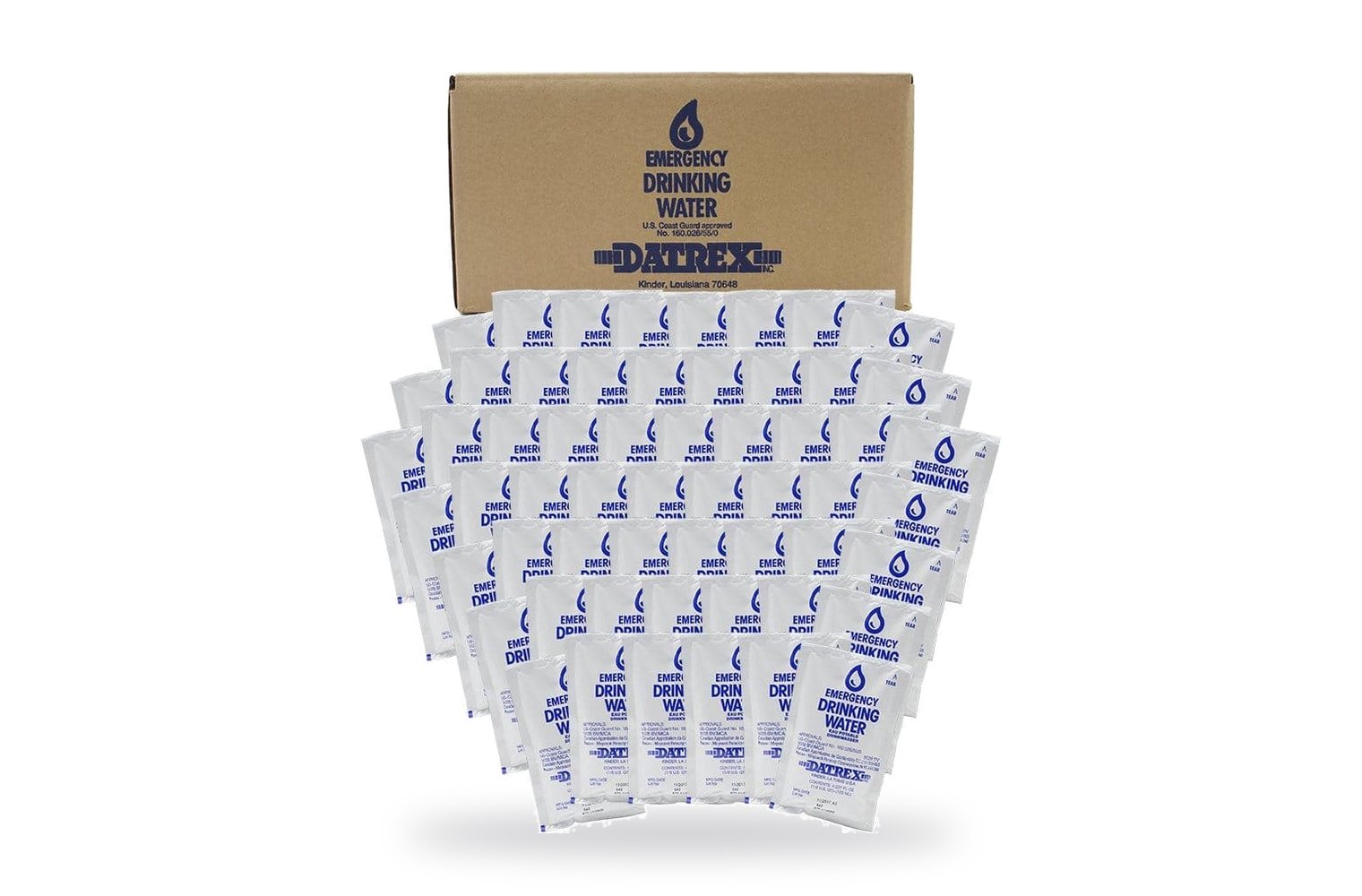
Why I chose it: A water jug in a car trunk freezes and splits in January and grows a science project in July. Datrex pouches are made for life rafts, approved by the U.S. Coast Guard and rated from -22°F to 149°F. Each pouch holds about half a cup, and a case of 64 comes to a little over two gallons that keeps five years.
That’s why a case rides in the car emergency kit I put together, and the pouches tuck into a go-bag or desk drawer where a big bottle would be in the way.
Key specs
- Pouch: 4.227 fl oz (125 ml)
- Pouches per case: 64
- Water per case: about 2.1 gallons
- Shelf life: 5 years from manufacture
- Temperature range: -22°F to 149°F
- Case: about 13 x 10 x 7 in, 20.5 lb
- Approval: U.S. Coast Guard
Pros
- Won’t split in a freezing trunk or cook in summer heat
- Five years with no rotating
- Small servings are easy to ration
- Made in the USA
Cons
- Costs far more per gallon than any jug
- Two gallons won’t carry a family very far
- Tearing open pouch after pouch gets old
In real use: Keep a case in every car and a dozen pouches in each go-bag. Write the expiration date on the box flap with a marker, since the date on each pouch is tiny.
How Much Water to Store Per Person
Ready.gov says to store at least one gallon per person per day for drinking and basic washing up, and the CDC suggests working toward a two-week supply. I’d plan on the two weeks. Ice storms and water main breaks don’t care about the three-day minimum, and a family of four needs 56 gallons to reach day fourteen.
Add more for heat, babies and anyone sick
Ready.gov notes that children, nursing mothers and sick people may need more, and that water needs can double in very hot weather. If your outages come with hurricanes and August heat, plan on a gallon and a half per person instead of one.
Don’t forget the dog
A dog drinks roughly an ounce of water per pound of body weight a day, so a 60-pound Lab needs close to half a gallon. Cats need much less, but they still count. Add the pets in the planner so their water doesn’t come out of the kids’ share on day ten.
The toilet is the hidden water hog
The official numbers leave out flushing. When the water is off, you flush by pouring a bucket into the bowl, and it takes a gallon or more to do it right. If your water stops when the power does, plan on about another gallon and a half per person per day, or set aside a filled bathtub for it.
On a Well? Your Water Quits When the Power Does
City water usually keeps running through a power outage, since water plants and pumping stations have backup power and the water tower holds pressure for a while. In town, the first sign of trouble is more likely a boil notice, which is one more reason to keep a hand crank radio in the kitchen drawer.
A private well is a different animal. The pump is electric, so when the lights go out you get whatever is left in the pressure tank, usually a few gallons, and then nothing. That means no drinking water, no flushing and no washing hands, and it roughly doubles how much water a well home needs to store.

The long-term fix is power for the pump. Many well pumps run on 240 volts, and only the biggest power stations put out 240, so the usual answer is a portable generator wired in through a generator interlock kit or a transfer switch. My power station vs generator breakdown covers which one fits your house. Store water anyway. Generators run out of gas and break down, and the pump is the one load you can’t live without.
The 40 Gallons Hiding in Your Water Heater
A tank-style water heater holds 40 or 50 gallons of clean water that came in before trouble started, and hardly anybody remembers it. Tankless heaters hold next to nothing. Here’s how to get at it safely:
- Turn off the heat. Flip the breaker for an electric heater, or turn the gas control on a gas heater to Pilot or Off.
- Let it cool for a few hours. Tank water starts out hot enough to scald.
- Close the cold water valve on the pipe feeding the top of the tank, so nothing from outside can flow in.
- Open a hot water faucet somewhere in the house to let air into the lines.
- Open the drain valve at the bottom and fill clean containers. The first few quarts can carry sediment, so let them settle or use them for flushing.
- Don’t turn the power or gas back on until the tank is full again. Heating an empty tank can ruin it.
Do it with a headlamp on, since water heaters live in dark closets and you’ll want both hands free. If a boil notice came out before you closed the valves, treat this water before anybody drinks it. Toilet tanks (not the bowls) hold a few more gallons of flushing water, as long as there are no cleaning tablets in them.
Storing Water for Emergencies: Fill, Treat and Rotate
City water goes straight in
If you’re on a public water system and there’s no boil notice, your tap water is already treated. Fill clean food-grade containers, cap them and you’re done. No bleach needed. If a boil notice does come, my gravity water filter guide shows what to run the water through.
Well water gets a little bleach
Water from a private well should be disinfected before you store it. The EPA’s emergency disinfection guide calls for 8 drops of regular unscented 6 percent bleach per gallon, or 6 drops of the 8.25 percent kind. Check the label, because both strengths sit side by side on the store shelf. Double the dose for cloudy water, stir and let it stand for 30 minutes. It should smell faintly of chlorine when it’s ready. Never use scented, splash-less or color-safe bleach.
Swap it every six months
Water you fill yourself should be replaced every six months. Tie it to the spring and fall clock changes, pour the old water on the garden and refill. Water preserver concentrate stretches a 55-gallon tank to five years, and store-bought bottled water keeps until the date on the case.
Start with clean containers
Wash new containers with dish soap, then slosh a tablespoon of unscented bleach in a gallon of water around inside, pour it out and let them air dry. Skip milk jugs. They’re thin, they crack, and milk protein never fully washes out, which gives bacteria a head start.
55 Gallon Water Barrel: Is One Right for You?
Barrels are the cheapest way to store a lot of water, and the least forgiving. A full 55-gallon barrel weighs around 460 pounds, so it goes where it’s going to stay: a garage slab or a basement floor, never a wood floor upstairs. Fill it in place with a hose rated for drinking water, because an ordinary garden hose can make the water taste like a tire.
A plain drum needs a bung wrench for the caps, a siphon or hand pump to get water out, and water preserver concentrate to keep it good for years. Kits like the Augason Farms kit bundle all three, or a spigot tank like the WaterPrepared skips the pump and wrench.
If it lives where it freezes, fill it about 90 percent full, since water grows about 9 percent as it turns to ice. Keep stored water of any kind out of the sun and away from gas cans, paint and weed killer, because fumes can work through plastic over time. A two-week supply for four people weighs close to 500 pounds, so spread jugs along the walls on upper floors.
Buying Guide: What to Look For in Water Storage Containers
Food-grade plastic you can’t see through
Look for containers sold for drinking water, made from food-grade HDPE (the number 2 in the recycling triangle) and labeled BPA-free. Opaque blue or tan plastic blocks light, which keeps algae from getting started.
A weight you can actually lift
Pick containers for the weakest back in the house, not the strongest. A WaterBrick is about 32 pounds full, a 5-gallon can about 46 and a 7-gallon jug about 60. If Grandma might be the one fetching water while you’re out clearing a tree, go smaller.

A way to get the water out
Tipping a 60-pound jug over a pot is how half your water ends up on the kitchen floor. Jugs should have a spigot built in or one you can add, and big tanks need a spigot or a pump. Square containers, and ones built to stack full, also fit a lot more water on the same patch of floor.
Water storage tank for home
Past a couple of barrels, look at a vertical water storage tank. WaterPrepared also makes a 160-gallon tank about 45 inches tall with two spigots that tucks into a garage corner. For most houses, though, two 55-gallon tanks plus a row of jugs covers a long outage.
Water is only half the job. My emergency food supply guide sizes up the food side by real calories per day, and the power outage emergency kit ties lights, radio, food and water into one checklist.
Frequently Asked Questions
How much water should I store for an emergency?
At least one gallon per person per day, and two weeks of it if you can. That’s 56 gallons for a family of four, plus more for hot weather, pets and flushing toilets with stored water.
How long does stored water last?
Containers you fill yourself should be emptied and refilled every six months. Bottled water keeps until its date, and water preserver concentrate stretches big tanks to five years.
Can I store water in milk jugs?
Better not. Milk jugs are thin and crack, and milk protein never fully washes out, which feeds bacteria. Clean 2-liter soda bottles work for small amounts.
Do I need to treat tap water before storing it?
Not if it comes from a public water system and there’s no boil notice. Well water should get 8 drops of unscented 6 percent bleach per gallon, or 6 drops of 8.25 percent bleach, before it goes into storage.
The Bottom Line
For most families, a row of Reliance Aqua-Tainer 7 Gallon jugs on the closet floor is the simplest two-week water supply you can build, with a spigot in every one. If you live in an apartment or can’t lift 60 pounds, build the same wall from WaterBrick 3.5 Gallon blocks. Keep a Scepter 5 Gallon Military Water Can for hauling, and tuck a WaterBOB Bathtub Water Storage under the bathroom sink for the next storm you can see coming.
Then cover the edges. Well homes need a WaterPrepared 55 Gallon Stackable Tank or two, and every car should carry a case of Datrex Emergency Water Pouches. Run your household through the planner above, set the water next to your emergency food, and write the date on every cap.
Keep reading