
There’s a LifeStraw in half the junk drawers in America. It’s still sealed in the plastic shell it came in, bought the week some hurricane was all over the news, and it’s been riding around under the birthday candles and a tape measure ever since. Whoever bought it figures the family is covered for water now. That’s a fair start. It’s also the piece of survival gear people misread the most, because a filter straw that turns a cold creek into a cold drink does next to nothing about the viruses in boil notice water or the gasoline sheen on a flooded street.
Short on time? Skip to my picks
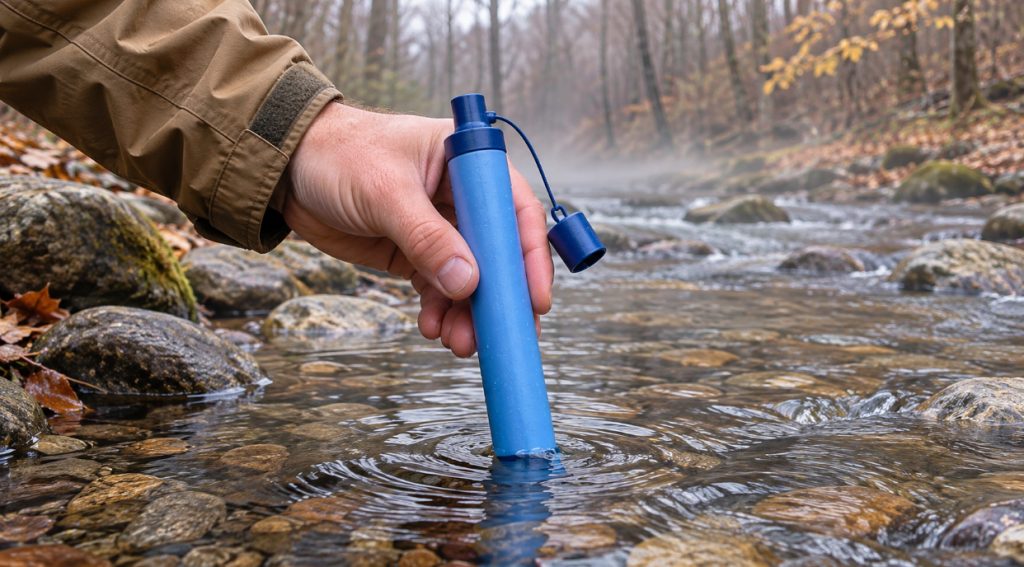
Here’s how I’d put it to a friend. A good straw weighs about what a candy bar does, keeps for years in a drawer and will let you drink from a mountain stream on the spot. It won’t make a cattail pond taste like springwater, it can crack inside if it freezes after it’s been wet, and some of the cheap ones pushed through video ads are a coin toss.
So here’s my short list. The Sawyer MINI is the one I’d hand most people because it works four different ways. The LifeStraw Peak Series straw is the best true straw for lying down at the edge of a creek, and a family pack of the original LifeStraw puts one in every backpack in the house. Right under the picks there’s a checker. Tap the water you’re looking at and the straw in your hand, and it shows you what gets caught, what slips through and exactly what to do before anybody takes a sip.
Quick Picks: The Best Water Filter Straws
- Sawyer MINI Water Filter: best for most people, hikers who want one filter that does everything, and a gravity setup when the power is out.
- LifeStraw Peak Series Personal Straw: best for drinking straight out of a creek and carrying dirty water in a soda bottle.
- LifeStraw Personal (Original): best for kids’ backpacks, go-bags and putting one in every car in the family.
- Survivor Filter Personal Straw: best for swampy, tannin-brown or smelly water and anybody who wants a carbon stage.
- Membrane Solutions Straw S1: best for stocking a lot of kits at once without spending a lot.
- LifeStraw Sip: best for travel, hotel tap water and cutting microplastics out of everyday water.
Water Filter Straws Compared

Can I Drink This? Check Your Water Before You Sip
Pick the water in front of you and the straw in your hand. The checker pushes that water through a cutaway of the straw so you can watch what gets stuck in the membrane, what slips past it and what ends up in your mouth. Then it tells you plainly whether to drink, what one extra step makes it safe, or when to walk away. Further down it works out how many straws your family needs and how long each one lasts. Print the card and tuck it in the go-bag with the straws.
1. Sawyer MINI Water Filter: Best Overall
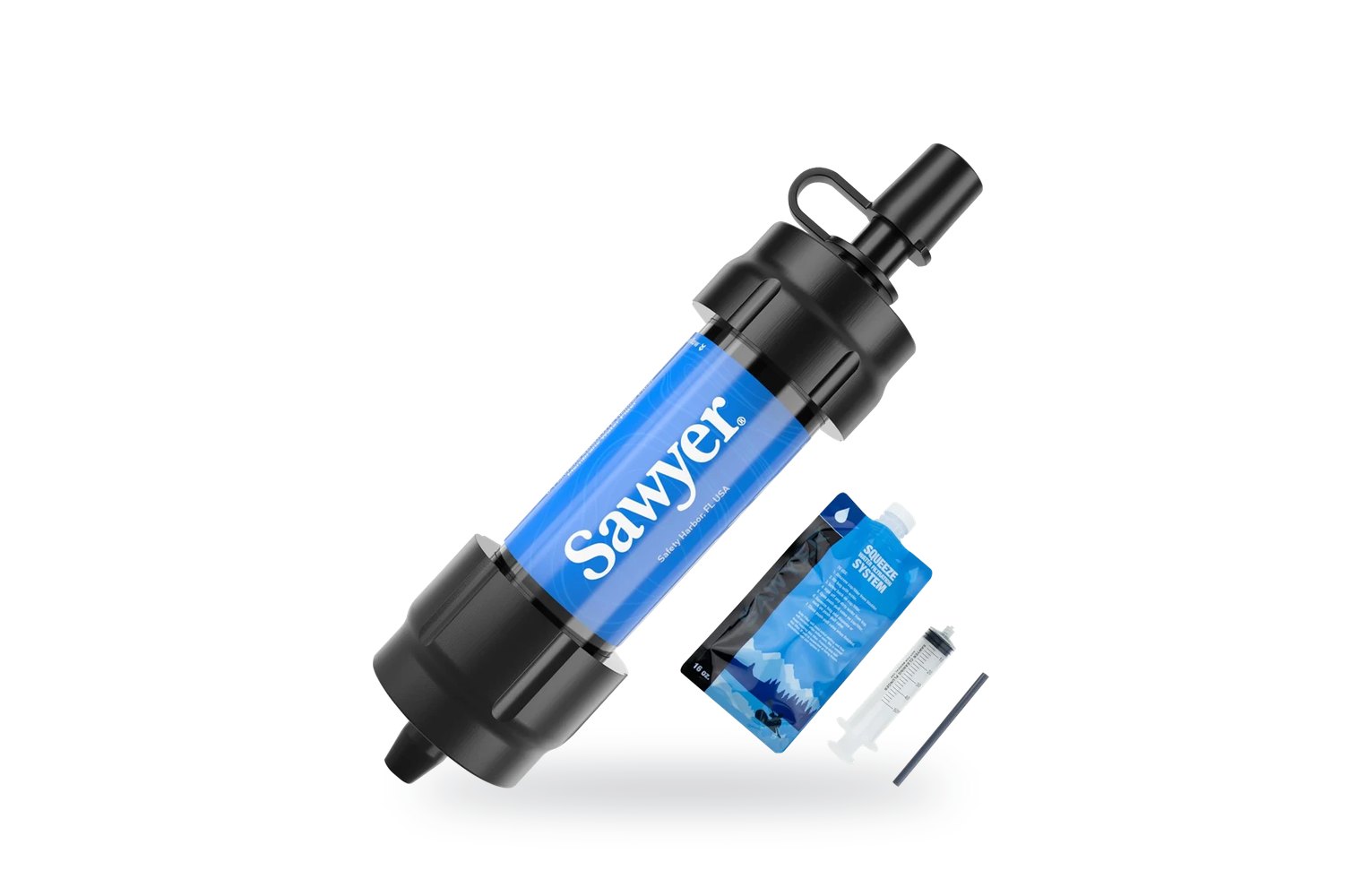
Why I chose it: If somebody only wants to buy one water filter, this is the one I hand them. Out of the box the MINI is a straw, and you can drink right out of a creek through it. Screw it onto the 16 ounce pouch that comes with it, or onto any 28mm soda or water bottle, and it turns into a squeeze filter. Splice it into a hydration pack hose, or hang it under a dirty water bag and let gravity do the work. It’s the same little blue filter all four ways.
Inside is a 0.1 micron absolute hollow fiber membrane. Sawyer rates it for 99.99999 percent of bacteria like E. coli and salmonella, 99.9999 percent of protozoa like Giardia and Cryptosporidium, and 100 percent of microplastics, and it’s rated for up to 100,000 gallons. That’s more water than one person will drink in a lifetime. The syringe in the box is for backflushing, which is how you get the flow back when it starts to drag.
Key specs
- Pore size: 0.1 micron absolute hollow fiber
- Rated life: Up to 100,000 gallons
- Weight: About 2 oz
- Threads: 28mm soda and water bottles
- In the box: Filter, 16 oz pouch, straw, syringe
- Removes: Bacteria, protozoa, microplastics
- Viruses: Not rated
Pros
- Four ways to use one filter, including gravity in an outage
- The longest rated life on this list by a mile
- Screws onto the bottles you already have
- Backflush syringe comes in the box
Cons
- Slower than the LifeStraws when you use it as a straw
- Sawyer says to replace it if it may have frozen after it got wet
- Doesn’t touch viruses, chemicals or salt
In real use: Most people end up using the MINI as a squeeze filter and keep the straw for showing off. Fill the pouch at the creek, screw the filter on and squeeze clean water into a bottle or straight into your mouth. When the flow slows to a trickle, fill the syringe with clean water and push it backward through the filter a few times. Snug it onto the bottle by hand and stop. Overtightening is the usual way people ruin the gasket.
At home it earns its keep in a long outage. Hang a bucket of rain barrel water, run a hose to the MINI and let it drip into a clean jug, then treat it the way the checker tells you. Sawyer warns against hooking it straight to a faucet, since anything over 20 psi can damage the fibers. If you want a bigger version of the same idea for the kitchen, my gravity water filter guide covers it.
2. LifeStraw Peak Series Personal Straw: Best Straw for Drinking From the Source
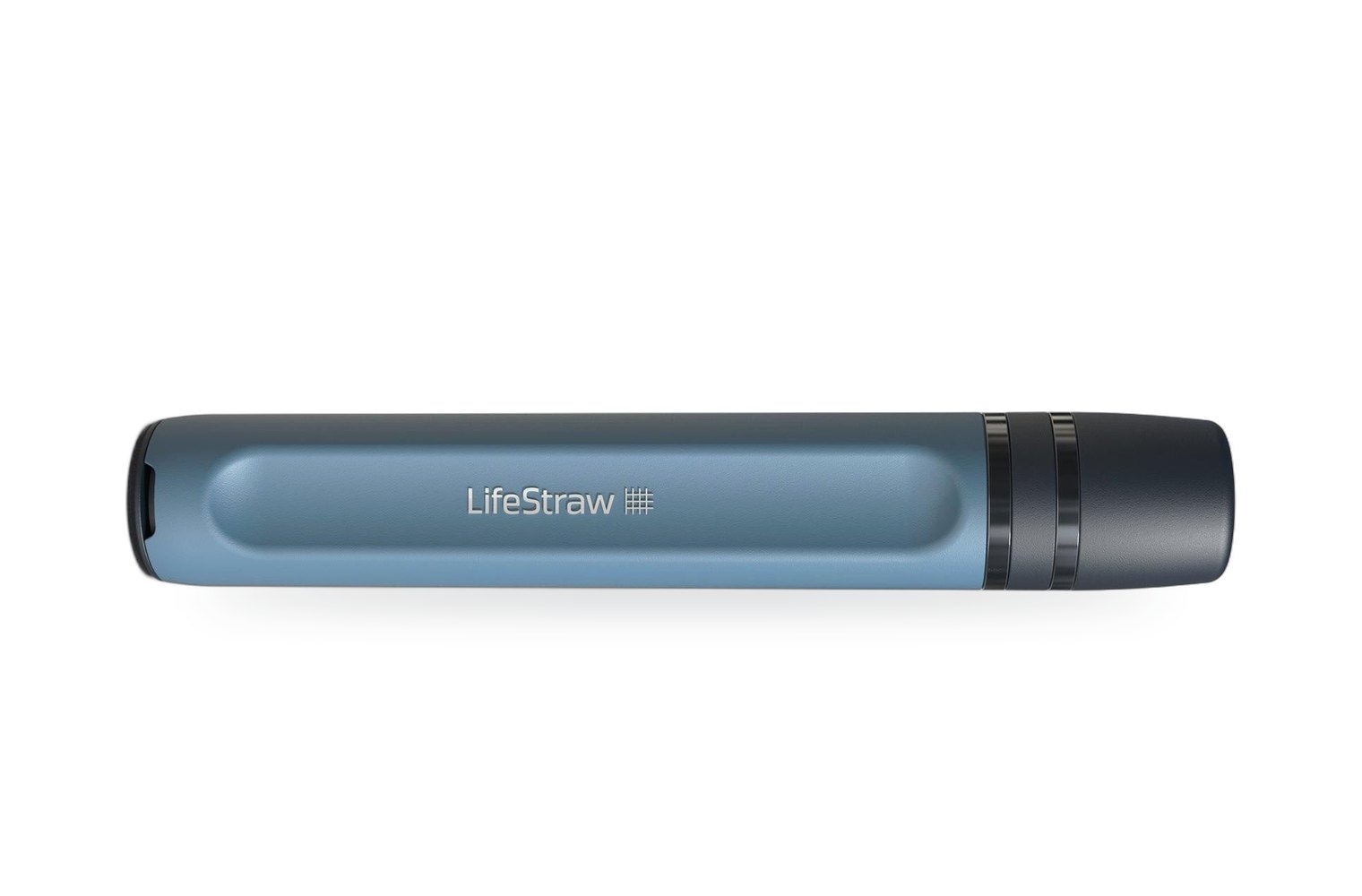
Why I chose it: LifeStraw rebuilt its famous straw from the ground up in 2022 and put it in the Peak Series. This is the straw I’d want on a day hike when the plan is to lie down at the edge of a creek and drink. The shell has a grippy texture that doesn’t squirt out of cold, wet hands, both ends have caps, and LifeStraw says the reworked membrane clogs less from sand and silt than the old one did.
The bottom end is threaded now, so it screws onto a 28mm soda or water bottle and onto standard gravity hoses. That small change makes it far more useful. You can fill a bottle at the creek, screw the straw on and sip while you walk instead of drinking on your belly. The 0.2 micron membrane meets the US EPA and NSF P231 standards for removing bacteria and parasites, and it’s rated for 1,000 gallons, about five years of drinking for one person.
Key specs
- Pore size: 0.2 micron
- Rated life: 1,000 gallons (4,000 liters)
- Weight: 2.3 oz
- Length: 7.5 in
- Threads: 28mm bottles and gravity hoses
- Shelf life: Unlimited
- Viruses: Not rated
Pros
- Sips easier than most straws, LifeStraw rates it near 1.75 liters a minute
- Grippy shell and caps on both ends
- Screws onto a soda bottle so you can carry dirty water
- Meets EPA and NSF P231 for bacteria and parasites
Cons
- Silty water slows it down sooner than you would like
- A fraction of the Sawyer’s rated life
- No carbon, so swampy water still tastes swampy
In real use: Pull the caps, put the bottom end in the water and draw slow and steady. The first couple of pulls take some effort while the membrane wets out, then it eases up. When you’re done, blow a puff of air back through the mouthpiece the way the instructions show, which pushes the grit back out the bottom and keeps the flow up for next time.
If you mostly squeeze water into a bottle and rarely drink straight from the source, look at the smaller LifeStraw Peak Series Solo too. It’s 1.7 ounces, threads onto the same bottles and LifeStraw rates it at 3 liters a minute, but it’s rated for 2,000 liters instead of 4,000.
3. LifeStraw Personal (Original): Best for Go-Bags and Kids
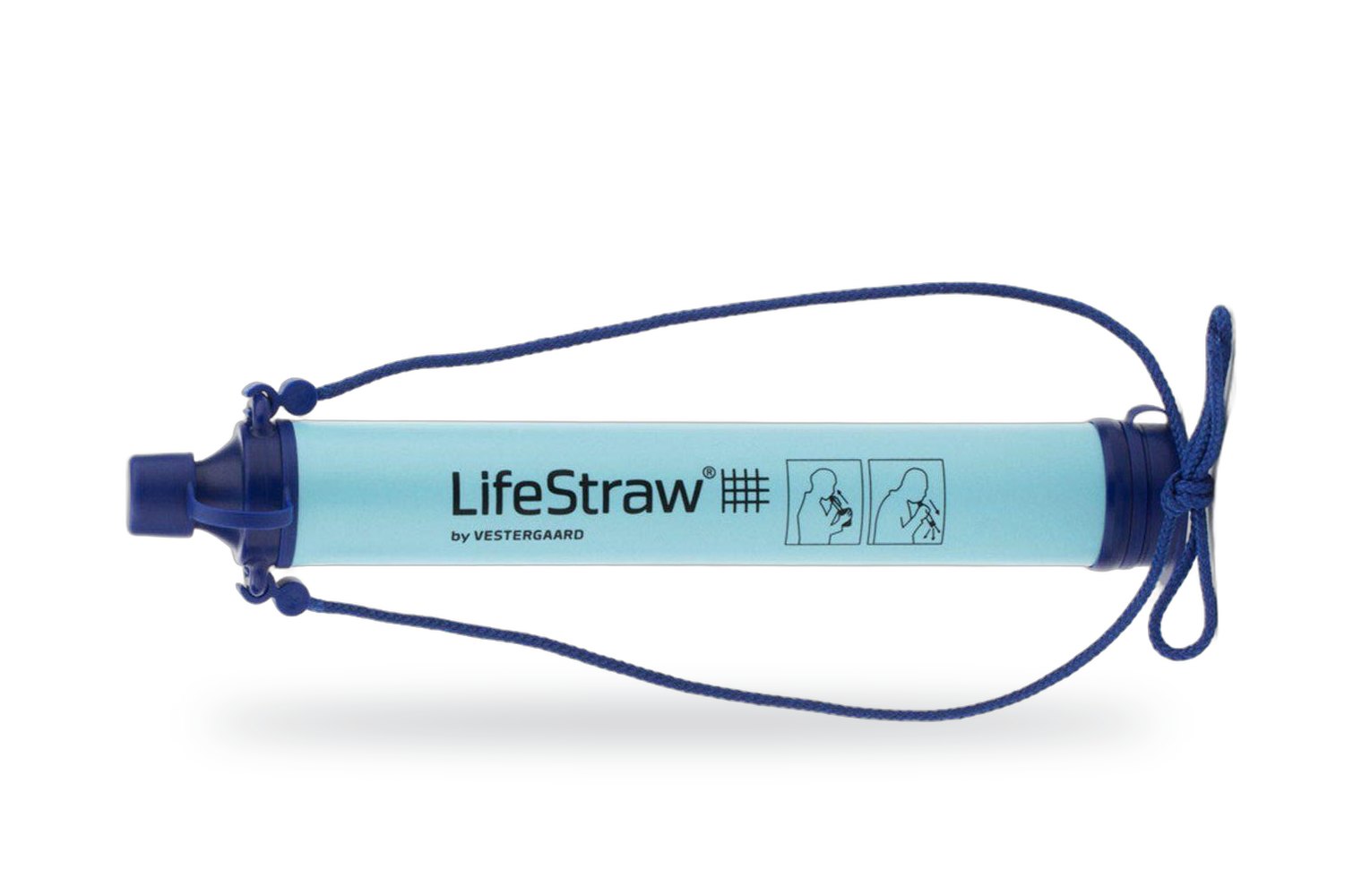
Why I chose it: The original blue LifeStraw is the straw that started all of this, and it’s still the one I’d buy by the family pack. It has no threads and nothing to lose. One end goes in the water, the other goes in your mouth. That’s exactly why it belongs in a kid’s school backpack, a grandparent’s go-bag and the glovebox of every car in the driveway, where nobody wants to read instructions.
It uses the same 0.2 micron hollow fiber idea and is rated for 1,000 gallons. Sealed in the package it has an unlimited shelf life, so the one in the junk drawer is still good. And when it’s used up, water just stops coming through. Nobody has to wonder whether it’s quietly letting germs by.
Key specs
- Pore size: 0.2 micron hollow fiber
- Rated life: 1,000 gallons (4,000 liters)
- Weight: About 2 oz
- Length: About 9 in
- Threads: None
- Shelf life: Unlimited
- Viruses: Not rated
Pros
- Dead simple, with nothing to assemble or lose
- Sold in family multi-packs, one per person
- Stops flowing at the end of its life instead of failing quietly
- Each one bought funds a year of safe water for a schoolchild
Cons
- You have to get down to the water or carry it in a cup
- Won’t screw onto a bottle
- Needs a short soak before the first sip
In real use: Teach the kids two things before it goes in their backpack. Let the bottom sit in the water for a few seconds before the first sip so the membrane can wet out, and blow back through it after they drink. Pair it with a collapsible cup or a wide-mouth bottle so nobody has to drink from a puddle on their knees.
I like writing the purchase year on each one with a paint pen. It doesn’t expire, but it tells you at a glance which straws have been opened and used and which ones are still factory fresh for the car emergency kit.
4. Survivor Filter Personal Straw: Best for Taste
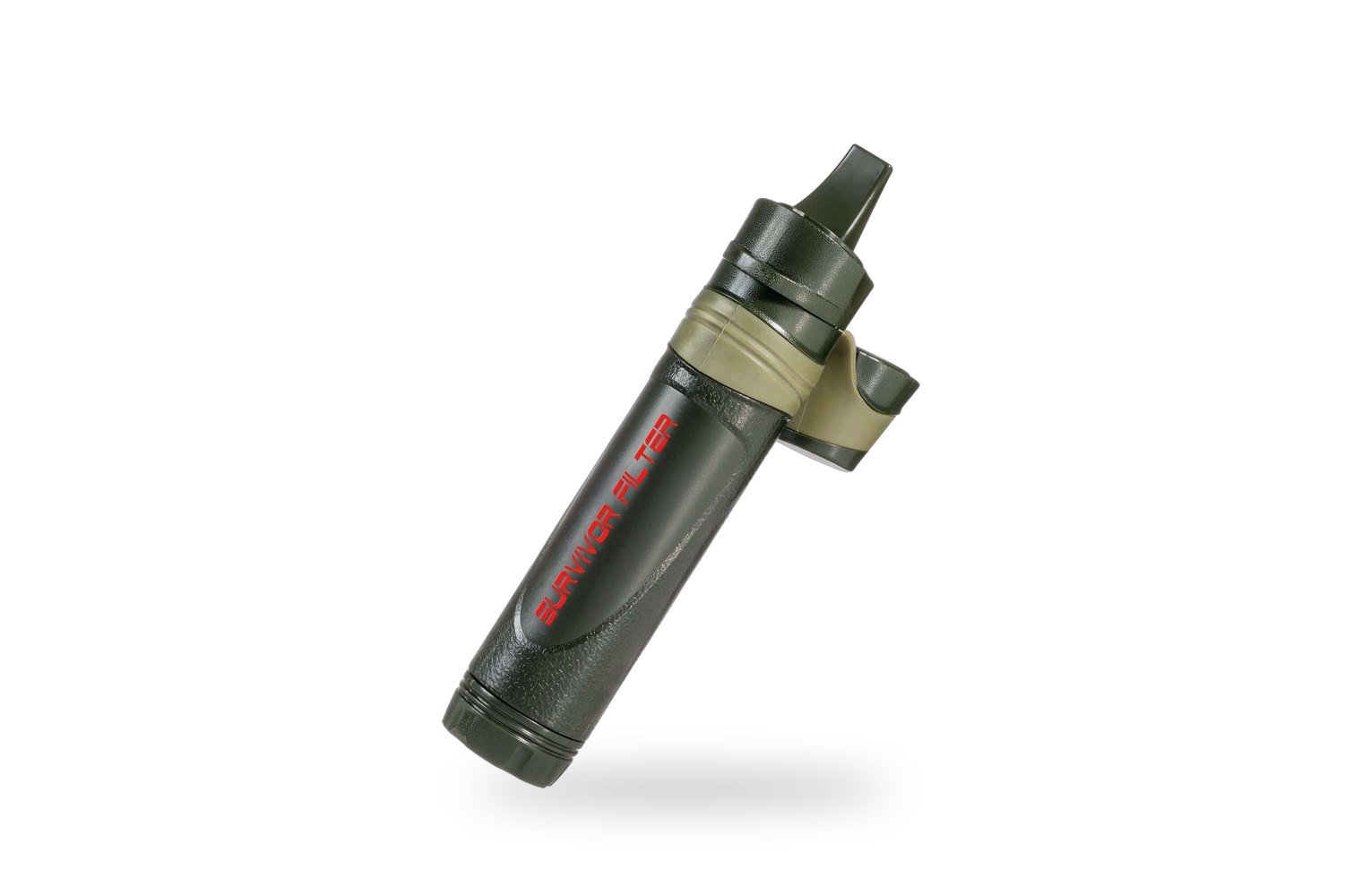
Why I chose it: Most straws make water safer and leave the taste alone. When the only water around is a cattail pond or a tea-colored creek full of leaves, that taste matters more than you’d think, especially to kids who’d rather go thirsty. The Survivor Filter runs water through three stages you can take apart: a cotton pre-filter for grit, a 0.05 micron membrane, and a carbon stage for the smell and swampy taste.
Survivor Filter says its lab tests in the US showed this straw removing viruses along with bacteria and parasites, and cutting heavy metals too. That’s a bigger claim than any other straw here makes. It comes from the company’s own testing, not an independent certification, so I treat it as a bonus and still boil or treat water when viruses are a real worry. The tiny pores and the carbon are reason enough to buy it.
Key specs
- Pore size: 0.05 micron membrane
- Membrane life: 100,000 liters (26,417 gallons)
- Carbon life: About 1,000 liters
- Pre-filters: 6 cotton pads included
- Weight: 3.5 oz
- Threads: Most standard water bottles
- Warranty: Lifetime guarantee
Pros
- Carbon takes out the swampy taste and smell
- Every stage comes apart for cleaning or replacing
- Flip cap keeps the mouthpiece clean in a pack
- Screws onto most bottles and canteens
Cons
- Heaviest straw on the list
- Carbon needs replacing every 1,000 liters or so
- The virus claim rests on the maker’s own testing
In real use: Swap the cotton pre-filter whenever it turns brown, which on muddy water can be every day. That little pad does the dirty work and saves the membrane. Change the carbon when the water starts tasting like the pond again, and keep a spare carbon stage in the bag, because it wears out long before the membrane does.
This is the straw I’d put in a go-bag for somebody who lives near lakes and slow rivers, where the water is safe enough after filtering but nobody wants to drink it.
5. Membrane Solutions Straw S1: Best Budget Multi-Pack
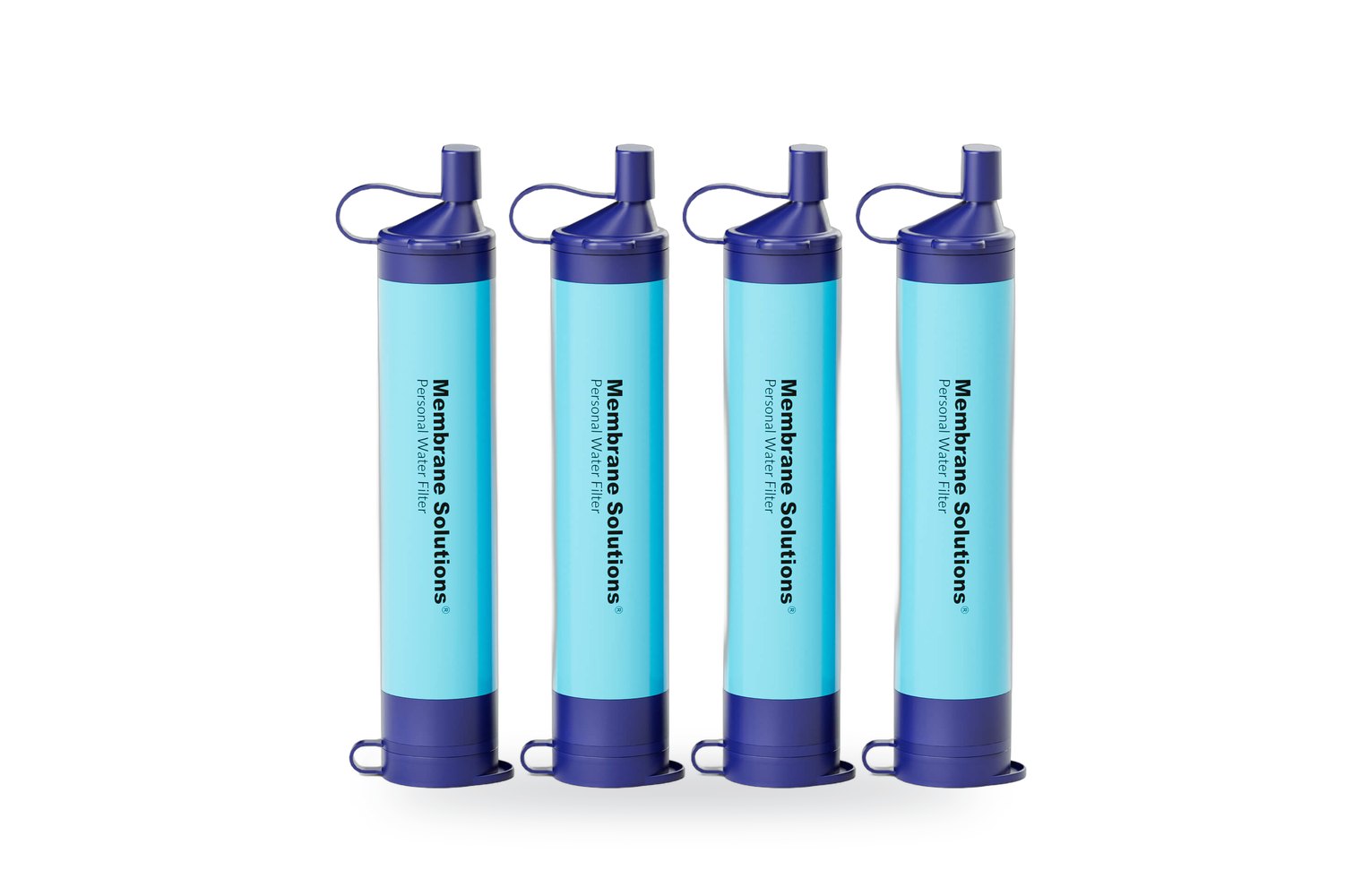
Why I chose it: Every go-bag, glovebox and kid’s backpack ought to have a straw in it, and that adds up fast. Membrane Solutions sells the S1 in 2, 4 and 6 packs, and it’s one of the best-selling filter straws around, with more than ten thousand reviews behind it. It’s 0.1 micron hollow fiber with carbon and a few other stages behind it, threaded for 28mm bottles and rated for 5,000 liters.
Know what the paperwork covers. The S1 is certified to NSF/ANSI 42, 372 and 401, which deal with chlorine and taste, lead-free materials and newer contaminants. None of those is a germ standard. I lean on the 0.1 micron membrane for bacteria and parasites, the same pore size as the Sawyer, and treat water whenever viruses could be in it.
Key specs
- Pore size: 0.1 micron hollow fiber
- Rated life: 5,000 liters
- Flow: About 500 ml a minute
- Weight: About 2 oz
- Length: 6.7 in
- Threads: 28mm bottles
- Certified to: NSF/ANSI 42, 372 and 401
Pros
- Multi-packs stock the whole family for about the price of one fancy filter
- Rated for more water than either LifeStraw straw
- Carbon stage helps with chlorine taste
- Short enough to ride in a glovebox
Cons
- No certification for removing germs
- The taste stage fades long before the membrane does
- Needs a soak before the first sip
In real use: Dunk the bottom end in water for about a minute before the first sip so the fibers wet out, or it’ll feel like drinking a milkshake through a coffee stirrer. After that it flows nicely, and the threads let you screw it onto a Smartwater bottle for sipping on the move.
Hand them out the way you’d hand out flashlights before a storm. One in each car, one in each backpack, one in the power outage emergency kit, and one in the junk drawer next to the old LifeStraw. My bug out bag guide shows where a straw fits in a full go-bag.
6. LifeStraw Sip: Best for Travel and Tap Water
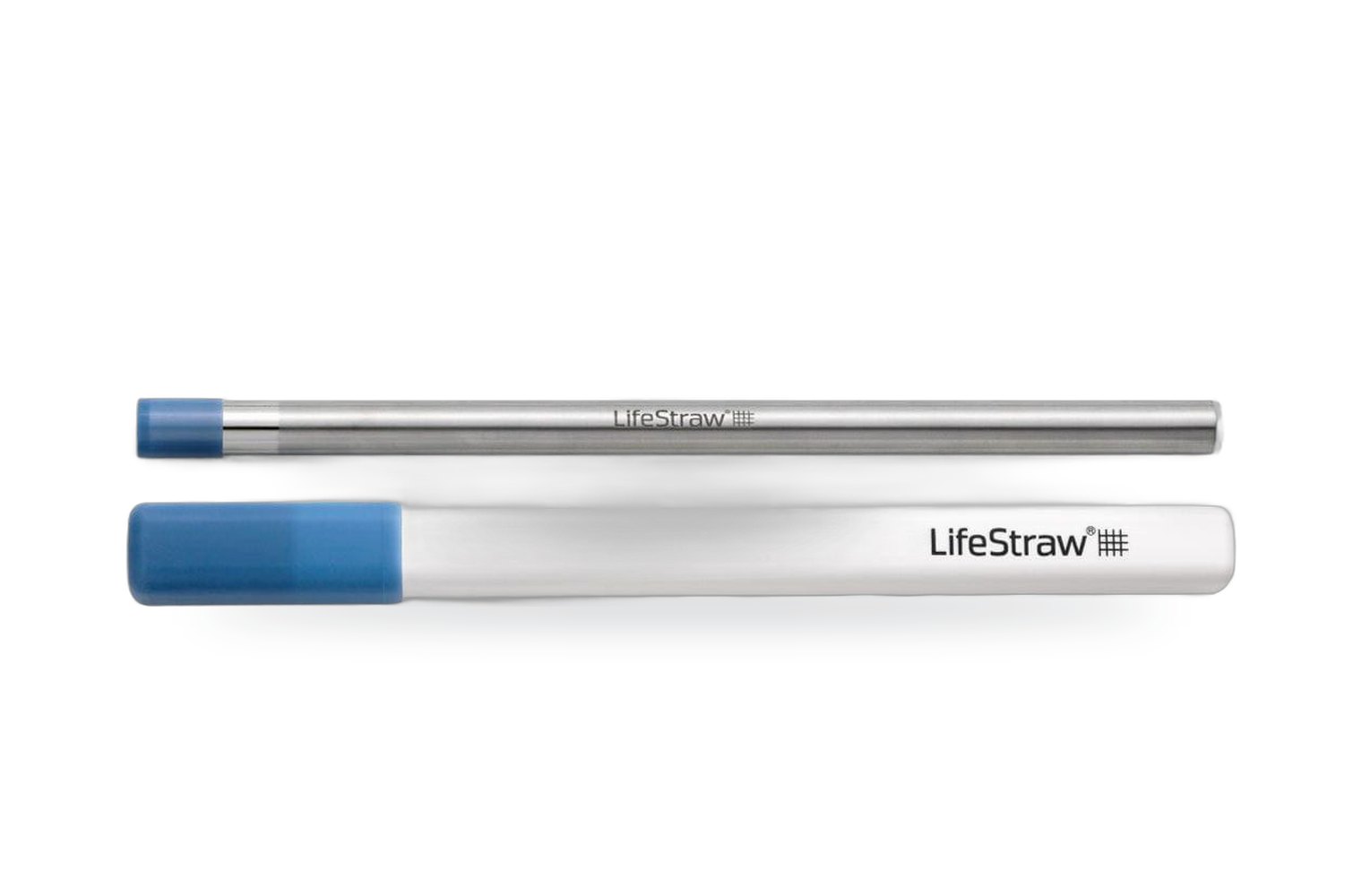
Why I chose it: The Sip is the odd one on this list, and it’s the one I’d give as a gift. It’s a slim stainless steel straw in a carry case that drops into a glass, a tumbler or a hotel room water bottle and filters as you sip. The 0.2 micron membrane takes out 99.999999 percent of bacteria, 99.999 percent of parasites and 99.999 percent of microplastics, and it meets the EPA and NSF P231 standards for bacteria and parasites.
There’s no carbon inside, so chlorine taste stays, and LifeStraw says it isn’t designed for viruses, chemicals or heavy metals. The filter is rated for 1,000 liters and can’t be replaced. Think of it as a travel straw first and a backup straw second, and it makes a good stocking stuffer to go with my tactical gifts.
Key specs
- Material: Stainless steel and silicone
- Pore size: 0.2 micron
- Rated life: 1,000 liters (264 gallons)
- Weight: 1.8 oz, 3.1 oz with case
- Length: 10 in
- Certified to: EPA and NSF P231, bacteria and parasites
- Viruses: Not rated
Pros
- Looks like any other reusable straw
- Reaches the bottom of tall tumblers and bottles
- Case keeps it clean in a purse or carry-on
- Pulls microplastics out of everyday water
Cons
- Filter can’t be replaced once it’s worn out
- Takes a harder pull than a plain straw
- Made for clear water, so murky creek water clogs it
In real use: Use it the way you’d use a regular straw, just a little slower. Rinse it with clean water after each use and let it dry in the open case before you close it up. At a campground spigot, a hotel sink or a picnic table it’s the easiest straw here to live with.
Keep it away from muddy water. If the trip involves creeks and ponds, take the Peak Series straw or the Sawyer instead and leave the Sip for the drive home.
Do Water Filter Straws Remove Viruses?
Almost none of them do, and it’s the thing most straw guides gloss over. Germs in water come in three sizes. Parasites like Giardia and Cryptosporidium are the big ones, bacteria like E. coli sit in the middle, and viruses like norovirus and hepatitis A are so small they slide right through a 0.1 or 0.2 micron membrane. The CDC says it plainly on its water treatment for hiking, camping and traveling page: a filter with an absolute pore size of 0.3 micron or smaller removes bacteria and parasites, but not viruses.

Viruses mostly come from people, so they show up wherever people are. Boil water notices, water downstream of houses or a busy campground, tap water in countries where the locals don’t drink it, and anything touched by floodwater all carry them. A clear stream high in the mountains is mostly a parasite and bacteria problem, which is exactly what a straw is built for.
When viruses are on the list, treat the bottle first and drink through the straw second. Drop in a purification tablet like Aquatabs and wait the full time on the label, or add 2 drops of plain unscented bleach per quart and wait 30 minutes. Then sip through the straw. The chlorine handles the viruses and the straw catches Cryptosporidium, which chlorine is slow to kill. If you’d rather have one device that does it all, a purifier bottle like the Grayl GeoPress handles viruses on its own.
Can You Use a Filter Straw on Tap Water or During a Boil Notice?
On normal tap water, yes, and it’s already safe. A straw just takes out sediment and microplastics, and the carbon straws knock down the chlorine taste. That’s why the Sip lives in so many purses.
A boil water notice is different. The city is telling you it can’t promise the water is free of germs, and viruses are part of that. A straw alone isn’t enough. Boil the water for a full minute, three minutes above 6,500 feet, or treat it with a tablet or bleach first and then drink through the straw. For a whole household, a straw is the wrong tool anyway. One person sipping is fine, but you still have to cook, brush teeth and fill baby bottles, and a gravity water filter with a stack of water storage containers handles that far better.
Floodwater, Ditches and Salt Water: When a Straw Won’t Help
Floodwater is where people get hurt trusting a straw. It carries sewage, fuel, lawn chemicals and whatever was under the kitchen sink of every house it passed through. No straw on this list removes gasoline or pesticides, and even the carbon stages are only made to cut taste and odor. The same goes for ditch water along a road, a puddle in a parking lot and runoff from a sprayed field. If the water has a rainbow sheen or a chemical smell, don’t drink it through anything.
Straws don’t remove salt either, so ocean water and brackish bays are out. Drinking it makes dehydration worse. Pool and hot tub water is loaded with chemicals for the same reason. In all of these cases the answer is stored water, which is why a straw belongs alongside your jugs and never in place of them.
What Happens If a Filter Straw Freezes?
It may be ruined, and you won’t be able to tell by looking at it. Once a hollow fiber membrane has been wet, water stays inside the fibers. If that water freezes, it can split them, and the split lets germs through while the straw still flows like normal. Sawyer is blunt about it on its filter warranty page. If you suspect a wet filter froze, replace it, and the warranty doesn’t cover a frozen filter.
A brand new straw that has never touched water is safe from freezing, and that gives you an easy rule for winter. Keep a sealed, never-used straw in the car, where it’ll see single digits all winter long. Once a straw has been used, it lives in an inside coat pocket on cold hikes and in the sleeping bag at night, and in a heated room during an ice storm outage. If you’re not sure, swap it out. They cost less than a trip to urgent care.
LifeStraw vs Sawyer MINI: Which One?
This is the question I get most, and the answer depends on how you’ll drink. If you want to put your face to a creek and sip with no setup, the LifeStraw Peak Series straw is easier to drink through and has the grippier shell. If you want one filter that also squeezes into bottles, rides inline on a hydration pack and turns a dirty bag into a gravity filter during an outage, the Sawyer MINI does more and is rated for far more water.
Neither one stops viruses, both have to be kept from freezing once they’re wet, and both screw onto the same soda bottles. Plenty of prepared families end up with both. The MINI goes in the hiking pack and a LifeStraw goes in every backpack and car.
Filter Straws From Video Ads: Pure Flow and the Rest
If a video ad sent you looking up a straw like Pure Flow, or one of the dozens of no-name straws claiming 0.01 micron and 99.99999 percent of everything, run it through four checks before you trust your stomach to it. Some of these straws are fine. Some are the same cheap shell sold under a new name every few months.
- An absolute pore size. “Absolute” means no hole is bigger than the number. An average or nominal size can let germs through the bigger holes.
- A real germ test. Look for EPA or NSF P231 testing for bacteria and parasites, or a lab report you can actually read. A certificate for taste or lead-free plastic says nothing about germs.
- A life rating that makes sense. A tiny straw claiming enormous capacity and virus removal at a bargain price is a red flag.
- A company you can find. A website with a manual, a mailing address and replacement parts usually means someone will still be around if it fails.
Every straw in my picks passes those checks, with the caveats I’ve noted on certifications. If you already bought a mystery straw, it isn’t worthless. Treat it as a pre-filter and use a tablet in the bottle, the same way you would for viruses.
How to Use a Water Filter Straw the Right Way
- Pick the best water you can find. Moving water beats still water, and clear beats cloudy. Fill upstream of where you or anybody else is standing.
- Settle muddy water first. Pour it through a bandana or a coffee filter, or let it sit in a bottle for half an hour and drink off the top. Grit is what kills straws early.
- Wet out a new straw. Let the bottom soak for a minute before the first pull, then draw slow and steady.
- Clear it after you drink. Blow back through the LifeStraws, or backflush the Sawyer with its syringe. A clear membrane keeps its flow.
- Dry and store it right. Shake out what water you can, cap both ends and keep it where it won’t freeze or bake in a hot car.
- Know when it’s done. When water won’t come through even after cleaning, it’s worn out. Don’t try to force it.
Keep the straw with a few purification tablets, a bandana and a small light. If you end up drinking from a creek after dark, a headlamp keeps both hands free for the bottle and the straw.
Buying Guide: What to Look For in a Water Filter Straw
Pore size and the word absolute
Smaller pores catch smaller germs, and anything at 0.2 micron or below stops bacteria and parasites. The Sawyer is rated 0.1 micron absolute, which is the number I trust most because it’s a maximum, not an average. Don’t chase 0.01 micron claims on cheap straws. Even if the number is real, it doesn’t make the straw a certified purifier.
Straw, squeeze or both
A pure straw means drinking from the source or from a cup. Threads open up a lot more uses. A straw that screws onto a 28mm bottle lets you carry dirty water and sip on the move, squeeze it into a clean bottle, or hang it as a slow gravity filter. Of my picks, only the original LifeStraw and the Sip have no threads.
Filter life you can count on
One person drinks two to three liters a day. At that rate a 1,000 liter straw lasts about a year of daily drinking, a 4,000 liter straw about four years, and the Sawyer’s 100,000 gallons is more than anyone will ever push through it. For a go-bag, any of these is plenty. For a straw you’ll use on every hike, the longer ratings save you from buying again.
Carbon or no carbon
Carbon makes swampy or chlorinated water taste better and cuts some chemicals, but it wears out much sooner than the membrane and adds weight. If the water near you is clear and cold, skip it. If it’s ponds and tea-colored creeks, it’s worth having.
The best water filter straw for kids
Keep it simple for kids. The original LifeStraw has nothing to unscrew or lose, and when it’s worn out it just stops flowing, which is the safest way for a filter to fail. Show kids how to soak it and blow it out, and put their name on it with a paint pen. A small light on the zipper pull helps too, and my flashlight for kids guide covers good ones.
Frequently Asked Questions
Do water filter straws remove viruses?
Most don’t. A 0.1 or 0.2 micron membrane stops bacteria and parasites, and viruses are small enough to pass through. Survivor Filter claims virus removal from its own lab tests. For boil notices, travel and anything near floodwater, treat the water with a tablet or boil it, then drink through the straw.
Does a LifeStraw expire?
No. LifeStraw lists an unlimited shelf life for its straws while they’re unused, so one that’s been in a drawer for years is still good. Once it’s been used, keep it from freezing, and replace it when water won’t come through anymore.
How long does a water filter straw last?
It depends on the straw. The LifeStraw Sip is rated for 1,000 liters, the LifeStraw Peak and original for 4,000 liters, the Membrane Solutions S1 for 5,000 liters and the Sawyer MINI for up to 100,000 gallons. Muddy water uses a straw up faster, so settle it first.
Is it safe to drink river or creek water with a filter straw?
A good straw makes clear creek and river water safe from bacteria and parasites, which are the main risk in the backcountry. If people, cattle or a campground are upstream, add a purification tablet to cover viruses. Never drink floodwater or water with a chemical smell, even through a straw.
The Bottom Line
For most people, the Sawyer MINI Water Filter is the water filter straw I’d buy. It drinks like a straw, squeezes like a bottle filter and hangs as a gravity filter when the power’s out, and it’s rated for more water than you’ll ever drink. If you mostly want to drink straight out of a creek, the LifeStraw Peak Series Personal Straw is easier on the lungs and tougher in the hand, and the original LifeStraw is still the simplest thing to put in a kid’s backpack.
Near ponds and tea-colored creeks, the Survivor Filter Personal Straw takes the swamp out of the taste. For stocking every car and go-bag in the family, grab a multi-pack of the Membrane Solutions Straw S1, and for travel and everyday tap water the LifeStraw Sip is the one that looks like an ordinary straw. Whatever you pick, keep a few purification tablets with it for the days viruses are on the list, and keep it from freezing once it’s wet.
Then pair the straws with real water at home. Fill your water storage containers, set up a gravity water filter for the kitchen, and check off the rest of your power outage emergency kit before the next storm.
Keep reading