
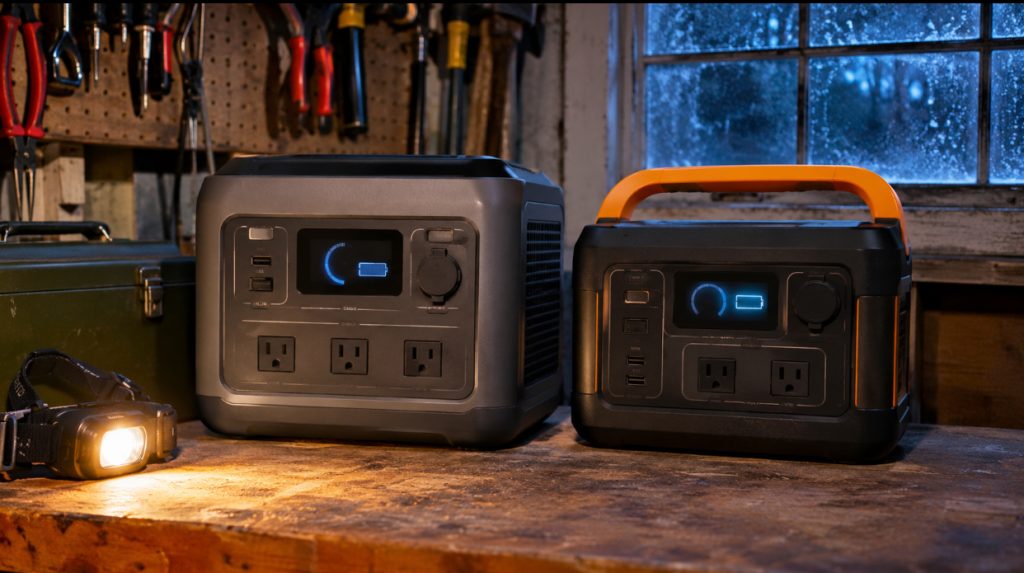
The first real cold snap always finds the weak spot in a house. Picture a ranch house outside Missoula the night after Thanksgiving. The leftovers are in the fridge, the wind’s been working on the power line all afternoon, and at a quarter to nine the lights blink twice and give up. Somebody heads out to the garage with a headlamp, where a power station has been sitting on the workbench since October, still showing a full charge. The thermometer by the door says 9 degrees.
Short on time? Skip to my picks
If that station is rated to run down to 14°F, it won’t do a thing until it warms up. Nothing’s broken. It just wasn’t built to work that cold, and the box never made a big deal of it.
That’s the kind of thing that decides Bluetti vs Jackery, and it almost never shows up in the comparisons. So here’s my answer up front. If you’ll lean on solar in winter, keep the station in a garage, or run a CPAP or a computer off it, I’d buy BLUETTI at almost every size. If you’ll carry it a lot, want the simplest box in the house, or need a whole-home system with a huge battery, Jackery earns its spot. At 2 kWh the Jackery Explorer 2000 v2 is 14 pounds lighter than the BLUETTI Elite 200 V2, and at the top end the Jackery Explorer 5000 Plus is the bigger, stronger machine.
Below, I match the two brands size for size with their current models, run the numbers that matter in an outage, and give you a Runtime Race that shows how late into the night each one keeps your house going.
Quick Picks: Bluetti vs Jackery at Every Size
Bluetti vs Jackery: The Short Answer
Both brands now build every station I’d recommend on LiFePO4 cells, both have Wi-Fi and Bluetooth apps, and both work fine as an outage battery. The differences are in the details, and they line up the same way at almost every size:
- BLUETTI: best for winter solar, cold garages, CPAP machines and computers, and a flat 5-year warranty with nothing to register.
- Jackery: best for carrying it around, a plain set-and-forget box, heavy motor loads at 3 kWh, and the biggest whole-home battery here.
- Is Bluetti better than Jackery? For home outages, yes at the small, 1 kWh, 2 kWh and expandable sizes. Jackery wins on weight at 2 kWh and on raw power at 3 kWh and whole-home.
How the Two Brands Compare
Here’s how the two lineups stack up on the things that matter in an outage, using the models in this guide.
*Jackery adds the extra 2 years when you register the station. The Explorer 5000 Plus gets 5 years standard.
Warranty and support
BLUETTI covers every station in this guide for 5 years. Jackery covers most of its lineup for 3 years and adds 2 more when you register the station on its website. That’s an easy step to forget in the chaos of unpacking a new toy before a storm, so if you buy a Jackery, register it the day it shows up. The Explorer 5000 Plus is the exception, with 5 years standard and 2 more on top.
Cold weather: where Bluetti pulls ahead
Neither brand will charge a battery below 32°F. That’s normal for LiFePO4, and it protects the cells. The difference is how cold they’ll keep running. BLUETTI rates its current stations to keep running down to -4°F, and the Elite 300 manual lists the same -4°F floor. Jackery’s Explorer 300 Plus, 1000 v2 and 2000 v2 stop at 14°F, and the HomePower 3000 is rated to keep running down to 5°F, though it cuts its output to 2,000 W below 14°F.
If your station lives in a garage, a mudroom or a camper, that gap is the whole ballgame on the worst night of the year. And if a station ever drains to zero while it’s stored in the cold, that same manual says to let it sit at 41°F to 95°F for 6 hours before you charge it.
Solar input in winter
This is the biggest gap between the two brands, and almost nobody talks about it. BLUETTI’s 1 kWh to 3 kWh Elite stations take 1,000 W to 1,200 W of solar. Jackery’s Explorer 1000 v2 and 2000 v2 top out at 400 W. In June that hardly matters. In December, with about 2.5 hours of good sun, it decides whether your battery is full by supper.

The 2 kWh matchup shows it best. With as many panels as each will take, one December day puts back about 90% of the Elite 200 V2 and only 37% of the Explorer 2000 v2. If you want the real number for your ZIP code, plug it into my peak sun hours calculator.
Expansion batteries: the old rule is out of date
Most Bluetti vs Jackery articles still say “Bluetti expands, Jackery doesn’t.” That was true a few years ago. Today it’s close to backwards in the popular sizes. The Elite 200 V2, Elite 300 and Elite 400 don’t take add-on batteries at all. Expansion now lives in the Apex 300, which grows to 58 kWh, and the older BLUETTI AC180. On the Jackery side, the Explorer 5000 Plus grows to 60 kWh. If you think you’ll ever add a battery, pick the expandable model now, because you can’t bolt one onto an Elite 200 V2 or Elite 300 later.
UPS switchover for a CPAP or a computer
Both brands can sit between the wall and your gear and take over when the grid drops. BLUETTI lists 10 ms on the Elite 30 V2, Elite 100 V2 and Elite 300, and 15 ms on the Elite 200 V2. Jackery lists 20 ms or less on the Explorer 2000 v2, HomePower 3000 and Explorer 5000 Plus. Routers and most CPAP machines usually ride through either one. A desktop computer with a cheap power supply is the thing most likely to reboot on a slow handoff, and that’s where the faster BLUETTI number earns its keep.
The apps: what each one does
You don’t need either app to run these stations, but you’ll want it for a few things. Here are the basics both apps cover.
The one that catches people: Jackery’s fastest wall charge is switched off until you turn on Emergency mode in the app. If you’re topping up a 1000 v2 during a short window of grid power, set that up before the storm, not after.
Small: Bluetti Elite 30 V2 vs Jackery Explorer 300 Plus

These are the boxes for a CPAP on a camping trip, a router during a short outage, or a nightstand during a long one. Same 288 Wh battery in both, very different jobs.
BLUETTI Elite 30 V2: Best Small Station
Why I chose it and who it’s for
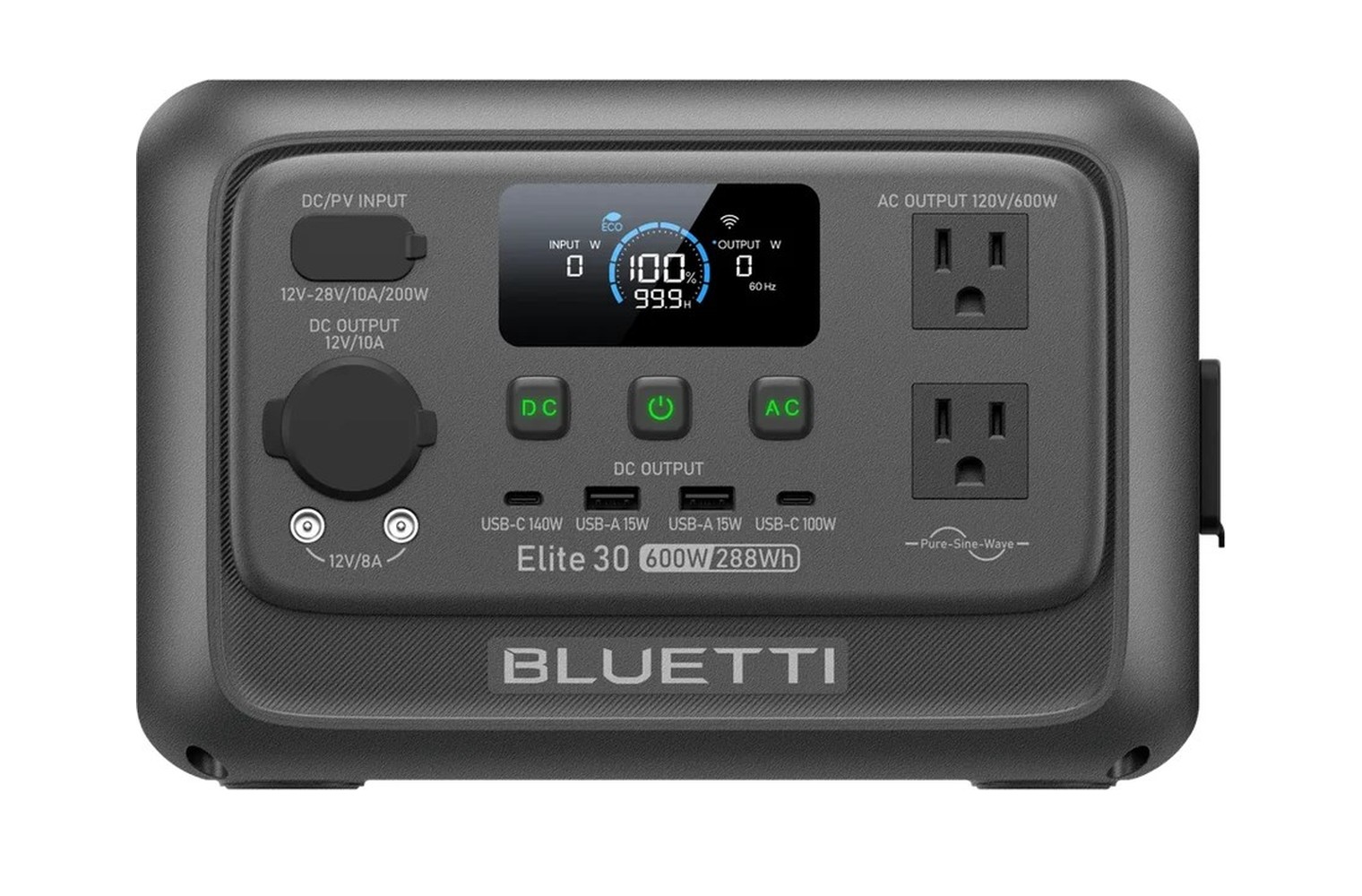
BLUETTI built the Elite 30 V2 to replace the EB3A, and it’s a better box in every way that matters at night. It doubles the Jackery’s output to 600 W and switches over in 10 ms, which is what you want under a CPAP or a modem. It’s for anyone who wants one small battery that can also stand in as a UPS.
Key specs
- 288 Wh LiFePO4, rated for 3,000+ cycles
- 600 W output, 1,500 W lifting mode for things like a kettle
- Full from the wall in about 70 minutes
- 200 W solar input
- 10 ms UPS switchover
- 9.5 lb, 5-year warranty
Pros and cons
Pros
- Twice the output of the Explorer 300 Plus
- Fast enough switchover for sensitive gear
- Charges from the wall quickly
Cons
- About a pound heavier than the Jackery
- Solar cable sold separately
In real use
On a 40 W CPAP with no humidifier, figure about six hours, which is a full night for most people. With just a router and modem, it runs about 12 hours. The 600 W ceiling also handles a small fan or an electric blanket on low, which the 300 Plus can’t.
Jackery Explorer 300 Plus: Lightest Small Station
Why I chose it and who it’s for
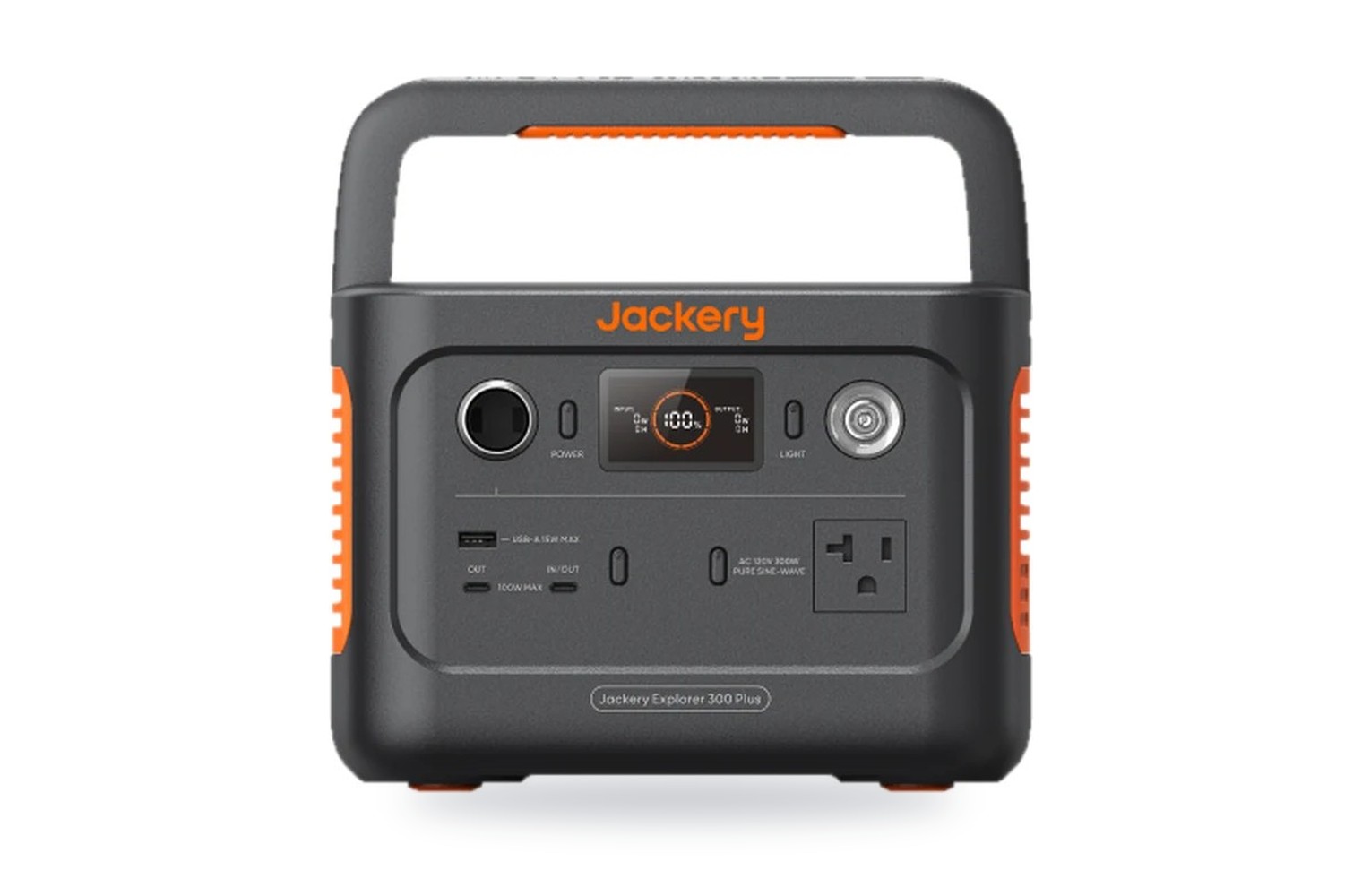
At 8.3 pounds, the Explorer 300 Plus is the one you’ll actually throw in a backpack or a kayak hatch. It has the same 288 Wh LiFePO4 battery as the BLUETTI and a 100 W USB-C port, and it’s for people who mostly charge phones, run lights and top off a laptop.
Key specs
- 288 Wh LiFePO4
- 300 W output, 600 W surge
- 2 AC outlets, 100 W USB-C
- Full from the wall in about 2 hours
- 100 W solar input
- 8.3 lb, 3 + 2 year warranty
Pros and cons
Pros
- Lightest LiFePO4 station either brand makes at this size
- Simple, quiet and easy for anyone in the house to use
- App control over Wi-Fi or Bluetooth
Cons
- 300 W rules out a lot of small appliances
- Slow on solar at 100 W
- No switchover time listed for UPS use
In real use
It’s a great tent and tailgate box. For an outage, it keeps phones, a lamp and a router alive for a long evening. Just don’t count on it for anything with a heating element.
1 kWh: Bluetti Elite 100 V2 vs Jackery Explorer 1000 v2

This is the size most families buy first. It’ll keep a fridge cold through a night, run the Wi-Fi and lights, and still fit in the trunk.
BLUETTI Elite 100 V2: Best 1 kWh for Outages
Why I chose it and who it’s for
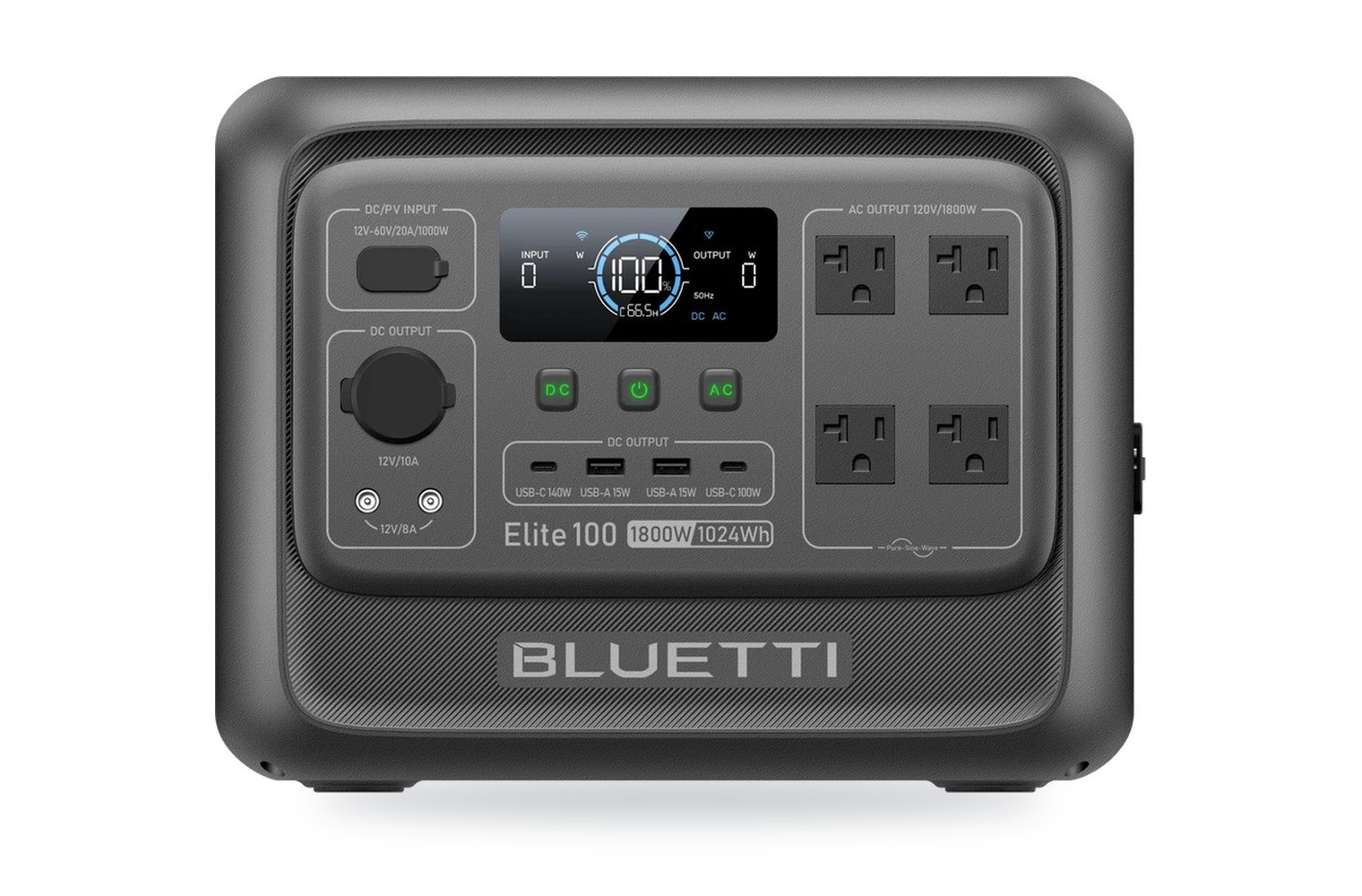
The Elite 100 V2 does the most at this size. It pushes 1,800 W, fills from the wall in 70 minutes without an app setting, and takes 1,000 W of solar, more than twice the Jackery. It’s for anyone who wants one mid-size station to cover a fridge overnight and refill from panels the next day.
Key specs
- 1,024 Wh LiFePO4, 4,000+ cycles
- 1,800 W output, 3,600 W surge
- Full from the wall in about 70 minutes, 80% in 45
- 1,000 W solar input
- 10 ms UPS switchover
- About 25 lb, runs down to -4°F, 5-year warranty
Pros and cons
Pros
- Refills fully in one December day with enough panels
- Fast wall charging with no app tricks
- Keeps running in a cold garage
Cons
- A pound heavier than the Jackery
- Slightly smaller battery on paper
In real use
With a fridge, router, lights and phones going, it runs about six and a half hours, so it gets most homes from supper to after midnight. Then four 250 W panels put it all back the next day, even in December.
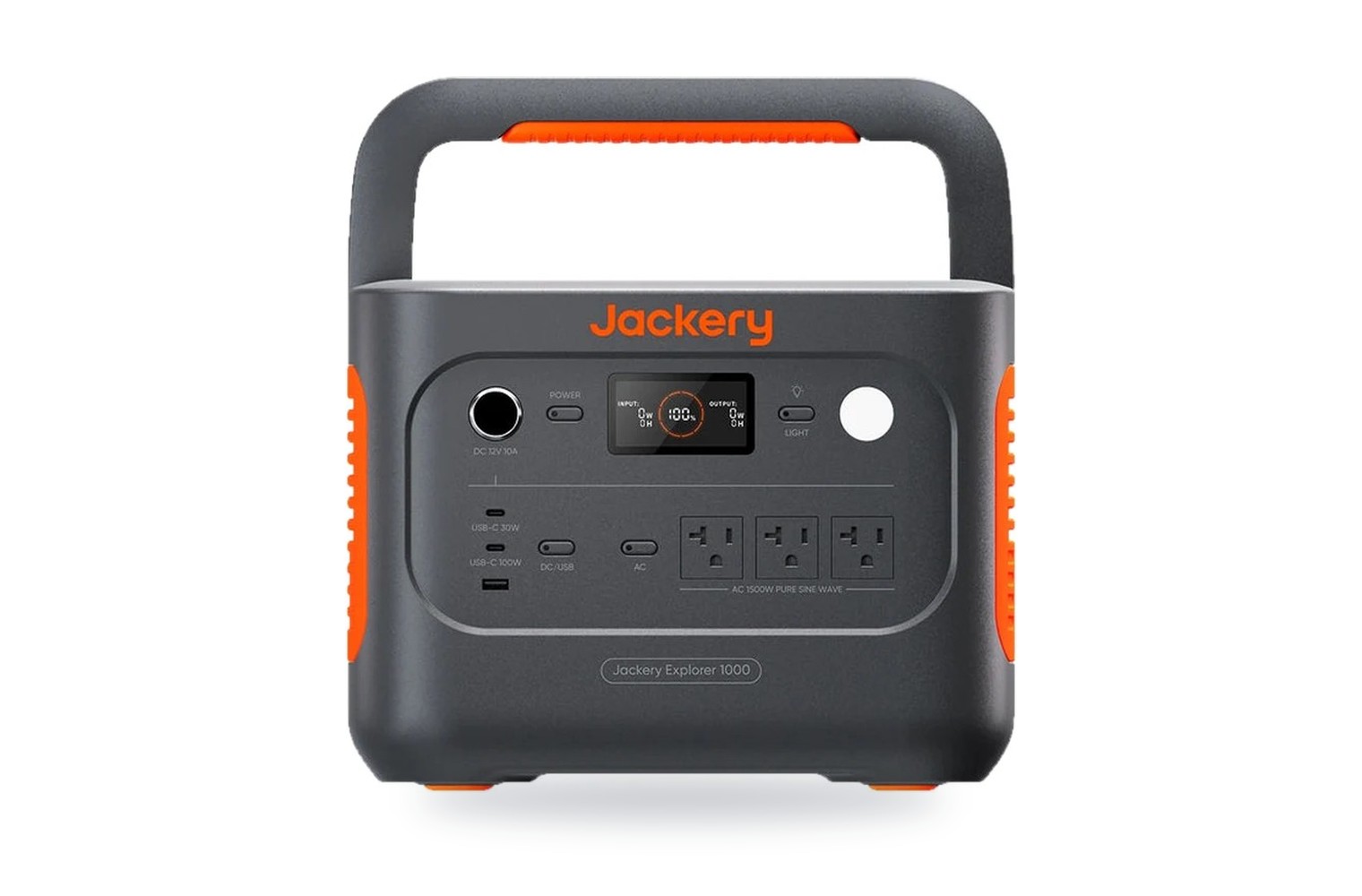
Jackery Explorer 1000 v2: Lightest 1 kWh
Why I chose it and who it’s for
The Explorer 1000 v2 is the easy one to live with. It weighs 23.8 pounds, has three plain outlets, and fills from the wall in one hour once you switch on Emergency mode in the app. It’s for people who move their station between the house, the car and the campsite.
Key specs
- 1,070 Wh LiFePO4
- 1,500 W output, 3,000 W surge
- Full in 1 hour with the app’s Emergency mode, 1.7 hours by default
- 400 W solar input
- Two 100 W USB-C ports
- 23.8 lb, runs down to 14°F, 3 + 2 year warranty
Pros and cons
Pros
- Light and easy to carry
- Slightly bigger battery than the BLUETTI
- Plain, simple controls
Cons
- Only 400 W of solar
- Fastest charge needs the app
- Shuts off sooner in a cold garage
In real use
Runtime is a near tie with the BLUETTI. On my fridge-and-lights list it actually goes about 15 minutes longer. Where it falls behind is the next day, since 400 W of solar puts back about 70% on a December day.
2 kWh: Bluetti Elite 200 V2 vs Jackery Explorer 2000 v2

At 2 kWh you can carry a fridge and a freezer through a full day, and this is where the two brands split the hardest.
BLUETTI Elite 200 V2: Best 2 kWh for Winter Solar
Why I chose it and who it’s for
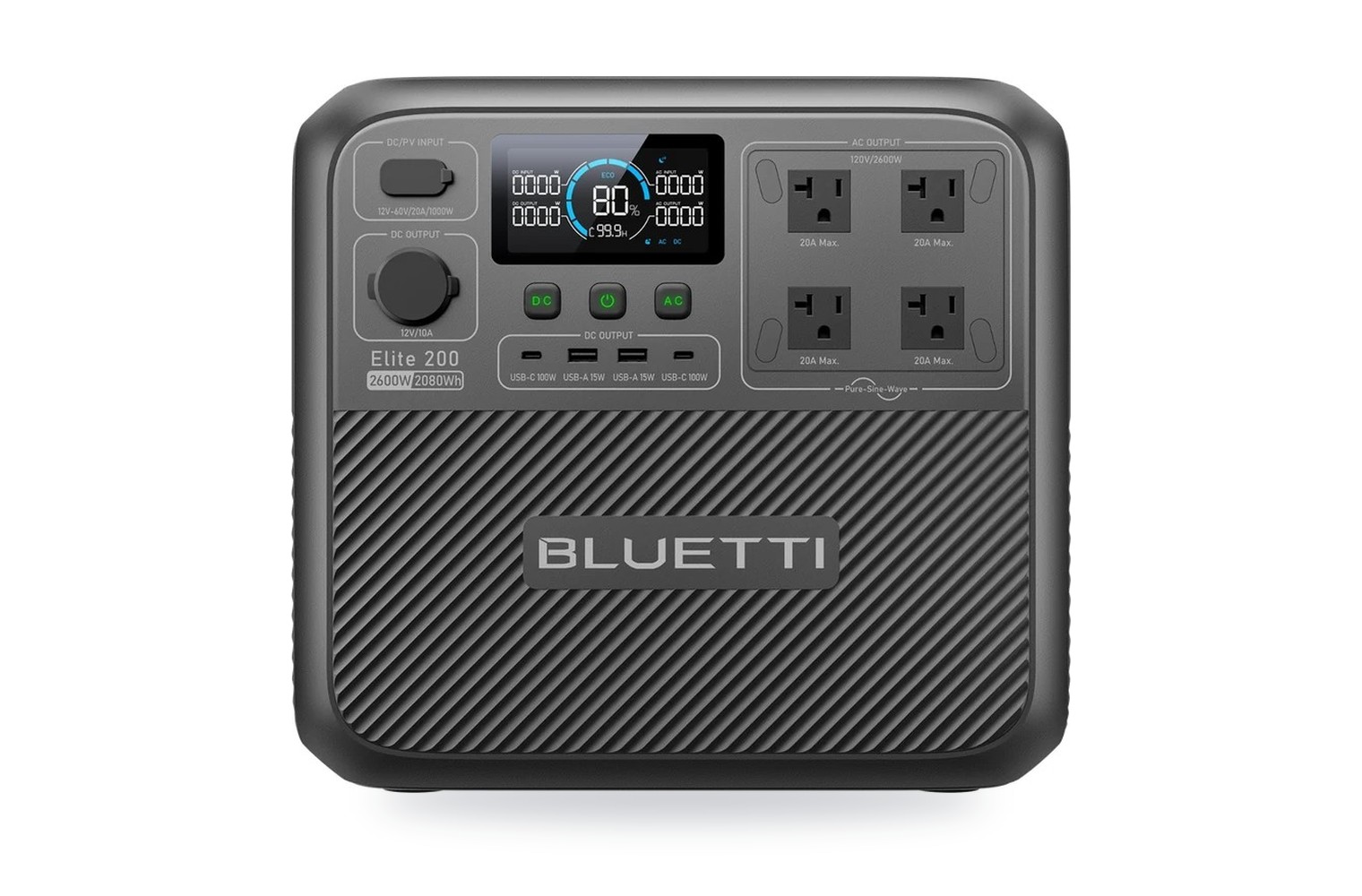
The Elite 200 V2 is the stronger station. It puts out 2,600 W, is rated for 6,000 cycles, and takes 1,000 W of solar, which turns a gray December day into most of a full battery. It’s for anyone planning on a multi-day outage with panels in the yard.
Key specs
- 2,073.6 Wh LiFePO4, 6,000+ cycles to 80%
- 2,600 W output, 3,900 W lifting mode
- Full from the wall in 1.4 hours, 80% in about 45 minutes
- 1,000 W solar input
- 15 ms UPS switchover with four UPS modes
- 53.4 lb, runs down to -4°F, 5-year warranty
Pros and cons
Pros
- About 90% back from one December day of sun
- More output for a microwave or a well-behaved space heater
- Longest cycle rating in this guide
Cons
- 14 pounds heavier than the Jackery
- Doesn’t take expansion batteries
In real use
It runs a fridge, chest freezer, router and lights for about 12 hours, which gets you through the night and into the next morning. Its solar-first UPS mode lets panels carry the load while the grid is up, so the battery stays full for the night the grid isn’t.
Jackery Explorer 2000 v2: Lightest 2 kWh
Why I chose it and who it’s for
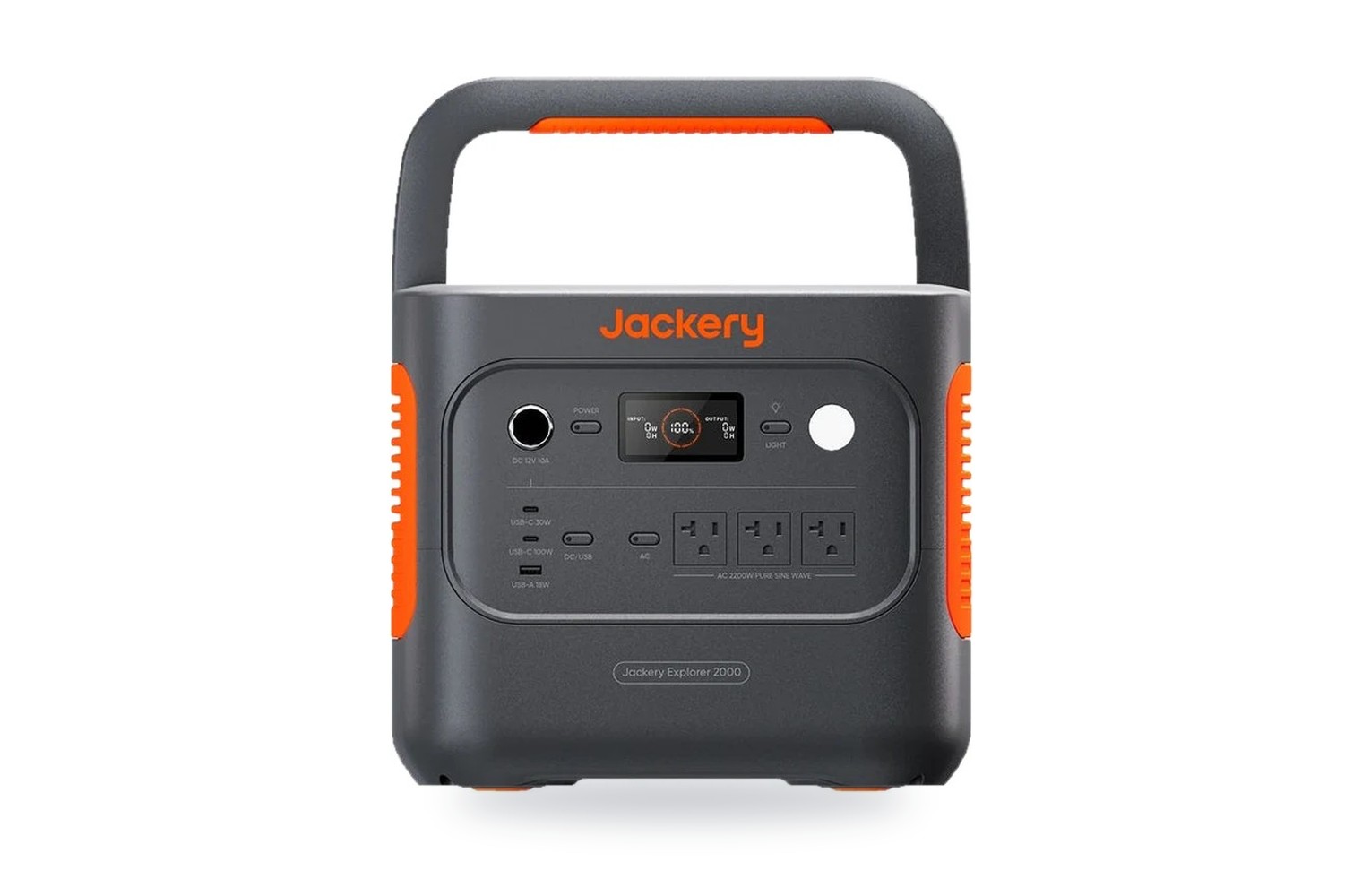
At 39.5 pounds, the Explorer 2000 v2 is the 2 kWh station a lot of people can actually lift. It has 2,042 Wh, 2,200 W and a quiet charge mode under 30 dB for overnight charging in a bedroom. It’s for anyone who has to carry their backup up from the basement.
Key specs
- 2,042 Wh LiFePO4, 4,000 cycles to 70%
- 2,200 W output, 4,400 W surge
- Full in 1.7 hours, 1.33 hours with the app’s Emergency mode
- 400 W solar input
- 20 ms UPS switchover
- 39.5 lb, runs down to 14°F, 3 + 2 year warranty
Pros and cons
Pros
- Much lighter than any other 2 kWh here
- Quiet enough to charge in a bedroom
- Simple controls
Cons
- 400 W of solar refills only about 37% on a December day
- No expansion batteries
In real use
Runtime is about the same as the BLUETTI. The difference shows up on day two, when you’re waiting on the sun. If your plan is grid power coming back within a day, it’s the easier box to own.
3 kWh: Bluetti Elite 300 vs Jackery HomePower 3000

Three kilowatt-hours keeps a fridge, a freezer and the Wi-Fi going for most of a day. These two weigh almost the same, so this one comes down to what you plug in.
BLUETTI Elite 300: Best 3 kWh for Electronics and Solar
Why I chose it and who it’s for
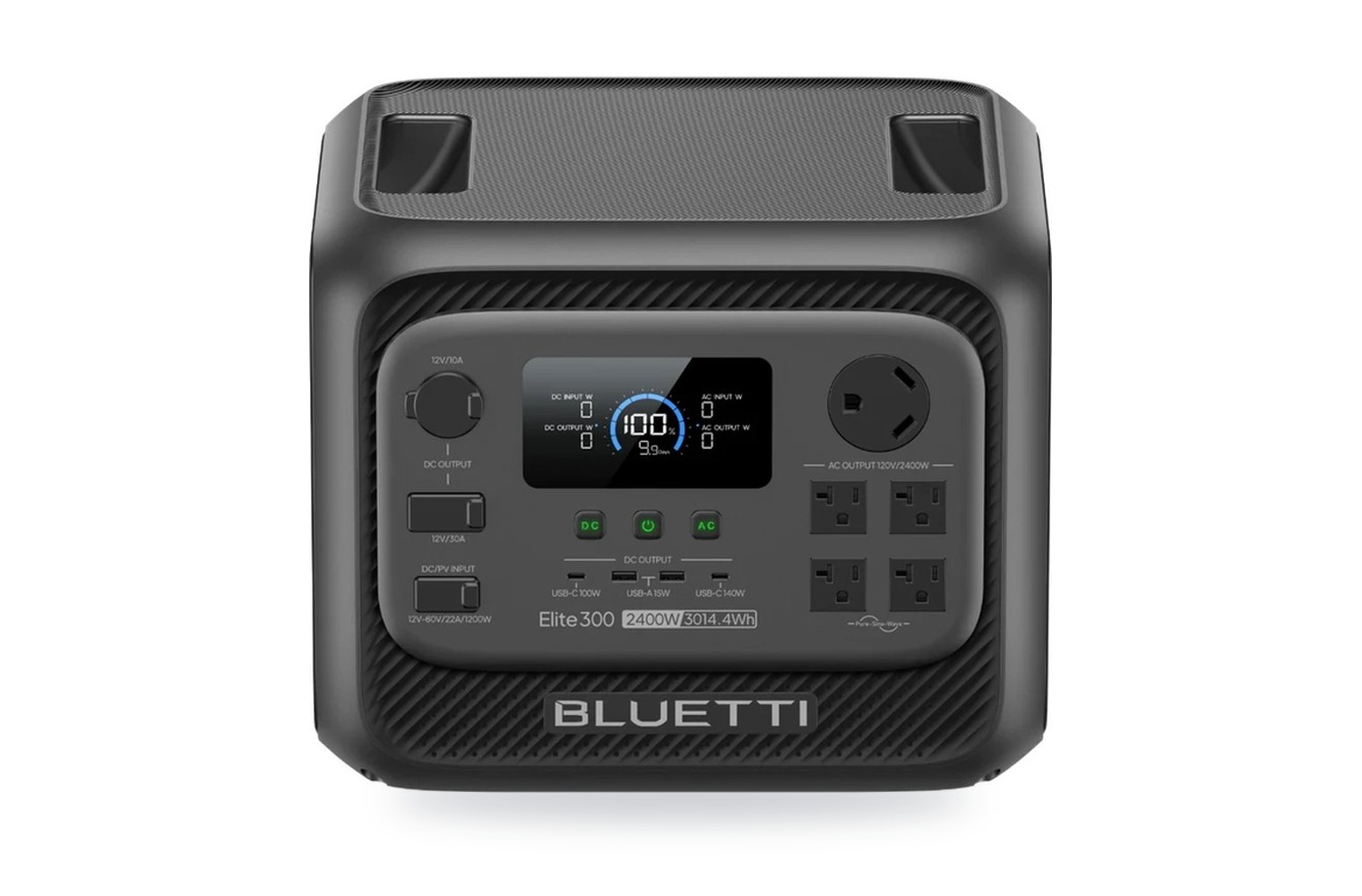
The Elite 300 is BLUETTI’s newest 3 kWh station, launched in March 2026, and it packs 3,014 Wh into a 58 pound box. It switches over in 10 ms, takes 1,200 W of solar and has a TT-30 outlet for a camper. It’s for home offices, CPAP users and anyone who’ll recharge from panels.
Key specs
- 3,014.4 Wh LiFePO4
- 2,400 W output, 4,800 W surge
- 1,800 W wall charging, about 2 hours to full
- 1,200 W solar input, 12 to 60 V
- 10 ms UPS switchover, TT-30 RV outlet
- 58 lb, runs down to -4°F, 5-year warranty
Pros and cons
Pros
- Fastest switchover at this size
- More solar than the Jackery
- Keeps running in a cold garage
Cons
- 2,400 W won’t start some well pumps or big power tools
- Doesn’t take expansion batteries
In real use
It runs a fridge, freezer, router and lights for about 17 hours. Add a gas furnace blower and that drops to about 7. A December day of full panels puts back about three quarters of it.
Jackery HomePower 3000: Best 3 kWh for Big Loads
Why I chose it and who it’s for
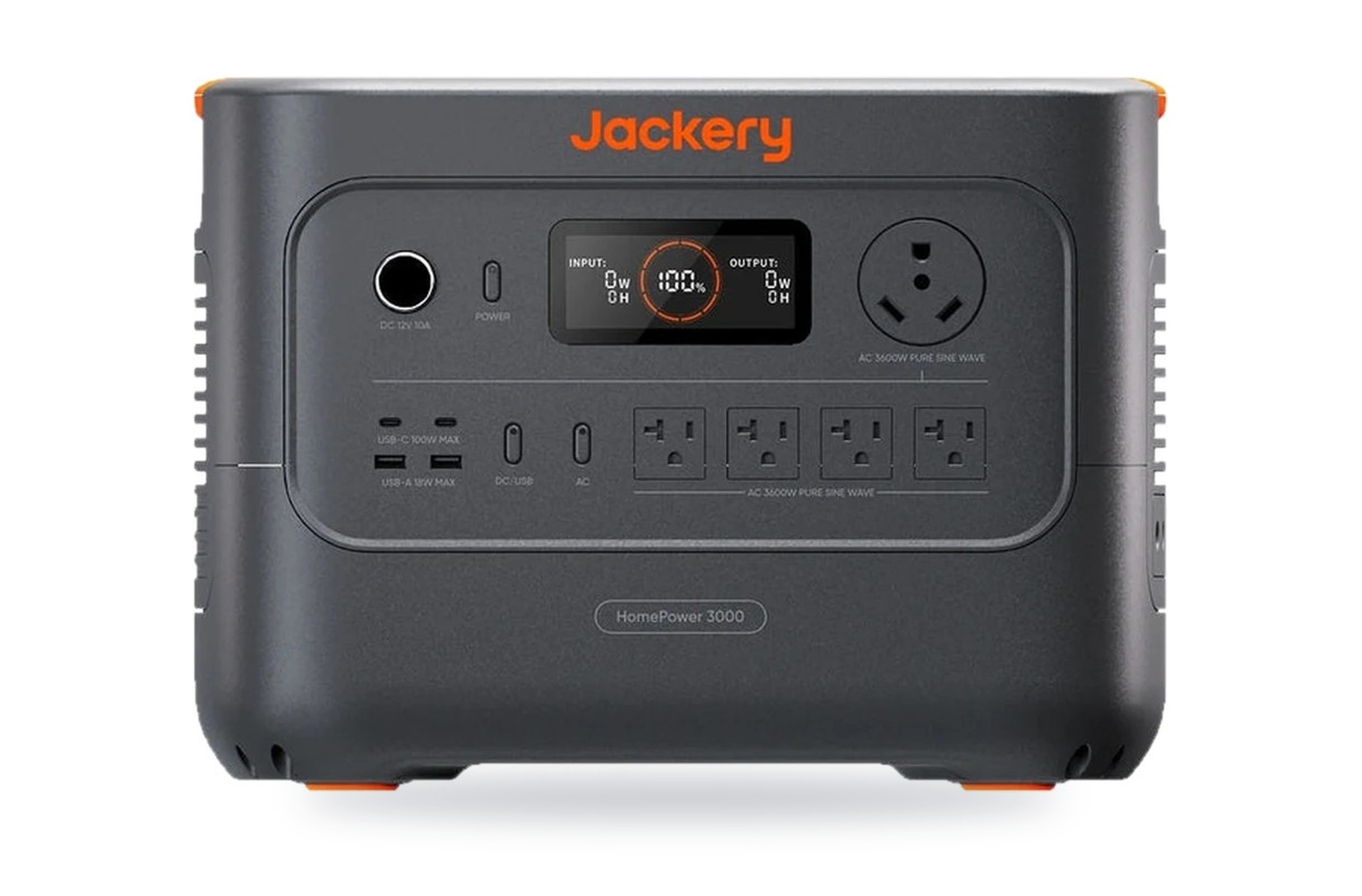
The HomePower 3000 has the muscle here, with 3,600 W and a 7,200 W surge, so it starts motors the BLUETTI can’t. It’s for homes with a well pump, a sump pump that kicks hard, or a shop full of tools.
Key specs
- 3,072 Wh LiFePO4, 4,000 cycles to 70%
- 3,600 W output, 7,200 W surge
- About 2.2 hours to full from the wall
- 1,000 W solar input
- 20 ms UPS switchover
- 59.5 lb, runs down to 5°F, 3 + 2 year warranty
Pros and cons
Pros
- 50% more output than the Elite 300
- Handles hard-starting motors
- Runs colder than other Jackerys
Cons
- Output drops to 2,000 W between 5°F and 14°F
- Slower switchover for sensitive electronics
In real use
Runtime is a near tie with the Elite 300 on a normal list. It pulls ahead the moment your list includes something with a big startup surge.
Whole Home: Bluetti Apex 300 vs Jackery Explorer 5000 Plus

These two feed a transfer switch and run 240 V loads like a well pump or a dryer. They take very different paths to get there.
BLUETTI Apex 300: Best Expandable Starter System
Why I chose it and who it’s for
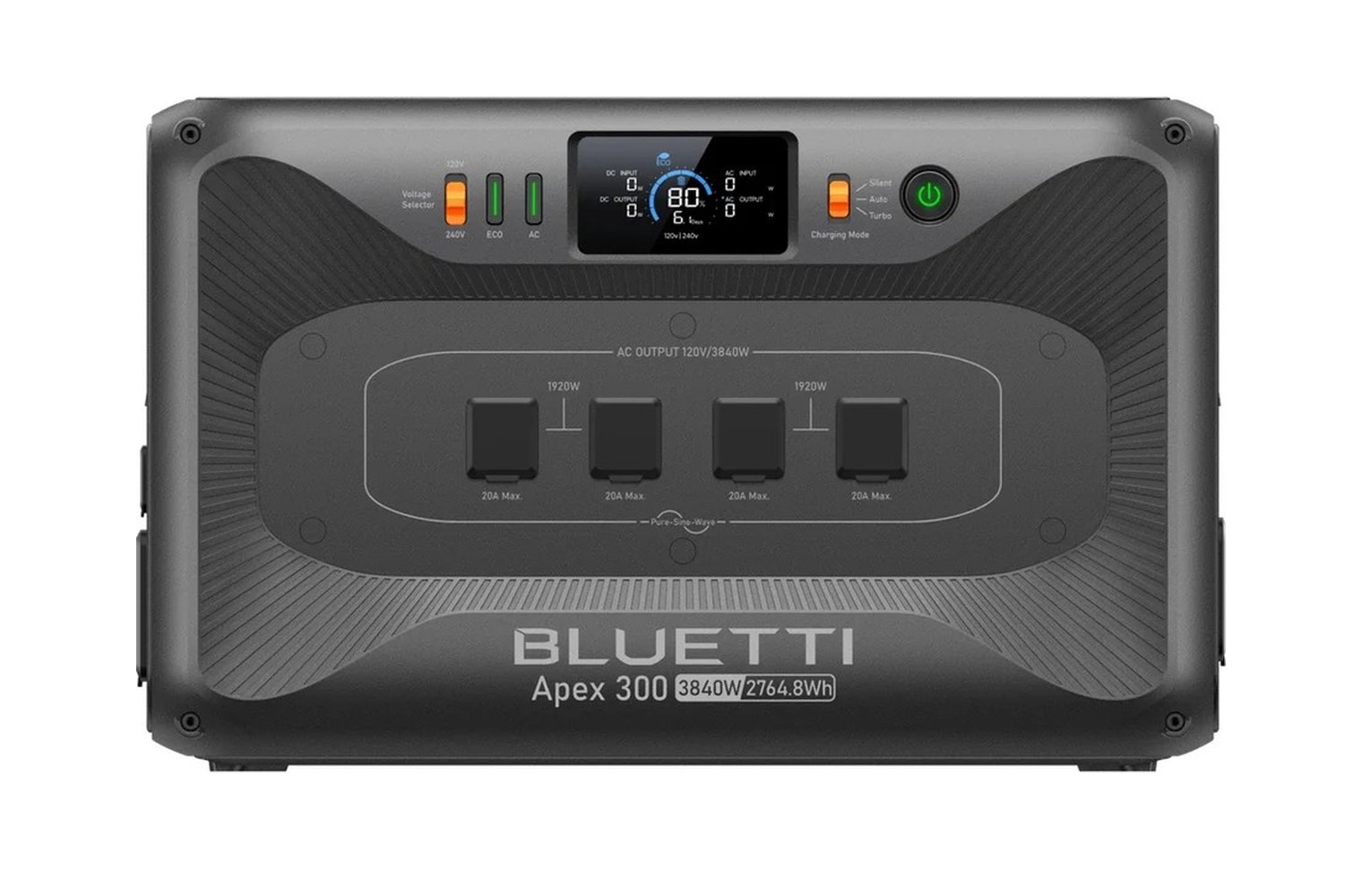
The Apex 300 gives you 120 and 240 volts from one box, 2,400 W of solar input, and a path to 58 kWh with B300K batteries. It’s for people who want to start with one unit and grow into whole-home backup over a few years.
Key specs
- 2,764.8 Wh LiFePO4, 6,000+ cycles, expandable to 58 kWh
- 3,840 W output, 7,680 W lifting mode, 120 and 240 V
- Full from the wall in about 70 minutes, 80% in 45
- 2,400 W solar input
- 20 ms UPS switchover, 0 ms in 240 V mode
- 83.8 lb, 5-year warranty
Pros and cons
Pros
- Much lighter to start with
- Time-of-use charging and weather alerts in the app
- Grows a battery at a time
Cons
- Smaller base battery than the Jackery
- Half the output of the 5000 Plus
In real use
Paired with a transfer switch, one Apex 300 runs a fridge, furnace blower and lights for about 7 hours, and it has the 240 V to start a well pump when it cycles. Add a B300K battery and you’re into multi-day territory. If you’d rather have one big BLUETTI on wheels with no add-ons, the BLUETTI Elite 400 packs 3,840 Wh, though it has only two AC outlets and no expansion.
Jackery Explorer 5000 Plus: Best Whole-Home Jackery
Why I chose it and who it’s for
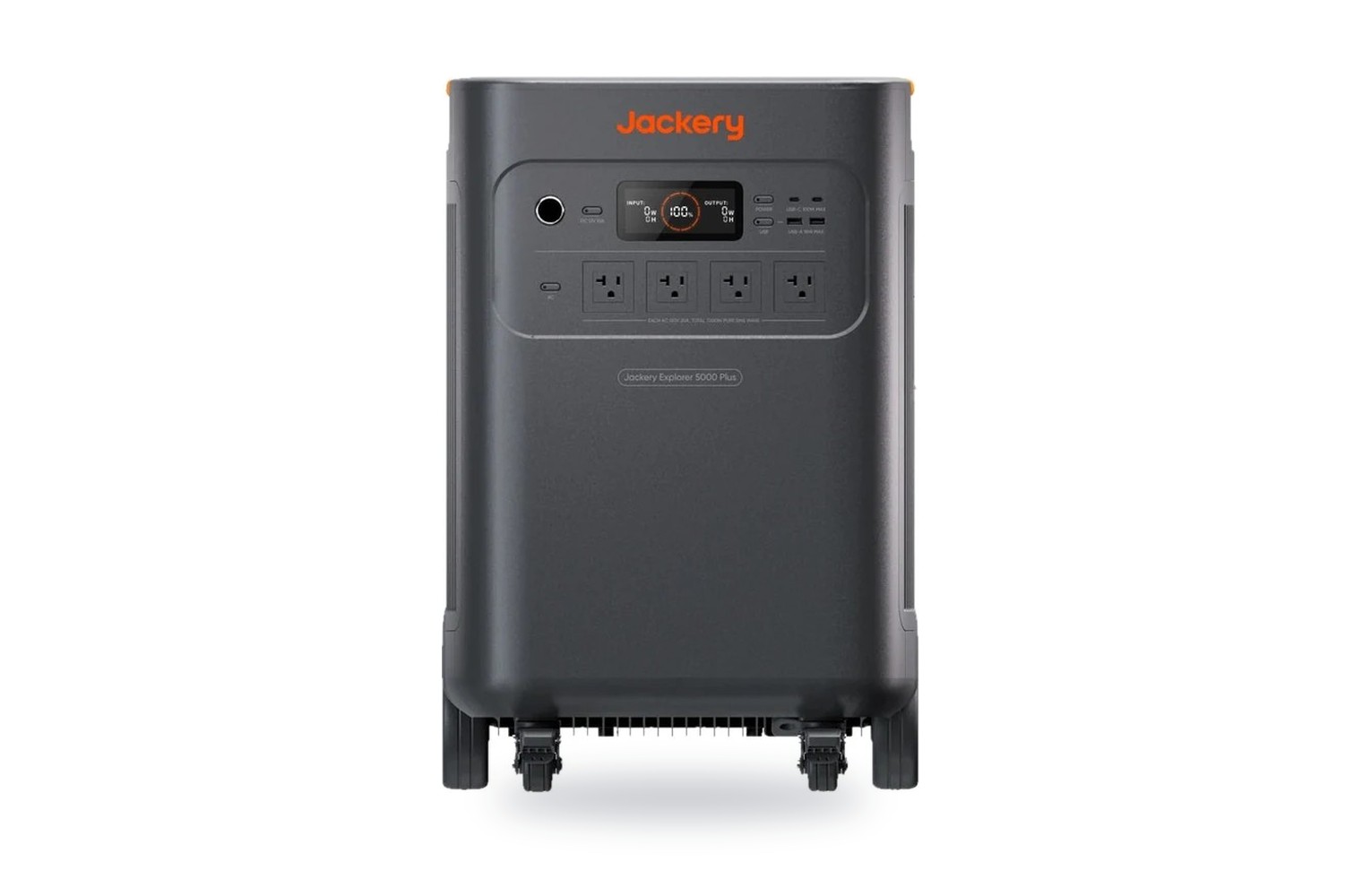
The Explorer 5000 Plus is the heavyweight. It has 5,040 Wh and 7,200 W at 120 or 240 volts, and it grows to 60 kWh. It’s for homes that want central air or an electric range in the backup plan.
Key specs
- 5,040 Wh LiFePO4, 4,000 cycles to 70%, expandable to 60 kWh
- 7,200 W output, 14,400 W surge, 120 and 240 V
- 4,000 W solar input
- About 3.5 hours to full on the standard wall charger
- Under 20 ms backup UPS, 0 ms in online UPS mode
- 134.5 lb, runs down to 5°F, 5-year warranty
Pros and cons
Pros
- Biggest battery and most power in this guide
- Huge solar input
- 5-year warranty standard
Cons
- 134.5 pounds, so it stays where you put it
- Big upfront buy
In real use
One unit keeps a fridge, freezer, router and lights going for more than a day, and it has the 7,200 W to run central air for about an hour at a time. With batteries added, it’s the closest thing here to a whole-house generator that never needs gas.
Runtime Race: Bluetti vs Jackery for Your House
Pick a size, tap what has to stay on, and set the time the lights go out. The race shows how late each station keeps going, whether it can carry everything at once, what happens in a cold garage, and how fast each one refills from the wall and from your panels.
Bluetti vs EcoFlow
These two are closer than Bluetti and Jackery. At 1 kWh, EcoFlow’s DELTA 3 Plus fills from the wall in 56 minutes against 70 for the Elite 100 V2, and both take 1,000 W of solar. Both come with a 5-year warranty. At 3 kWh, EcoFlow’s DELTA 3000 Gen4 puts out 3,600 W to the Elite 300’s 2,400 W. I’d pick BLUETTI for a cold garage and the faster 10 ms switchover, and EcoFlow for the quickest wall charging. I go through the EcoFlow models size by size in my EcoFlow vs Jackery vs Anker SOLIX guide.
Bluetti vs Anker SOLIX
Anker’s C1000 Gen 2 is the fastest 1 kWh charger I’ve found, at 49 minutes from the wall with UltraFast on, so it suits homes where the grid flickers back for an hour at a time. For whole-home backup, the Anker SOLIX F3800 Plus rolls on wheels with 6,000 W at 120 or 240 volts. The Apex 300 starts lighter, takes more solar per kilowatt-hour, and grows to 58 kWh. My EcoFlow vs Jackery vs Anker SOLIX comparison has the full Anker lineup.
How to Choose Between Bluetti and Jackery
Count the panels you’ll really own
Solar input only matters if you buy the panels to fill it. If you’ll own one 200 W panel, a Jackery’s 400 W limit never holds you back. If you’ll own 800 W or more, the BLUETTI’s bigger input is worth real hours of runtime every winter day. A solar generator kit takes the guesswork out by pairing them for you.
Check where it’ll sit in January
A station in a heated room can be either brand. In a garage, camper or porch, the BLUETTI’s -4°F rating keeps it running on nights the Jackery shuts down. Neither one will charge below freezing, so bring it in to warm up before you plug it in.
Match the switchover to what’s plugged in
For a CPAP, a router or a fridge, any switchover in this guide is fine. For a desktop computer or a network drive, I’d lean toward the 10 ms BLUETTIs. My CPAP battery backup guide covers how many nights each size gets you.
Decide now if you’ll ever add a battery
The Elite 200 V2, the Elite 300 and both Jackery Explorer v2 models here don’t take add-on batteries. If you think you’ll grow, start with the Apex 300 or the Explorer 5000 Plus, because you can’t add one later.
Weigh it against your back, not the spec sheet
The 14 pounds between the 2 kWh models is the difference between one trip up the basement stairs and two. If you’re still deciding between a battery and gas altogether, my power station vs generator page lays out when each one wins, and the portable power station guide covers more brands at every size.
Frequently Asked Questions
Is Bluetti better than Jackery?
For home outages, BLUETTI is better at most sizes. It takes more solar, runs colder, switches over faster and carries a flat 5-year warranty. Jackery wins on weight at 2 kWh, on output at 3 kWh with the HomePower 3000, and on sheer size with the Explorer 5000 Plus.
Which lasts longer, Bluetti or Jackery?
On one charge they’re close at every size, because the batteries are nearly the same. Over the years, BLUETTI rates the Elite 200 V2 for 6,000 cycles to 80% and Jackery rates the Explorer 2000 v2 for 4,000 cycles to 70%. Either one outlasts a decade of normal outage use.
Which has the better warranty, Bluetti or Jackery?
BLUETTI gives 5 years on every station here with no registration. Jackery gives 3 years, plus 2 more when you register on its website. The Jackery Explorer 5000 Plus comes with 5 years standard.
What replaced the Bluetti EB3A?
The BLUETTI Elite 30 V2. It keeps the small size, doubles the output to 600 W against the Jackery 300 Plus, and adds a 10 ms UPS switchover and app control over Wi-Fi.
The Bottom Line
For most homes, I’d buy BLUETTI. The BLUETTI Elite 100 V2 is my pick at 1 kWh, and the BLUETTI Elite 200 V2 is the one I’d want for a long winter outage with panels in the yard. Go Jackery when weight or raw power decides it. The Jackery Explorer 2000 v2 is the 2 kWh station you can carry, the Jackery HomePower 3000 starts the motors the Elite 300 can’t, and the Jackery Explorer 5000 Plus is the biggest machine here. Before you buy, run your own list through the Runtime Race above, and register a Jackery the day it lands.
