
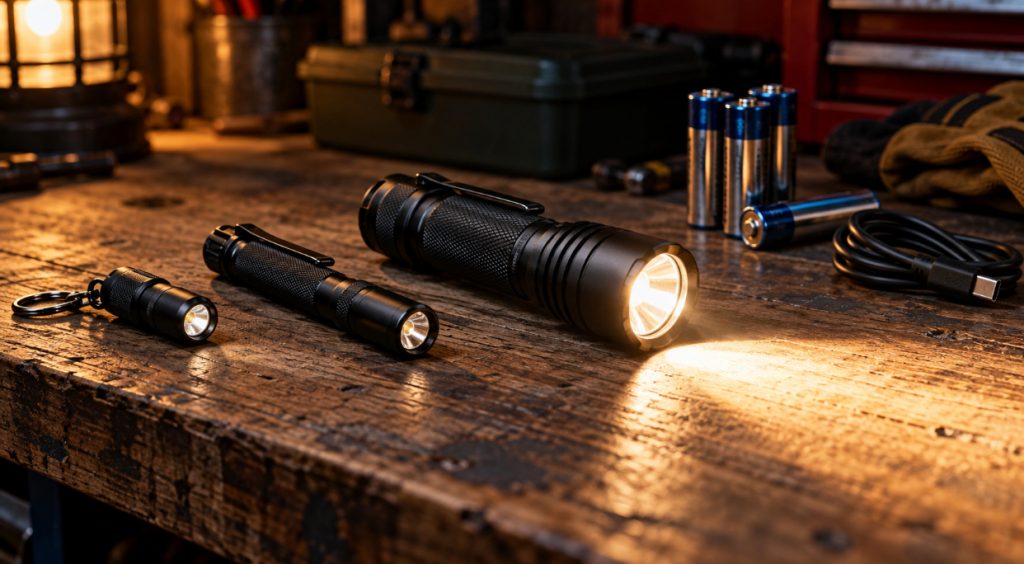
A budget flashlight used to mean a plastic tube from the checkout aisle that went dim by its second week. That changed when brands like Wurkkos, Lumintop and Fenix started putting regulated drivers, USB-C charging and quality LEDs into lights that cost less than a dinner out.
The hard part now is the listings. Search Amazon for a cheap flashlight and you’ll find claims of 90,000 or even 990,000 lumens from lights the size of a soda can. The batteries inside them can’t power those numbers, and the lights behind those claims tend to be the first to fail.
I picked six lights that deliver what their spec sheets promise, from a 43 gram keychain light to a 4,500 lumen 21700 light that can charge your phone. Shopping a listing that isn’t here? Run its numbers through the Lumen Claim Checker further down before you buy. If pocket carry matters most, my best EDC flashlights guide goes deeper on that.
James’s Top Picks
Quick Comparison
How I Picked These Lights
Honest specs came first. Every pick comes from a brand that publishes output and runtime figures for each mode, and the real-world output of each one lands close to what the box says.
Next came the driver. A regulated driver holds brightness steady as the battery drains, while the cheapest lights start bright and fade from the first minute. The three Wurkkos lights and the Fenix all use regulated drivers. The Lumintop doesn’t, and it earns its spot by running on almost any AA you can find.
Last, I looked at what each light costs to own. Every pick charges by USB-C or runs on a battery you can buy anywhere, so there’s no separate charger hiding in the real price.
1. Wurkkos FC11C: Best Overall
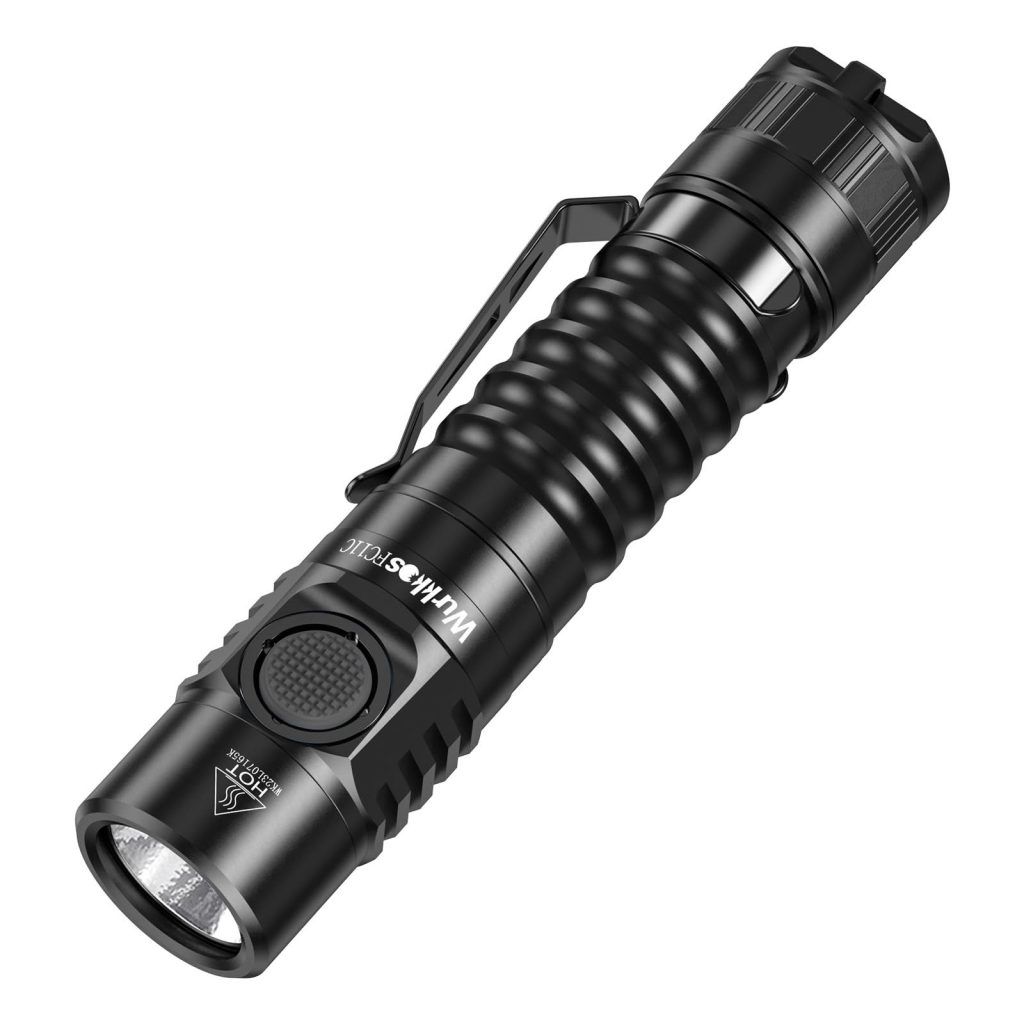
Why I chose it: The FC11C is the light I’d hand to anyone who asks for one good flashlight that doesn’t cost much. It has the kind of driver you usually find in lights at twice the price, so its brightness stays flat instead of fading as the battery drains. It’s best for home, car and general use, and it makes a smart first upgrade from a big box store flashlight.
Key specs
- Output: 1,200 lumen turbo, then 600, 250, 50 and a 1 lumen moonlight
- Throw: 155 meters, 6,008 candela
- LED: Nichia 519A, high CRI, 5000K or 4000K
- Battery: one 18650, usually sold with a 3,000 mAh cell, USB-C charging on the light
- Runtime: 250 lumens for about 7.5 hours
- Build: aluminum, IPX8, 1.5 meter drop rated, 116 mm long, 112 g with the cell
Pros
- Regulated output that stays steady through the runtime
- High CRI beam that renders colors accurately
- Magnetic tail cap and a four-click lockout for bags
Cons
- The side switch sits nearly flush and is hard to find by feel
- No power bank function
- The clip isn’t deep carry
Performance analysis: Turbo is a short burst, which is normal for an 18650 light this size. In practice the FC11C lands near 1,000 lumens at the 30 second mark, then settles around 500 lumens and holds there for most of a three hour run. That steady 500 is the number to judge it by, and it’s more usable light than most cheap lights deliver at their peak.
The beam is wide and smooth with enough center to light a yard, which suits the way most people use a flashlight. Four quick clicks lock it, or you can loosen the tail cap an eighth of a turn. If you want more lights in this size class, my best 18650 flashlights guide covers them.
2. Wurkkos TS22: Brightest for the Money
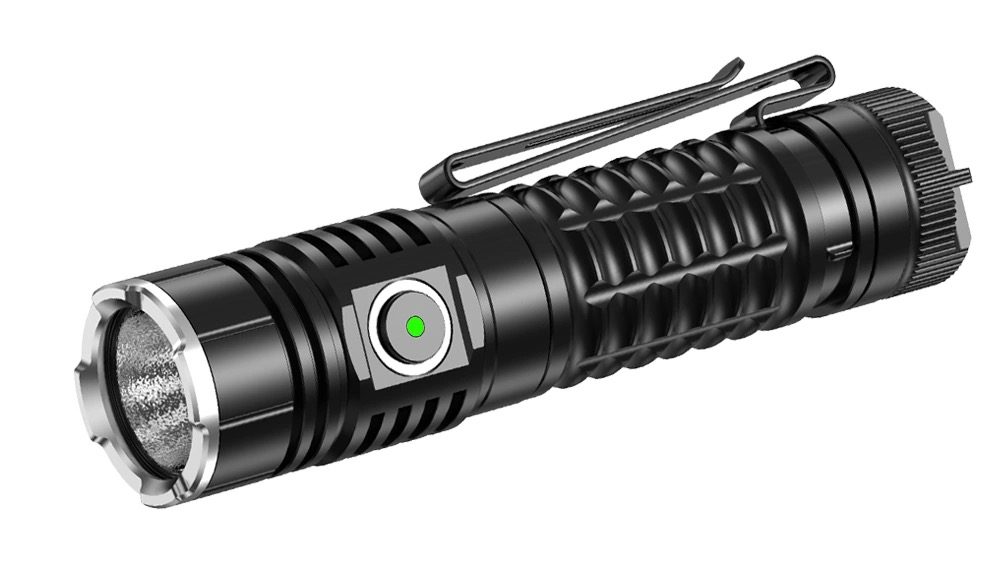
Why I chose it: If you want the most light you can get without spending much, the TS22 is the one. It’s rated at 4,500 lumens from a single 21700 cell, and its boost driver runs that big battery efficiently. It’s best for yard work, camping, power outages and anyone who wants a wall of light from something still small enough for a jacket pocket.
Key specs
- Output: 4,500 lumen turbo, then 1,800, 500, 100 and 10 lumens
- Throw: 191 meters, 9,150 candela
- LED: Cree XHP70.3 HI, high CRI
- Battery: one 21700, included, USB-C charging and power bank output
- Runtime: 500 lumens for about 4.5 hours
- Build: aluminum, IP68, magnetic tail cap, 122 mm long, 164 g with the cell
Pros
- Far more output than anything else here
- Charges your phone from its own battery
- Wide, even flood beam that’s easy on the eyes up close
Cons
- Auto lockout is on by default and can catch you off guard
- Aggressive knurling feels rough in the hand
- Too thick for most front pants pockets
Performance analysis: The 4,500 lumen figure is a burst, and real output at 30 seconds is closer to 3,000 lumens, which is still enormous. After that it steps down to roughly 650 lumens and holds that level for about three hours.
One quirk is worth knowing before it surprises you. By default the TS22 locks itself after a couple of minutes off, so the next click flashes instead of lighting up. Clicking five times from off turns on the green switch indicator, which also turns off the auto lock. Four clicks still lock it by hand when you want to.
Not sure whether you need a 21700 light or an 18650 one? My 18650 vs 21700 breakdown explains the tradeoff in size and runtime.
3. Wurkkos FC12C: Best Budget Tactical
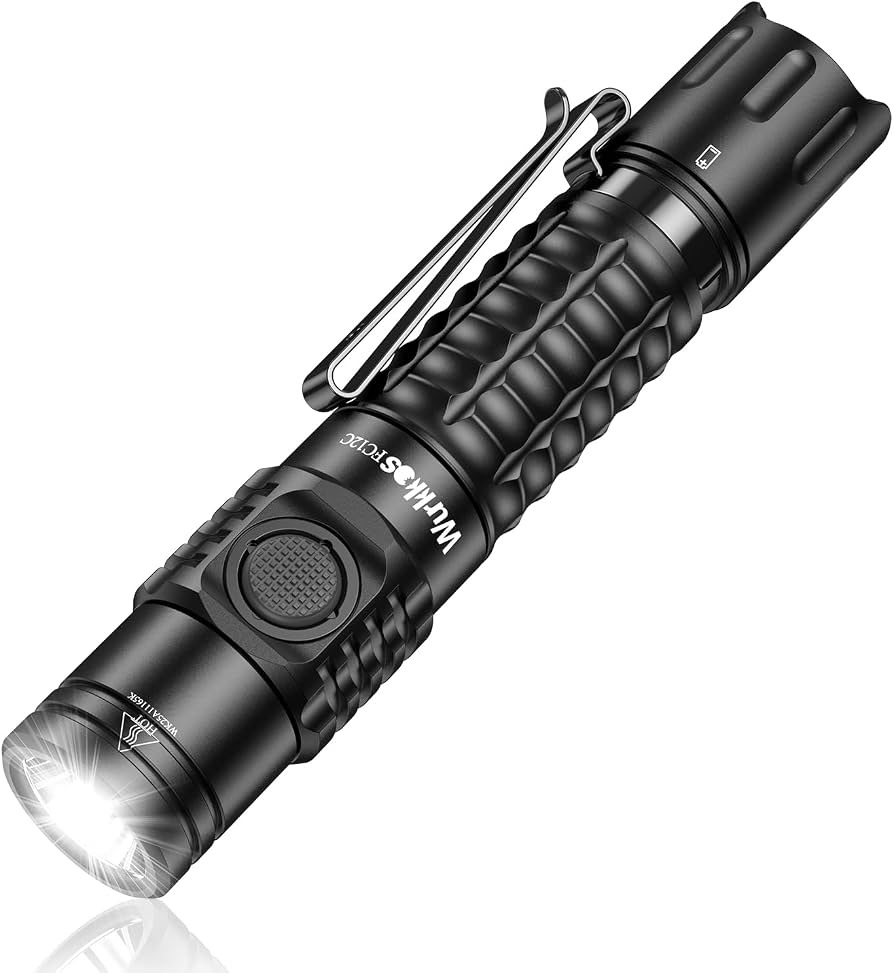
Why I chose it: Tactical lights usually cost a lot more than this, and the FC12C is the cheapest light I’d trust with that job. A forward clicky tail switch gives you momentary light with a half press and constant light with a full click, which is how a tactical light should work. It’s best for security work, property checks and anyone who wants a self defense light without paying duty light prices.
Key specs
- Output: 1,600 lumen turbo, 300 lumen medium, 1 lumen moonlight, plus smooth ramping
- Throw: 332 meters, 27,575 candela
- LED: Luminus SFT-40-W, cool white
- Battery: one 18650, included, USB-C charging on the light
- Modes: Ramping group and a Tactical group with turbo on the tail switch and strobe on a double tap
- Build: aluminum, IP68, 1 meter drop rated, 136 mm long, 131 g with the cell
Pros
- Real mechanical tail switch with momentary on
- Longest throw on this list by a wide margin
- Regulated output and smooth ramping
Cons
- No stepped low and high modes in the Ramping group
- No electronic lockout, only a loosened tail cap
- Cool white beam with low color accuracy
Performance analysis: The SFT-40 LED is built for reach, and this light reaches. Turbo hits about 1,200 lumens at 30 seconds, then settles near 550 lumens and holds there for well over an hour and a half. The throw is what stands out: the beam reaches past 300 meters, which lights a fence line or a tree line that other budget lights only hint at.
Set it to the Tactical group if it’s for defense. A full click gives you turbo from off, and a double tap of the tail switch gives you strobe without hunting for a mode. My best self defense flashlight guide covers how to use a light like this under stress.
4. Lumintop Tool AA 3.0: Best AA or 14500 Light
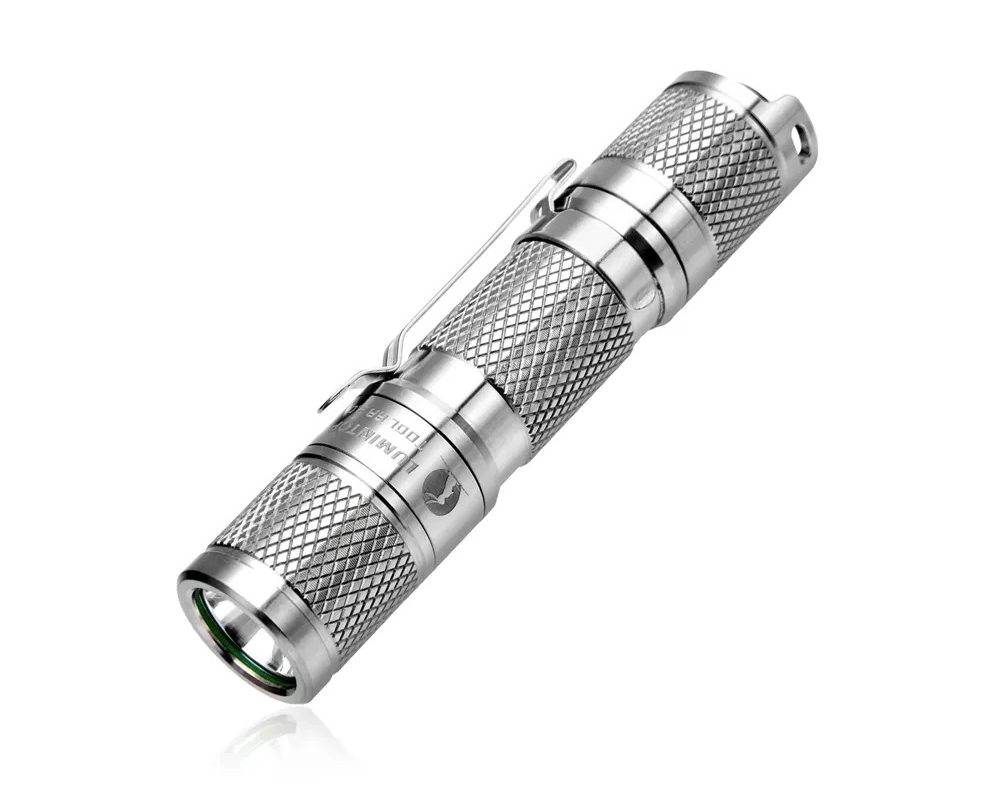
Why I chose it: The Tool AA 3.0 solves the battery problem in a light that’s barely longer than the cell inside it. Drop in a regular AA and you get about 300 lumens. Swap to a rechargeable 14500 lithium cell and it jumps to 900. It’s best for anyone who already buys AA batteries for the house and wants one light that takes them.
Key specs
- Output on 14500: 900, 500, 150 and 20 lumens
- Output on AA: 300, 150, 30 and 4 lumens
- Throw: 138 meters, 4,750 candela
- Battery: one AA (alkaline or NiMH) or one button top 14500; some listings include a USB-C rechargeable 14500
- Switch: reverse clicky tail switch with mode memory
- Build: aluminum, IPX8, 89 mm long, 44 g with a 14500
Pros
- Runs on AA batteries sold everywhere
- Triples its output on a 14500 cell
- Small enough for a coin pocket or a key ring
Cons
- The lit tail cap slowly drains a 14500 when the light is off
- Strobe sits six taps into the mode cycle
- Cool white beam with a narrow hotspot
Performance analysis: On a fresh NiMH AA it holds right around 300 lumens at 30 seconds, which is excellent for a single AA. On a 14500 it opens near 1,000 lumens and sits around 840 after 30 seconds before stepping down. Runtime on AA turbo is close to an hour and a half, and medium runs for about 12 hours.
Two cautions matter here. Only button top 14500 cells make contact, so a flat top cell won’t light it. And the glowing tail cap pulls a small current from a 14500, so loosen the tail cap if the light will sit for weeks. My best AA flashlights guide has more lights that run on AA.
5. Olight i3T 2 EOS: Best Keychain Light
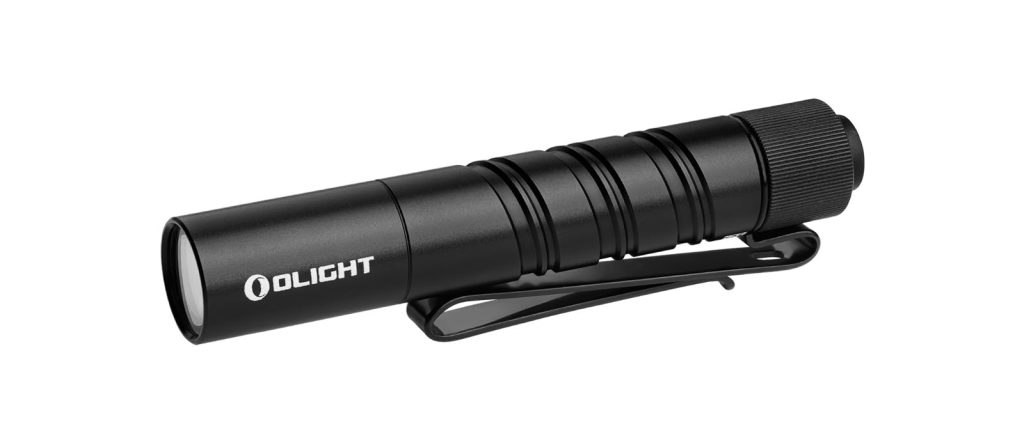
Why I chose it: The i3T 2 EOS is the light you’ll actually have with you. It runs on one AAA battery, weighs about 43 grams with it, and still puts out 200 lumens, which is enough to find a dropped key in a parking lot or walk a dark hallway. It’s best for keys, purses and kids’ backpacks, and as a backup light for anyone who already owns a bigger one.
Key specs
- Output: 200 lumens on an alkaline AAA, 300 on a 10440 rechargeable, plus a 5 lumen low
- Throw: 62 meters, 963 candela
- Battery: one AAA, included; also takes NiMH or a 10440 lithium cell
- Runtime: 200 lumens for 7 minutes, then 100 lumens for 28 more; 5 lumens for 21 hours
- Switch: tail button with momentary and constant on
- Build: aluminum, IPX8, about 1.5 m drop rated, 3.5 in long, 1.5 oz with the battery
Pros
- Runs on the most common battery in any house
- Two simple modes anyone can use
- Clip fits a cap brim for hands-free light
Cons
- High mode steps down after 7 minutes
- No lockout, so it can click on in a bag
- The protruding switch means it can’t stand on its tail
Performance analysis: Two hundred lumens is a lot for a single AAA, and Olight is honest about how long it lasts. The light runs at 200 for seven minutes, then drops to 100 for another 28. The 5 lumen low runs for 21 hours and is the mode you’ll use most around the house or in a tent.
A 10440 lithium cell pushes it to 300 lumens, but stick with alkaline or NiMH AAAs if anyone else will change the battery. My best AAA flashlights guide and my best mini flashlight guide cover more small lights.
6. Fenix E12 V3.0: Best Glovebox Light
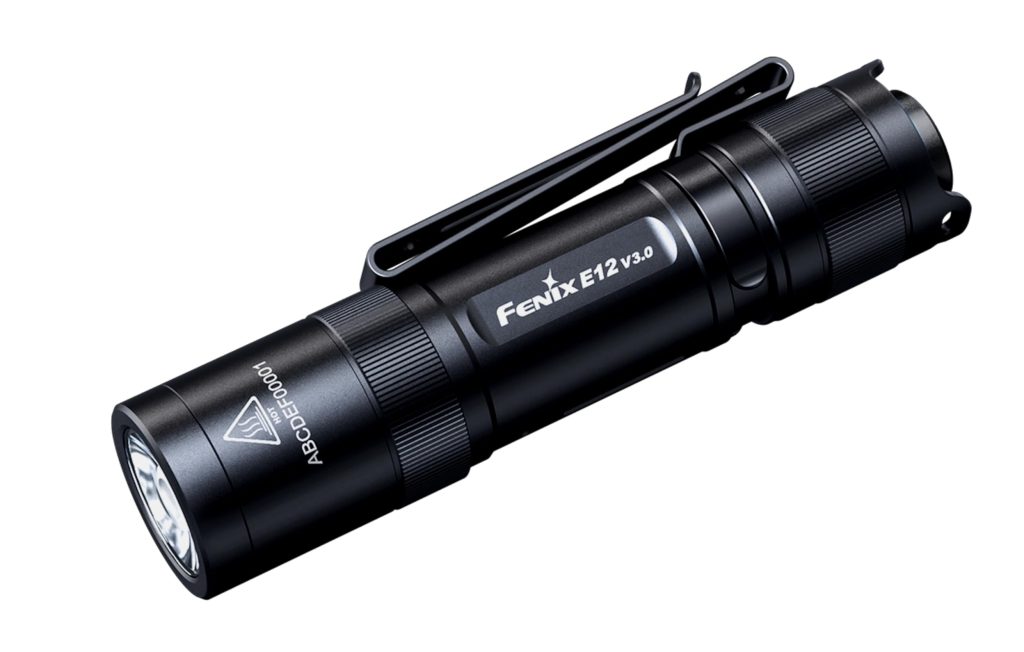
Why I chose it: The E12 V3.0 is the light I’d buy for someone who never thinks about flashlights. Click the tail switch and it works. It takes any AA, including the lithium AAs that hold their charge for years, so it’s ready after months in a glovebox or a kitchen drawer. It’s best for cars, kids’ rooms, gift giving and anyone who wants a light that never needs charging.
Key specs
- Output: 200, 30 and 5 lumens
- Throw: 78 meters
- Runtime: 200 lumens for 1 hour, 30 lumens for 15 hours, 5 lumens for 100 hours
- Battery: one AA, alkaline included; NiMH and lithium AA also work
- Switch: tail switch with mode memory, magnetic tail cap
- Build: aluminum, IP68 to 2 meters, 1.5 meter drop rated, 81.5 mm long, 54 g with the battery
Pros
- Works on any AA battery, including long-life lithium
- Regulated output that holds its brightness
- 100 hours on low covers a long power outage
Cons
- 200 lumens is the lowest peak here alongside the i3T 2
- Not rated for 14500 lithium-ion cells
- No momentary on from the tail switch
Performance analysis: The E12 trades raw output for runtime you can count on. Five lumens for 100 hours is a light that gets you through several nights of an outage on one battery, and 30 lumens is plenty for reading or finding your way to the breaker box. The 200 lumen high is a regulated hour, not a burst that fades in seconds.
Keep a lithium AA in it if it’s going in a car, since lithium cells resist cold and don’t leak like alkalines. Never put a 14500 in it, because the higher voltage can damage the driver. For a full outage kit, my best emergency flashlights guide covers lights built for that job.
Lumen Claim Checker: Is That Listing Telling the Truth?
Type the lumens a listing claims, pick the battery it runs on, and the checker shows where that claim sits against what quality lights of the same size actually reach, and how fast the battery would run dry if the claim were true.
Quality lights on one AAA reach about 200 lumens, on one AA about 300, on a 14500 about 1,000, on an 18650 about 2,000 and on a 21700 about 5,000. A single cell claim of 10,000 lumens or more belongs to a handful of enthusiast lights, and claims of 100,000 lumens from a small light aren’t possible.
Most of the inflated listings share a pattern. They pair a huge lumen number with a zoom head, a single 18650 or 26650 cell, and no runtime figure for the top mode. If you want to see what genuinely huge output looks like, my brightest flashlight guide covers lights that earn their numbers, and they’re a lot bigger than a soda can.
How bright each battery can really go
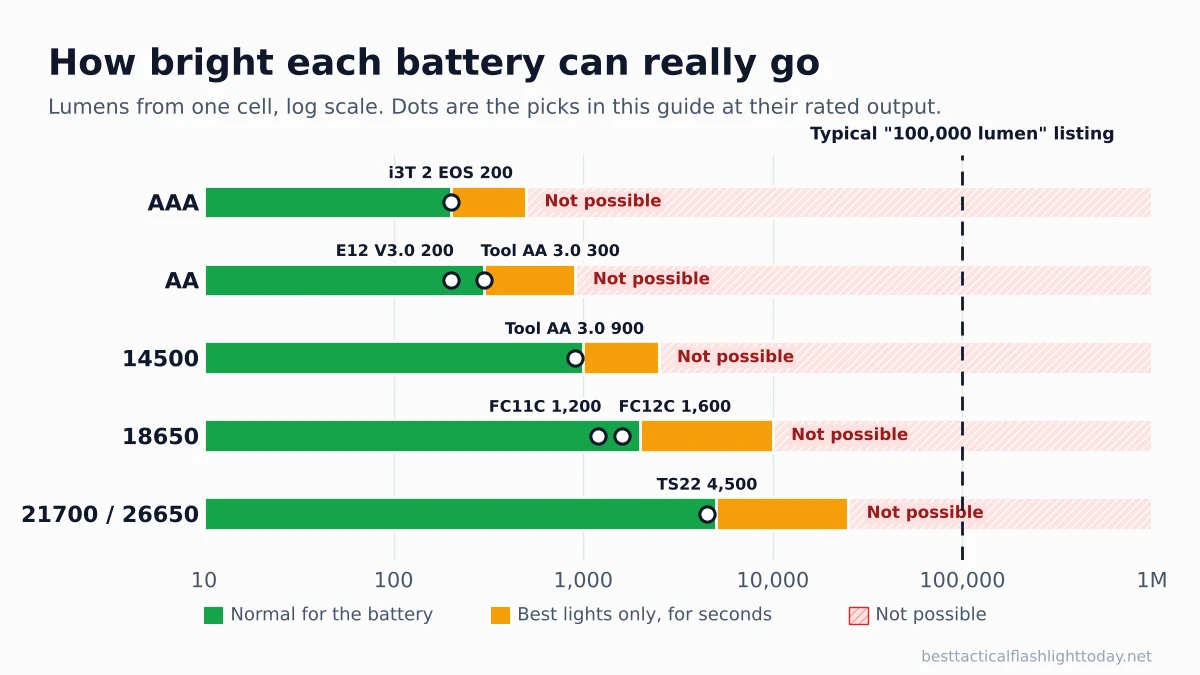
Each battery size has a ceiling, and every pick on this list sits inside the green honest band for its battery. The dashed line is where a typical 100,000 lumen listing lands: many times past the brightest real light on any of these cells.
What to Look For in a Budget Flashlight
Specs from a brand that measures them
The lumen number only means something if it was measured the same way every time. Brands that follow the ANSI/PLATO FL 1 standard measure output 30 seconds after the light turns on and count runtime until output falls to 10% of that figure, as Streamlight explains on its ANSI page. A listing that gives a lumen figure with no runtime for that mode is telling you it didn’t measure, or didn’t like what it found.
A regulated driver
The driver decides how the light behaves as the battery drains. A regulated buck or boost driver holds a set brightness until the battery is nearly empty, while a direct drive light starts bright and dims steadily. The three Wurkkos picks and the Fenix are all regulated, and that’s the biggest quality jump budget lights have made in the last few years.
The battery decides what the light really costs
AA and AAA lights are the cheapest to own when you already stock those batteries, and lithium AAs keep for years in a car. Lithium-ion lights like the 18650 and 21700 picks are brighter and cheaper to run, but only if the light charges by USB-C or comes with a cell. If it doesn’t, add a charger and a quality cell to the real price.
Buy replacement cells from the light’s maker or a brand you know. Counterfeit lithium-ion cells and generic chargers are a known fire risk, and UL Research Institutes advises ordering batteries from the device maker and avoiding cells that promise more than the original.
USB-C charging and a lockout
Charging on the light means any phone cable keeps it ready, and it’s the feature that makes a lithium-ion light practical for people who’ll never buy a separate charger. My best rechargeable flashlights guide covers more lights built that way. A lockout matters just as much if the light lives in a bag, because a light that turns on by accident drains its battery and can get hot. The FC11C and TS22 lock with four clicks, and the FC12C and Tool AA lock when you loosen the tail cap slightly.
Under $25 or $25 to $50
The lower bracket covers the single AA and AAA lights and, on sale, the 18650 picks. That’s enough light for a house, a car and a keychain. The upper bracket is where 21700 power, power bank output and a true tactical tail switch show up. Spend there if the light will see real work outdoors or has to carry you through a long outage.
Throw and flood matter as much as the price. A throw light like the FC12C reaches far but lights a narrow area, while the TS22 floods a wide area at shorter range. My candela vs lumens guide explains how to read those two numbers together.
FAQ
What is the best budget flashlight?
For most people it’s the Wurkkos FC11C. It has a regulated driver, a high CRI beam, USB-C charging and a magnetic tail at a price that used to buy a plastic flashlight. If you want much more output, the Wurkkos TS22 gives you 4,500 lumens and doubles as a power bank.
Are cheap flashlights with 100,000 lumens real?
No. A small light running on one 18650 or 26650 cell can’t come close to that number. The brightest single 21700 lights reach about 13,000 lumens for a few seconds, and a single 18650 tops out at a few thousand. Real 100,000 lumen lights exist, but they run on several large cells and weigh well over a kilogram. Use the Lumen Claim Checker above to test any listing.
Is an AA or an 18650 flashlight better on a budget?
An 18650 light is brighter, runs longer and costs less to run if it charges by USB-C. An AA light makes more sense when you already stock AA batteries or need a light that can sit in a drawer for months and still work. Many people keep one of each: an 18650 light for use and an AA light for the car.
How many lumens do I need in a flashlight?
For most jobs, 300 to 1,000 lumens is plenty. Around the house and in a tent, 50 to 200 lumens is easier on the eyes. Higher output helps when you’re scanning a large yard or a field, but on a small light it only lasts a few minutes before stepping down, so judge a light by the mode it can hold.
Bottom Line
If you buy one budget flashlight, make it the Wurkkos FC11C. It gets the details right that cheap lights usually miss, and it holds its brightness better than many lights that cost more. Pick the Wurkkos TS22 if you want the most light and a phone charger in one, or the Wurkkos FC12C if you want a tactical tail switch and serious reach.
For lights that run on everyday batteries, the Lumintop Tool AA 3.0 gets the most out of an AA, the Olight i3T 2 EOS rides on your keys, and the Fenix E12 V3.0 is the one to drop in a glovebox and forget until you need it.
