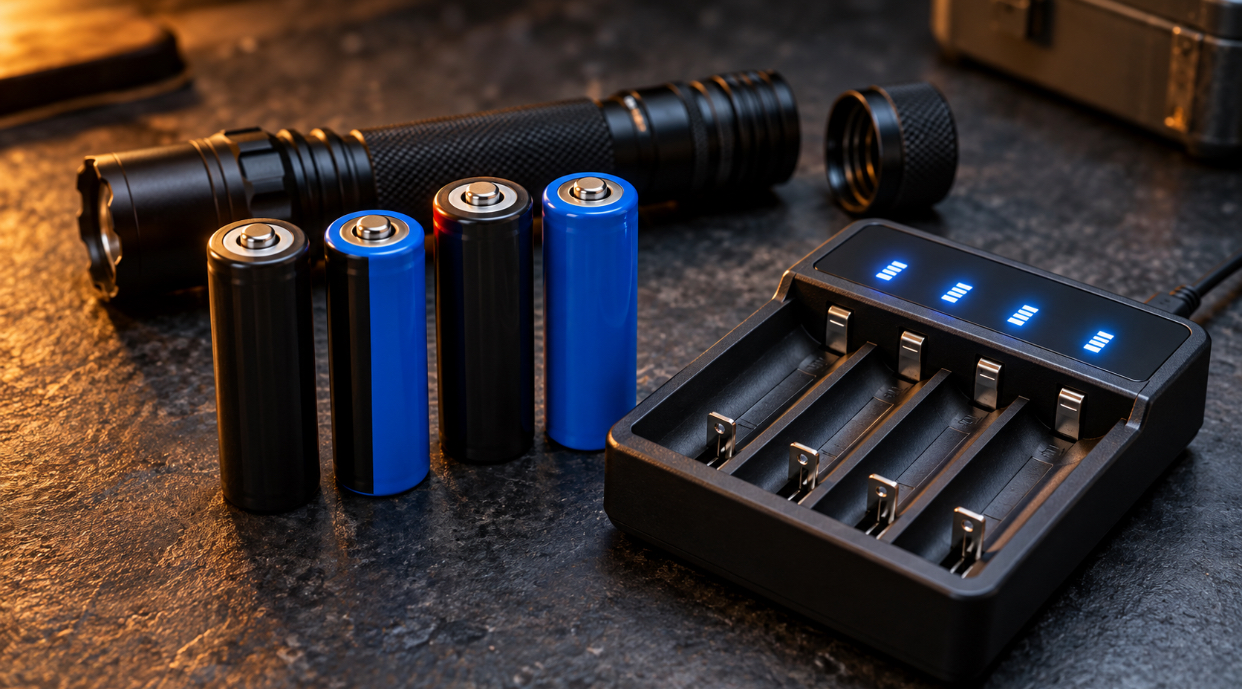
Buying a CR123A rechargeable battery is trickier than it looks, because the standard CR123A cells in your drawer can’t be recharged at all. The rechargeable versions, sold as RCR123A or 16340 cells, look almost identical, but most run at 3.6 to 3.7 volts instead of 3, and they hit 4.2 volts fresh off the charger. In the right flashlight, that means more output and no more buying disposables. In the wrong one, it can cook the driver in seconds.
Most battery listings skip that part. Every pick below comes from a brand that makes flashlights or serious chargers, not an anonymous eight pack, and each one fits a specific kind of light.
If you just want the answer, the Nitecore NL169R is my top pick for any flashlight rated for 16340 cells. If your gear only takes 3V, get the Paleblue CR123A. The compatibility guide after the reviews shows you how to tell which camp your light is in.
Quick Picks: The Best Rechargeable CR123A Batteries
Rechargeable CR123A Batteries Compared
1. Nitecore NL169R: Best Overall
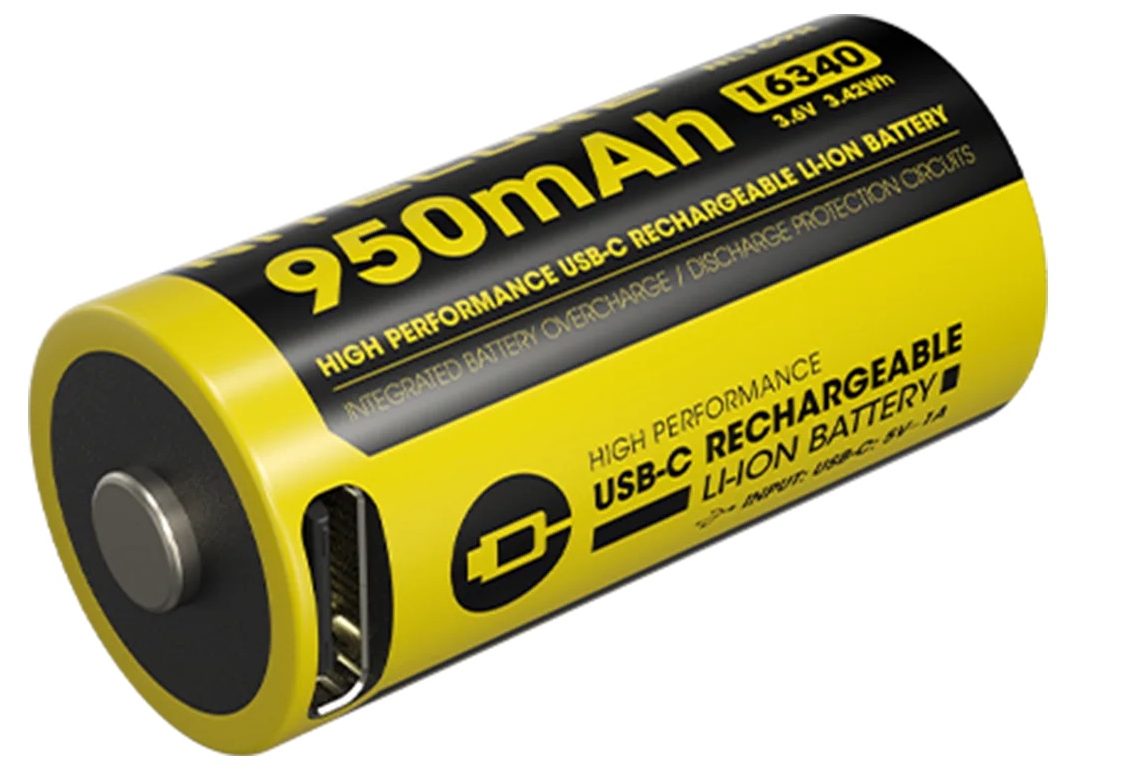
Why I chose it: The NL169R packs 950mAh into a cell the size of a CR123A. That’s the most capacity I found in a protected 16340 from a major brand. It’s best for single cell flashlights rated for 16340 or RCR123A cells.
Key specs
- Capacity: 950mAh at 3.6V (3.42Wh)
- Continuous discharge: 2A
- Charging: USB C port (5V, 1A) or any lithium ion charger
- Size and weight: 16.5 x 36.3 mm, 20 g
- Rated cycles: 500
Pros
- Highest capacity in this group
- Charge indicator light on the cell
- Works in a regular bay charger too
Cons
- 36.3 mm long, which is tight in some battery tubes
- 2A is low for the hungriest turbo modes
- One cable charges one cell
Performance analysis
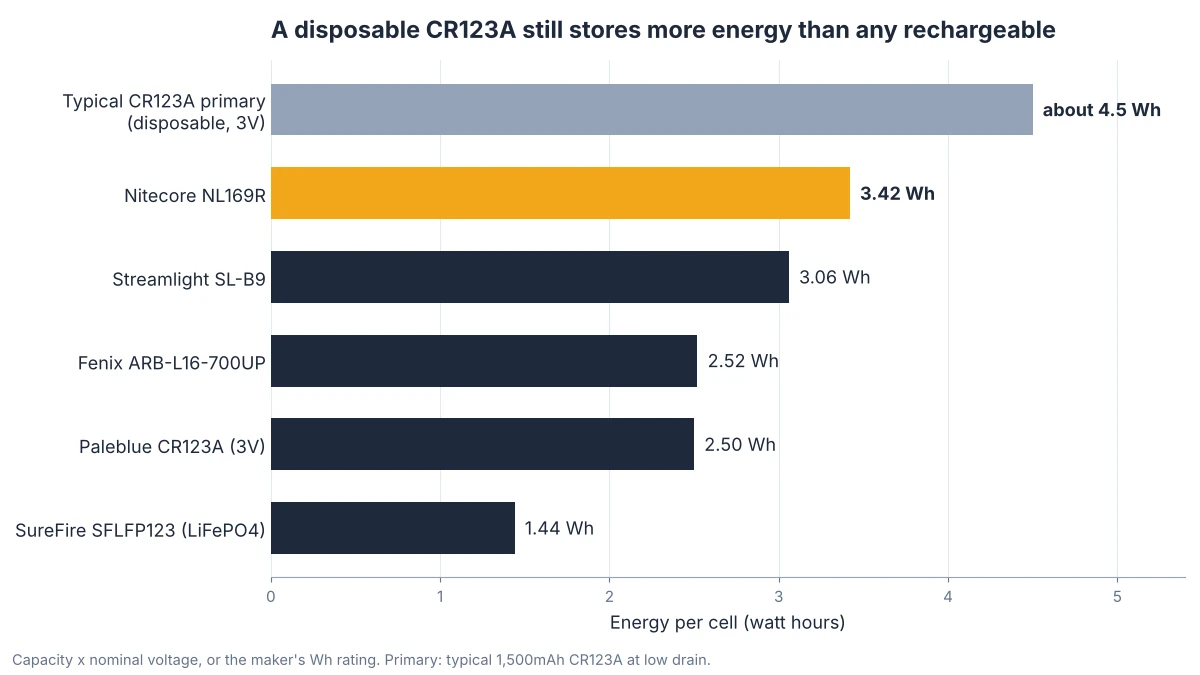
At 3.42Wh, the NL169R stores about a third more energy than the 700mAh cells most brands still sell. In a single cell EDC light, you’ll notice that on medium.
Length is the catch. The USB port and protection circuit add a couple of millimeters, and some compact lights may not close with it in. If yours is one of them, Nitecore’s NL169 is the same 950mAh cell without the port, at 34.1 mm.
If your light’s turbo pulls more than 2A, the Fenix below is the safer match.
2. Fenix ARB-L16-700UP: Best for High Drain Lights
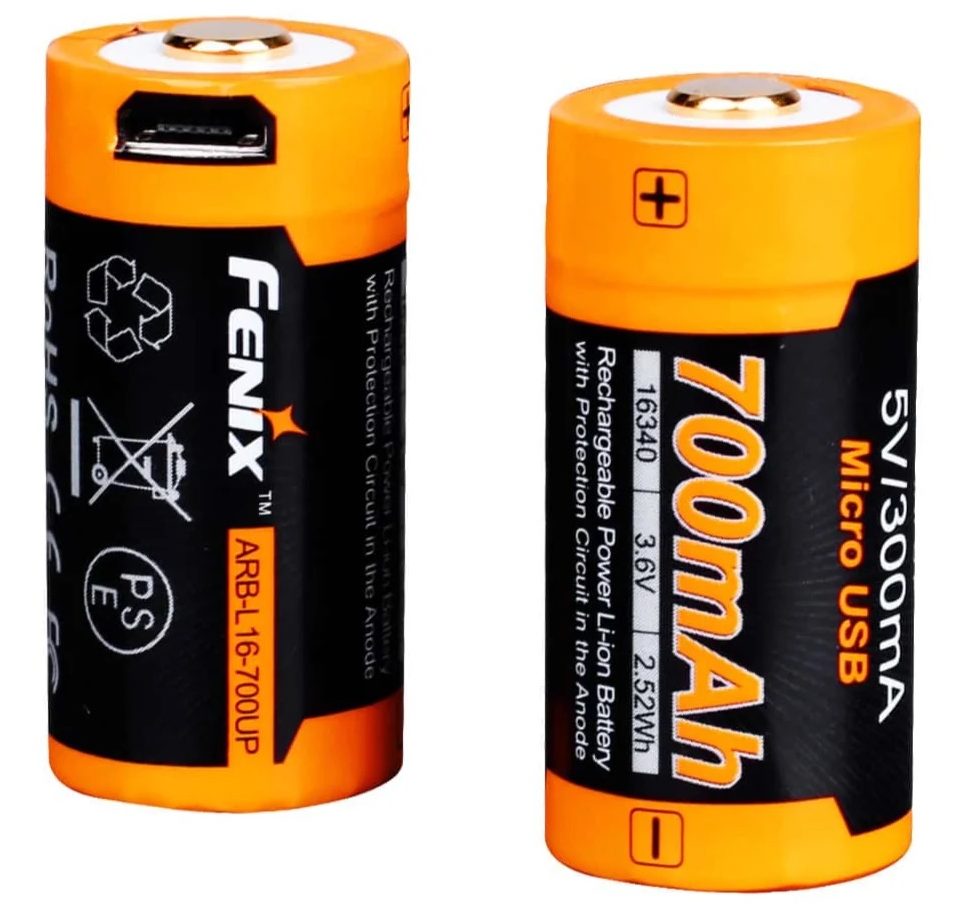
Why I chose it: The ARB-L16-700UP is rated for 2.5A, the highest discharge rating in this group. That matters in lights with hard turbo modes, where a weaker cell’s protection can trip. It’s best for high output single cell lights, especially Fenix models like the PD25 and E18R that list it as compatible.
Key specs
- Capacity: 700mAh at 3.6V (2.5Wh)
- Max discharge: 2.5A
- Charging: Micro USB port at 0.3A, or a charger at up to 0.7A
- Build: steel shell, pressure relief vent, built in protection
- Rated cycles: 500, keeping about 75% capacity
Pros
- Highest current rating here
- Steel shell stands up to drops
- Charge indicator light on the cell
Cons
- Micro USB, not USB C
- No cable in the box
- Slow charging through the port
Performance analysis
It gives up 250mAh to the Nitecore, and in exchange it holds up better when a light pulls hard.
Micro USB feels dated in 2026, and at 0.3A a drained cell needs well over two hours to fill. I’d charge it in a bay charger like the XTAR VC4SL and treat the port as a backup for trips.
3. Streamlight SL-B9: Best for Streamlight Weapon Lights
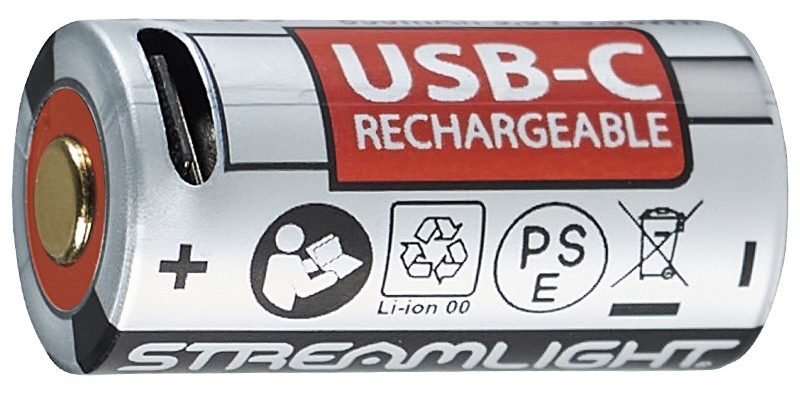
Why I chose it: Streamlight built the SL-B9 for its multi fuel weapon lights, so it’s the rechargeable those lights are actually rated for. Run a TLR-7 X Sub on it and output climbs to 725 lumens and 7,700 candela, up from 550 lumens and 5,000 candela on a CR123A. It’s best for owners of SL-B9 compatible Streamlight lights like the TLR-7 X, TLR-7 HL-X and TLR-1 HL-X.
Key specs
- Capacity: 850mAh at 3.6V (3.1Wh)
- Charging: USB C port, about 2.5 hours
- Rated cycles: up to 300
- Length and weight: 1.36 inches, 0.70 oz
- Extras: red and green charge indicator, optional 8 bay bank charger
Pros
- Approved by Streamlight for its weapon lights
- Real output gain over a CR123A
- USB C on every cell
Cons
- Only for Streamlight lights listed as SL-B9 compatible
- Lowest rated cycle count here
- Streamlight warns against heat above 140°F (60°C)
Performance analysis
Streamlight tunes these lights to use the extra voltage, which is where that 30% jump in lumens comes from. Expect up to an hour of continuous use per cell.
Retailer lists don’t all agree on which models take the SL-B9, so confirm it in your light’s manual. A car in summer can easily pass 140°F, so keep spares out of the glovebox. My best pistol lights guide covers which lights run this cell.
4. Paleblue CR123A: Best 3V Replacement
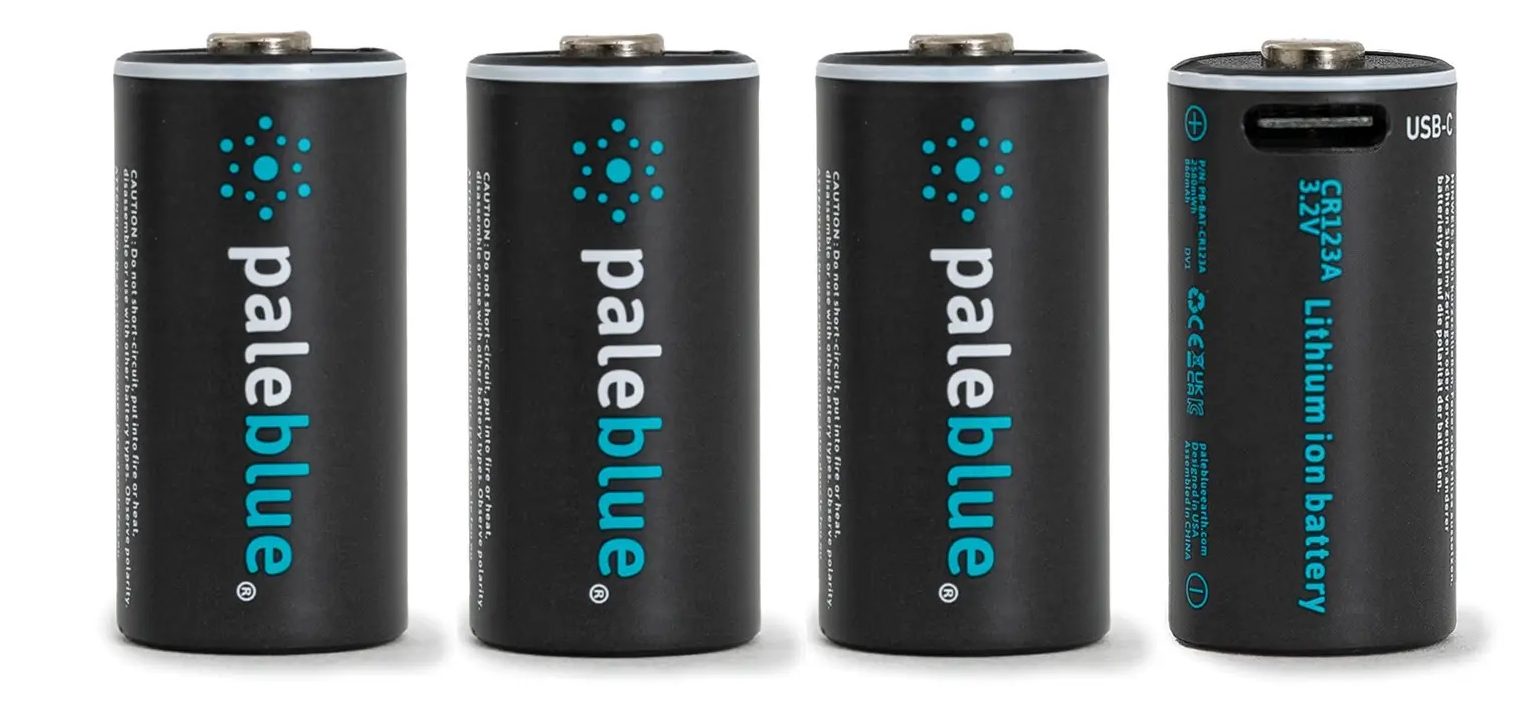
Why I chose it: Paleblue’s cell has a small regulator inside, so it puts out a steady 3V instead of 3.7V. That makes it the safe choice for gear that can’t take a 16340. It’s best for 3V only devices and moderate output flashlights.
Key specs
- Output: 3V regulated
- Capacity: 860mAh, rated at 2,500mWh
- Charging: USB C on each cell, about 100 minutes
- Rated cycles: 1,000
- Working temperature: -20°C to 60°C (-4°F to 140°F)
Pros
- Safe voltage for 3V only gear
- Highest cycle rating here
- Charges four cells at once with the included cable
Cons
- No published max current rating
- Less stored energy than the Nitecore or Streamlight
- Shuts off with little warning when it runs out
Performance analysis
Paleblue rates it at 2,500mWh of output, below the Nitecore’s 3,420mWh, because the converter inside costs some efficiency. In return, your device sees 3V from full to nearly empty, just like a disposable.
A primary sags as it drains, so your light dims and warns you. A regulated cell holds full brightness and then cuts out, so carry a spare.
Paleblue doesn’t publish a max discharge current, so I wouldn’t put it in a weapon light or a flashlight with a hard turbo mode. For a camera or a modest single cell light, it’s the easiest swap here.
5. SureFire SFLFP123 Kit: Best for SureFire Lights
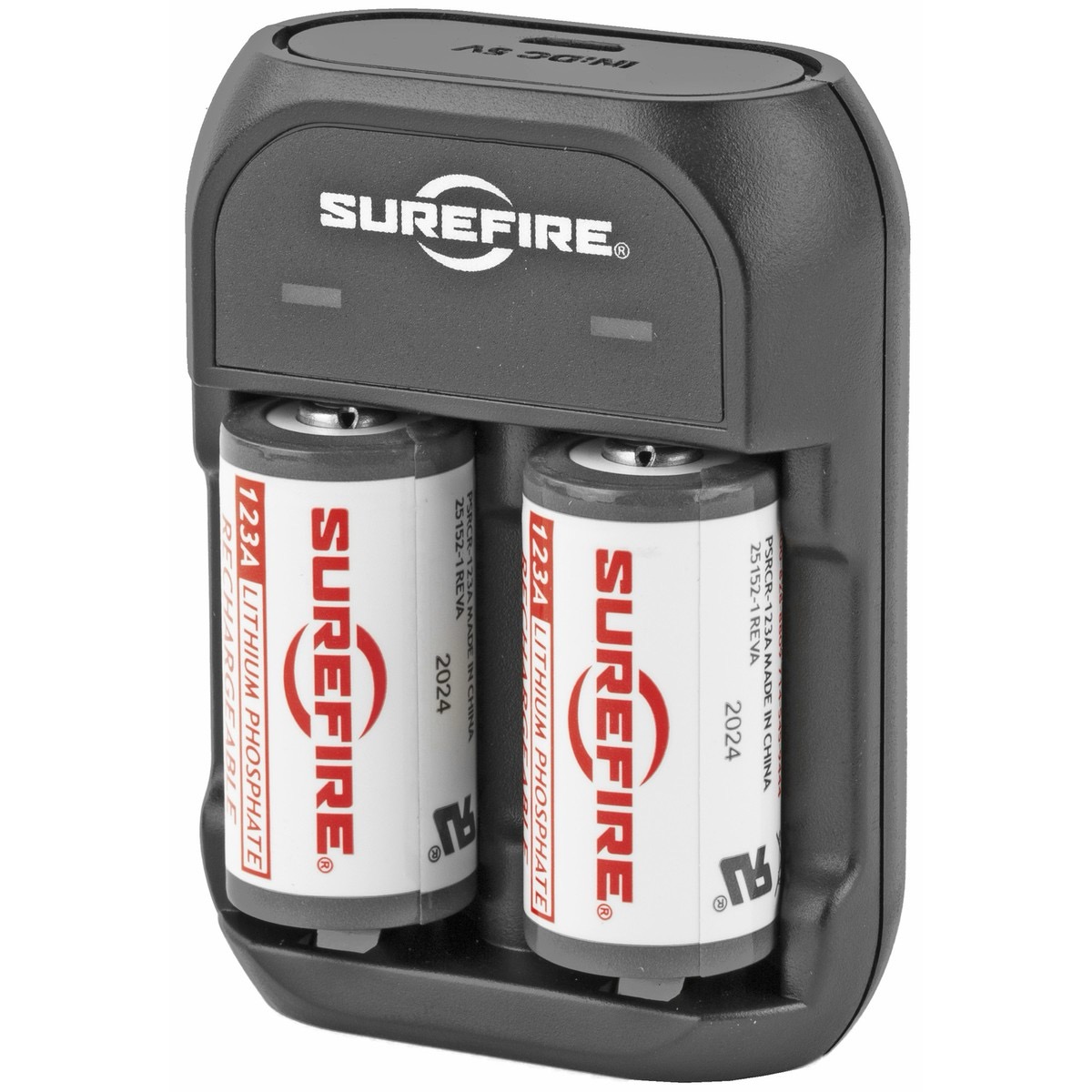
Why I chose it: SureFire’s kit pairs two lithium iron phosphate (LiFePO4) cells with a matching two bay charger. LiFePO4 runs at 3.2V and tops out at 3.65V, far closer to a CR123A than a 4.2V lithium ion cell. SureFire approves it for its LED WeaponLights and hands free lights. It’s best for SureFire owners who are done buying disposables.
Key specs
- Chemistry: LiFePO4, 3.2V nominal, 3.65V full
- Capacity: 450mAh (1.44Wh) per cell
- Max discharge: over 2C
- In the kit: two cells, a two bay charger and a Micro USB to USB A cable
- Charge time: 1.5 to 3 hours for one or two cells
Pros
- Voltage close to a CR123A
- Approved by SureFire for its LED lights
- Charger built for the chemistry
Cons
- Lowest capacity here
- Much shorter runtime than disposables
- Not for incandescent lights
Performance analysis
SureFire’s own SFLFP123 product page warns that these cells run significantly shorter than disposables. At 1.44Wh per cell, they hold about a third of the energy in a typical lithium primary.
So use it for training and everyday carry, and load fresh primaries before the light goes on duty or into storage.
Charge these only in the SureFire charger or another charger with a LiFePO4 setting. A standard lithium ion charger pushes cells to 4.2V, which is wrong for this chemistry. The XTAR VC4SL below doesn’t support LiFePO4.
6. XTAR VC4SL: Best Charger
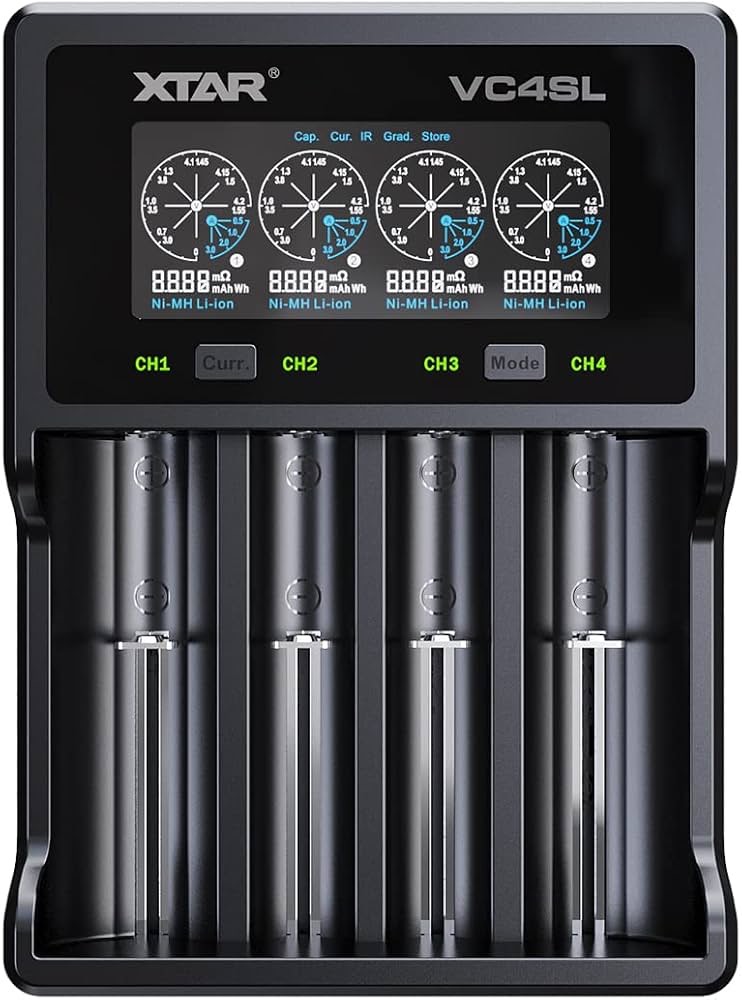
Why I chose it: A good bay charger is still the best way to look after 16340 cells. The VC4SL has four independent bays and a display that shows each cell’s voltage, current and internal resistance. It’s best for anyone running more than a couple of rechargeables, including the 18650s in your bigger lights and the cells in your AA flashlights.
Key specs
- Bays: 4, independent
- Charge current: 0.25, 0.5, 1, 2 or 3A, set manually
- Input: USB C, QC 3.0 compatible
- Chemistries: 3.6V/3.7V lithium ion, NiMH and NiCd
- Sizes: 16340, 18650, 21700, AA, AAA and more
Pros
- Low current settings suit small cells
- Reads internal resistance to flag worn cells
- Charges nearly every size you own
Cons
- One current setting for all four bays
- Auto mode can pick a high current for small cells
- No LiFePO4 support
Performance analysis
Left alone, the charger picks a current based on each cell’s internal resistance, and for small cells it can pick high. For 16340s, I’d press the current button down to 0.5A. That’s about half the capacity of these cells, a gentle rate.
Internal resistance climbs as a cell ages. When one cell in a matched pair reads well above its partner, it’s time to retire the pair from two cell use.
Will a Rechargeable CR123A Work in Your Light?
Rechargeable replacements come in three types, and voltage is what separates them:
- 3.6V/3.7V lithium ion (16340, RCR123A): 4.2V when full. The most capacity and the most output, but only for gear rated for it.
- 3.2V LiFePO4: 3.65V when full. Much closer to a CR123A, with less capacity, and it needs a LiFePO4 charger.
- 3V regulated: a lithium ion cell with a converter that holds the output at 3V. The safest swap for 3V gear.
Check your light before you buy
Look in the manual or on the maker’s site for “16340,” “RCR123A” or a voltage range that reaches 4.2V. If the manual lists only CR123A, assume it’s 3V only and stick with the Paleblue or the SureFire kit.
Two cell lights are the real trap
Two fresh CR123As give a light about 6V. Two charged 16340s give it 8.4V, 40% more. Plenty of lights built for two CR123As can’t handle that, so never run two 3.7V cells unless the manual says you can.
The better upgrade is often a single 18650. It’s about the length of two CR123As, and some two cell lights are designed to take one, like the Streamlight ProTac 2L-X from my best self defense flashlight picks. A 3,500mAh 18650 stores about 12.6Wh, nearly double the 6.84Wh in two NL169Rs. My best 18650 flashlights guide covers lights built around that cell.
Protected cells, button tops and length
Every 16340 here is protected, with a circuit that cuts power if the cell is overcharged, overdrained or shorted. The circuit adds length, though. A CR123A is about 34.5 mm long, and USB cells often run a millimeter or two longer, so check that your tube closes. Most flashlights also need a button top, and the Nitecore, Fenix and Streamlight cells all have one.
When disposables still win
Rechargeables win on cost over time, not on runtime. A typical lithium CR123A holds around 1,500mAh at 3V, roughly 4.5Wh, which is more than any rechargeable here. Primaries also keep their charge for about ten years and cope with cold better than lithium ion. For a car kit, a go bag or a power outage flashlight, keep primaries loaded.
Charging, Storage and Flying Rules
Never mix rechargeables and primaries in one light, and keep cells you run in pairs together as a matched set. In series, a weaker cell gets pushed past empty by its partner, which can overheat it.
Charge on a hard, nonflammable surface and stay nearby. Don’t charge a lithium ion cell below freezing. For long storage, leave cells partly charged in a cool, dry place rather than full or empty.
The FAA’s PackSafe rules say spare lithium ion cells go in carry on bags only, with the terminals protected from short circuits. A plastic battery case does the job. A 16340 holds under 4Wh, far below the FAA’s 100Wh limit per battery, so you don’t need airline approval.
If you’d rather skip loose cells and a separate charger, a light that charges over USB-C may suit you better. My rechargeable flashlight guide compares seven, including one that falls back on AAA batteries when its pack runs flat.
FAQ
Are CR123A batteries rechargeable?
Standard CR123A batteries aren’t. They’re lithium primaries, and trying to charge one can make it leak, vent or catch fire. Rechargeable versions are sold as RCR123A or 16340 cells, plus a few 3V regulated and LiFePO4 options.
Can I use a 3.7V battery in a 3V device?
Only if the device maker says so. Many LED flashlights handle up to 4.2V, but cameras, sensors and older lights often don’t, and the extra voltage can destroy them. If you’re not sure, use a 3V regulated cell like the Paleblue.
Will rechargeable CR123A batteries work in Arlo cameras?
The older Arlo wire free cameras that take CR123A cells, like the VMC3030 and VMC3430, can run on 3.7V RCR123A cells, and Tenergy sells packs labeled Arlo certified for them. Most newer Arlo models use their own rechargeable battery packs instead.
Can I use an 18650 instead of two CR123As?
In many lights, yes. An 18650 is about the length of two CR123As and only slightly wider, so it fits a lot of two cell lights. Check the manual first, since some tubes are too narrow. When it fits, you get close to double the energy of two 16340s on one charge.
The Bottom Line
For most flashlights rated for 16340 cells, the Nitecore NL169R is the best rechargeable CR123A you can buy right now. Pair it with the XTAR VC4SL and you’re set for years.
Run Streamlight weapon lights on the Streamlight SL-B9 and SureFire lights on the SureFire SFLFP123 Kit. If your light pulls hard on turbo, the Fenix ARB-L16-700UP is the safer cell. For anything that only takes 3V, the Paleblue CR123A is the safe swap. Whatever you buy, check your light’s voltage first, and keep disposables in the kits you don’t touch for months.
