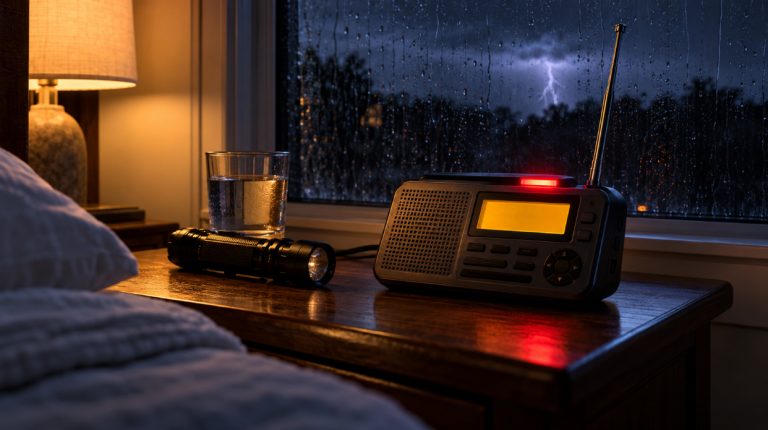

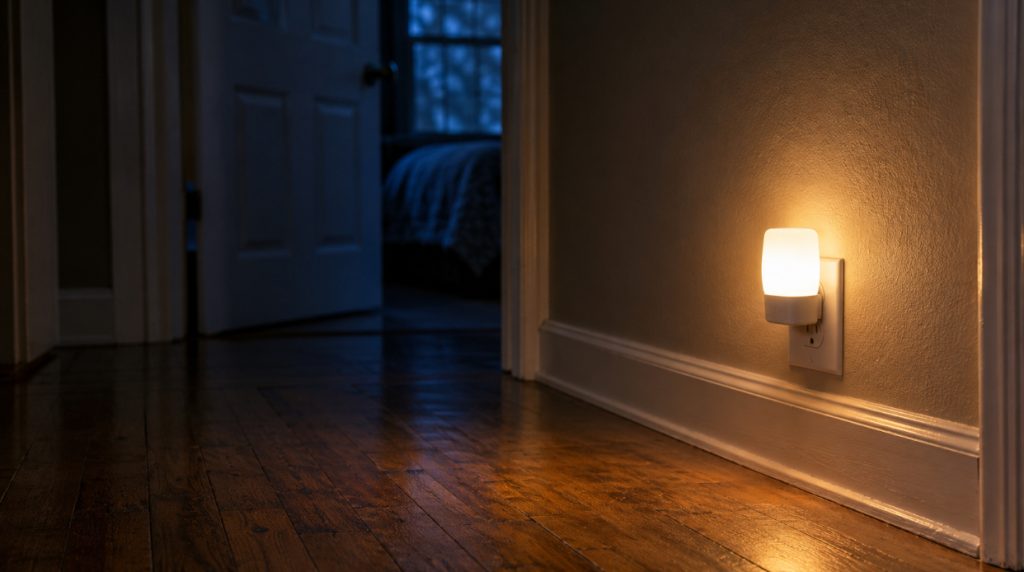
The furnace is what wakes you, or really the quiet it leaves when it shuts off at ten past two in the morning in the first good cold snap of the year. You swing your feet out of bed, reach for the lamp out of habit and get nothing. Out in the hallway it’s that thick, all the way dark a house only gets with the power out, the kind where you find the dog by stepping on him.
Short on time? Skip to my picks
Now picture the same night with a few power outage lights plugged in. The second the power drops, a little light by the bathroom door comes on by itself. Another one glows at the top of the stairs, and the one beside your bed is already lit, waiting for you to pull it out of the wall and carry it to the breaker panel. Nobody stubs a toe, and the dog keeps his dignity.
I’ll be straight with you about what these are before you buy a six-pack. They’re small guide lights, most of them somewhere between 5 and 40 lumens, and the ones with a sealed battery usually run for a few hours, not the whole night. That’s fine, because their real job is the first ten minutes. They get everybody out of bed and down the hall to the battery lantern without anyone fumbling for a candle, which is exactly what the U.S. Fire Administration tells people to avoid when the power goes out.
Here’s my short list. The GE 3-in-1 is the one I’d put in most outlets, since it lights up on its own and folds into a little flashlight. The Energizer 4-in-1 six-pack covers a whole house in one box, and if your outages run long, the GE 4-in-1 that runs on AA batteries keeps going for days on low because you can swap the batteries. Right under the picks there’s a room by room list that shows where each kind goes and how many you’ll want.
Quick Picks: The Best Power Outage Lights
- GE 3-in-1 Rechargeable Power Failure Night Light: best for bathrooms, bedrooms and any outlet where you’d want a night light anyway.
- Energizer 4-in-1 Power Failure Night Light (6-Pack): best for covering a whole floor of the house with one order.
- Enhon 4-in-1 Motion Sensor Emergency Light: best for hallways, staircases and the path to the bathroom.
- Energizer WeatherReady Auto-On Flashlight (3-Pack): best for the outlet by your bed and the one nearest the breaker panel.
- GE 4-in-1 Power Failure Light With AA Batteries: best for the kitchen and long outages that run into a second night.
- Amerelle Power Failure Light (71134): best for kids’ rooms and a parent’s room down the hall.
- SnapPower StormLight: best for hallways and rooms where every outlet is already taken.
Power Outage Lights Compared
How Many Power Outage Lights You Need and Where to Put Them
Think about the walk you’d make at 2 a.m. with the power out, from your bed to the bathroom, the kids’ rooms, the stairs and the breaker panel. Every spot along that walk gets a light. Here’s the one I’d put in each place.
To get a count, add one per bedroom, one per hallway, one at the top and bottom of each staircase, one per bathroom, one for the kitchen and one by the panel. A single story, three bedroom house with two bathrooms comes out to about eight lights. A two story house with a staircase usually lands somewhere between ten and twelve, which is why the six-packs make sense.
1. GE 3-in-1 Rechargeable Power Failure Night Light: Best Overall
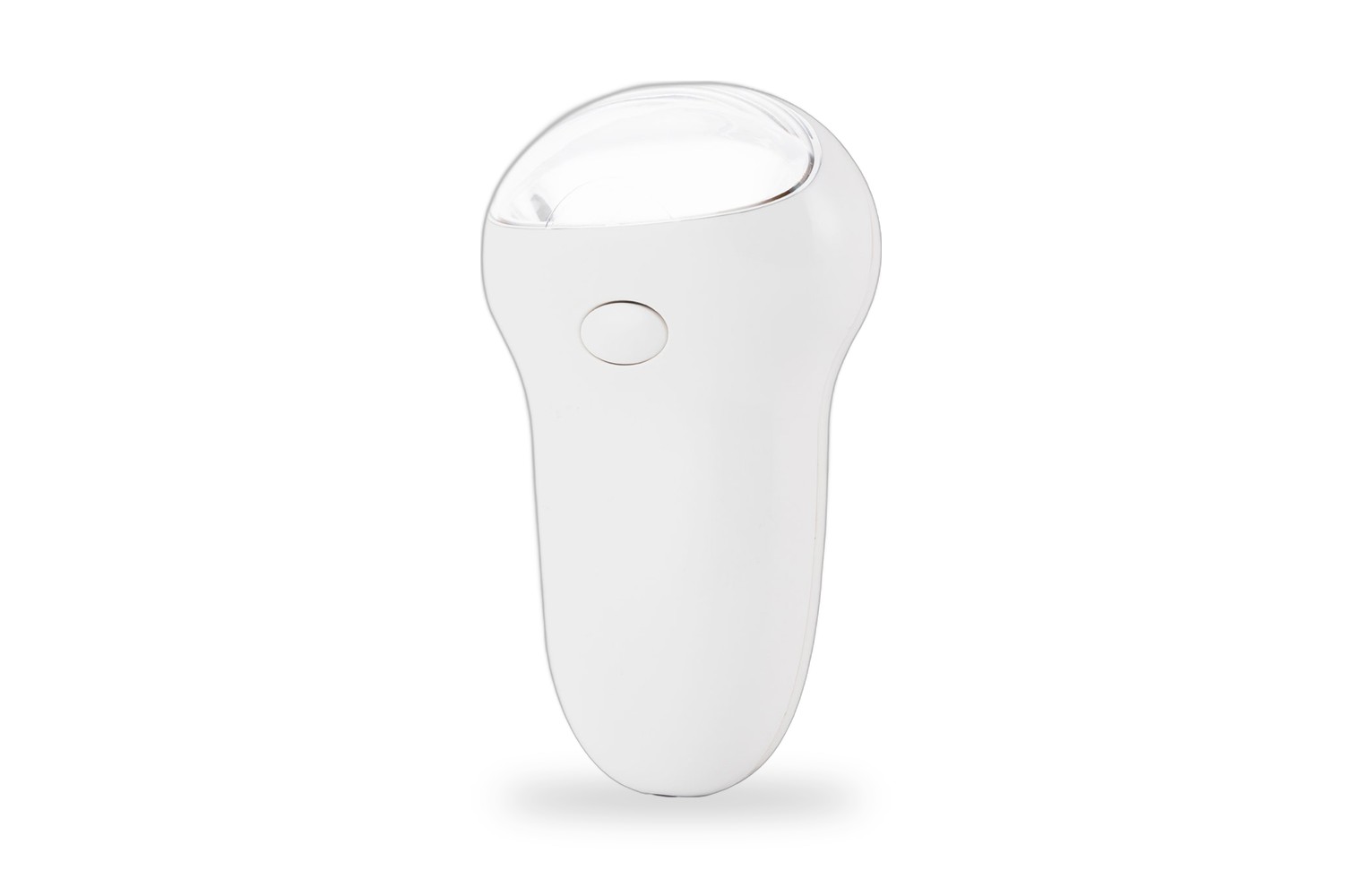
Why I chose it: GE’s little 3-in-1 is the plug-in I’d buy if you only bought one kind. Every evening it works as a dusk to dawn night light at 5 lumens. The moment the power fails it jumps to 20 lumens, and once you fold the prongs in, it pulls out of the wall as a flashlight. It’s UL certified and charges itself while it sits in the outlet, so there’s nothing to look after. It’s best for bathrooms, bedrooms and any outlet where you’d want a night light anyway.
Key specs
- Night light: 5 lumens, dusk to dawn
- Outage light: 20 lumens
- Flashlight: 20 lumens
- Battery: Built in, not replaceable
- First charge: At least 12 hours
- Certification: UL
- Model: 11281
Pros
- Comes on the instant the power drops
- Earns its outlet every night as a night light
- Small enough for a bathroom outlet
- Nothing to set up after the first charge
Cons
- GE doesn’t give a runtime
- The battery can’t be replaced
- 20 lumens is guide light, not room light
In real use: Give it a full 12 hours on the wall before you trust it, which is what GE’s instructions ask for. Then pull it out once to make sure the outage mode is on. If it lights up in your hand, you’re set.
In an outage it gives you enough light to find the door handle and see the floor in front of you. Carry it to the lantern, get that going, and switch the GE off so there’s battery left for a trip to the bathroom at 4 a.m.
2. Energizer 4-in-1 Power Failure Night Light (6-Pack): Best for the Whole House
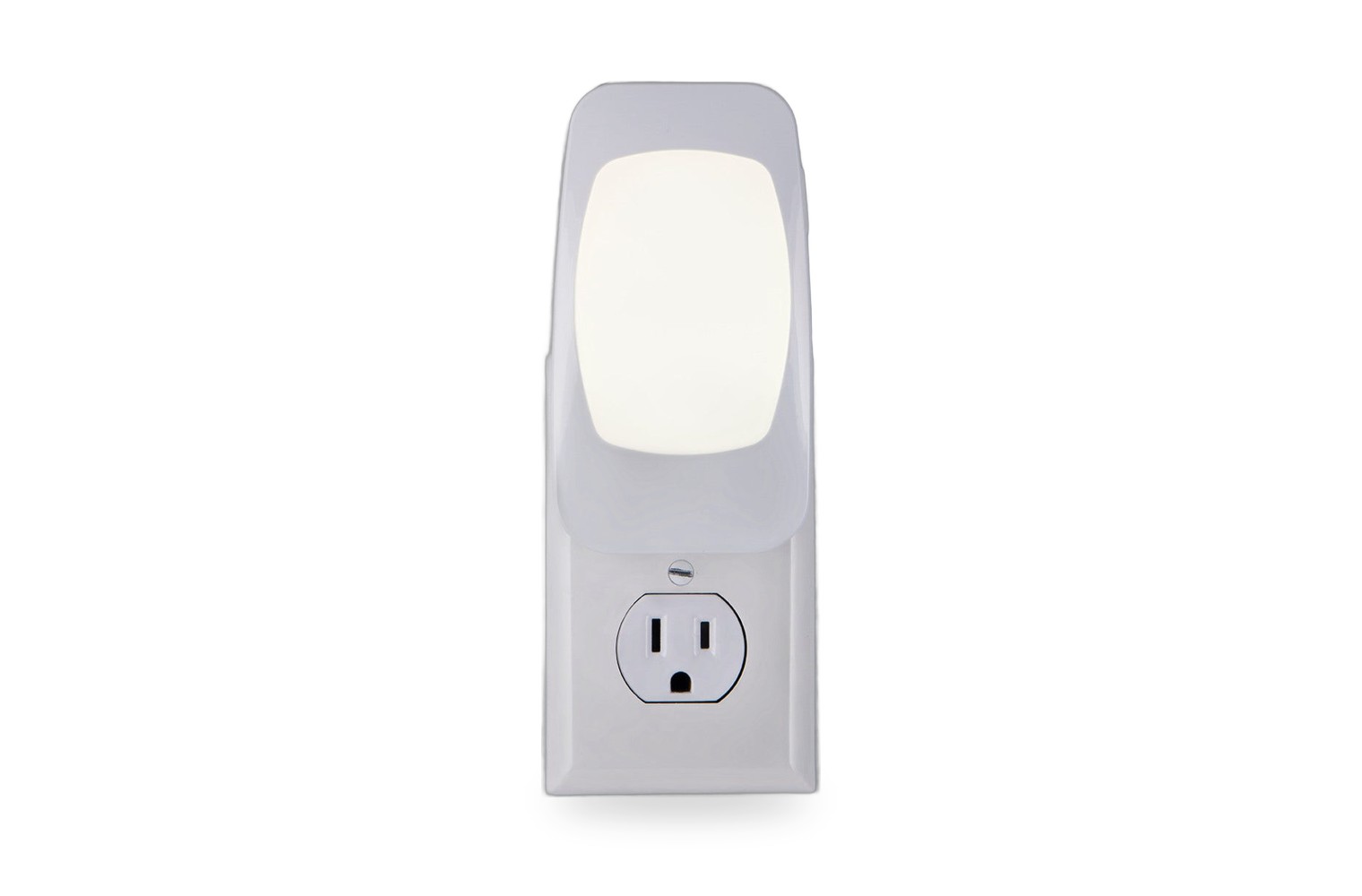
Why I chose it: Most homes need more than one or two of these, and Energizer’s six-pack covers the whole house in one box. Each light does four jobs. It’s a light sensing night light, an outage light, a tabletop light when you lay it on its back and a 40 lumen flashlight when you pull it out. Jasco makes these for Energizer, the same company behind the GE lights, and the plug folds flat so it rides in a pocket. It’s best for covering a whole floor of the house with one order.
Key specs
- Flashlight: 40 lumens, soft white
- Night light: Dusk to dawn sensor
- Uses: Night light, outage, table, flashlight
- Battery: Built in, not replaceable
- Plug: Folds flat
- Pack: 6 lights
Pros
- Enough lights for a whole floor
- Twice the flashlight output of the GE 3-in-1
- Lies flat as a little table light
- Folding plug for carrying
Cons
- No runtime given
- Sealed battery
- The nightly glow may bother light sleepers
In real use: I’d spread these out first and fill the gaps with the other picks. One in each bedroom, one in each bathroom and one in the hallway uses up the box in a typical three bedroom house.
Lay one on the kitchen table when the power goes and you’ll have enough light to find the lantern, the radio and the deck of cards. That covers the first hour of most outages.
3. Enhon 4-in-1 Motion Sensor Emergency Light: Best for Hallways and Stairs
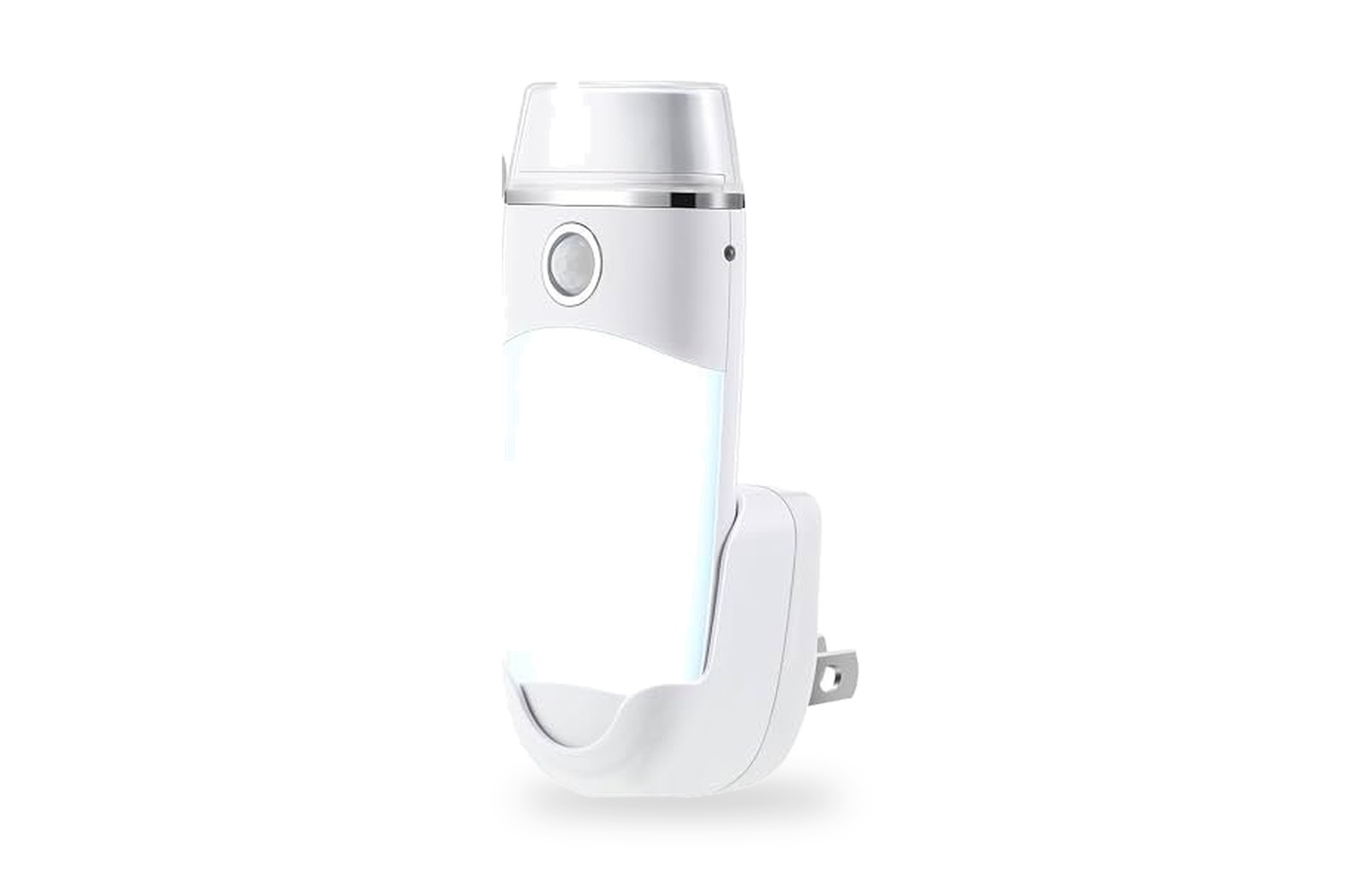
Why I chose it: Enhon’s plug-in is the one I’d put where people walk. It glows as a night light, gets brighter when it picks up somebody moving within about 7 to 10 feet, and comes on by itself when the power fails. Pull it from the wall and it’s a flashlight rated at up to 130 lumens, the brightest in this group by a good margin. Inside is a lithium-ion battery rated for about 4 hours. It’s best for hallways, staircases and the path to the bathroom.
Key specs
- Max output: Up to 130 lumens
- Motion range: About 7 to 10 feet
- Battery life: About 4 hours
- Battery: Built-in lithium-ion
- Modes: Night, motion, outage, flashlight
- Pack sizes: 2, 3, 4 or 6 lights
Pros
- Brightest flashlight mode on this list
- Motion mode stretches the battery in an outage
- Bright enough to light a full flight of stairs
- Packs big enough for a two story house
Cons
- Not a household brand name
- Specs vary a little between pack sizes
- Sealed battery
In real use: Put one at the top of the stairs and one at the bottom. In motion mode it stays dim until someone heads that way, then brightens long enough to get them down, so it isn’t burning battery all night on an empty staircase.
Enhon sells this light in white, silver and a warm white version, and the warm white is easier on the eyes at 2 a.m. Pick the pack size by counting your stairs and hallways first.
4. Energizer WeatherReady Auto-On Flashlight (3-Pack): Best Grab-and-Go Flashlight
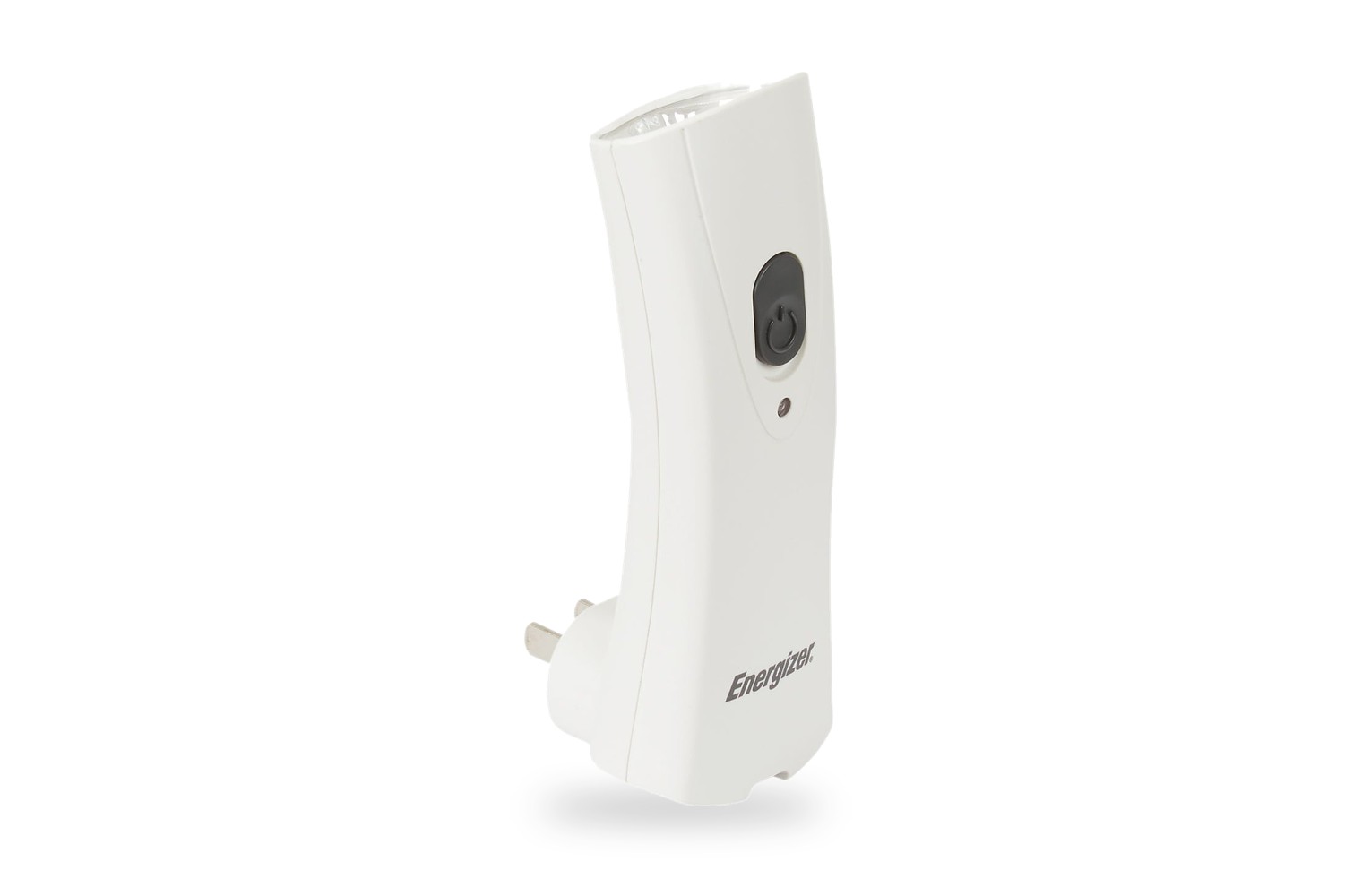
Why I chose it: Energizer’s WeatherReady is a compact handheld flashlight that happens to live in a wall outlet. It charges there, comes on by itself when the power fails, and its plug slides away into the body when you pull it out. It puts out 40 lumens with a beam that reaches about 30 meters, so you can actually point it down the basement stairs, and Energizer rates it for 3 hours under the ANSI FL1 standard. A red LED tells you it’s charging. It’s best for the outlet by your bed and the one nearest the breaker panel.
Key specs
- Output: 40 lumens
- Beam: Up to 30 meters
- Runtime: 3 hours (ANSI FL1)
- Recharge: About 12 hours
- Battery: Built-in NiMH
- Drop rating: 1 meter
- Pack: 3 lights
Pros
- Throws a real beam you can aim
- Runtime tested to a published standard
- Charging light shows it’s working
- Plug slides away for a comfortable grip
Cons
- No night light mode
- Takes about 12 hours to recharge
- Sealed battery
In real use: This is the one you grab when the power goes and you need to go look at something, like the breaker panel, the sump pit or that noise in the garage. Three hours is plenty for that kind of job.
Keep one in the outlet you can reach from bed and one near the panel or the door to the garage. That’s where you’ll be pulling the manual release cord on the garage door opener.
5. GE 4-in-1 Power Failure Light With AA Batteries: Best for Long Outages
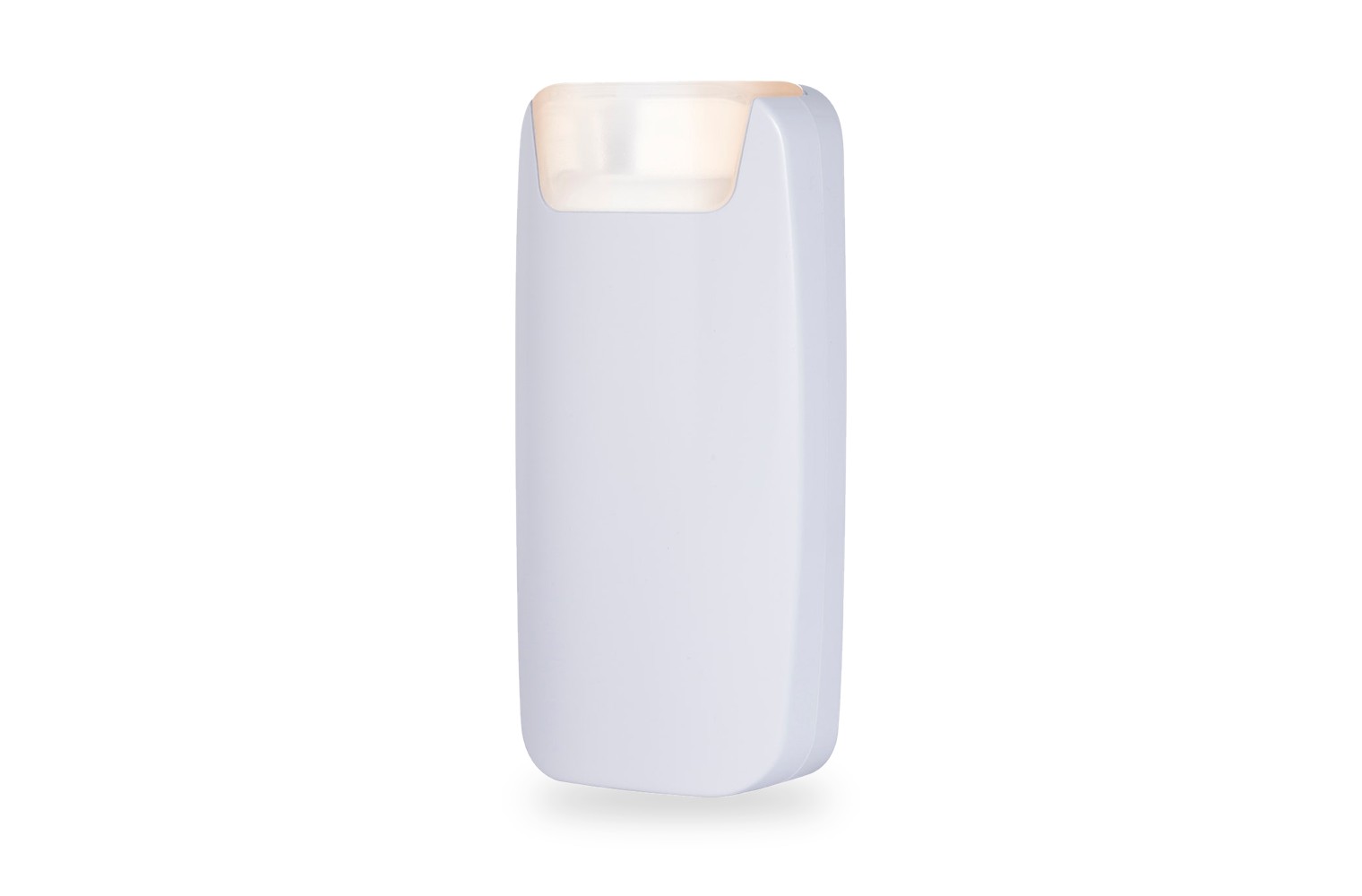
Why I chose it: Here’s the pick most lists skip. Every other plug-in on this page has a small sealed battery, and this GE runs on three ordinary AA batteries instead. GE rates it for up to 250 hours on low, and since the batteries aren’t used while it’s plugged in, they sit there fresh until the power fails. When they finally run down, you drop in new ones and it’s good as new. It’s best for the kitchen and long outages that run into a second night.
Key specs
- Flashlight: 40 lumens
- Night light: 5 lumens, dusk to dawn
- Runtime: Up to 250 hours on low
- Batteries: 3 AA, included
- Switch: Hi, Low, Off
- Battery use: None while plugged in
Pros
- By far the longest runtime here
- Swappable batteries, so it never ages out
- High and low settings
- Takes lithium AAs for long storage
Cons
- Batteries are one more thing to keep on hand
- Low mode is a soft glow, not room light
- Easy to mix up with GE’s rechargeable 4-in-1
In real use: Read the box before you buy. GE also makes a rechargeable 4-in-1 that looks nearly the same, and Jasco’s own support team has said that one lasts close to 2 hours. The AA version is the one you want for long outages.
I’d load it with lithium AA batteries, which hold their charge for years in a drawer, and set it on low on the kitchen counter. It’ll glow all evening and still be going when the coffee pot can’t.
6. Amerelle Power Failure Light (71134): Best for Bedrooms
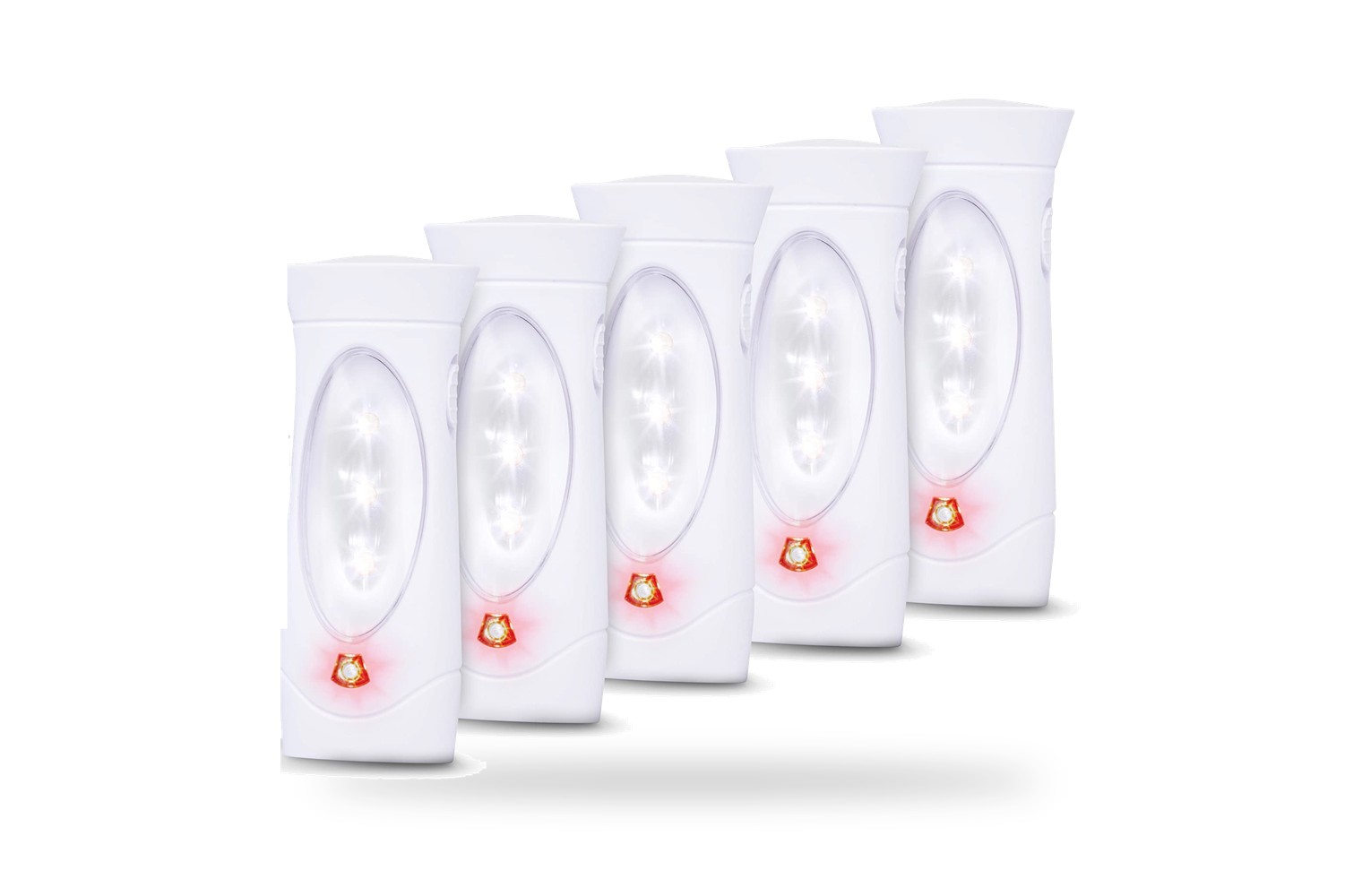
Why I chose it: Amerelle, the brand AmerTac sells these under, makes a slim plug-in with a detail I like for bedrooms. While it’s on the wall it shows a small red glow so you know it’s charged, and red light doesn’t keep anybody awake. When the power fails, the white front panel lights up on its own, and you can pull it out to use as a flashlight. Amerelle rates it for up to 7 hours on a full charge, the longest of the sealed battery picks. It’s best for kids’ rooms and a parent’s room down the hall.
Key specs
- Runtime: Up to 7 hours
- Battery: 3.6V 200mAh NiMH, built in
- Guide light: Red, on while charging
- Outage light: White front panel
- Flashlight: Yes
- Pack sizes: 2 to 6 lights
Pros
- Longest runtime of the sealed batteries
- Red glow is easy on sleepers
- Front panel spreads light wider than a single LED
- Simple to use, even for kids
Cons
- Small battery, so the light is gentle
- No dusk to dawn night light
- Plain looks
In real use: That 200 mAh battery holds well under one watt-hour, so the long runtime comes from running the panel softly. It won’t light a room the way a lantern does.
That’s what a bedroom needs anyway. A sleepy kid sees the room and the door, doesn’t panic, and comes down the hall to find you.
7. SnapPower StormLight: Best When You’re Short on Outlets
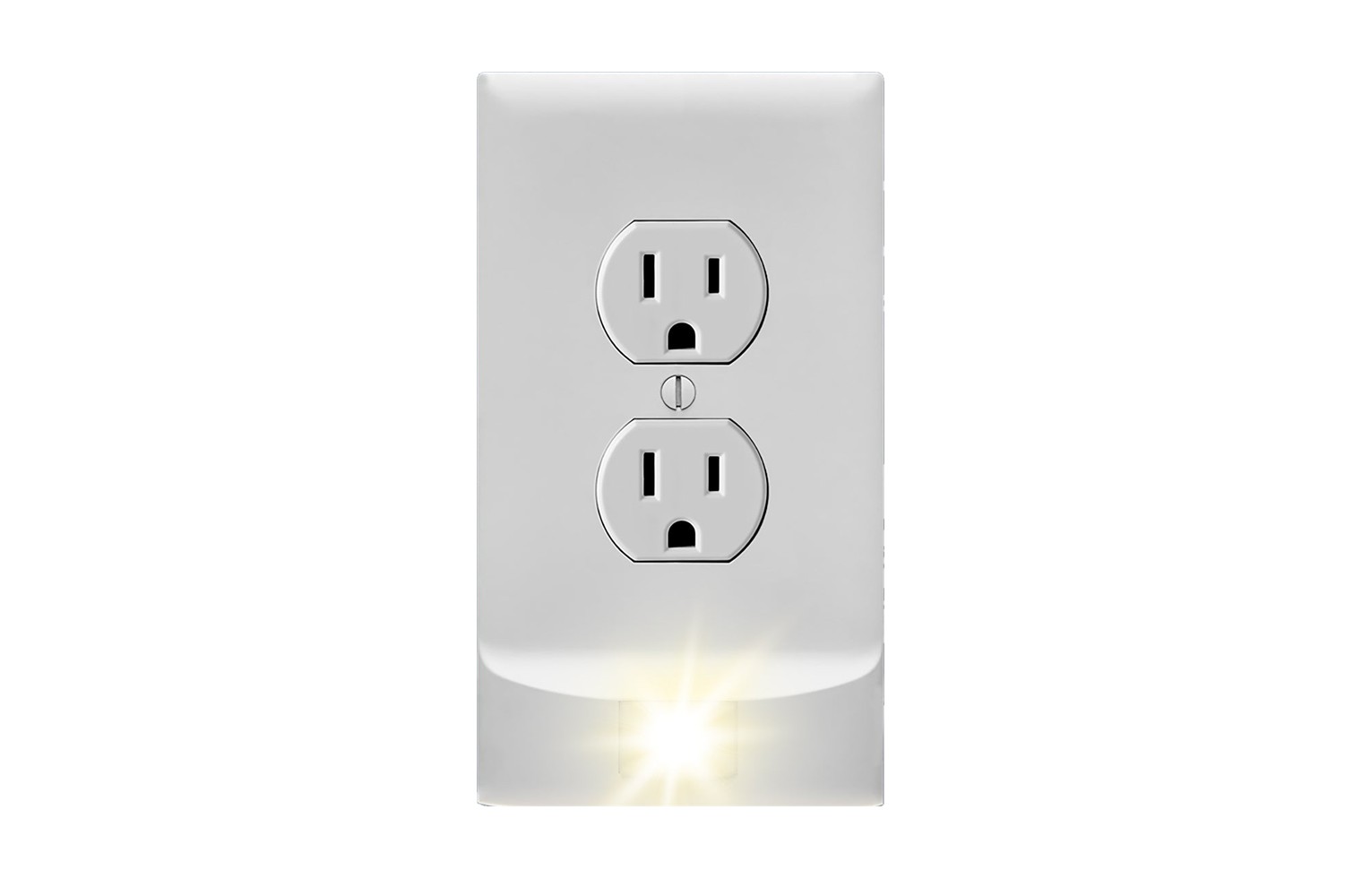
Why I chose it: StormLight takes the place of your outlet cover. You flip the breaker off, unscrew the old plate, snap this one on and put the screw back, and the outlet stays free for the vacuum or a phone charger. Its built-in LEDs work as a dusk to dawn path light, and when the power goes out, brighter outward facing LEDs come on for up to 6 hours. It charges back up in about 2 hours. It’s best for hallways and rooms where every outlet is already taken.
Key specs
- Outage runtime: Up to 6 hours
- Recharge: About 2 hours
- Fits: Duplex, Decor or GFCI outlets
- Everyday mode: Dusk to dawn path light
- Listing: ETL
- Warranty: 1 year
- Use: Indoor only
Pros
- Takes up no outlet
- Looks like an ordinary cover plate
- Quick recharge
- Comes in a GFCI style for bathrooms and kitchens
Cons
- You have to order the right style
- You can’t carry it
- Not rated for outdoor outlets
In real use: Order the style that matches your outlet, since there are three, and turn the breaker off before you swap the plate. It takes about two minutes.
One quirk worth knowing: SnapPower says the backup light needs a real outage to the whole house, and switching off a single breaker may not set it off. So if your breaker test leaves it dark, it isn’t broken.
How Long Do Power Outage Lights Last?
Most plug-in power outage lights with a sealed battery run somewhere between 2 and 7 hours. Jasco’s support team put GE’s rechargeable 4-in-1 at close to 2 hours, Energizer rates the WeatherReady at 3, and Amerelle says up to 7. The AA powered GE 4-in-1 is the outlier at up to 250 hours on low, because three AA batteries hold far more energy than the tiny packs inside the rechargeables.
Brightness decides the rest. Westinghouse lists a clear example for its own 4-in-1, which gets about 6 hours as a dim outage light and an hour and a half as a flashlight from the same battery. So if a light has a low setting or a dim outage mode, use it, and save the flashlight mode for when you’re actually walking somewhere.
Here’s the battery math, if you like numbers. The Amerelle’s 3.6 volt, 200 mAh pack holds about 0.7 watt-hours. Three fresh alkaline AAs hold roughly ten. That’s the whole reason one runs for an evening and the other runs for days.

Do Power Failure Lights Need Batteries?
Most of them don’t need batteries from you. The GE, Energizer and Enhon lights all have a built-in rechargeable battery that tops itself off while the light sits in the outlet. GE calls its battery non-replaceable, and that’s true of most of these. When the battery wears out after a few years, the light still works as a night light but stops lasting in an outage, and the fix is a new light.
The GE 4-in-1 on AA batteries is the exception. It uses no battery power while it’s plugged in, and when the AAs finally run low you put in fresh ones. If you want a light you can count on for years, that’s the one.
Why Didn’t My Power Failure Light Turn On?
When one of these stays dark in an outage, it’s almost always one of these five things.
It never got its first charge. GE says to charge its night light for at least 12 hours before you count on the outage feature, and the WeatherReady takes about 12 hours for a full recharge too. A light plugged in the night before a storm may not have much in it.
The outage mode is switched off. Several of these have a switch or button for outage mode. GE’s instructions say to unplug the light after charging. If it lights up, the outage mode is on, and if it stays dark, it’s off.
It’s in a switched outlet. Plenty of bedrooms and living rooms have an outlet controlled by the wall switch. Plug a power failure light in there and every time somebody flips the switch off, the light thinks the power’s out and runs on battery. By the time a real outage comes along, it’s flat.
It’s on a power strip or a tripped GFCI. Same story. If the strip gets switched off or the bathroom GFCI trips, the light comes on and quietly drains itself. The upside is that a glowing outage light in the bathroom is a handy sign the GFCI has tripped.
The battery is worn out. If it lights up when you unplug it but fades in a few minutes, the sealed battery is done. Replace the light, or switch that spot to the AA powered GE.
How to Test a Power Failure Light
Once a month, unplug each plug-in light and make sure it comes on in your hand. That’s the same check GE’s instructions use, and it takes about a minute for the whole house. I do it the same day I push the test button on the smoke alarms, so I don’t have to remember it separately.
Once a year, before storm season, run a runtime test on one of them. Unplug it at bedtime, set it on the nightstand and note the time it goes dark. If a light that used to last a few hours now quits in twenty minutes, its battery is worn out.
The StormLight is the odd one. SnapPower says switching off one breaker may not trigger its backup light, since it needs a real outage to the whole house, so the next storm is its test.
Plug-In Flashlight vs Night Light vs Motion Sensor
Power outage lights come in a few styles, and most homes do best with a mix of them.
A plug-in flashlight like the Energizer WeatherReady sits in the outlet with no light showing until the power fails, then comes on and pulls out as a real handheld light. Put these where you’ll need to go somewhere, by the bed and by the breaker panel.
A power failure night light like the GE 3-in-1 or the Energizer 4-in-1 glows every night and switches to battery in an outage. These are the everyday ones for bathrooms and bedrooms.
A motion sensor light like the Enhon 4-in-1 stays dim until someone walks by. In an outage, that’s the best way to stretch a small battery through a long night in a hallway.
An outlet cover light like the StormLight screws on where your cover plate goes. It can’t be carried, but it doesn’t use up an outlet.
If you want the lamps themselves to keep working, that’s a different tool. I covered those in my guide to rechargeable light bulbs, which stay lit in the socket when the power drops.
Buying Guide: What to Look For in Power Outage Lights
A battery you can replace, or a cheap light you don’t mind replacing
Sealed batteries are the norm, and they wear out. That’s fine on a light that doesn’t cost much, as long as you test it. For the one or two spots that matter most in a long outage, a light that runs on AA batteries never ages out.
A runtime you can check
A runtime tested to the ANSI FL1 standard, like the WeatherReady’s 3 hours, means something. When a box gives you a lumen number and no hours, plan on a short run and test it yourself.
A real flashlight mode
At least one light per floor should pull out of the wall and work as a handheld light. The ones that only glow in place won’t help you check the breaker panel or walk the dog.
An outage switch you can find in the dark
Some lights hide the outage mode behind a small button or a slide switch. Learn which way is on before the storm, and leave it there.
Motion sensing for halls and stairs
Motion sensors save battery in places people pass through. In a bedroom, where a rollover can set one off, a light without one is the better pick.
Light color in bedrooms
A bright white night light in a bedroom keeps some people awake. Warm white or a red guide light like the Amerelle’s is easier to sleep next to.
The outlet it blocks
Most of these cover one socket and leave the other free. In a hallway with a single outlet that’s already in use, the outlet cover style solves it. Whatever you buy, look for a UL or ETL mark on the box.
Frequently Asked Questions
Do power failure lights stay on all night?
Most don’t. Lights with a built-in battery usually run 2 to 7 hours. For light all night, use a motion sensor light in the hallway, the AA powered GE 4-in-1 on low or a battery lantern.
Can you leave power failure lights plugged in all the time?
Yes, that’s how they’re meant to live. They charge while they’re plugged in, and the AA powered GE doesn’t touch its batteries at all until the power fails.
Do LED lights work when the power is out?
Only the ones with a battery. Ceiling lights and lamps go dark with everything else unless they have a backup bulb in them. Power failure lights, flashlights, headlamps, lanterns and rechargeable light bulbs all keep working.
Do power failure lights turn on when unplugged?
Most do, as long as the outage mode is switched on. To the light, being pulled out of the wall looks the same as a power cut, which is why unplugging it is the easiest way to test it.
The Bottom Line
For most homes, the GE 3-in-1 is the power outage light I’d buy first. It earns its outlet every night as a night light and comes on by itself when the power goes. Cover the rest of the house with the Energizer 4-in-1 six-pack, put Enhon’s motion sensor lights on the stairs and keep an Energizer WeatherReady by your bed for the walk to the breaker panel.
If your outages last days, the GE 4-in-1 that runs on AA batteries is the one still glowing on the second night. The Amerelle is the gentle choice for kids’ rooms, and the SnapPower StormLight handles the hallway where every outlet is spoken for.
These lights handle the first few minutes. After that, a battery lantern, a rechargeable headlamp and a good emergency flashlight carry the night, and the CDC also says to reach for battery lights before candles. My power outage emergency kit guide covers everything else to have on hand.
Keep reading