
The boil notice always lands on the worst night. A water main splits across town during a cold snap, the city’s text alert buzzes every phone in the house at a quarter to seven, and by the time anybody has read it twice there’s a line at the grocery store running past the rotisserie chickens and the bottled water shelf is bare metal. Out in the country it’s quieter and worse. The ice took the power down a little after midnight, the well pump went with it, and the only water on the place is what’s left in the pressure tank, the back of the toilet and the rain barrel under the downspout.
Short on time? Skip to my picks
I’ll tell you what I tell the neighbors. A gravity water filter doesn’t care whether the grid is up. You pour water in the top, go see about the woodstove, and clean water collects in the bottom the same way it did in farm kitchens a hundred years ago. They aren’t all built for the same water, though. The shiny stainless canisters on kitchen counters are made for tap water, most of them do nothing about viruses, and a couple of them aren’t certified to stop germs at all. If your water is coming out of a creek or a flooded well, you want a purifier, or a filter with a few drops of bleach behind it.
Here’s my short list. The British Berkefeld is the canister I’d put on most counters, the Waterdrop King Tank makes the most water for the money, and the LifeStraw Family is the cheapest way I know to knock out viruses without a stove. Under the picks there’s a planner that works out how many gallons your house needs a day, how many hours each filter takes to make it, and whether your water needs one more step before anybody drinks it.
Quick Picks: The Best Gravity Water Filters
- British Berkefeld 2.25 Gallon Gravity Filter: best for most kitchens, boil notices and anyone who wants certified ceramic on the counter.
- Waterdrop King Tank: best for city water that still runs in an outage and families who go through a lot of it.
- Purewell K Series 2.25 Gallon: best for former Berkey owners and anyone who wants to see the water level without lifting the lid.
- LifeStraw Family: best for a tight budget, apartments and boil notices where viruses are on the list.
- LifeStraw Peak Series Gravity Purifier: best for creeks, ponds, rain barrels and big families on a dead well.
- Sawyer One Gallon Gravity System: best for the car, the go-bag and a backup to whatever sits on your counter.
Gravity Water Filters Compared
Clean Water Planner: How Much Filtered Water Does Your House Need?
Tell the planner who’s in the house, how long you want to hold out and where your water is coming from. It works out your gallons a day, races all six filters to see how long each one takes to make them, and tells you exactly what to do with your kind of water, down to the drops of bleach. Tap any filter to see its routine, then print the plan and tape it inside a cabinet door.
1. British Berkefeld 2.25 Gallon Gravity Filter: Best Overall
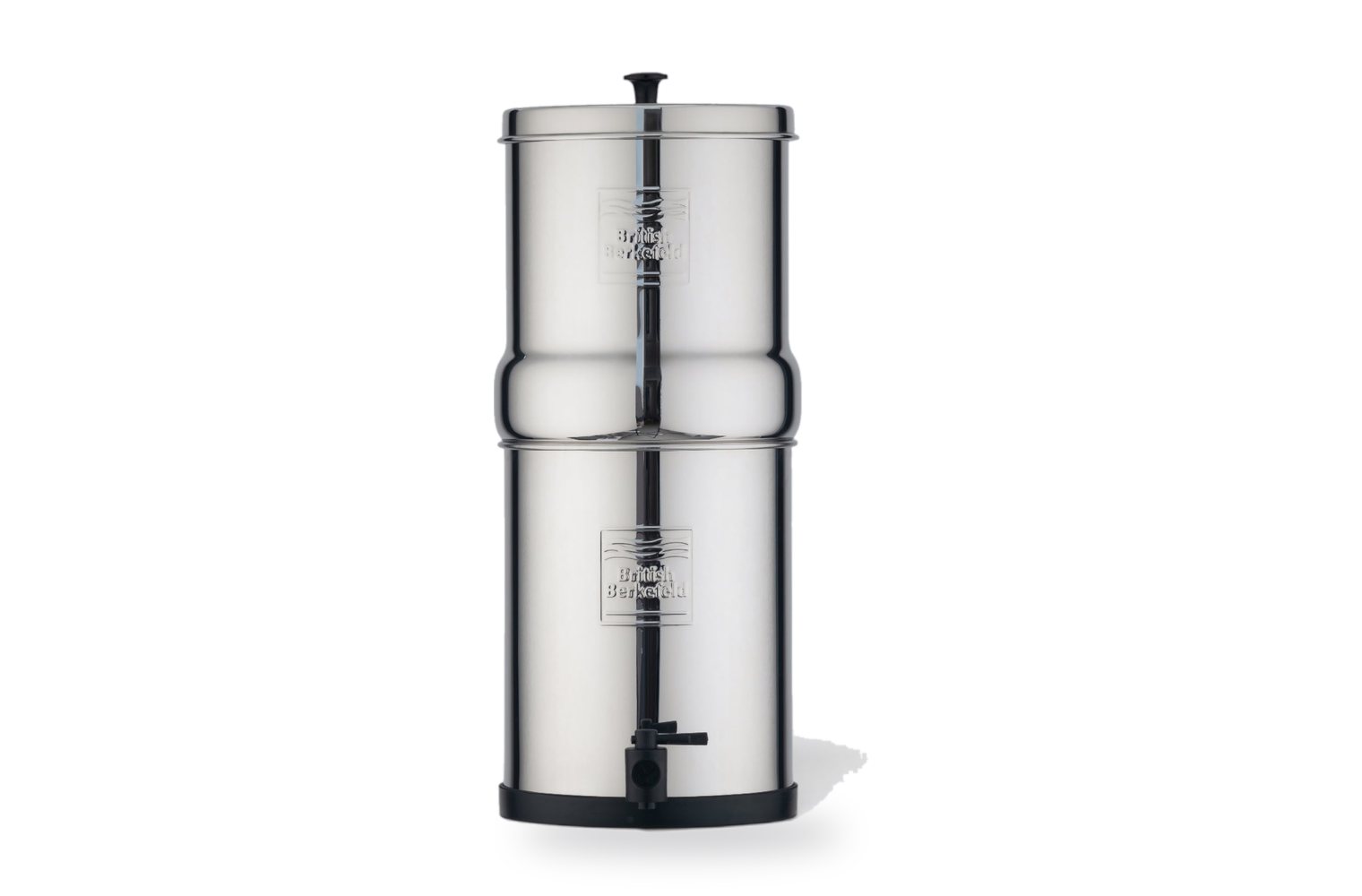
Why I chose it: British Berkefeld has been making ceramic water filters in England since the 1820s, and the Berkey you’ve heard about got its name from the same family tree. This is the 2.25 gallon stainless steel gravity water filter with four Ultra Sterasyl candles, and it’s the countertop filter I trust most when the water coming out of the tap might be dirty, not just bad tasting.
Each candle is a ceramic shell around a carbon core. The ceramic has a 0.9 micron absolute rating, and Doulton’s own test data shows more than 99.99 percent of E. coli and Klebsiella stopped, plus more than 99.99 percent of Giardia and Cryptosporidium. The Ultra Sterasyl candles are certified to NSF/ANSI 42, 53 and 401 for particulates, cysts and microplastics, which is more independent paperwork than any other canister here carries.
Key specs
- Capacity: 2.25 gallons (8.5 liters)
- Elements: 4 Ultra Sterasyl ceramic candles
- Flow: Up to 1.16 gallons an hour
- Ceramic rating: 0.9 micron absolute
- Certified to: NSF/ANSI 42, 53, 401 and 372
- Element life: About 6 months each
- Made in: United Kingdom
Pros
- Ceramic that stops bacteria and cysts, backed by real certification
- Ships with all four candles, so it runs at full speed from day one
- Ceramic shells scrub clean when they slow down
- Lead reduction up to 95 percent in the maker’s testing
Cons
- About a gallon an hour, so a big household runs it overnight
- Doesn’t stop viruses, so boil notice water still needs bleach
- Candles need replacing about every 6 months in daily use
In real use: Fill the top before bed and there are a little over two gallons waiting in the morning, which covers drinking and cooking for a couple. A family of four runs it twice a day. When the flow drops off, pull the candles and scrub the ceramic under running water with the pad that comes in the box, and it picks right back up.
On a boil notice, run the water through and then add 8 drops of unscented bleach per gallon to the bottom chamber. The ceramic handles the parasites that bleach struggles with, and the bleach handles the viruses the ceramic lets by. Together they cover all three.
2. Waterdrop King Tank: Best Value
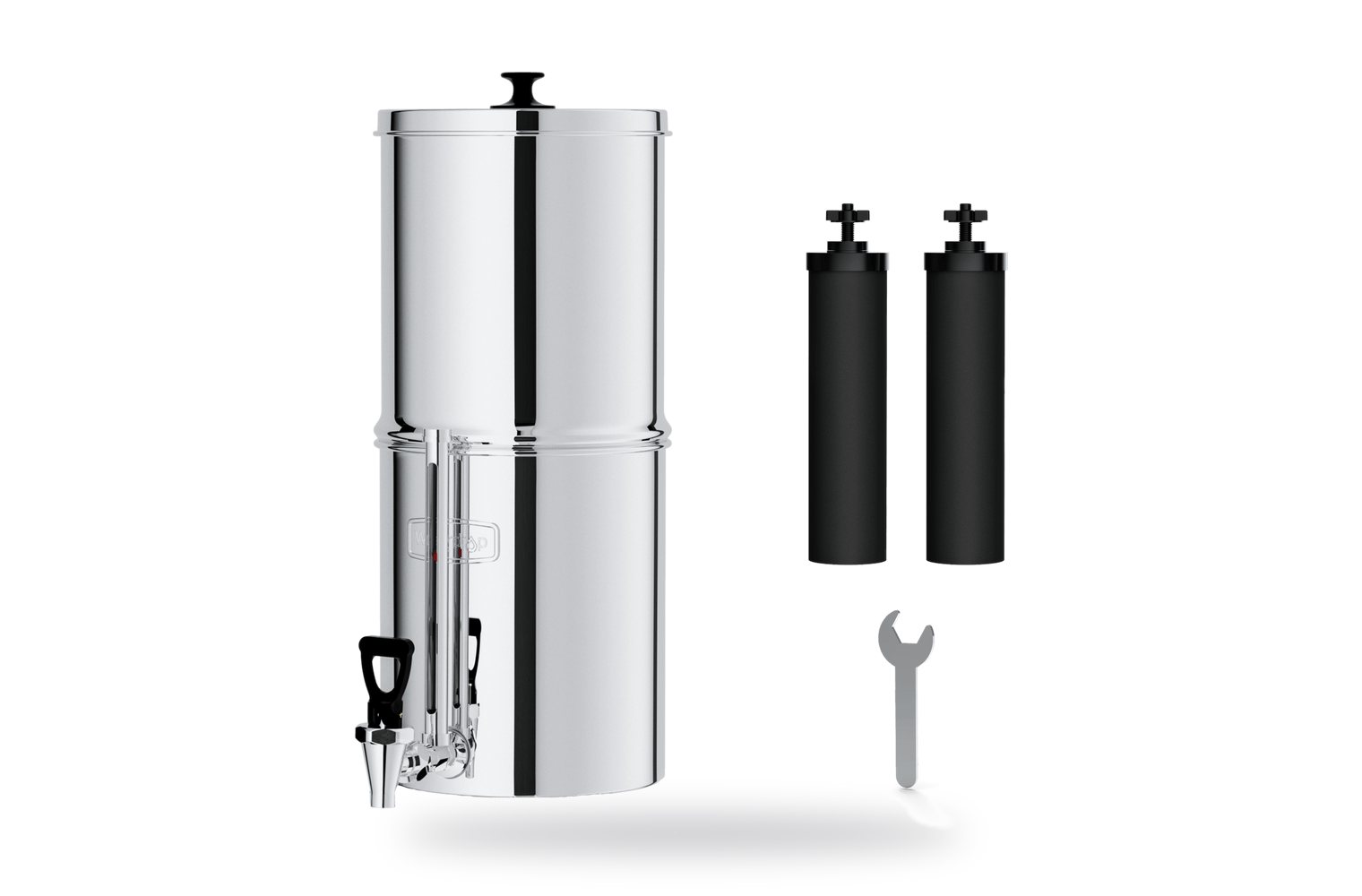
Why I chose it: If your water still comes out of the tap in an outage, and in most towns it does, the King Tank makes the most water for the money of anything on this list. It’s a 2.25 gallon 304 stainless gravity fed water filter system with two coconut carbon blocks, and in hands-on testing it filtered about 4 gallons an hour. That’s three or four times the pace of ceramic.
Be clear about what it’s for. The carbon is certified to NSF/ANSI 42 for chlorine, taste and odor, and the system is certified to NSF/ANSI 372 for lead-free materials. Neither certificate says a word about bacteria, so I treat it as a tap water filter and a taste fixer, not a pond water purifier.
Key specs
- Capacity: 2.25 gallons
- Material: 304 stainless steel
- Filters: 2 carbon blocks, room for 2 fluoride
- Flow: About 4 gallons an hour
- Filter life: 6,000 gallons a pair
- Certified to: NSF/ANSI 42 and 372
- Size: 8.5 x 8.5 x 20.4 in
Pros
- Fast enough to keep up with a big family
- Carbon rated for 6,000 gallons a pair
- Sight glass spigot on most versions shows the level
- Easy to find spare filters
Cons
- Not certified to stop germs, so untreated water gets boiled first
- Rated for water between 40 and 100°F, so keep it out of a cold garage
- Can overflow if you fill the top before emptying the bottom
In real use: During an ordinary outage on city water, fill it from the tap and forget about it. On a boil notice, boil the water a full minute, let it cool, then pour it through. The carbon takes the flat, cooked taste out of boiled water, and the kids will actually drink it.
Empty the bottom chamber before you top off the upper one. Waterdrop warns that a full lower tank with water still sitting up top can leak where the two chambers meet.
3. Purewell K Series 2.25 Gallon: Best Berkey Alternative
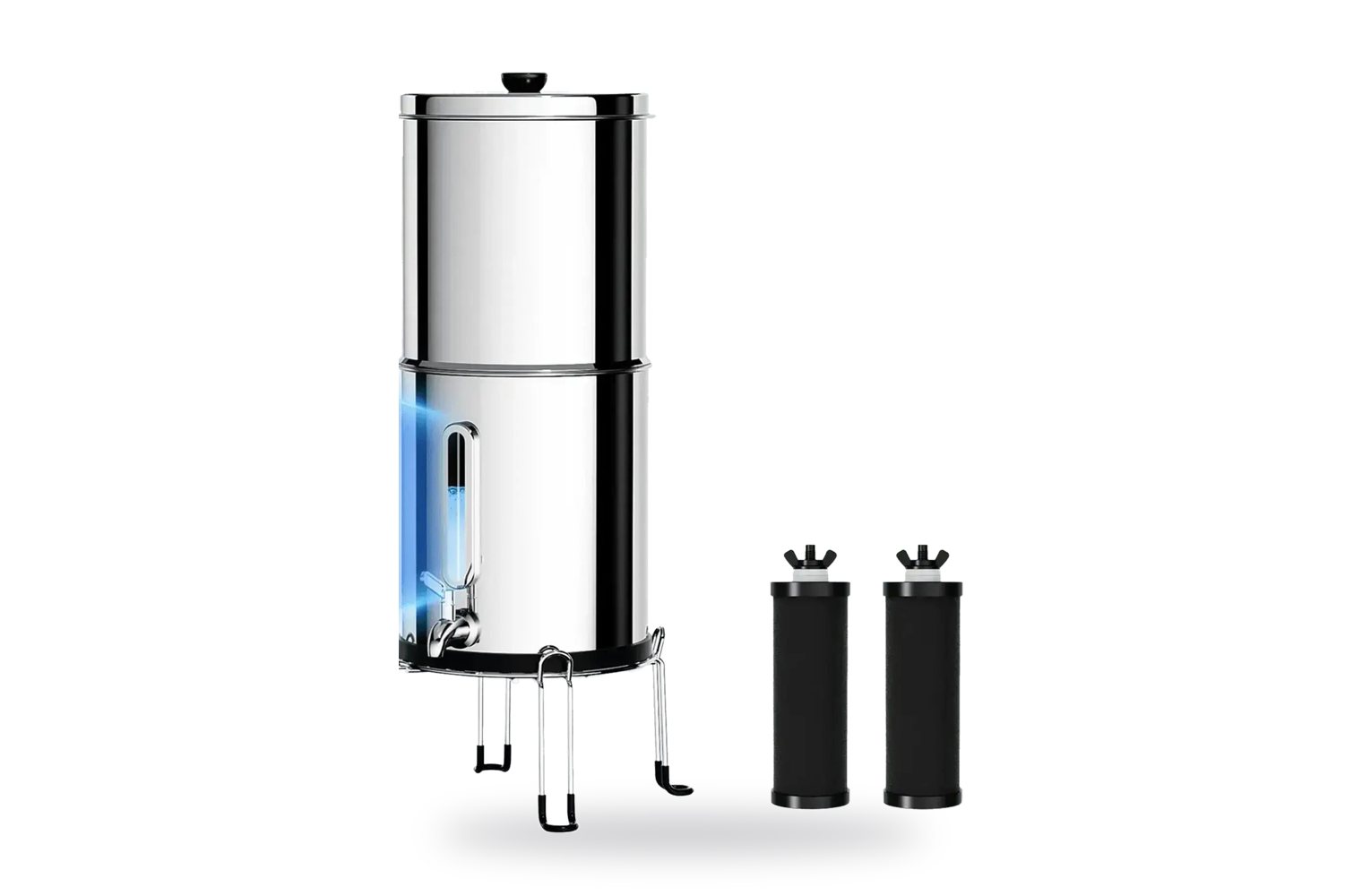
Why I chose it: A lot of folks shopping for gravity filters this year are really shopping for whatever replaced their Berkey. Purewell is the name that keeps coming up, and the K Series is the one I’d pick. It’s the same 2.25 gallon stainless canister shape, but each filter stacks a 0.01 micron hollow fiber membrane, a silver ion layer and a carbon block, and there’s a little window in the side so you can see how much water is left.
Purewell rates it at about 4 gallons an hour. Its filters are certified to NSF/ANSI 42 for chlorine and the housing to NSF/ANSI 372 for lead-free materials. That membrane is fine enough to block bacteria, but nobody has certified it for germs, so I’d use it on tap water and boil anything sketchier.
Key specs
- Capacity: 2.25 gallons
- Filters: 2 three-stage elements
- Membrane: 0.01 micron hollow fiber
- Flow: About 4 gallons an hour
- Filter life: About 3,000 gallons each
- Certified to: NSF/ANSI 42 and 372
- Extras: Water level window, stand
Pros
- Looks and works like a Big Berkey for a lot less
- Water level window saves lifting the lid
- Fast flow for a stainless canister
- Stand included, so a pitcher fits under the spigot
Cons
- Germ claims aren’t certified, so it’s a tap water filter in my book
- Shorter filter life than the King Tank
- Fluoride filters cost extra
In real use: Folks who owned a Berkey will feel right at home: lid, upper chamber, wing nuts, spigot. Fill it at night, empty the bottom into a pitcher in the morning, and glance at the window to know when to pour more. If your old Berkey still has good stainless, read the Berkey section further down before you replace the whole thing.
4. LifeStraw Family: Best Budget Purifier
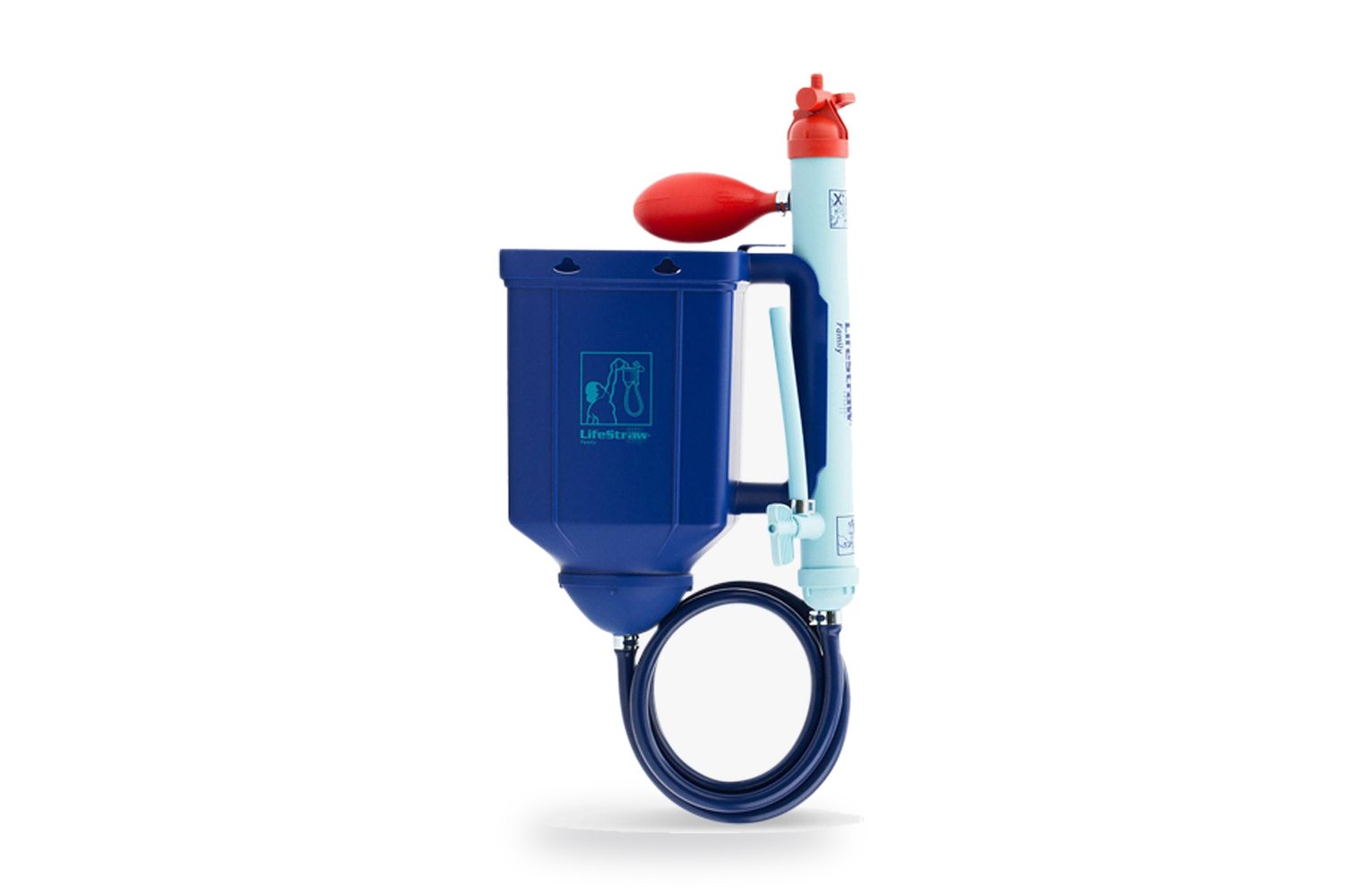
Why I chose it: This is the filter I hand to people who say they can’t afford to get serious about water. The LifeStraw Family is a feed tank, a hose and a cartridge you hang from a nail or a cabinet knob. Inside the cartridge is a 0.02 micron ultrafilter that LifeStraw rates for 99.999 percent of viruses, 99.999999 percent of bacteria and 99.999 percent of parasites, and the company lists it as meeting NSF/ANSI P231, the protocol for purifiers.
That virus number is what separates it from every canister above it. On a boil notice, a flooded well or rain barrel water, this one does the whole job by itself, no bleach and no stove.
Key specs
- Type: Hanging gravity purifier
- Pore size: 0.02 micron ultrafilter
- Removes: Viruses, bacteria, parasites
- Flow: Up to 12 liters (3.1 gal) an hour
- Lifetime: 18,000 liters (about 4,755 gal)
- Standard: NSF/ANSI P231
- Weight: 1.17 lb
Pros
- Stops viruses for less than most canisters cost
- Fast for its size at up to 3 gallons an hour
- Light enough to grab when you evacuate
- Backwash bulb keeps the flow up without tools
Cons
- Small feed tank, about 2 liters, so you top it up often
- Plastic, and it looks like camp gear on the counter
- Has to be protected from freezing once it’s been wet
In real use: Hang the tank from a cabinet door knob or a nail in the pantry, set a clean pot or pitcher on the counter under the tap, and keep a bucket of raw water next to it. Every few liters, squeeze the red bulb to backwash, which pushes the gunk back out and keeps the flow strong. A family of four needs to fill it a dozen times on a hard day, so give the job to whoever’s bored.
5. LifeStraw Peak Series Gravity Purifier: Best for Creek and Pond Water
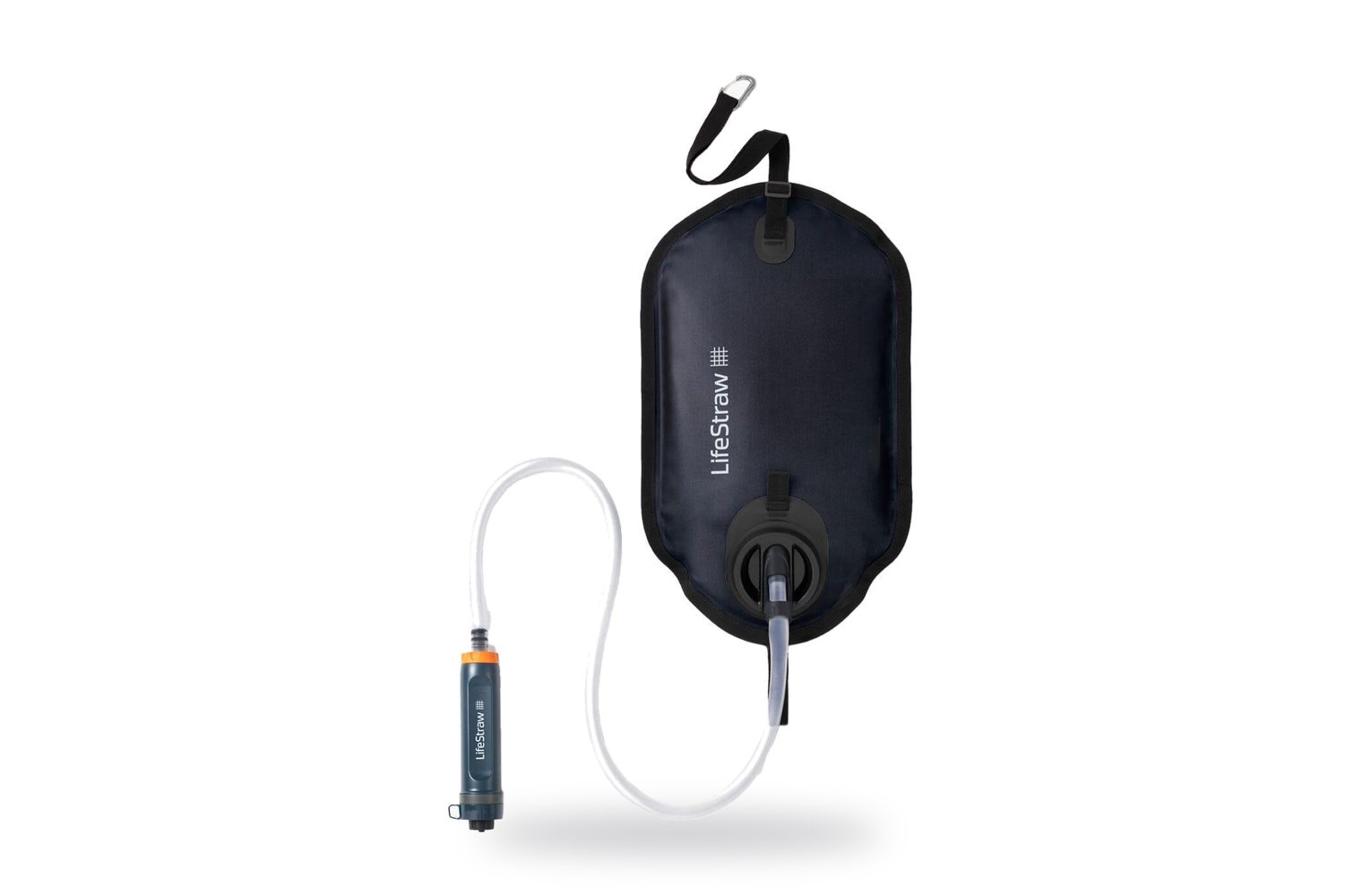
Why I chose it: If your plan B is a creek, a stock pond or a rain barrel, this is the one I’d want hanging from a tree. The Peak Series Gravity Purifier is an 8 liter bag with a virus-rated 0.02 micron cartridge on the hose, and it pushes up to 30 liters an hour. That’s close to eight gallons, fast enough to keep a big household going on a dead well.
It also handles dirty water better than anything else here. The bag has a prefilter basket to catch leaves and grit, and the cartridge backwashes with the syringe in the box, which matters when you’re pouring water that looks like weak tea.
Key specs
- Type: 8 liter gravity bag with inline purifier
- Pore size: 0.02 micron ultrafilter
- Removes: Viruses, bacteria, parasites, microplastics
- Flow: Up to 30 liters (7.9 gal) an hour
- Lifetime: 18,000 liters (about 4,755 gal)
- Includes: Prefilter basket, hose, backwash syringe
Pros
- Fastest purifier on the list, viruses included
- Prefilter and backwash made for silty water
- Packs small enough for a bug-out bag
- Big bag means fewer trips to the water
Cons
- Costs more than the LifeStraw Family
- A hanging bag on the counter takes some rigging
- Ruined if it freezes wet, same as any hollow fiber
In real use: Scoop the bag full at the creek, hang it from a tree limb or a hook in the garage door track, and let the hose run into a clean bucket while you go fetch the next load. Let muddy water settle in a separate bucket for an hour first and you’ll backwash a lot less. Mark one bucket raw and one clean with a big strip of tape, and never swap them.
6. Sawyer One Gallon Gravity System: Best Grab-and-Go Backup
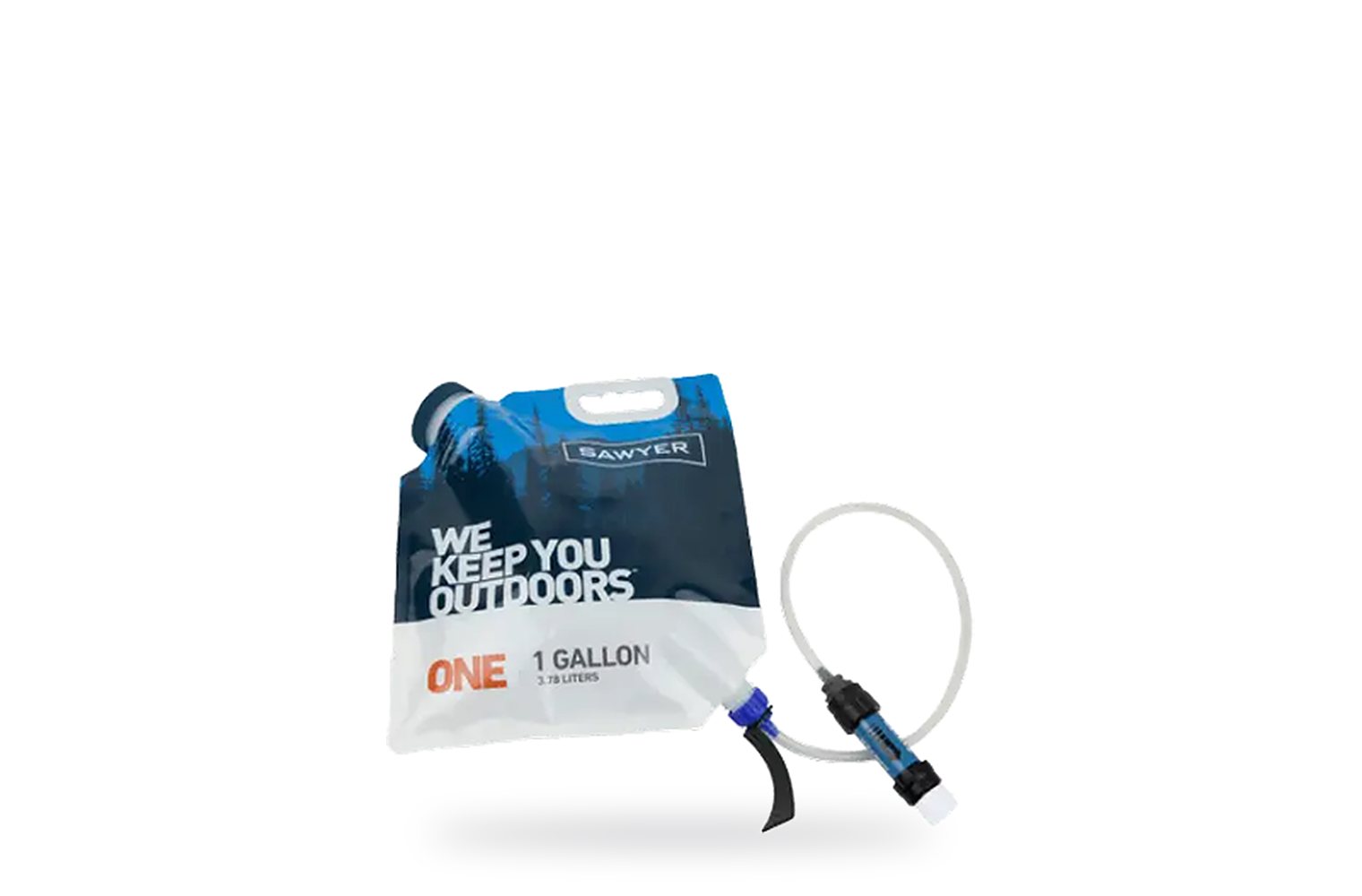
Why I chose it: Every water plan needs a second filter, and this is the cheapest good one. It’s a 1 gallon bag, a short hose and the Sawyer MINI, a filter about the size of a roll of quarters with a 0.1 micron absolute hollow fiber inside. Sawyer rates it for up to 100,000 gallons and says it removes 99.99999 percent of bacteria and 99.9999 percent of protozoa like Giardia.
Hang the bag and a gallon runs through in as little as seven minutes. It won’t stop viruses, so treat it like the ceramic canister: filter, then a little bleach. As an emergency water filter for the glovebox, the go-bag or a backup to the canister on the counter, it’s hard to beat.
Key specs
- Filter: Sawyer MINI, 0.1 micron absolute
- Bag: 1 gallon
- Speed: A gallon in about 7 minutes
- Rated life: Up to 100,000 gallons
- Weight: 11.8 oz
- Removes: Bacteria and protozoa
Pros
- Costs about what you’d spend on a couple of cases of bottled water
- Fits a glovebox or the side pocket of a go-bag
- The MINI also screws onto a water bottle or drinks like a straw
- Practically never wears out
Cons
- One gallon at a time means a lot of refilling
- No virus protection without bleach
- Freezing can ruin the filter once it’s been used
In real use: Keep it in the car with your car emergency kit and it turns any creek or ditch on a stranded drive into drinking water. At home, it’s the backup that keeps you going if a ceramic candle cracks or the canister gets knocked off the counter. Backflush it with the plunger after every outing and it’ll outlast the car.
Filter or Purifier? What Each One Stops
This is the part most buying guides skip, and it’s the part that keeps people out of the emergency room. Germs in water come in three sizes. Parasites like Giardia and Cryptosporidium are the big ones, bacteria like E. coli are in the middle, and viruses like norovirus and hepatitis A are so small that most filters let them walk right through.

The CDC lays it out plainly on its making water safe in an emergency page: boiling kills all three, bleach kills most viruses and bacteria, and a filter can remove parasites. That’s why the planner above pairs a ceramic filter with bleach and a carbon filter with boiling. Each method covers what the other one misses.
Gravity water purifier with virus removal
If you only want to own one thing and never think about bleach, buy a purifier. The LifeStraw Family and the LifeStraw Peak Series Gravity Purifier both use a 0.02 micron ultrafilter that catches viruses, and neither one needs electricity, chemicals or a stove. The tradeoff is that they’re plastic hanging systems, not pretty countertop canisters, and they’re built for germs more than for taste.
Using a Gravity Filter During a Boil Water Notice
A boil notice means the city can’t promise the water is free of germs, usually after a main break, a pressure drop or a treatment plant problem. It doesn’t mean the water is full of chemicals, which is why a good filter routine works. Here’s what I’d do with each kind of filter:
- LifeStraw Family or Peak: run the tap water straight through. They’re rated for viruses, so you’re done.
- British Berkefeld or Sawyer: filter it, then add 8 drops of unscented 5 to 9 percent bleach per gallon and wait 30 minutes.
- Waterdrop King Tank or Purewell: boil it for a full minute first (3 minutes above 6,500 feet), cool it, then pour it through to clear the taste.
Keep using filtered or boiled water for brushing teeth, making formula and washing produce until the notice is lifted. And when the city says it’s over, run your faucets for a few minutes before you fill the filter again.
Gravity Filter for Well Water When the Power’s Out
Well homes get hit twice. The pump quits the second the power does, and if the outage comes with a flood, the well itself can take in surface water. If your well wasn’t flooded, the water you saved in the pressure tank and your storage jugs is the same water you drink every day, and any filter on this list is fine for taste. If it was flooded, treat it like creek water until it’s been tested: a purifier, or ceramic plus bleach.
The better fix is getting the pump running again. A portable generator for home with an interlock kit runs most well pumps, and a stack of water storage containers filled ahead of the storm buys you the days in between.
Rain Barrel, Creek and Pond Water
Water that’s never seen a treatment plant needs the full treatment. Roof runoff carries bird droppings and grit, and creeks and ponds carry whatever lives upstream, from beaver to cattle to somebody’s septic field. For any of it:
- Let it settle in a bucket for an hour, then pour the clear water off the top.
- Pour it through a clean cloth, a bandana or a coffee filter to catch the rest.
- Run it through a purifier, or through a ceramic or hollow fiber filter and then bleach.
- Cloudy water that won’t clear gets double the bleach: 16 drops per gallon.
Don’t skip the settling step. Silt is what clogs filters, and a clogged filter on day two of a long outage is a miserable thing to fix by lantern light.
Floodwater is a different animal
Don’t drink floodwater, and don’t pour it through your filter. It can carry fuel, farm chemicals and sewage all at once, and the CDC says water contaminated with chemicals can’t be made safe by boiling, disinfecting or filtering. If the flood reached your water source, drink stored water and wait for the all clear.
What Happened to Berkey? Phoenix Filters and the Stop-Sale
For about twenty years, “gravity filter” meant Berkey. Then the EPA put the Black Berkey elements under a stop-sale order over how the silver in the filter media was registered. The company has fought it in court and says the order was about paperwork, not about the water being unsafe. The practical result for buyers is that standalone Black Berkey replacement elements have been unavailable in the U.S.
Berkey’s answer is the Phoenix Gravity New Millennium Edition element, made for the company in India, rated for up to 5,500 gallons a pair and certified to NSF/ANSI 42 and 372. Those are the same two standards the Waterdrop carries, chlorine taste and lead-free materials, which tells you it’s a tap water filter on paper.
If you already own a Berkey, keep it. The stainless shell doesn’t care whose filter is inside, and British Berkefeld’s Ultra Sterasyl candles fit most standard two-chamber stainless systems. Swap them in and you’ve upgraded it.
One more name you’ll see is ProOne. Culligan bought the brand and is selling off the old stock, with its new MaxClear filters taking over. Those filters carry strong certifications for lead and PFAS, but in one independent test the 3 gallon system ran about a third of a gallon an hour with all three filters installed, and each filter is rated for about 50 gallons. That’s fine for one person’s drinking water. It’s too slow for a family in a week-long outage.
Water Purification Tablets: The Backup Every Filter Needs
Tablets weigh nothing, last for years in a drawer and kill viruses, which makes them the perfect partner for a ceramic or hollow fiber filter. I keep a strip in every go-bag and a box next to the water jugs. These are the three I’d buy for drinking water:
- Aquatabs: individually sealed tablets that kill bacteria and viruses in about 30 minutes, with no measuring. Best for the house and the car.
- Potable Aqua Chlorine Dioxide Tablets: chlorine dioxide, which handles Cryptosporidium if you give it the full four hours. Best for creek and pond water.
- Katadyn Micropur MP1: another chlorine dioxide tablet with a mild taste. Best for families who hate the swimming pool flavor.
Read the wait time on the package and stick to it, especially in cold water, which slows every chemical down. Tablets don’t clear cloudy water, so settle and cloth-filter it first.
How to Purify Water at Home Without Power
If you’re reading this with no filter and the power out, here’s the method that works with what’s in the house. It comes straight from the CDC and the EPA’s emergency disinfection guidance.
- Clear it: let cloudy water settle, then pour the clear water through a clean cloth or coffee filter.
- Boil it: bring it to a rolling boil for 1 minute, or 3 minutes above 6,500 feet. A propane camping stove on the back porch works when the kitchen range is electric.
- Or bleach it: 8 drops of plain unscented 5 to 9 percent bleach per gallon, stir and wait 30 minutes. Double it for cloudy water.
- Fix the taste: pour it back and forth between two clean containers to put some air back in.
Store the clean water in clean, covered containers and label them. A gallon jug of treated water looks exactly like a gallon jug of creek water by flashlight.
Setting Up a Gravity Filter Before the Storm
The worst time to open the box is the night the water goes bad. Set it up on a calm Saturday, run a few batches through, and you’ll know how fast it really drips in your kitchen with your water.
- Wash the chambers: warm soapy water, a good rinse, and dry them before the filters go in.
- Seat the filters snug: hand-tight on the wing nuts, with the washer between the filter and the chamber. A loose one lets raw water sneak around it.
- Flush the first batches: new carbon sheds black dust, so dump the first fill or two. Ceramic candles run slow the first time, and that’s normal.
- Time a full top chamber: write the time on a strip of tape on the lid. That’s your real flow rate.
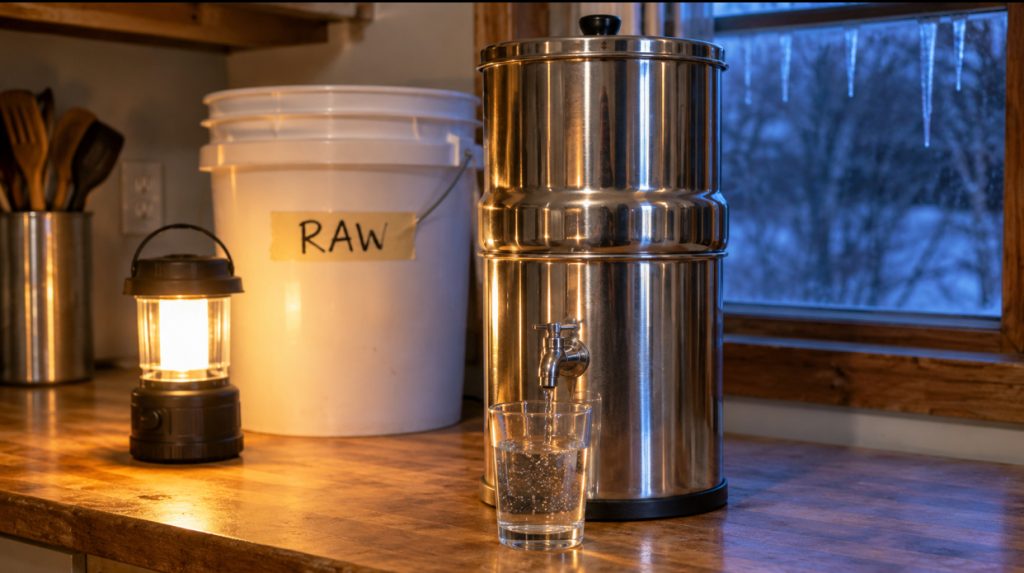
- Mark your buckets: one raw, one clean, in big letters. Never let the raw bucket touch the spigot or the clean water.
If your canister fills slowly from the start, pull the carbon filters and drop them in a pot of clean water. Waterdrop says a filter that floats still has air trapped in it, and it’ll speed up once it soaks through and sinks.
Cleaning and Storing Your Filter Between Storms
A filter that sits in a closet for a year needs a little care so it works when you grab it. Wet filters left sitting in a warm closet can grow their own slime.
- Canisters in daily use: wash the chambers every month or so, and scrub ceramic candles when the flow drops off.
- Canisters in storage: let everything dry completely before you stack it, and keep the spare elements sealed in their boxes.
- Bag filters: backwash with clean water after every use, shake out what you can, and store them where they’ll never freeze.
- Twice a year: run a batch through at the clock changes, the same day you check your flashlight batteries and rotate your water.
Keep the filter with a bottle of unscented bleach, an eyedropper, a clean bandana and a battery lantern. Most of the work of a long outage happens after dark.
Buying Guide: What to Look For in a Gravity Water Filter
Certifications that actually mean something
Every box says it removes 200 contaminants. The certificate is what tells you which ones somebody outside the company checked. NSF/ANSI 42 covers taste, odor and chlorine. NSF/ANSI 53 covers health effects like lead and cysts. NSF/ANSI 401 covers newer contaminants like microplastics. P231 is the purifier protocol for bacteria, viruses and parasites. NSF/ANSI 372 only means the parts are lead-free, which is good but says nothing about what the filter removes.
Flow rate and the math nobody does
A family of four needs at least four gallons a day just to drink and cook. A ceramic canister at about a gallon an hour needs four hours to make that, while a fast carbon tank does it in one. Cloudy water slows them all down, and every filter slows as it loads up. Run your household through the planner and you’ll see right away whether your filter can keep up or needs a partner.

Element life and spares
Element life sounds like a lot until you do the arithmetic. A household drinking 6 gallons a day burns through 1,600 gallons of ceramic in about nine months. Buy one spare set with the system and store it sealed in the box, so a cracked candle doesn’t end your water plan.
Stainless canister or hanging bag
Canisters sit on the counter, look good and run unattended overnight, but they’re heavy and you aren’t carrying one to the creek. Bags hang anywhere, pack small and the virus-rated ones are cheaper, but they need a hook and a bucket. A lot of prepared households own one of each: a canister for the kitchen and a bag for the go-bag.
Do gravity filters remove fluoride?
Plenty of people buy a gravity filter to take fluoride out. Standard carbon doesn’t do much for it, so you need add-on fluoride elements, like Waterdrop’s or Berkefeld’s Ultra Fluoride candles, and they wear out faster than the main filters. For emergency use, skip them. Germs are the worry in a disaster, not fluoride.
Keep it from freezing
Hollow fiber filters like the Sawyer and both LifeStraws can be ruined if they freeze after they’ve been wet, because the ice splits the fibers and you’d never know by looking. Ceramic candles can crack too. If the house is going cold in an ice storm, bring the filter into the room you’re heating, or take the bag to bed with you.
Frequently Asked Questions
Do gravity water filters remove viruses?
Most don’t. Ceramic, carbon and 0.1 micron hollow fiber filters let viruses through. You need a purifier rated to NSF P231, like the LifeStraw Family or Peak Series Gravity Purifier, or you add bleach or boil after filtering.
Can a gravity water filter make river or creek water safe?
Yes, with the right filter. A virus-rated purifier makes it safe on its own. A ceramic or hollow fiber filter needs bleach afterward, and carbon-only countertop filters aren’t made for it. Settle muddy water first.
How long do gravity water filter elements last?
Anywhere from about six months for ceramic candles to 100,000 gallons for a Sawyer hollow fiber filter. Carbon blocks like Waterdrop’s run about 6,000 gallons a pair. Cloudy water and heavy use wear any of them out sooner.
Is a gravity water filter worth it for emergencies?
It’s one of the few water tools that works with no power, no pressure and no stove. Stored water runs out, and a filter turns your rain barrel, pressure tank or the creek out back into more of it.
The Bottom Line
For most kitchens, the British Berkefeld 2.25 Gallon Gravity Filter is the gravity filter I’d buy. Its ceramic stops bacteria and parasites with real certification behind it, and a few drops of bleach take care of the rest on a boil notice. If your city water keeps running in an outage and you just want a lot of it fast, the Waterdrop King Tank is the value pick, and Berkey owners can switch to the Purewell K Series 2.25 Gallon without changing a thing about their routine.
If your backup water comes from a creek, a pond or a rain barrel, buy a purifier. The LifeStraw Family covers a small household on a budget, and the LifeStraw Peak Series Gravity Purifier keeps a big family going on a dead well. Toss a Sawyer One Gallon Gravity System in the car, keep a box of Aquatabs with the jugs, and run your house through the planner above so you know how many hours of dripping your water day takes.
Then fill your water storage containers, set them next to your emergency food supply, and check off the rest of your power outage emergency kit before the next storm.
Keep reading