

The first hard cold snap of the year always finds the weak battery before you do. It’s six degrees on a Tuesday morning in January, the Blink camera over the garage has gone gray in the app, and the trail camera on the ridge behind the house sent its last picture three days ago. A raccoon, naturally. You put fresh batteries in both of them back in October, the cheap alkaline ones from the 48-pack in the hall closet, and they did just fine right up until the thermometer dropped and the chemistry inside them more or less went into hibernation.
Short on time? Skip to my picks
Lithium AA batteries fix most of that, and the reason is right there on the spec sheet. A good lithium AA like the Energizer Ultimate Lithium works from -40°F to 140°F, holds its power for up to 25 years in a drawer, and weighs about a third less than alkaline. They also cost a good deal more per cell, which is why I’d never waste one in a TV remote. The trick is knowing which gear in your house actually needs lithium, and which gear is better off with something else.
Here’s what I’d buy. The Energizer Ultimate Lithium is the battery I trust in a camera hanging off an icy eave, and it’s the only battery a Nest Protect is built to take. Rayovac’s lithium AA does the same job for less. For a deer lease full of cameras, a BEVIGOR 24-pack keeps the cost per cell down. And for the controllers and headlamps that chew through batteries every week, a USB-C rechargeable like the Paleblue Voyager AA pays for itself. Below the picks, there’s a planner that sorts every AA gadget you own into lithium, alkaline or rechargeable, flags the makers’ own battery rules, and prints a list for the junk drawer.
Quick Picks: The Best Lithium AA Batteries
- Energizer Ultimate Lithium: best lithium AA battery overall, and the one to buy for Blink cameras and Nest Protect alarms.
- Rayovac 1.5V Lithium AA: best name-brand value in lithium AA batteries.
- BEVIGOR Lithium AA 24-Pack: best bulk lithium AA batteries for trail cameras.
- Blinkspower Lithium AA: best budget lithium AA for security cameras and doorbells.
- Paleblue Voyager AA: best USB-C rechargeable lithium AA battery.
- EBL Rechargeable Lithium AA with Charger: best rechargeable lithium AA set with its own charger.
Lithium AA Batteries Compared
Which AA Goes Where? Battery Drawer Planner
Most houses have a dozen gadgets that take AAs, and they don’t all want the same battery. Tap the gear you own, slide in how cold your winters get, and the planner sorts each device into lithium, alkaline or rechargeable. It also flags the gear with strict battery rules, like Blink’s lithium-only cameras and Schlage’s no-lithium locks, adds up how many cells to buy, and prints a list you can tape inside the drawer where the spares live.
1. Energizer Ultimate Lithium: Best Overall
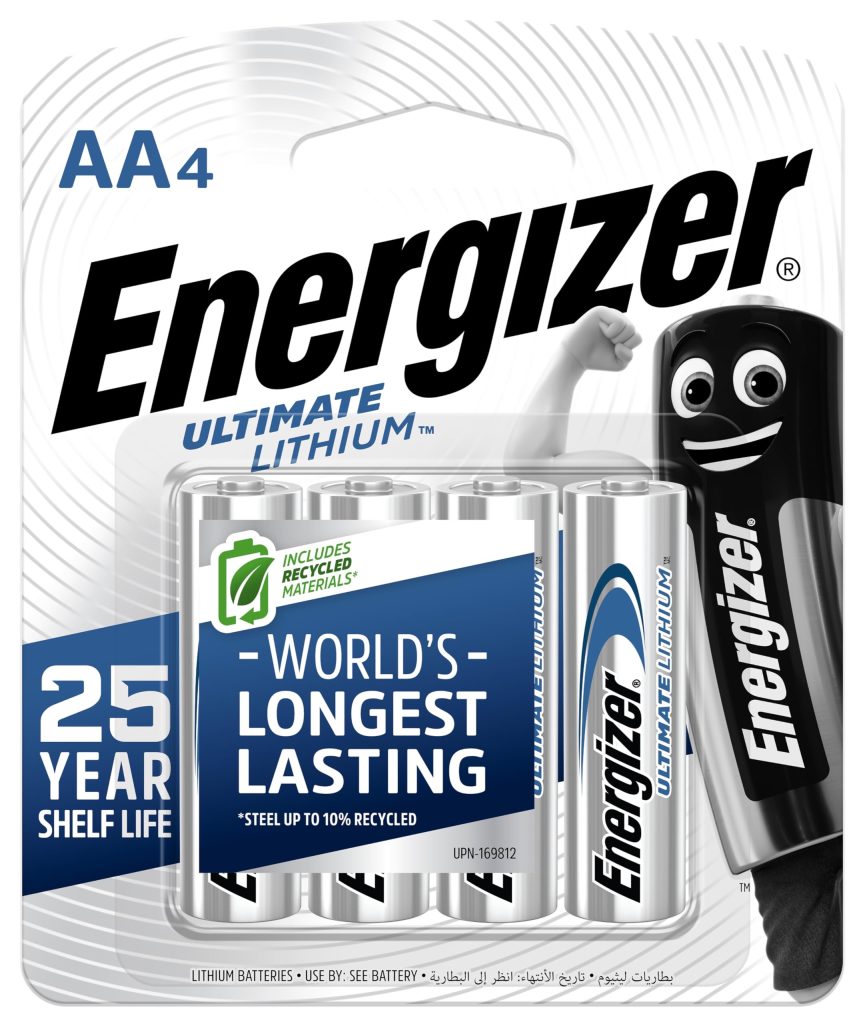
Why I chose it: Energizer has been making the L91 lithium AA since 1989, and it’s still the battery every other lithium AA gets measured against. It works from -40°F to 140°F, holds its power for up to 25 years in storage, and it’s guaranteed not to leak under normal use. It’s also the battery the gear itself is built around. Blink cameras were designed with it in mind, and the Nest Protect takes the Energizer L91 and nothing else. It’s the best pick for outdoor cameras, smoke alarms that call for it, trail cameras and any emergency light that might sit untouched for years.
Key specs
- Chemistry: lithium iron disulfide, 1.5 V nominal (about 1.8 V fresh out of the pack)
- Rated temperature: -40°F to 140°F, for both use and storage
- Shelf life: up to 25 years
- Weight: 15 g, about a third lighter than alkaline
- Max discharge: 2.5 A continuous, 4 A in pulses
- Leak-proof guarantee based on standard use
Pros
- Works in cold that stops alkaline cold
- Holds its charge for decades in a drawer
- Named by Blink and required by Google for the Nest Protect
- Light enough to notice in a headlamp
Cons
- Costs several times more per cell than alkaline
- Wasted money in remotes and clocks
- Some smart locks ask you not to use it
In real use: The number I care about is the cold one. Put an L91 in a test chamber at -40° and it still delivers its full capacity on a light 25 milliamp load, and keeps giving useful power on a much heavier 250 milliamp load. Alkaline and NiMH cells are mostly dead by -4°F. That’s the difference between a trail camera that keeps sending pictures through a January cold front and one that goes quiet the first night it drops below zero. If you like numbers, the full ratings are on the L91 datasheet. One thing to know if you use a battery tester: a fresh lithium cell reads around 1.8 volts, higher than an alkaline, and it holds near that level until it’s almost empty. So a “half full” lithium on a meter is a cell to swap soon, not one to trust for another season.
2. Rayovac 1.5V Lithium AA: Best Name-Brand Value
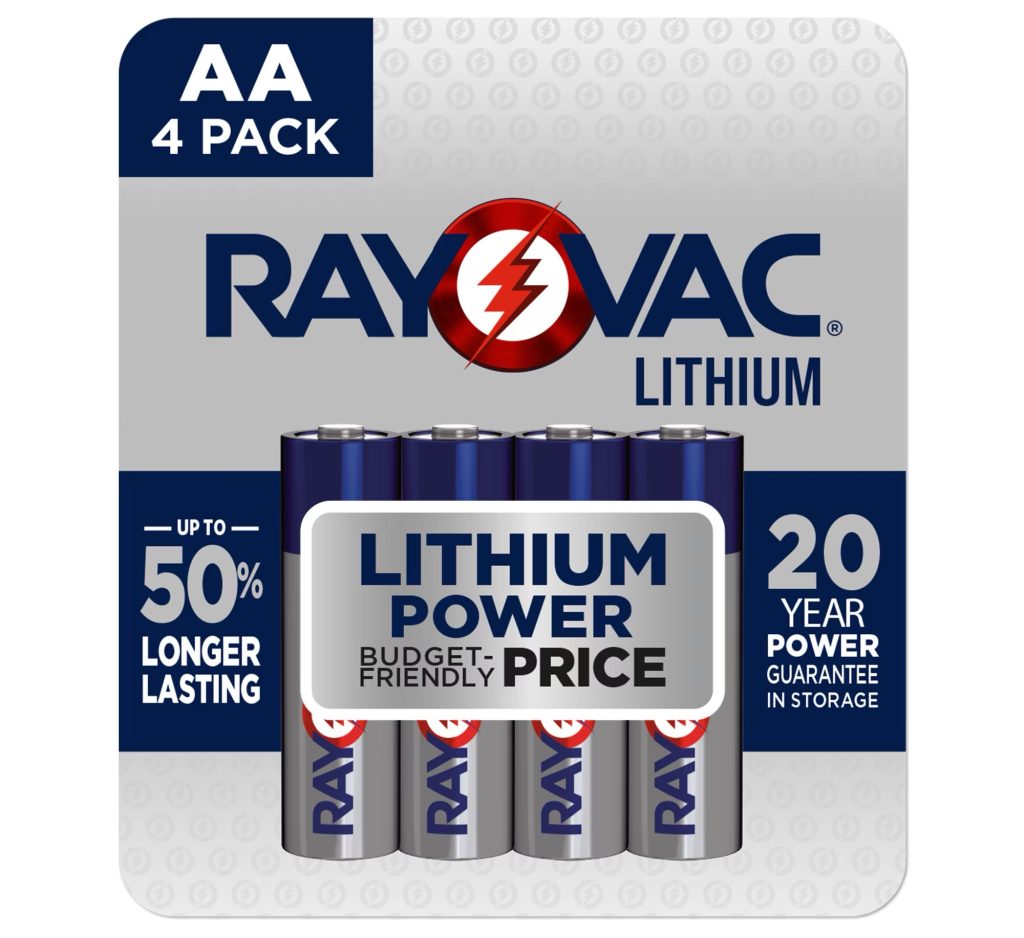
Why I chose it: Rayovac is Energizer’s budget brand these days, and its 1.5V Lithium AA is the cheaper way into lithium without gambling on a brand you’ve never heard of. It carries a 20-year power guarantee in storage, it’s sold in packs from 4 to 24, and it comes from the same company that makes the Energizer. It suits families who want lithium in the cameras and the outage kit but don’t need the exact Energizer part number for a Nest Protect.
Key specs
- Chemistry: 1.5 V lithium, non-rechargeable
- Storage: 20-year power guarantee
- Maker: Energizer Brands, which owns Rayovac
- Packs: 4, 8, 12 and 24
- Listed uses: Blink cameras, fire alarms, flashlights and game controllers
Pros
- Lithium performance for less per cell
- Backed by a big battery company
- A good fit for the outage tub and glovebox
Cons
- Not the L91 a Nest Protect calls for
- Rayovac publishes less detail than Energizer’s datasheets
- Still pricier than alkaline
In real use: I’d put these in the Blink cameras, the glovebox flashlight and the lanterns in the outage tub, and keep the Energizers for anything whose manual names them. For a camera on the north side of the house that sees single digits every winter, either brand does the job, since the cold advantage comes from the lithium chemistry itself. Write the install date on the battery door with a paint pen. Lithium gives very little warning before it quits, so knowing when you last swapped is half the battle.
3. BEVIGOR Lithium AA 24-Pack: Best Bulk Pack for Trail Cameras
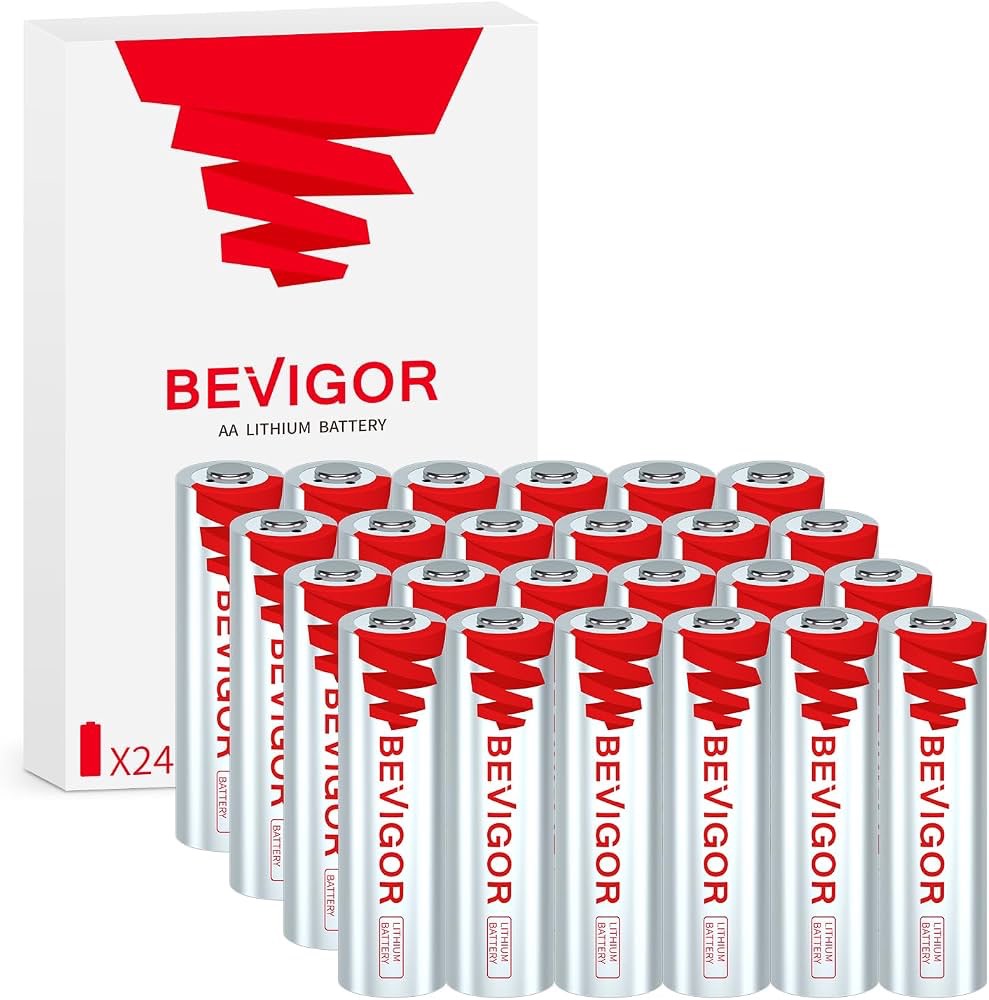
Why I chose it: A cellular trail camera like the Tactacam Reveal takes 12 AAs at a time, and a man with four cameras on a lease is buying batteries by the box. BEVIGOR’s 24-pack is the bulk lithium I’d grab for that job. The cells are rated from -40°F to 140°F with a 3,000 mAh capacity and a 20-year shelf life, and they weigh the same 15 grams as an Energizer. It’s the best pick for trail cameras and anyone feeding several cameras at once.
Key specs
- Chemistry: lithium iron disulfide (FR6), 1.5 V
- Capacity: 3,000 mAh
- Rated temperature: -40°F to 140°F
- Shelf life: 20 years
- Max discharge: 2.5 A continuous, 4 A in pulses
- Packs: 8, 12, 24 and bigger bulk boxes
Pros
- Lowest cost per cell of the disposable picks
- Same cold rating as the name brands
- Big packs fit 12-battery cameras
Cons
- Not the battery for a Nest Protect
- Less known brand, so check the date on arrival
- Lesser-known brand than Energizer or Rayovac
In real use: A cellular camera like the Tactacam Reveal X runs somewhere around two to three months on a set of 12 good lithiums when it’s taking about 30 pictures a day. Plan on that range with any good lithium, and less if your camera sits in a spot with lots of deer traffic or poor cell signal. Swap all 12 at once, never a few, and keep the spare dozen in a zip bag in the truck so you can change them at the tree. I’d also pick up a cheap battery tester and check a couple of cells from each new box before they go to the woods.
4. Blinkspower Lithium AA: Best Budget Pick for Cameras and Doorbells
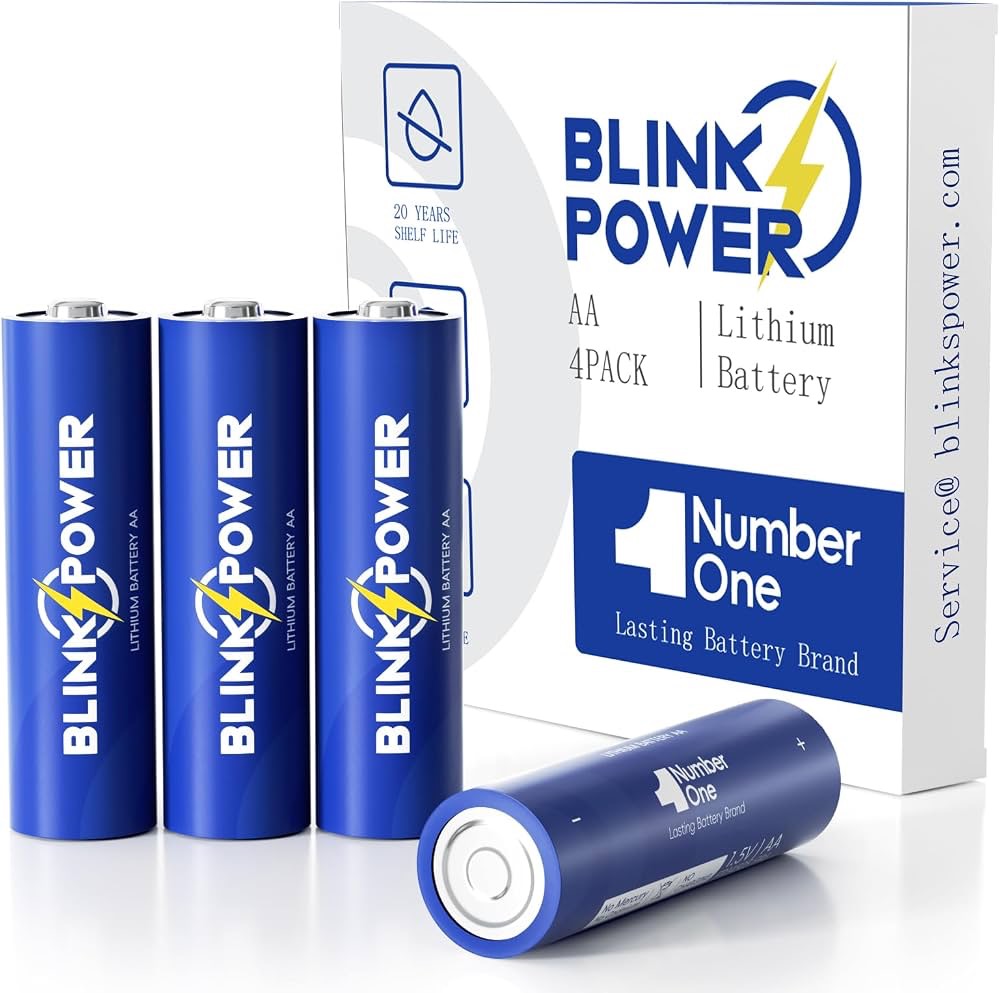
Why I chose it: Blinkspower built its name on exactly what the brand sounds like: AA lithium cells for Blink cameras and doorbells. It claims a 3,500 mAh capacity, a 20-year shelf life and the usual -40°F to 140°F rating. It’s the pick for anyone with a few Blink cameras and a battery doorbell who wants lithium without paying name-brand money every year.
Key specs
- Chemistry: 1.5 V lithium, non-rechargeable
- Capacity: 3,500 mAh claimed
- Rated temperature: -40°F to 140°F
- Shelf life: 20 years
- Weight: 15 g
- Packs: 4, 8, 16 and bulk
Pros
- Meets Blink’s 1.5 volt lithium spec
- Good price per cell in the 8 and 16 packs
- Same cold rating as the big names
Cons
- The 3,500 mAh claim is measured at a light load
- Smaller brand with less published test data
- Wrong pick for a Nest Protect
In real use: Don’t buy a lithium AA on the mAh number alone. Every maker measures capacity at its own gentle test load, and at the real pull of a camera waking up and uploading video, good lithium cells land much closer together than the boxes suggest. What matters in a Blink is the 1.5 volt lithium chemistry and a matched set. Put both cells in from the same pack at the same time, and expect the “up to two years” on the Blink box to shrink if the camera watches a busy street.
5. Paleblue Voyager AA: Best USB-C Rechargeable
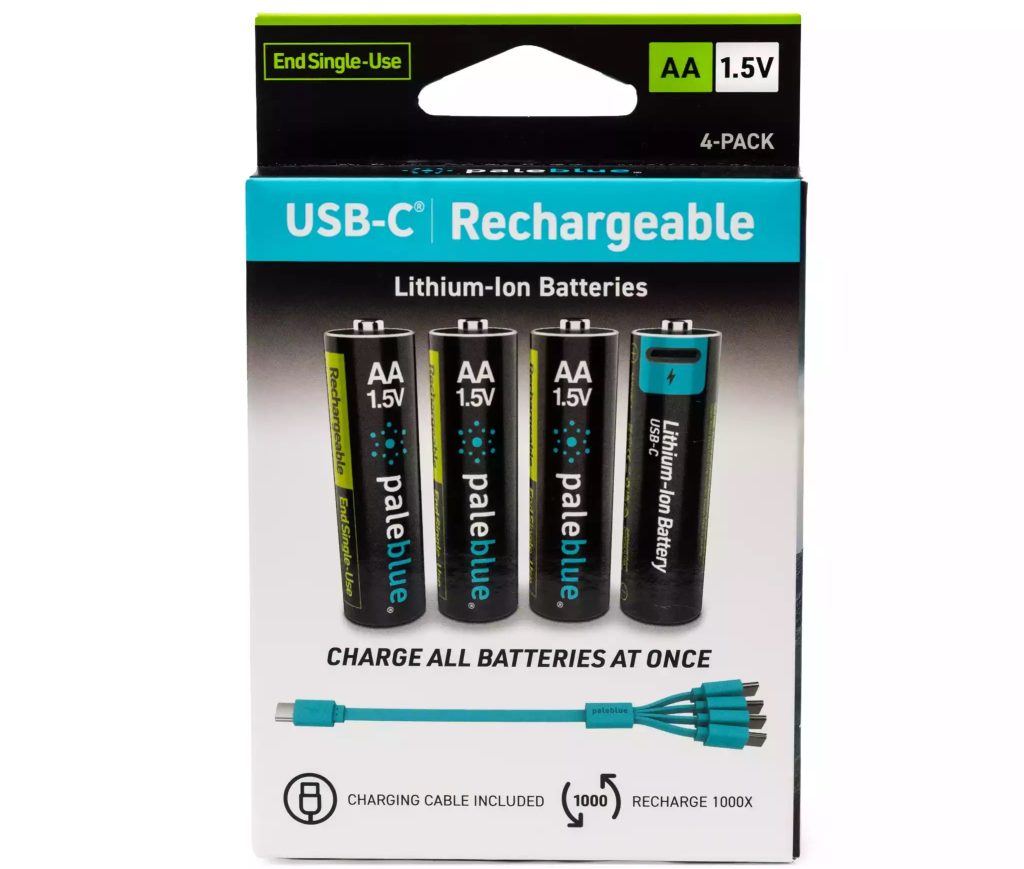
Why I chose it: Paleblue’s Voyager is the newer version of its USB-C rechargeable AA, and it fixes the biggest complaint about the old one. Most lithium-ion rechargeables hold a flat voltage and then drop off a cliff, so your gadget shows a full battery right up until it dies. The Voyager is built to fade gently like an alkaline, with a final drop at the end, so low-battery warnings still work. Each cell holds 2,200 mAh (3.3 watt-hours), puts out a true 1.5 volts, charges from its own USB-C port in a little over two hours, and is rated for more than 1,000 recharges. It’s best for headlamps, game controllers, wireless keyboards and anything you run down every week.
Key specs
- Chemistry: lithium-ion, 1.5 V output (1.0 to 1.6 V range)
- Capacity: 2,200 mAh, 3.3 Wh
- Charging: USB-C on every cell, full in about 126 minutes, 80% in about 94
- Recharges: 1,000+
- Best operating range: 50°F to 113°F, works down to -4°F with less runtime
- Warranty: limited lifetime
Pros
- Charges from any phone charger or power bank
- Alkaline-style fade keeps battery meters honest
- Pays for itself in a few dozen swaps
- Tops off from a power station during an outage
Cons
- Lower capacity than a disposable lithium
- Not for Blink cameras or the Nest Protect
- Loses runtime in hard cold
In real use: This is the battery for things you use, not things you store. I keep a set in the rechargeable headlamp drawer and a set in the game controllers, and charge them on the same cable as my phone. During a long outage, they top off from a portable power station or a solar panel, which is something no disposable can do. Keep them out of the deer stand and the outdoor cameras, though. They run best from 50°F to 113°F, and below freezing a disposable lithium will outlast them easily.
6. EBL Rechargeable Lithium AA with Charger: Best Rechargeable Set with a Charger
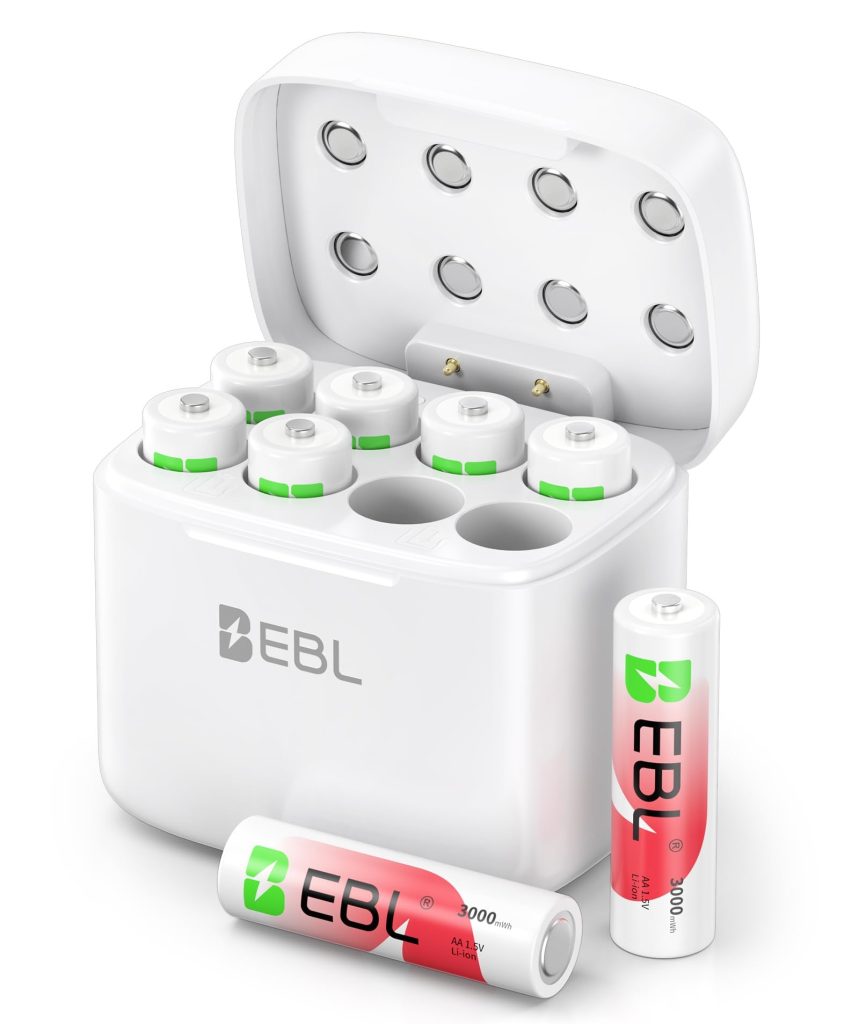
Why I chose it: If you have kids, you have a pile of toys and controllers that eat AAs. EBL’s set pairs eight 1.5 volt lithium-ion AAs with an 8-bay charger that runs off a USB-C cable, so the whole drawer charges at once instead of eight cables snaking around the kitchen. Each cell holds 3,500 milliwatt-hours and is good for up to 1,200 recharges, and the charger fills them in about two and a half hours with a light that tells you when they’re done. It’s the best pick for busy households with lots of daily-use gadgets.
Key specs
- Chemistry: lithium-ion, 1.5 V output
- Energy: 3,500 mWh per cell
- Recharges: up to 1,200
- Charger: 8-bay, USB-C input, about 2.5 hours
- In the box: 8 AA cells and the charger
- Ships 40% to 50% charged, so charge fully before first use
Pros
- One charger handles the whole batch
- Lots of cells for the money
- Great for toys, controllers and flashlights you use daily
Cons
- Cells charge only in the dock, not by their own USB port
- Not for Blink cameras or anything outdoors in hard cold
- Charger takes up a spot on the counter
In real use: Charge the cells fully before you load them, since they ship half full for safety. Then make a rule in the house: dead ones go straight back in the dock, never in the junk drawer. Rechargeable lithium-ion cells don’t like sitting empty for months. I’d still keep a pack of disposable lithiums in the outage kit, because a rechargeable you forgot to charge is just a paperweight in the dark.
Lithium vs Alkaline AA Batteries: What Actually Changes
Both say 1.5 volts on the label, both fit the same slot, and plenty of folks assume the pricier one is just a fancier alkaline. It isn’t. A lithium AA uses a completely different chemistry, lithium iron disulfide, that changes how the battery behaves in four ways you’ll notice.
Lithium AA batteries in cold weather
This is the big one for anybody with gear outside. Alkaline is only rated down to about 0°F, and it gets weak well before that. Lithium AA is rated all the way to -40°F. Put both in a freezer test and the gap is plain to see: alkaline and NiMH are mostly dead by -4°F, while a lithium cell still gives its full capacity at -40° on a light load.

One more thing worth knowing. Cold doesn’t destroy an alkaline battery. It just slows the chemistry down so the battery can’t deliver its power, and much of that power comes back once the cell warms up. That’s why a “dead” flashlight in the truck sometimes works again after an hour on the kitchen counter. It also means alkaline is fine indoors, and lithium only earns its price where things actually get cold, get hot, or sit for years.
Are lithium AA batteries better than alkaline in every device?
No. In a TV remote, a wall clock or a kitchen scale, the drain is so light that a good alkaline lasts a year or more, and lithium buys you almost nothing. Lithium pays off in high-drain gear, in anything that lives outside or in a car, and in anything that has to sit in a drawer and still work years from now.
AA 1.5 Volt Lithium Non-Rechargeable: What Blink Is Asking For
If you searched that exact phrase, you probably copied it off a Blink box. It’s the one battery Blink cameras are built to run on, and the battery Video Doorbell takes two of them. Every word in that phrase rules something out:
- 1.5 volt rules out the 3.7 volt lithium-ion cells sold for flashlights. Those are a different size anyway, but people do ask.
- Lithium rules out alkaline. In a Blink, alkaline gives poor runtime and can keep the camera from powering up properly.
- Non-rechargeable rules out rechargeables of every kind, including the 1.5 volt lithium-ion type.
Best batteries for Blink cameras
Any of the four disposable picks above meets Blink’s spec. Energizer Ultimate Lithium is the battery Blink cameras were designed around, and that’s what I’d use for a camera in a hard-to-reach spot or on the cold side of the house. For a few indoor cameras, the Rayovac or Blinkspower cells save money. Expect up to two years on default settings, and a camera that sees a lot of motion, a weak Wi-Fi signal or deep cold will land well short of that.
Best Batteries for Trail Cameras
Trail cameras are where lithium earns every penny. They sit in the cold for weeks, they fire an infrared flash all night, and the cellular models wake up to send pictures over a weak signal, which is about the hardest job you can give a AA. That’s why lithium is the standard trail camera battery anywhere it freezes, and Energizer Ultimate Lithium is about the longest-lasting AA you can put in a Tactacam Reveal.
- Count your cells. Many cameras take 8 AAs, and cellular models like the Tactacam Reveal take 12. That’s why a bulk pack like the BEVIGOR 24 makes sense.
- Swap the whole set. Never mix old and new cells, or lithium and alkaline, in one camera.
- Use the external port if you have one. Many cellular cameras take a rechargeable lithium battery pack or a solar panel, which beats buying AAs for a camera you visit a lot.
- Skip rechargeable AAs in the woods in winter. They lose runtime below freezing, right when deer are moving.
Where Lithium AA Batteries Don’t Belong
Lithium is the best AA you can buy for a lot of jobs, but a few devices are built around alkaline, and a couple are picky about the exact battery.
Smart locks
Schlage electronic locks aren’t made for lithium. They’re built around premium alkaline, and Duracell Coppertop is the one to buy. Most other smart locks work the same way, for the same reason. A lock judges how much battery is left by watching the voltage slowly fall, the way an alkaline does. Lithium holds a flat voltage until it’s nearly empty, so the lock may show a full battery right up until the day it won’t turn. Check your lock’s manual before you upgrade.
The Nest Protect wants one exact battery
Both the battery and wired Nest Protect are built for Energizer Ultimate Lithium AA (L91) batteries, six in the battery model and three as backup in the wired one. Alkaline and rechargeable cells drain quickly in it. I’d follow that to the letter. A smoke alarm is no place to save a few cents on a different brand of lithium.
Other smoke and CO alarms
Look inside the battery door before you buy. Many alarms print the specific battery models they were tested with. Use what’s listed, and if lithium isn’t on that list, stick with the alkaline it names.
Remotes, clocks and anything low drain
It won’t hurt them, but you’re paying several times more for power the device will never use. A good alkaline runs a remote or a wall clock for a year or two.
Rechargeable Lithium AA vs Disposable: Which to Buy
The word “lithium” covers two very different AA batteries, and the listings mix them up all the time. Here’s how to tell them apart.
Can you recharge lithium AA batteries?
Only the ones sold as rechargeable. Never put a disposable lithium AA in any charger, since charging one can make it leak or vent. Don’t mix them with used cells or other battery types either.
Energizer Ultimate Lithium vs Cheaper Lithium AA
All four disposable picks use the same basic lithium iron disulfide chemistry, which is why they share the -40°F to 140°F rating. Energizer’s edge is its track record. It has been making these cells for decades, and it’s the battery gear makers write into their manuals. When a device names the L91, buy the L91. Everywhere else, Rayovac, BEVIGOR and Blinkspower are sensible ways to spend less, especially when you’re feeding cameras that take a dozen cells apiece.
Shelf Life and Storage: Making Lithium Last 20 Years
A lithium AA keeps about 95% of its charge after 20 years in storage, and the newest Ultimate Lithium packs are rated for 25. Alkaline loses roughly 3% a year at room temperature. That gap is why lithium is my battery for the outage kit, the car and the go bag.
- Keep them in the package. Loose cells rattling in a drawer can short against keys and coins.
- Room temperature is fine. You don’t need the fridge, and condensation from a cold fridge does more harm than good.
- Write the date on the box. Then rotate the oldest pack into everyday use once a year.
- Pull batteries from gear you store for months. Even lithium is better off in its package than sitting in a lantern in the attic.
For outages, I keep a lithium set with every flashlight in the power outage emergency kit, with the battery lantern, with the hand crank radio, and taped to each of the AA-powered walkie talkies from my GMRS radio guide. In the car, a lithium-powered glovebox flashlight handles summer heat better than alkaline, which is only rated to 131°F.
Can You Take Lithium AA Batteries on a Plane?
Yes. The FAA allows disposable lithium batteries with up to 2 grams of lithium each, and a lithium AA has less than 1 gram. Batteries installed in a device can travel in your carry-on or checked bag. Spare batteries that aren’t in a device must go in your carry-on only, protected from short circuits, which means in the original package or with the ends taped. Rechargeable lithium-ion AAs follow the same carry-on rule for spares.
How to dispose of lithium AA batteries
Don’t toss them in a fire or a burn barrel. Put a piece of tape over the positive end, collect them in a jar, and drop them at a battery recycling bin. Many hardware stores and home centers have one near the front door, and some states require recycling, so check your local rules.
How to Choose Lithium AA Batteries
Read the chemistry, not the color of the label
A disposable lithium AA says 1.5 V and lithium, and the fine print often shows FR6 or lithium iron disulfide. A rechargeable one says rechargeable, lithium-ion or Li-ion, and usually lists watt-hours. Some cheap listings call alkaline cells “lithium” in the title, so check the specs before you buy.
Take mAh claims with a grain of salt
Capacity depends on the test load. A cell rated at 3,500 mAh at a trickle may deliver far less in a camera, and different brands test differently. Temperature rating, shelf life and a known brand tell you more than a big number on the box.
Buy the pack size you’ll actually use
Lithium keeps for decades, so a big pack isn’t wasted if you have cameras to feed. Count the cells in each device, add one spare set, and buy the next pack size up. The planner above does that math for you.
Match the battery to the job
Disposable lithium for cold, heavy loads and long storage. A USB-C rechargeable for anything you run down every week. Alkaline for remotes, clocks and any device whose manual asks for it. If you’re picking a light to go with them, my best AA flashlight guide covers lights that run on any AA, and the rechargeable CR123A guide covers the other battery tactical lights love.
Frequently Asked Questions
Are lithium AA batteries better than alkaline?
For cold weather, heavy loads like cameras and bright flashlights, and long storage, yes. Lithium is rated down to -40°F, holds its charge for 20 years or more, and doesn’t leak like alkaline. For remotes, clocks and smart locks, alkaline is the better buy.
Are lithium AA batteries rechargeable?
The common ones, like Energizer Ultimate Lithium, are not, and you should never charge them. Rechargeable lithium-ion AAs from brands like Paleblue and EBL are a separate product and are clearly labeled rechargeable.
How long do lithium AA batteries last in storage?
Energizer Ultimate Lithium AA holds power for up to 25 years in storage, and most other lithium brands are rated for 20. Alkaline typically lasts 5 to 10 years before it loses much of its charge.
Can you use lithium AA batteries in any device?
Most devices that take AA batteries work fine with lithium, but check the manual first. Some smart locks, including Schlage, ask you not to use lithium, and the Nest Protect requires the Energizer L91 specifically. Never mix lithium and alkaline in the same device.
The Bottom Line
For anything that lives outside, rides in the car or waits in a drawer for the next ice storm, the Energizer Ultimate Lithium is the lithium AA I’d buy first, and the only one I’d put in a Nest Protect. The Rayovac 1.5V Lithium AA gives you the same chemistry for less, the BEVIGOR 24-pack keeps a string of trail cameras running without draining your wallet, and Blinkspower is a solid budget choice for Blink cameras and doorbells. For the gadgets you use every day, skip disposables altogether and get the Paleblue Voyager AA or the EBL rechargeable set with its charger.
Then run your house through the planner above, print the list, and tape it inside the drawer. Next January, when the camera over the garage is still sending pictures at six degrees, you’ll be glad you did. If you’re building out your weather gear while you’re at it, my weather alert radio guide is a good next stop.
