
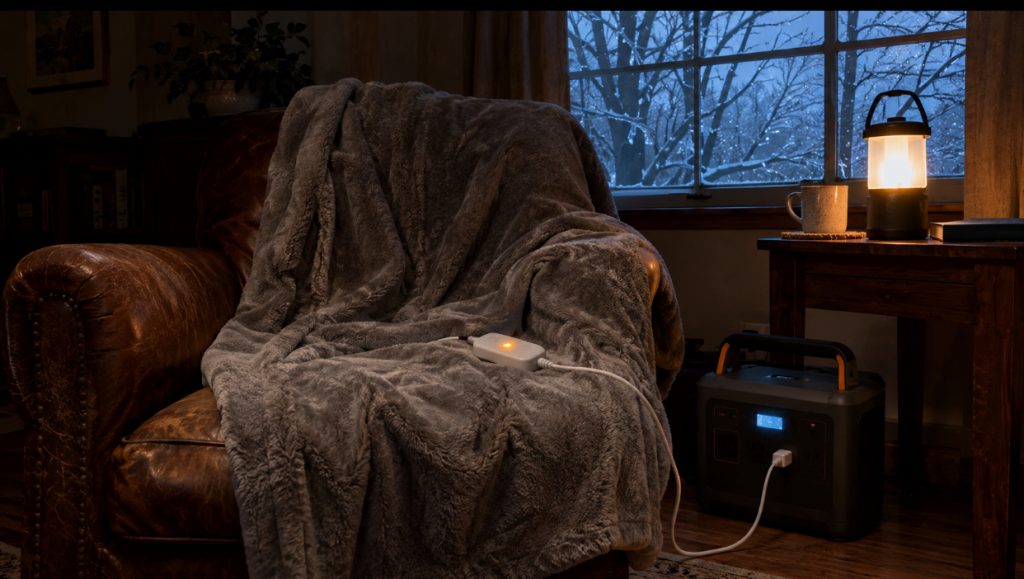
An ice storm always starts out polite. A few ticks against the window during supper, then a pine limb lets go out back with a crack like a deer rifle, and the lights blink twice like they’re thinking it over before they quit for the night. In a lot of Southern homes that’s the end of the heat too, since the gas furnace needs electricity to run its blower and nobody put a fireplace in a ranch house in Jackson back in 1987. By bedtime the thermostat says 58 and the dog has claimed the good wool blanket. Somebody’s standing at the kitchen counter with a phone at 31 percent, typing “battery operated heater” with cold thumbs.
I’ll save you some money before you hit the buy button. No battery you can carry is going to heat that room for long. Those little cordless “space heaters” that clip onto a drill battery buy you about half an hour of warm knees, and a real 1,500 watt heater will drain a big power station before the weatherman gets through the five-day forecast. Run a heated blanket off that same battery, though, and you’ll stay toasty until somebody gets the coffee going.
Here’s my short list. A plain plug-in Sunbeam heated throw running off a power station is the setup that gets most families to sunrise without anybody sleeping in their coat. The Gobi Heat Zen carries its own battery, so you can wrap up on the couch with no cord at all. And if there’s a Makita drill out in the garage, the Makita heated blanket runs a day and a half on one of its batteries. Right below the picks, there’s a planner where you plug in your heat and your battery and see exactly what time you’ll go cold.
Quick Picks: The Best Battery Operated Heaters and Heated Blankets
- Sunbeam Microplush Heated Throw: best battery operated heat for a night without power, run from a power station.
- Gobi Heat Zen Heated Blanket: best cordless heated blanket for the couch, the porch or the tailgate.
- Makita DCB200A Heated Blanket: best for anyone who already owns Makita 18V tool batteries.
- ORORO Heated Vest: best wearable heat for moving around a cold house.
- RoadPro 12V Heated Blanket: best heated blanket for the car or truck.
- OCOOPA Rechargeable Hand Warmers: best small, pocket-size heat and an easy stocking stuffer.
Is There a Battery Operated Heater That Actually Heats a Room?
Not one you’d want to pay for. A small bedroom loses heat through the windows and walls all night, and keeping it comfortable on a freezing night takes something close to a regular 1,500 watt space heater running much of the time. A battery has to hold all of that energy, and batteries are expensive per watt-hour.
Here’s the math. A 1,000 Wh power station gives you roughly 870 Wh you can actually use. Divide that by the watts of whatever you plug in and you get hours: about 35 minutes for a space heater on high, and about 14 hours for a heated throw.
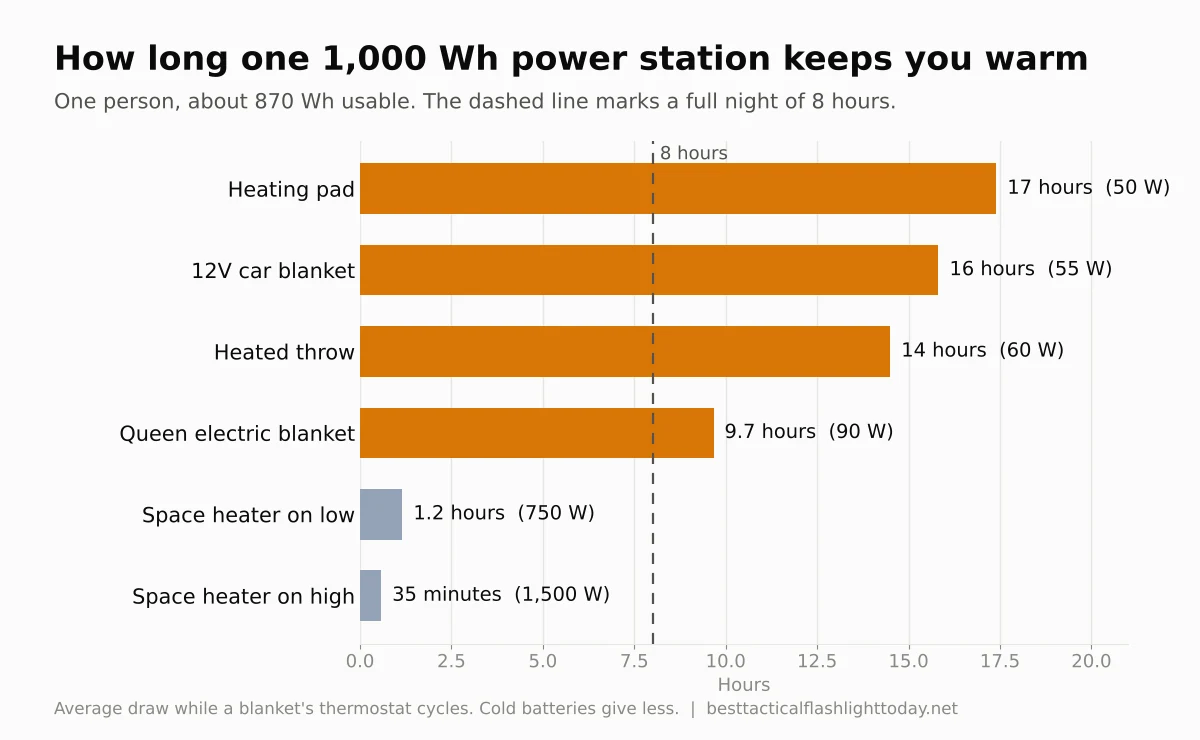
That’s why every pick on this page heats you rather than the room. Your body makes about 100 watts of heat sitting still. Trap it under a comforter, add 60 watts of electric blanket, and you’re warm on a sliver of what the room would need.
What about the little cordless space heaters?
You’ll see plenty of small heaters that clip onto a DeWalt or Milwaukee style battery and promise warmth “anywhere.” Most put out 100 to 200 watts. A 5.0Ah 18V pack holds about 90 Wh, so at 170 watts you get around half an hour of warm air in front of your knees. That’s fine in a deer stand. For a night at home, a heated blanket on the same battery lasts many times longer.
How long can a power station run a space heater?
Take the station’s rating, multiply by 0.85 for inverter losses, and divide by the heater’s watts. A 2,000 Wh station runs a 1,500 W heater for a little over an hour, and many stations under 1,000 Wh can’t start one at all. My power station guide and the EcoFlow vs Jackery vs Anker comparison compare the stations, and a solar generator can refill one after the storm.
Battery Operated Heater Comparison
Warm Tonight Planner: How Long Will Your Battery Keep You Warm?
Pick your heat, the battery you’d run it from and how many people need warming. The planner shows how far into the night it lasts and what else that battery could run. Try a space heater on a power station, then a heated throw on the same one, and you’ll see why this page is built around blankets.
1. Sunbeam Microplush Heated Throw: Best for a Night Without Power
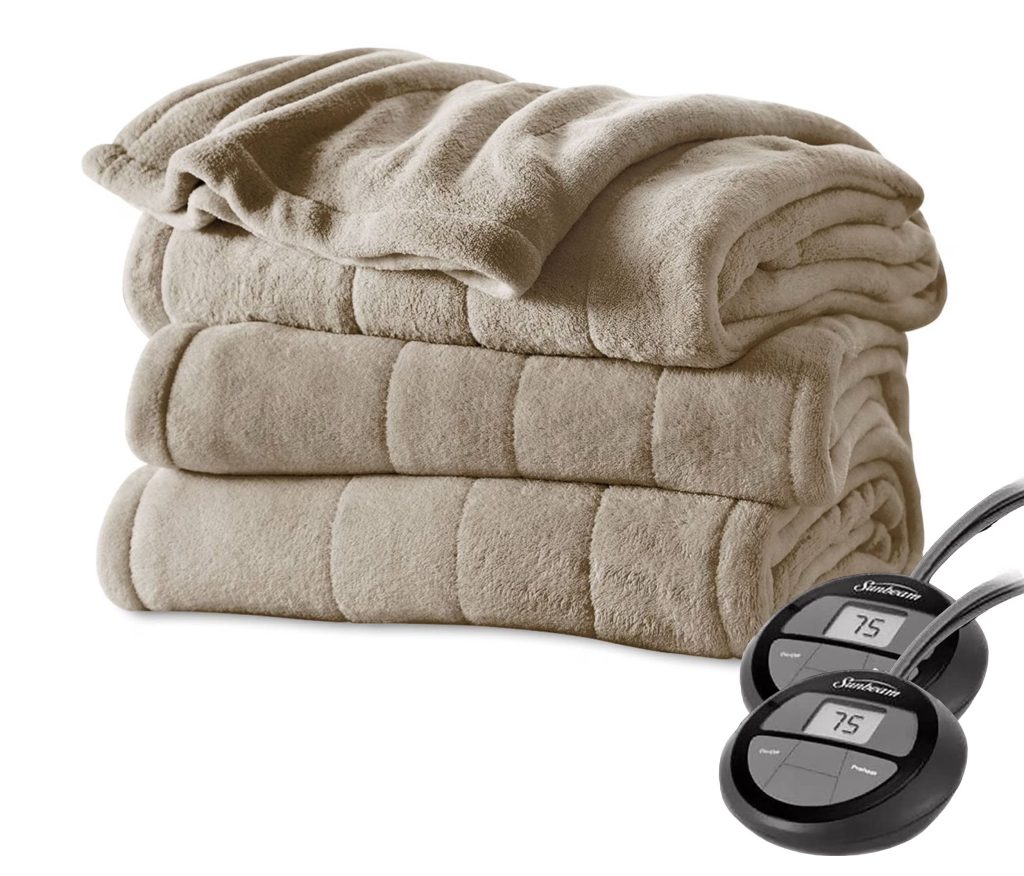
Why I chose it: A plain plug-in heated throw is the cheapest long-lasting heat you can run from a battery, once you have a power station to plug it into. Sunbeam has made electric blankets for decades, and the Microplush throw is soft and big enough to wrap one adult on the couch or cover one side of a bed. Throws like this draw around 50 to 100 watts, and less once the controller starts cycling. On a 1,000 Wh station such as the Anker SOLIX C1000 Gen 2, the Jackery Explorer 1000 v2 or the EcoFlow DELTA 3 Plus, that’s a whole night for one person. It’s best for anyone with a power station.
Key specs
- Size: 50 x 60 inches
- Power: plug-in, 120V
- Draw: about 50 to 100 W, depending on the setting
- Heat settings: 4
- Auto shutoff: 4 hours
Pros
- Runs all night on a mid-size power station
- Costs a lot less than any cordless blanket
- Works off the grid or on it, so it earns its keep all winter
Cons
- Needs a power station or a working outlet
- The 4 hour shutoff means a button press in the middle of the night
- Covers one person, not a whole bed
In real use: Put the throw on you and a regular comforter on top. The comforter holds the heat in, the controller cycles off more often, and the battery lasts longer. When the 4 hour shutoff clicks off around 2 AM, you’ll wake up warm, press the button and drift back off. Keep it flat or loosely draped while it’s on, since folding an electric blanket can damage the wires inside. The Maine State Fire Marshal’s electric blanket safety sheet lists a few more habits worth knowing.
2. Gobi Heat Zen Heated Blanket: Best Cordless Heated Blanket
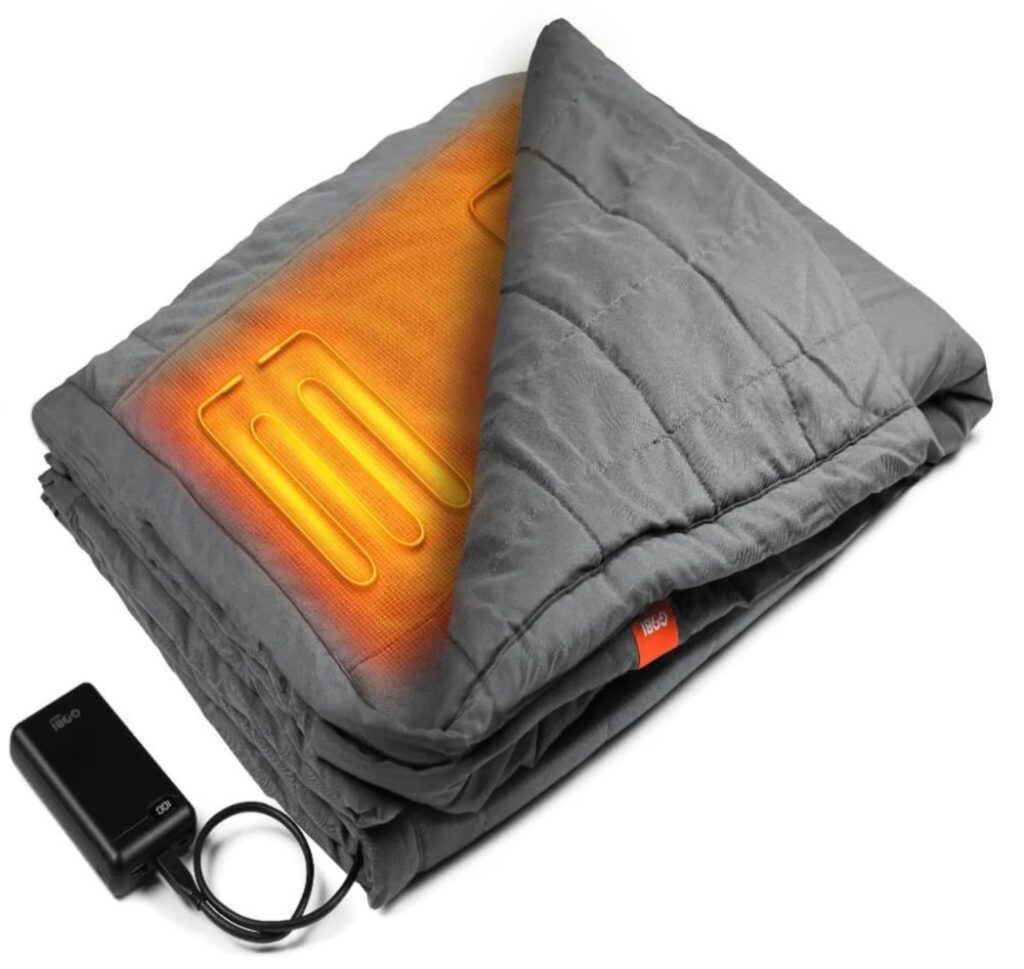
Why I chose it: The Zen is what most people picture when they type “battery operated heater.” It’s a full 70 by 50 inch blanket with a 20,000 mAh battery that tucks into a pocket, so there’s nothing to plug in and nothing to trip over. Gobi Heat built its name on heated clothing, and it shows in the three heating zones, the wind and water resistant shell and the USB port on the battery. It’s best for people without a power station, or anyone who wants it on the porch and in the stands too.
Key specs
- Size: 70 x 50 inches
- Battery: 20,000 mAh, removable
- Runtime: up to 10 hours on low, 8 on medium, 5 on high
- Heat: about 116, 127 and 136 degrees F
- Washable: yes, with the battery removed
- Extras: USB port on the battery, direct power option for a wall outlet or a car socket
Pros
- No outlet, station or cord needed
- Big enough to share on the couch
- Shell shrugs off wind and spilled coffee
Cons
- Costs a lot more than a plug-in throw
- High drains the pack in about five hours
- A second battery costs extra
In real use: Run it on low under a comforter and it covers a long evening and a good part of the night. In a multi-day outage, recharge the pack during the day from a power bank, a station or the car while you run errands, and grab a spare battery if you’ll lean on it for more than one night. Outside, it’s the blanket I’d throw in the truck for a cold football game or the duck blind.
3. Makita DCB200A Heated Blanket: Best on Tool Batteries
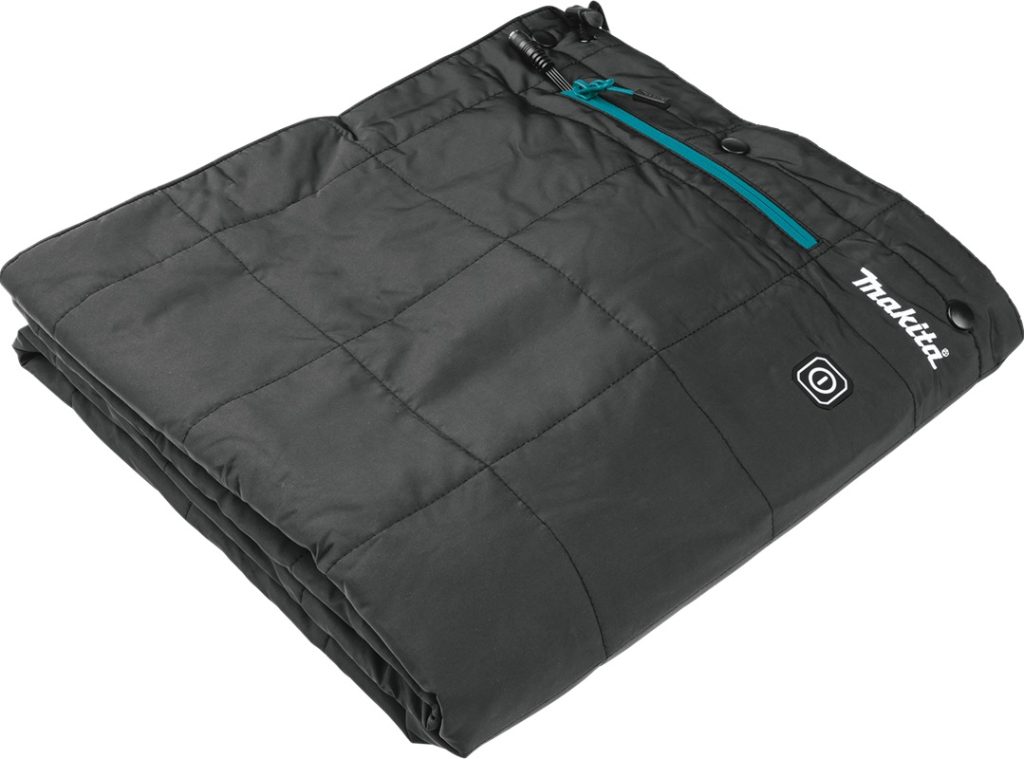
Why I chose it: If there’s a Makita drill in your garage, this is the cheapest way to get serious runtime out of batteries you already own. The DCB200A slides onto any Makita 18V LXT battery and runs up to 35 hours on low from a single 6.0Ah pack. That’s a day and a half of heat. At 27.5 inches wide it’s a lap blanket or a sleeping bag liner more than a bed blanket. It’s best for Makita owners and hunters.
Key specs
- Size: 55 x 27.5 inches
- Power: Makita 18V LXT batteries (sold separately)
- Runtime: up to 35 hours on low with a 6.0Ah battery
- Heat settings: 3
- Weight: 1.28 lb without the battery
- Extras: USB port, machine washable, wind and water resistant shell
Pros
- Longest runtime here by a wide margin
- Uses batteries you may already own
- Light enough to live in a truck or a pack
Cons
- Narrow, so it’s a one-person blanket
- Battery and charger cost extra if you don’t have them
- Only fits Makita 18V packs
In real use: Low is a gentle warmth, which is exactly right inside a sleeping bag or under a comforter. Use medium or high to warm up, then step down. Keep two packs in rotation and charge the spare from a station or the Makita charger when you can. DeWalt and Milwaukee don’t make a matching blanket, but both sell heated jackets that run on their packs.
4. ORORO Heated Vest: Best to Wear
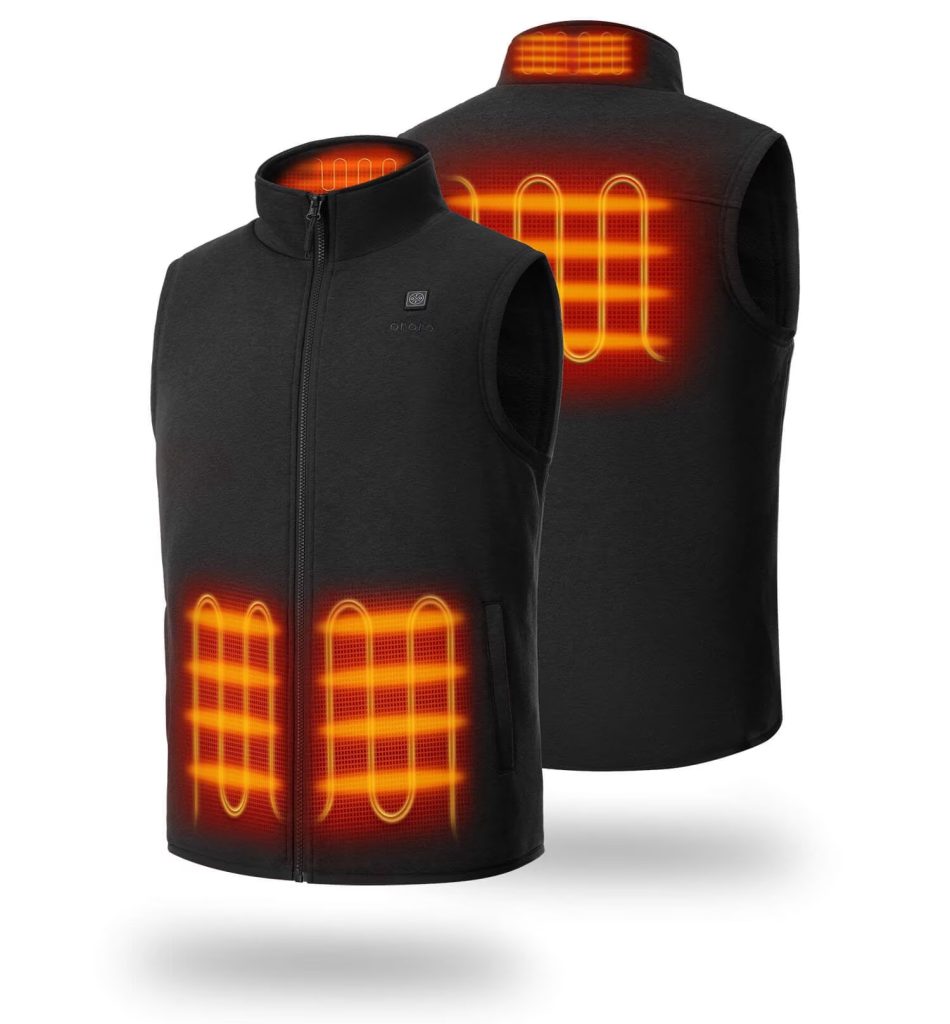
Why I chose it: A blanket keeps you warm while you sit still. An outage also means getting up to heat soup on the camp stove out on the porch, check the pipes and feed the dog. A heated vest goes with you. ORORO’s vests put heat across the chest and back, run from a small USB-C battery and look like a normal puffer vest. It’s best for anyone who has to keep moving in a cold house, and a good gift for the person who’s always cold.
Key specs
- Heat: panels across the chest and back
- Battery: about 5,000 mAh, USB-C rechargeable
- Runtime: about 9 hours on low, 5.5 on medium, 2.5 on high
- Heat settings: 3
- Styles: men’s and women’s cuts
Pros
- Heat goes wherever you go
- Battery charges from any power bank or station USB port
- Looks like regular clothing, so you’ll wear it all winter
Cons
- Only warms your core
- High setting drains the battery in a couple of hours
- Sizing matters, so check the chart before ordering
In real use: Wear it over a thin base layer and under a fleece so the heat stays against you. Low is plenty indoors once you’re dressed for the cold. It pairs well with a heated throw: the vest while you settle the house, the throw once you’re in bed. A spare battery doubles your runtime and charges from the same cable as your phone.
5. RoadPro 12V Heated Blanket: Best for the Car
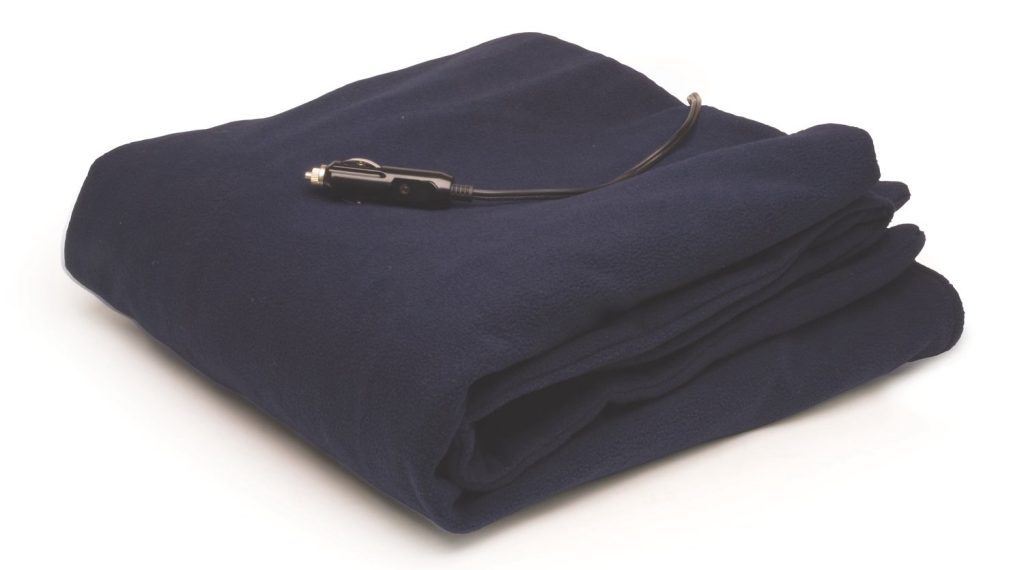
Why I chose it: RoadPro has sold gear to long-haul truckers for more than 30 years, and this polar fleece blanket is about as simple as it gets. It plugs into the 12V socket and draws about 4.6 amps, roughly 55 watts, through an 8 foot cord that reaches the back seat. It’s best for winter drives and as a quiet extra in your car emergency kit.
Key specs
- Size: 58 x 42.5 inches
- Power: 12V socket
- Draw: 4.6 amps, about 55 W
- Cord: 8 feet
- Material: polar fleece
Pros
- Cheap, simple and reliable
- Long cord reaches any seat
- Also runs from the 12V socket on a power station at home
Cons
- Can drain a parked car’s battery
- No battery of its own
- Fleece is cozy but not wind resistant outdoors
In real use: With the engine running, it goes as long as you need. With the engine off, give it an hour or so before you start worrying whether the battery can still start the car in the cold. If you’re stuck, run the engine about 10 minutes an hour with the tailpipe clear of snow, and keep a portable jump starter aboard. At home, it runs from a power station’s 12V socket about as long as a heated throw.
6. OCOOPA Rechargeable Hand Warmers: Best Small Heat
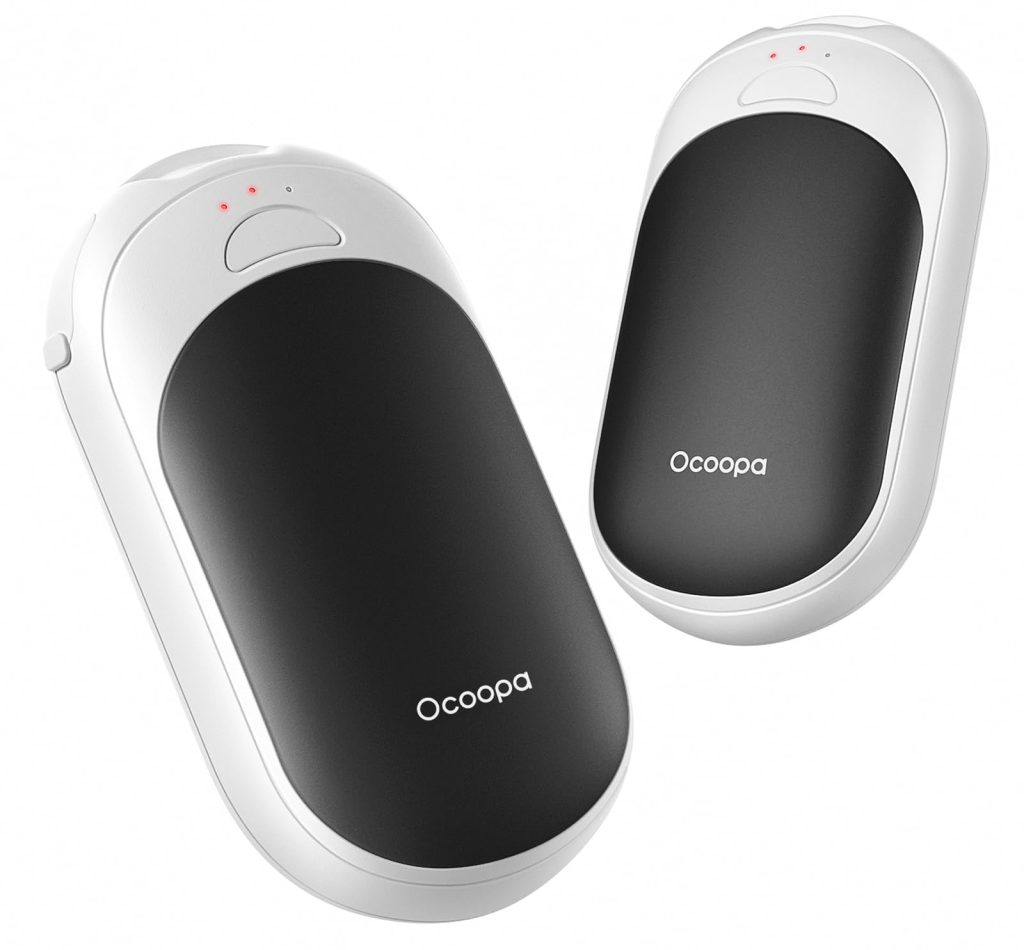
Why I chose it: Sometimes you just need warm hands. These two magnetic warmers snap together into one unit, split apart for two pockets, and recharge from any USB port, so you never buy another box of disposable packs. They reach about 136 degrees F on the top setting and are rated for up to 16 hours on the lowest. They’re best for trips out to the generator or the woodpile, and they show up in my tactical gifts guide as one of the easiest stocking stuffers going.
Key specs
- Units: 2, magnetic
- Battery: 10,000 mAh in all
- Heat: 4 levels, up to 136 degrees F
- Runtime: up to 16 hours on the lowest setting
- Charging: USB
Pros
- Reusable, so there’s no box of packs to run out of
- Small enough for any pocket
- Easy gift
Cons
- Warms hands, not much else
- Runtime drops fast on the high settings
- Not a substitute for a blanket at night
In real use: Keep them charged in a drawer so they’re ready when the power goes. Drop one into the foot of a sleeping bag or a vest pocket, and use the middle settings to stretch them through a long day of cleanup.
Need Real Room Heat? Use an Indoor-Safe Propane or Kerosene Heater
If you truly need to heat a room for days, fuel beats batteries. A single 20 pound propane tank holds more energy than a dozen big power stations. The DeWalt DXH12B shows up in battery heater searches because it runs its fan, lights and USB ports on a DeWalt 20V pack, but the heat comes from propane. You’ll find it, the Mr. Heater Buddy line and the rest of the indoor-certified options in my indoor propane heater guide, and the wick heaters in my indoor kerosene heater guide.
Any heater that burns fuel indoors needs a working carbon monoxide detector in the room and a window cracked for fresh air. Battery heat makes no fumes, which is the other reason I’d use blankets for sleeping.
Battery Operated Heaters for the Bedroom, Car, Office and Camp
For indoor use and the bedroom
Pick one room in the middle of the house with the fewest windows and close the doors to the rest. A heated throw or queen electric blanket on a power station, under your regular comforter, gets a family through an ice storm night. Give kids and older relatives the warmest spot.
For the office or a desk
At a desk, a heated throw over your lap or a heating pad on the chair beats any cordless heater, and both run for hours on a small power station.
For the car
Most plug-in car heaters are small 12V fans that do little more than clear a patch of windshield. A 12V heated blanket like the RoadPro does more for the people inside, and a wool blanket works with the engine off.
For camping and the tent
For tent camping, the Gobi Heat Zen or the Makita blanket inside a sleeping bag is the safest heat you can bring. Never run propane in a closed tent. Real heat in a canvas tent is a job for a tent wood stove with a proper stove jack, and morning coffee belongs on a propane camping stove outside the door.
Outdoors, on the porch and at work
For the bleachers or a cold job site, wear the heat with a vest and hand warmers. In a garage with the door open, a battery-fan propane heater like the DXH12B makes sense.
How to Stay Warm in a Power Outage Without Electricity
If the outage catches you with no station and no fuel heater, here’s the plan I’d follow, especially in a house built for mild winters:
Then plan for next time. A mid-size power station and a heated throw for each person also keeps the phones and the lights running. My power outage emergency kit page has the rest of the list.
Buying Guide: What to Look for in a Battery Operated Heater
Watts and watt-hours. These two numbers tell you everything. Watts is how fast something uses power. Watt-hours is how much the battery holds. Usable watt-hours divided by watts gives you hours of heat. If the box won’t tell you the watts, assume the runtime claims are optimistic.
Don’t compare mAh across products. A 20,000 mAh pack at 3.7 volts and a 20,000 mAh pack at 12 volts hold very different amounts of energy. Compare runtimes on the same setting instead.
Match the plug to your battery. Plug-in blankets need a power station or an inverter. USB gear runs from power banks. 12V blankets run from a car socket or the 12V port on a station. Tool gear runs only on its own brand of battery.
Settings and shutoff. More settings let you run low once you’re warm, which is where long runtimes come from. Auto shutoff is a good safety feature, as long as you know it’s coming.
Safety listing and the brand behind it. Look for a UL or ETL listing on anything that heats up next to your body, and stick with brands that answer the phone. In July 2026 the CPSC warned people to stop using one brand of electric heated blanket after reports of blankets smoking and melting, and the company behind it hadn’t answered the agency’s requests. That’s the risk with a no-name heated blanket that disappears from the market next year.
Battery Operated Heater FAQ
Is there a battery operated heater that actually heats a room?
Not for long. Heating a room takes something like a 1,500 watt space heater, and even a 1,000 Wh power station runs one for only about 35 minutes. Battery power works best when the heat goes on your body through a heated blanket, throw or vest, which can last all night on the same battery.
How long can a power station run a space heater?
Multiply the station’s watt-hour rating by 0.85 and divide by the heater’s watts. A 1,000 Wh station runs a 1,500 W heater for about 35 minutes and a 3,000 Wh station about an hour and a half. The same 1,000 Wh station runs a 60 W heated throw for about 14 hours.
Are battery operated heaters safe to use indoors?
Battery and plug-in heated blankets, vests and hand warmers make no fumes, so they’re safe to use indoors and in a closed bedroom. Keep blankets flat while they’re on and buy a known brand with a UL or ETL listing. Fuel heaters are different: use only indoor-certified models, with a CO detector and a cracked window.
What’s the best way to stay warm in a power outage without electricity?
Keep the heat close to the people. Move everyone into one small room, close it off, wear hats and wool socks, and sleep two to a bed under every blanket you have. For next time, a power station with a heated throw for each person keeps everyone warm all night with no fumes.
The Bottom Line
For most homes, the best battery operated heater is a Sunbeam Microplush Heated Throw plugged into a power station like the Anker SOLIX C1000 Gen 2. It keeps one person warm all night. If you want warmth without an outlet, the Gobi Heat Zen Heated Blanket is the cordless blanket to get, and Makita owners should grab the Makita DCB200A Heated Blanket for its 35 hour runtime. Wear the ORORO Heated Vest when you’re up and moving, keep the RoadPro 12V Heated Blanket in the car and drop the OCOOPA Rechargeable Hand Warmers in a coat pocket. To heat a whole room for days, look at an indoor propane heater with a CO detector beside it.
