
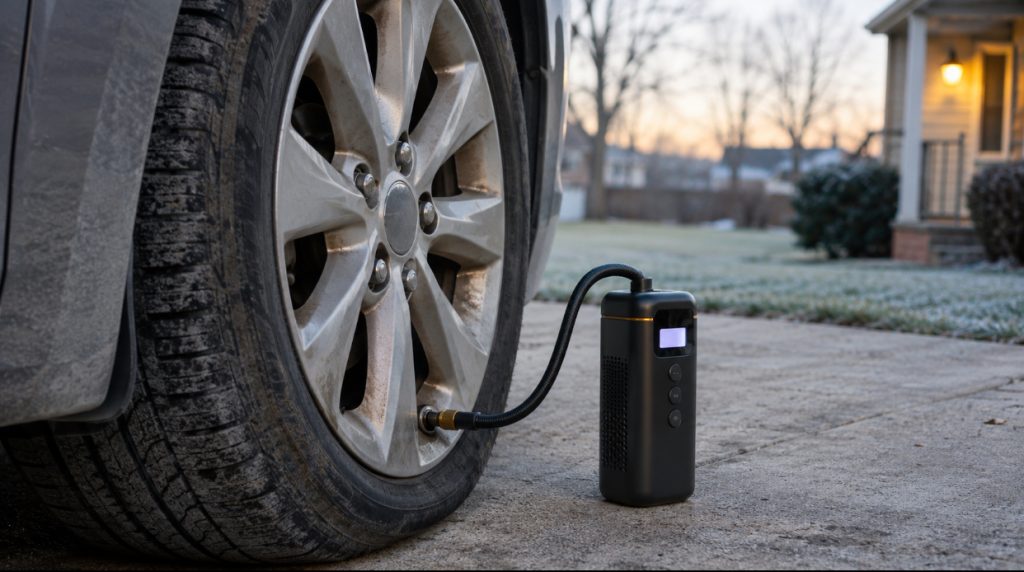
The first real cold snap of the year always starts the same way. You walk out with your coffee, scrape a hole in the frost on the windshield, start the car, and there it is on the dash: the little orange horseshoe with the exclamation point. Nothing ran over a nail. The air in your tires simply shrank overnight, and now your morning includes a gas station air machine with a chewed-up chuck and a gauge that reads whatever it likes.
A small tire inflator in the trunk turns that whole errand into two quiet minutes in your own driveway. It’s also what gets you off a dark shoulder when a slow leak catches up with you twenty miles from town, and the spare, which nobody ever checks, turns out to be soft too. I’ve watched that exact scene play out more than once, usually in November, usually after dark.
Here’s what I’d keep in the car. The GOOLOO GT160 Dual is the one I’d hand most drivers. It fits the glovebox, and a cold-morning top-off is done before the defroster has cleared the glass. If you drive a pickup or a big SUV, the ETENWOLF Vortex S6 has the lungs for those tires and doesn’t need to stop and cool down halfway through. Milwaukee owners already have half of a great inflator sitting on the battery charger, and if you know you’ll never remember to charge anything, the Slime 12V Digital Tire Inflator plugs into the 12V socket and never goes flat on you. Below the reviews there’s a tire pressure check you can run for your own car and today’s weather.
Quick Picks: The Best Tire Inflators in 2026
Tire Inflator Comparison Chart
1. GOOLOO GT160 Dual: Best Overall
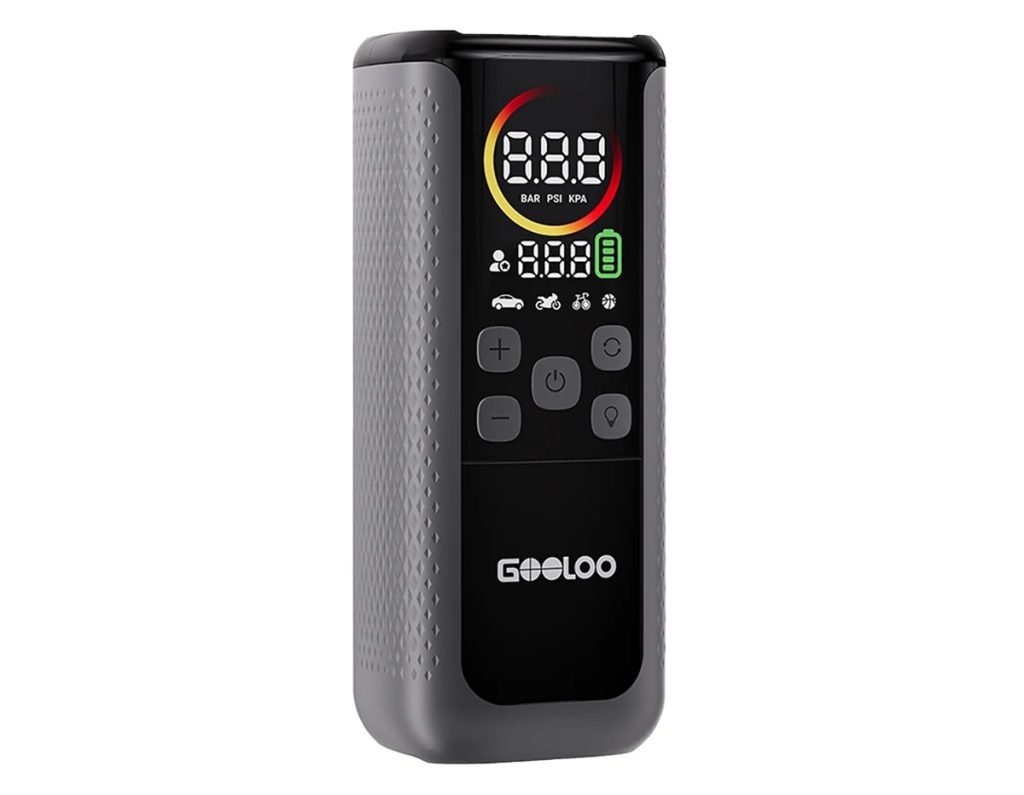
Why I chose it: This is the inflator I’d buy for my own family’s cars. GOOLOO put two pump cylinders into a body small enough for the glovebox, so it fills like a much bigger machine without eating trunk space. It suits commuters, households with two or three cars, and anyone who wants the pressure light sorted out before work instead of after.
Key specs
- Max pressure: 160 PSI
- Pump: dual 22mm cylinders, 13,000 RPM motor
- Battery: 10,000mAh, about 25 minutes of run time
- Maker’s fill claim: a 225/60R18 tire from 30 to 35 PSI in about 1 minute
- Per charge: up to 24 top-offs from 30 to 35 PSI, or 4 full fills from empty to 36 PSI
- Size and weight: 7.7 x 3.2 x 2.6 in, 2.0 lb
- Extras: USB power bank, LED light, preset modes, magnetic storage for 5 nozzles
Pros
- Fills car and SUV tires about as fast as inflators twice its size
- Enough battery to top off two cars in one go
- Charges your phone when you need it to
- Shuts off on its own at the pressure you set
Cons
- The hose is short, so you’ll hold the unit while it runs
- GOOLOO recommends recharging it every 3 months even if you haven’t used it
Performance analysis: GOOLOO’s dual-cylinder pump moves far more air than the single small piston inside most compact inflators, which is why so many of those whine away for five minutes to add a few PSI. A morning top-off of 4 or 5 PSI on a sedan or crossover is about a minute per tire, and that’s the job you’ll do most often between November and March. Four full fills from empty is plenty for a roadside flat, because you only need to bring one tire back. The short hose is the one real gripe. You can’t set it on the ground and walk off when the valve is low on the wheel, so plan on crouching there holding it for a minute. Check its gauge against a separate gauge once when it’s new. Some owners find it reads a PSI or so off, and once you know which way, you just set the target one higher or lower.
2. Fanttik X8 Apex: Best Compact
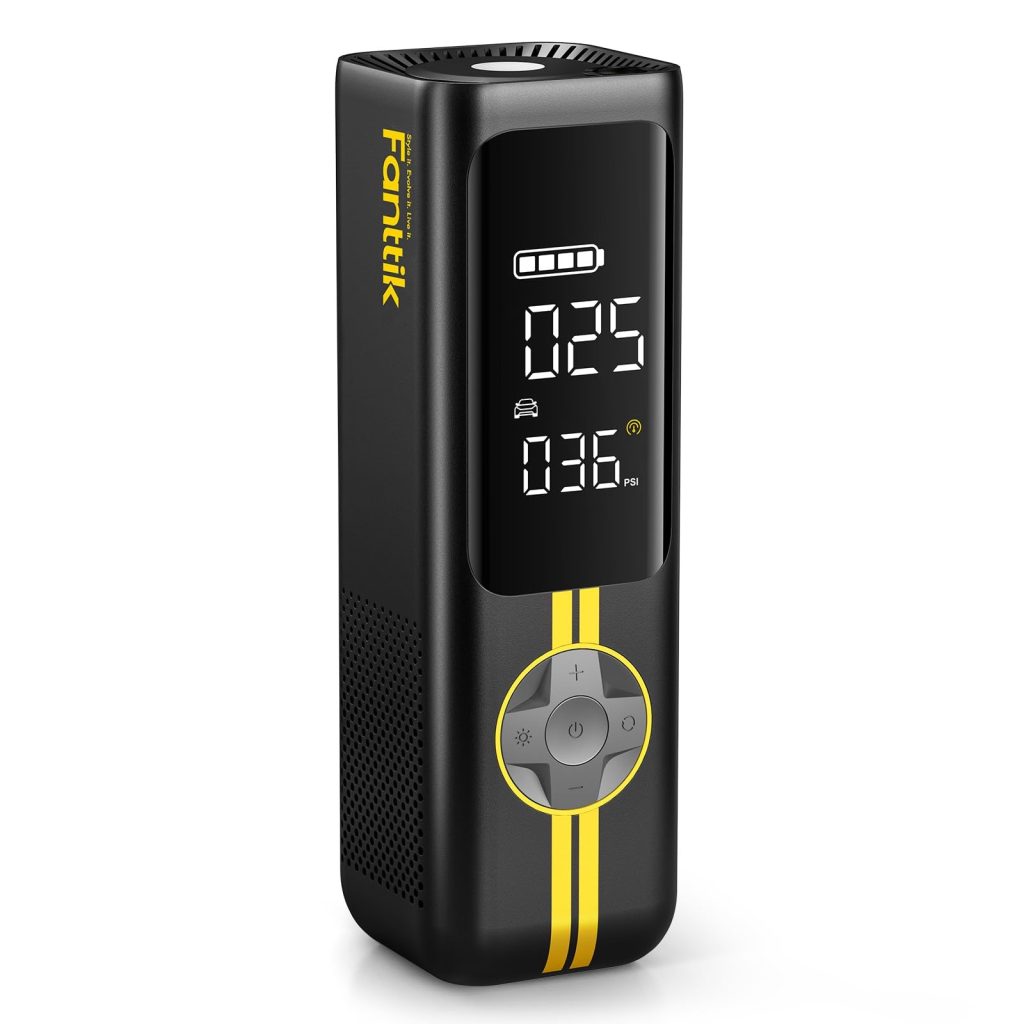
Why I chose it: If the glovebox is already full or you want the smallest inflator that still does a proper job on a car tire, this is the one. It’s barely bigger than a water bottle and weighs under 2 pounds, so it lives happily in a door pocket, a backpack or under a motorcycle seat. It’s the inflator I’d put in a teenager’s first car.
Key specs
- Max pressure: 150 PSI
- Airflow: 32 L/min
- Battery: 28.86Wh (11.1V), up to 40 minutes of run time
- Maker’s fill claim: a 26.3 inch car tire from 28 to 33 PSI in 56 seconds
- Gauge accuracy: ±1 PSI
- Size and weight: 7.9 x 2.5 x 2.5 in, 1.7 lb
- Hose: 18 in
- Extras: LED light, USB-A power out, USB-C charging, 4 preset modes
Pros
- Smallest inflator here that still handles full-size car tires well
- Clear dual readout shows current and target pressure side by side
- Charges from any USB-C phone charger, including the one in your car
Cons
- Usually runs out of battery before it finishes a big truck tire
- Rated to work only down to 14°F and to charge only above freezing
Performance analysis: For a sedan, crossover or minivan the X8 Apex is quick and dead simple. Screw on the hose, tap the car mode, set your number and let it run. Where it runs out of breath is a big pickup tire. It’ll get a 33 inch truck tire up to a pressure you can drive on, but the battery usually gives out before it reaches full, so truck owners should look at the ETENWOLF below. The temperature rating matters more than most people realize. Fanttik rates it to run down to 14°F and to charge only above freezing, so on a below-zero morning in Minnesota keep it in the cab with you instead of the trunk. Fanttik also sells the newer Fanttik X10 Apex with a larger color screen, but for a car it doesn’t add enough to justify paying more.
3. ETENWOLF Vortex S6: Best for Trucks and SUVs
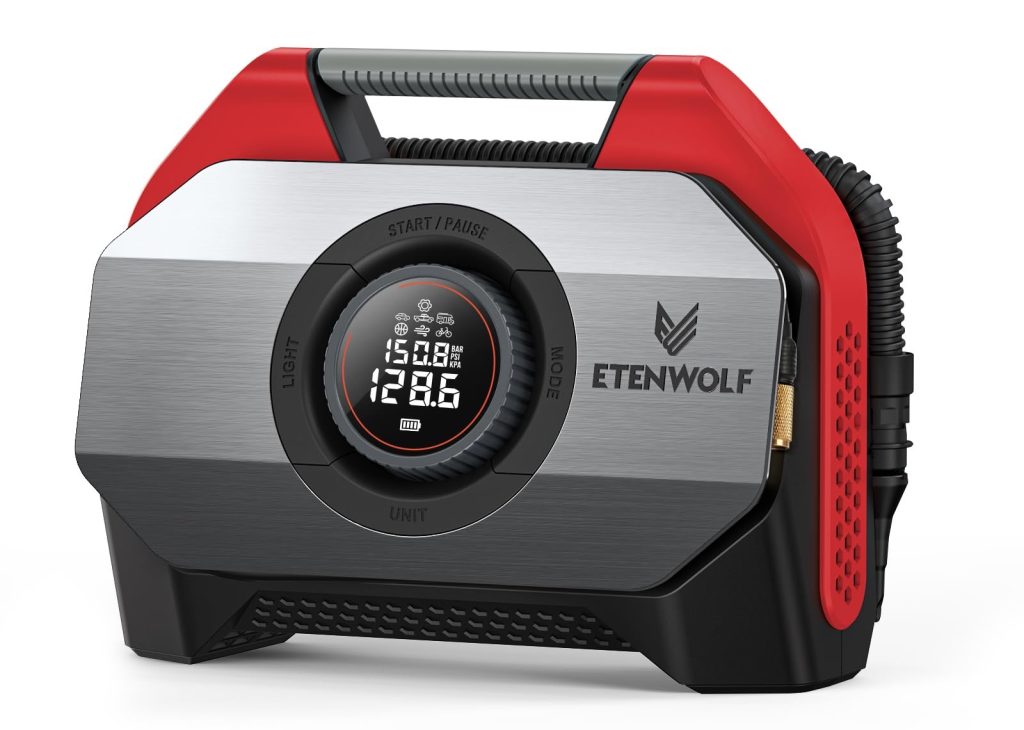
Why I chose it: Big tires hold a lot of air, and small inflators either overheat or run flat trying to fill them. The Vortex S6 is built for that job. It’s for pickups and full-size SUVs, campers and RV owners, and anybody who airs down for a trail and has to air back up before the highway.
Key specs
- Max pressure: 160 PSI
- Airflow: 42 L/min (1.5 CFM at 0 PSI)
- Battery: 19,200mAh with 45W USB-C charging that also powers your devices
- Maker’s fill claim: a 31 inch tire from 30 to 35 PSI in 1 minute, and 18 F-150 tires (245/70R17) per charge
- Duty cycle: 100%, with dual cylinders and a cooling system
- Gauge accuracy: ±1 PSI
- Light: 1,000 lumen LED
- Size and weight: 11.8 x 9.5 x 5.5 in, about 6 lb
Pros
- Runs straight through all four big tires without a cooldown break
- Huge battery that doubles as a power bank for a phone or laptop
- The work light is bright enough to find a nail in the tread at night
- 7 preset modes
Cons
- Lunchbox size, so it lives in the trunk or the truck bed
- More machine than a compact car needs
Performance analysis: Duty cycle is the spec most buyers skip, and on a truck it’s the one that matters. Most portable inflators need to rest after 10 to 20 minutes of running, which is fine for a sedan top-off and miserable when you’re bringing four 33s back up after a day on the trail. ETENWOLF rates the S6 at a 100% duty cycle, so it just keeps going. The 1,000 lumen light deserves a mention too. On most inflators the LED is a token gesture, but this one actually lights up a wheel well on a moonless shoulder. If you drive a small car, it’s simply more than you need, and the GOOLOO does a car top-off in a third of the space. ETENWOLF also makes the lighter ETENWOLF Vortex S6SE with a 15,600mAh battery if you want the same pump in a smaller package.
4. Milwaukee M18 Inflator 2848-20: Best for M18 Tool Owners
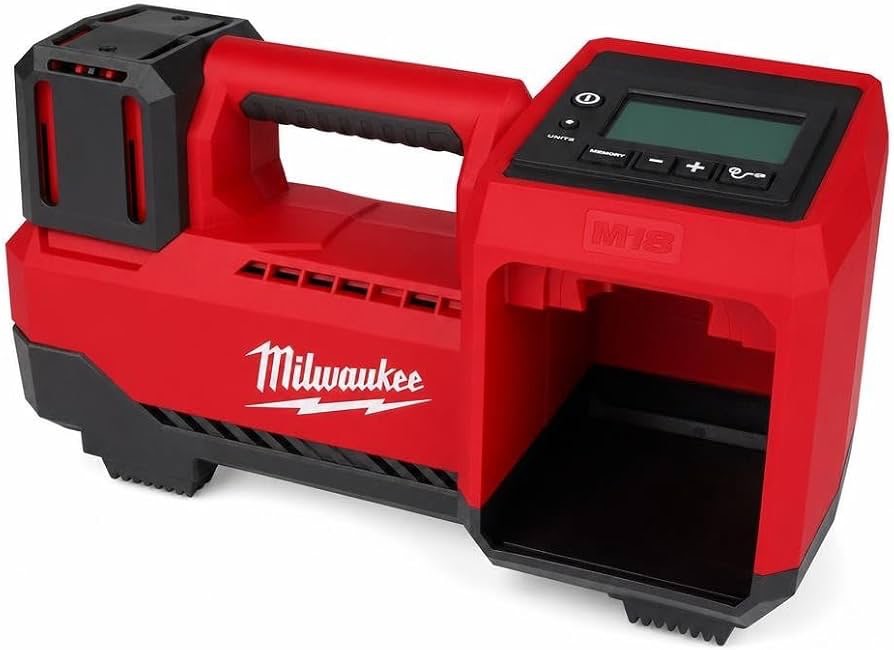
Why I chose it: If there’s a red M18 battery sitting on a charger in your garage, you already own half of the fastest portable inflator I know of. It suits contractors, ranch and farm trucks, and the homeowner who keeps a few M18 packs charged for the drill anyway.
Key specs
- Max pressure: 150 PSI
- Airflow: 1.41 SCFM at 0 PSI
- Power: any M18 battery (battery and charger sold separately)
- Maker’s fill claim: tops off a 33 inch light truck tire in under 1 minute
- Gauge accuracy: ±1 PSI, with TrueFill automatic pressure check
- Duty cycle: 33% at 80 PSI
- Hose: 36 in with an all-brass Schrader chuck
- Size and weight: 13.8 x 6.4 x 7.8 in, 7.0 lb without a battery
- Warranty: 5 years
Pros
- About as fast as a portable inflator gets
- TrueFill rechecks the tire after it stops and tops it up, so you land on your number
- Long hose and a brass chuck built for years of use
- Four memory presets for different vehicles
Cons
- Battery and charger cost extra if you’re not already on M18
- Big and heavy for a car
Performance analysis: TrueFill is the feature you end up loving. While air is flowing, the reading at the chuck runs a little high, so most inflators stop a hair short. The Milwaukee stops, waits for the pressure to settle, reads it again and adds more if it needs to. That sounds minor until you’ve spent ten minutes going back and forth with a cheap pump. It’s also the quickest inflator on this list on big tires by a wide margin. The catch is size and weight: 7 pounds before the battery goes on makes it a truck bed or garage tool. In winter, carry the battery in the cab rather than the toolbox, because a frozen pack gives up a lot of its punch. If your garage runs on yellow batteries, the DeWalt 20V MAX inflator (DCC020IB) works off 20V packs, the car’s 12V socket or a wall outlet.
5. Slime 12V Digital Tire Inflator: Best Budget
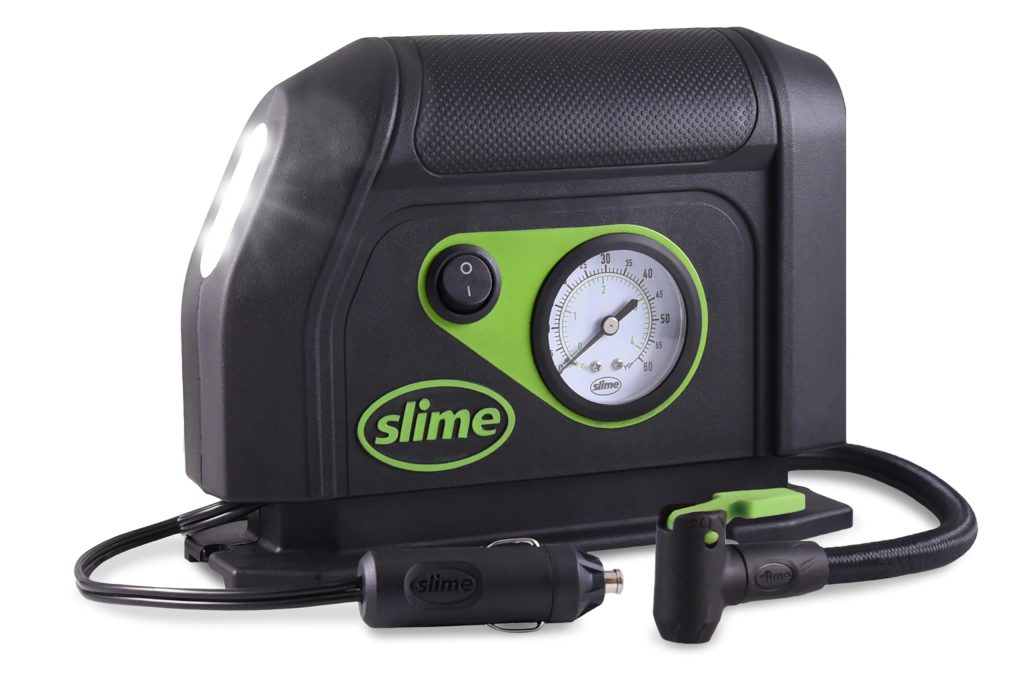
Why I chose it: Plenty of people buy a cordless inflator, toss it in the trunk and discover two years later that the battery died in the meantime. The Slime has no battery to go flat. It plugs into the car’s 12V socket and runs as long as the car does, which makes it the right pick for a second car, a teenager’s car, or anyone who knows they won’t remember to charge anything.
Key specs
- Max pressure: 99 PSI
- Power: 12V accessory socket, 10 ft cord
- Maker’s fill claim: a standard mid-size car tire in about 6 minutes
- Auto shutoff: Inflate-Right stops at the pressure you set
- Weight: about 2.1 lb
- Extras: LED light, adapters for balls and inflatables
- Warranty: 1 year
Pros
- Nothing to charge and no battery to wear out
- Cord reaches the rear tires on most cars
- Plenty of pressure for any car tire
Cons
- Slower than the battery picks
- You need the engine running, or you may need a jump starter next
- No use on a bike or a trail without the car
Performance analysis: Six minutes to fill a car tire from flat sounds slow next to the GOOLOO, but it’s still quicker than limping to a gas station, and it never asks to be charged. The 99 PSI ceiling doesn’t matter here, because car tires run in the 30s. Keep the engine running while it works. A 12V compressor pulls hard on the battery, and a dead battery on top of a low tire makes for a long night. If you like the idea of a cord for backup but want cordless convenience most of the time, the Avid Power cordless inflator runs off its own battery or a 12V cord from the same unit.
6. Airmoto BP198: Best for Motorcycles and Bikes
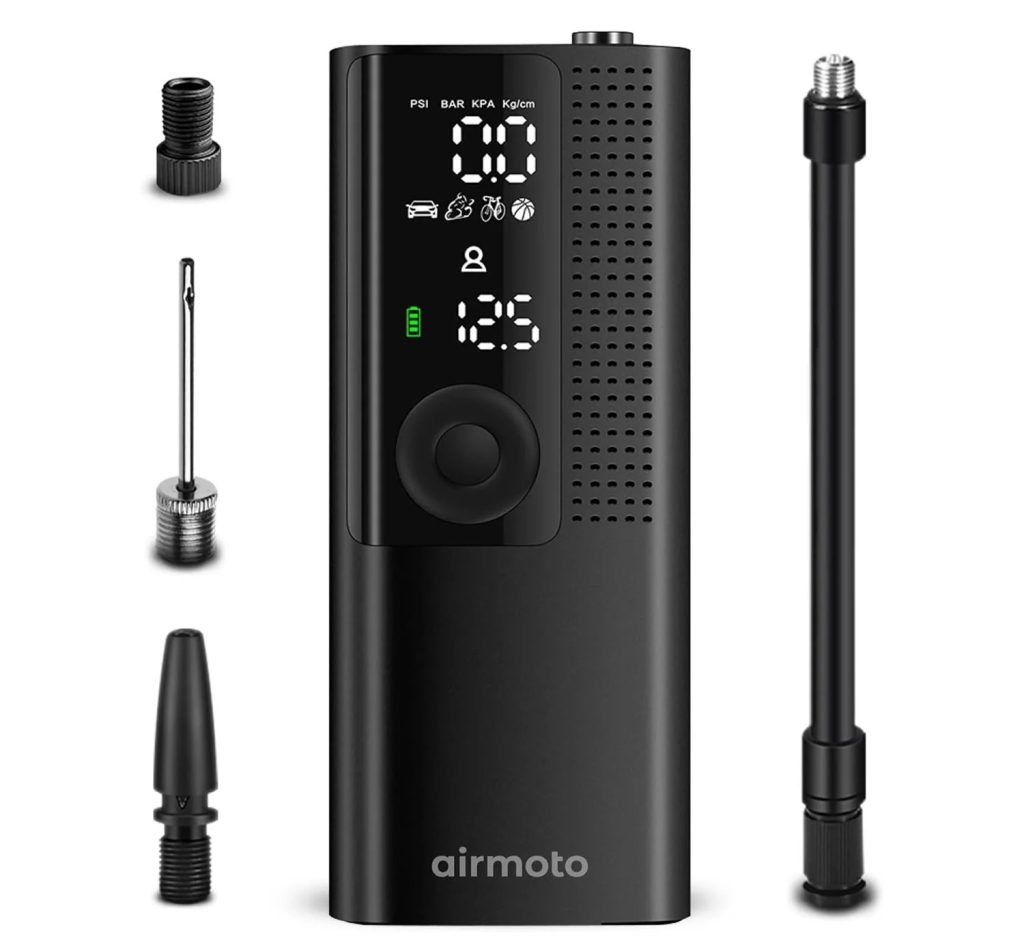
Why I chose it: Not every flat happens on four wheels. The Airmoto is 6 inches long and weighs 1.2 pounds, small enough for a saddlebag, a bike bag or a jacket pocket. It handles motorcycle, e-bike and bicycle tires with room to spare, and it’ll top off a compact car in a pinch.
Key specs
- Max pressure: 120 PSI
- Airflow: 20 L/min
- Battery: 2,000mAh (7.4V), USB-C charging
- Size and weight: 6.1 x 2.4 x 1.6 in, 1.2 lb
- Noise: 78 dB
- Extras: LED light, Presta adapter, ball needle, nozzle and carry pouch
Pros
- Smallest and lightest pick here
- Charges from any USB-C source, including a power bank on a long ride
- Quieter than the bigger inflators
Cons
- Too small for SUV and truck tires
- The battery gauge is a color light rather than a percentage
Performance analysis: Think of the Airmoto as a pocket tool. On a motorcycle or a bike it’s plenty, and it’ll add a few PSI to a compact car tire on a cold morning. Ask it to fill a big SUV or pickup tire and it can’t move enough air to build pressure, because a small pump only moves a little air and a truck tire holds a lot of it. If you ride, keep it under the seat with a plug kit and you’re covered for most flats. If you drive a car, the Fanttik X8 Apex is only a little bigger and does a great deal more.
Check Your Tire Pressure for Today’s Weather
Pick your vehicle, set the pressure from your door sticker, and slide in roughly how warm it was the last time you set your tires and how cold it is now. The check estimates where your tires sit this morning, how close you are to the pressure light, and how they’ll read if it gets colder. If you have a gauge reading, type it in and it’ll work from that instead.
Why the Tire Pressure Light Comes On When It Gets Cold
Air takes up less room as it cools. Your tires haven’t sprung a leak overnight; the same air is simply squeezed into less pressure. Goodyear puts the drop at 1 to 2 PSI for every 10 degrees the temperature falls, and for a car tire set around 35 PSI the gas law works out to right about 1 PSI per 10°F. So if you last set your tires on a 75 degree afternoon in September, a 25 degree morning in December has quietly taken about 5 PSI out of each one.
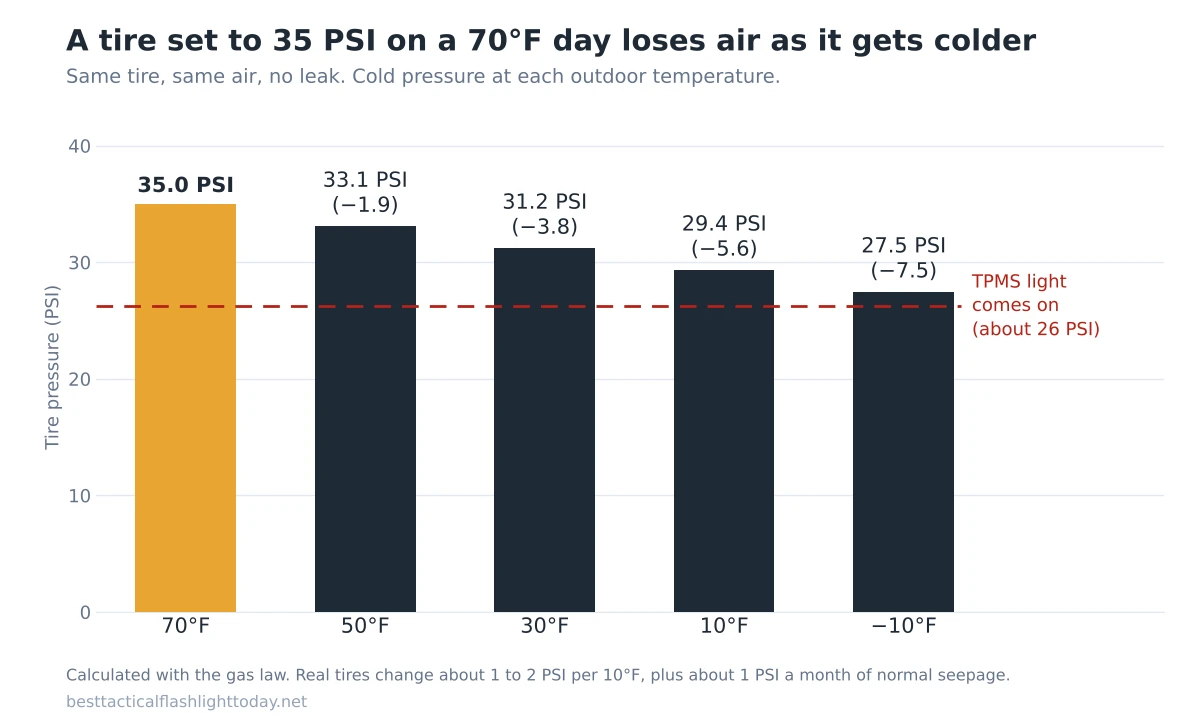
Add the normal seepage every tire has, roughly a PSI a month, and a car that was set properly in late summer is often 6 to 8 PSI low by the first hard frost. That’s enough to trip the TPMS light, which comes on when a tire is about 25 percent under the door number. The NHTSA explains that the light often comes on during a cold morning and then goes back off once driving warms the tires up. Don’t take that as a sign everything is fine. It means you’re sitting right at the edge, and the next cold night will put it back on.
Summer is when people get the opposite wrong. Tires warm up as you drive, and a set that’s just come off the highway can read several PSI over the door number. If you let air out to match the sticker while they’re hot, you’ll be under-inflated once they cool, and an under-inflated tire builds heat on the highway, which is how blowouts start. Check pressure cold, meaning the car has been parked for at least three hours. If you have to add air while they’re warm, fill to the door number and check again in the morning.
One more thing while you’re crouched down there: check the spare. NHTSA recommends checking every tire, the spare included, once a month. Most TPMS systems don’t watch the spare at all, and finding it flat on the side of the road is a lousy way to learn that.
What to Look for in a Tire Inflator
Airflow matters more than max PSI
Nearly every inflator on Amazon says 150 PSI on the box, and that number tells you very little. Your car tire needs 30 to 40 PSI. The high ceiling exists for road bike tires, which hold a tiny amount of air at high pressure. What decides how fast a car tire fills is airflow, listed in liters per minute (L/min) or CFM. Look for 30 L/min or more for a car and 40 or more for a truck. Dual-cylinder pumps like the GOOLOO and ETENWOLF move far more air than the single-piston pumps in most budget inflators.
Battery or 12V cord
A cordless inflator is easier to use. You can walk it around the car without a cord, use it on a bike, and keep it in the house. The trade is that it needs a charge every few months, and its battery doesn’t love deep cold or a baking hot trunk. A 12V plug-in never goes flat, but it’s slower, it needs the engine running, and the cord has to reach the far tire. Be honest with yourself about whether you’ll remember to charge it. If you won’t, buy the cord, or one that does both.
Duty cycle for big tires
Duty cycle is how long a pump can run before it needs to rest. Milwaukee rates its M18 at 33%, which works out to roughly 20 minutes of running followed by a long cooldown. For a car top-off that never comes up. For a pickup on 33s, or four tires after a day of airing down, a 100% duty cycle like the ETENWOLF’s saves real time and keeps the pump from cooking itself.
Auto shutoff and a gauge you can trust
Every pick here stops itself at the pressure you set, which is the feature you’ll appreciate most on a freezing morning. Accuracy within 1 PSI is good. Screw-on chucks let out a little air as you take them off, so set the target half a PSI to a PSI high. And keep a separate digital tire pressure gauge in the glovebox anyway. NHTSA recommends having one in the car, it costs very little, and it’s the easiest way to check your inflator’s readout once in a while.
Hose length and storage
A short hose means holding the inflator up at the valve while it runs. A longer one lets you set it on the ground, which is nicer on a big tire or when the valve stops at the bottom of the wheel. Onboard storage for the hose and nozzles keeps the little ball needle from disappearing into the trunk carpet.
Temperature ratings
Look up the storage and operating temperatures in the manual before you decide where the inflator will live. Fanttik, for example, rates the X8 Apex for storage between 14°F and 113°F, and a car parked in the July sun blows straight past that. There’s more on storing one in the FAQ below.
Using a Tire Inflator on a Dark Shoulder
Most of the times you’ll need an inflator away from home, it’ll be dark. The evening commute is in full night after the clocks fall back, and that’s also when the cold is pulling pressure out of every tire on the road. Get as far off the pavement as you can, put the hazards on, and keep a good car flashlight or a rechargeable headlamp within reach so both hands are free for the valve cap and the hose.
Find the cause before you pump. Run the light slowly around the tread, and look for the head of a nail or screw. If the tire won’t hold air, a tire plug kit fixes most tread punctures in about ten minutes, and then the inflator brings it back up. A hole in the sidewall can’t be plugged, so if that’s where the damage is, put the spare on or call for a tow. The rest of what belongs in the trunk for nights like that is in our car emergency kit guide.
Frequently Asked Questions
Can a portable tire inflator fill a completely flat tire?
Yes, as long as the tire is still seated on the rim and the hole has been plugged or the leak is slow. Filling a car tire from empty takes a few minutes and a good share of a small battery. GOOLOO rates the GT160 Dual for about four full fills from empty per charge. If the tire was driven on while flat, look the sidewall over for cracks or a bulge before you trust it, because that kind of damage can’t be repaired.
How long does it take to inflate a car tire with a portable inflator?
A typical cold-weather top-off of 3 to 5 PSI takes about a minute with a quick unit like the GOOLOO GT160 Dual or the Fanttik X8 Apex. Filling a car tire from flat takes around 5 to 7 minutes on most cordless inflators, and Slime rates its 12V model at about 6. Pickup tires take two or three times longer on small inflators, which is why truck owners should look at the ETENWOLF or the Milwaukee.
Is a corded or cordless tire inflator better to keep in the car?
Cordless is more convenient and works away from the car, but it has to be charged every few months to be ready. A 12V corded inflator never goes flat in storage, though it’s slower and you need the engine running while it works. If you’re good about charging things, go cordless. If you’re not, a 12V model or a unit that runs both ways is the safer bet.
Can you leave a tire inflator in your car in winter and summer?
A 12V corded inflator can live in the car all year. Battery models are fussier. Lithium cells don’t like extremes, and the Fanttik X8 Apex, for one, is rated for storage only up to 113°F, which a closed car in summer sun passes easily. Keep a cordless inflator under a seat or in the trunk well out of direct sun, never on the dash or rear shelf. Top it up every three months, bring it inside during heat waves, and let a cold-soaked unit warm up to room temperature before you charge it.
The Bottom Line
For most drivers, the GOOLOO GT160 Dual is the inflator to buy. It’s small enough for the glovebox and fast enough that a cold-morning top-off barely interrupts your day. Put the ETENWOLF Vortex S6 in a pickup or a big SUV, and if you already run Milwaukee tools, the Milwaukee M18 2848-20 is the fastest of the bunch. For a car that gets forgotten about, the Slime 12V Digital Tire Inflator never needs charging, the Fanttik X8 Apex is the pick for tight spaces, and riders should keep an Airmoto BP198 under the seat.
Whichever one you choose, run your car through the pressure check above, set your tires cold to the door number, and check them again on the first frosty morning. Toss a plug kit and a good flashlight in with it, and a slow leak on a dark road becomes a twenty minute job instead of a tow.
