
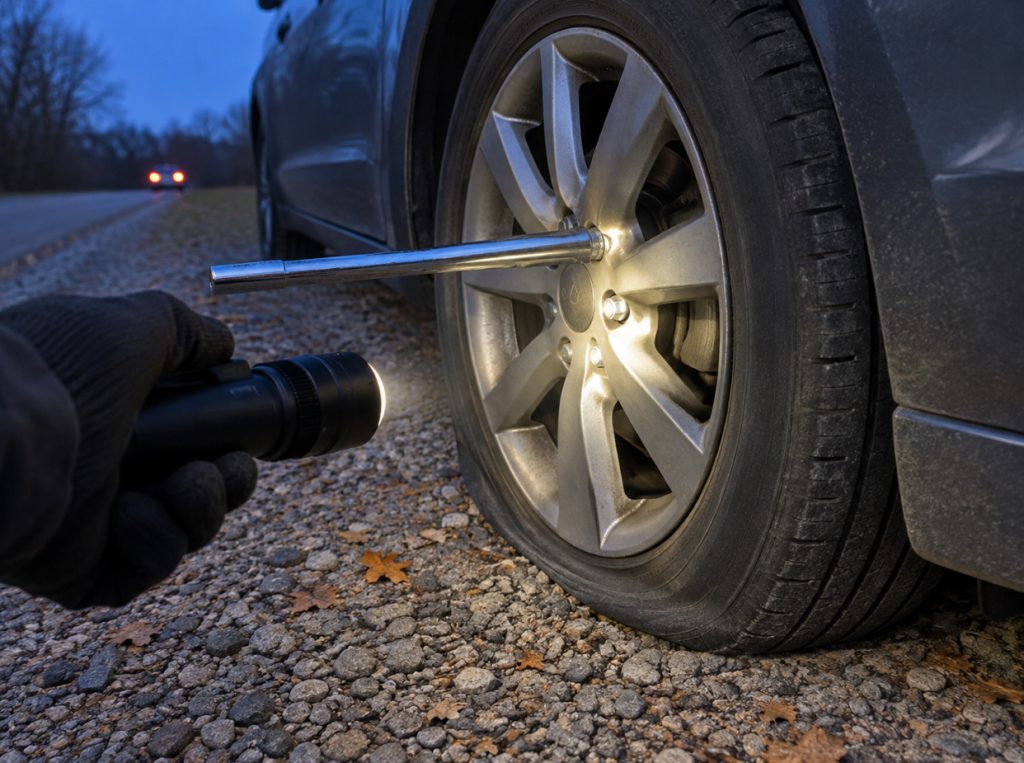
Open the glovebox in just about any car and you’ll find the same sad flashlight. It came free with something, the batteries went in a few summers back, and there’s a little white crust on one end where they’ve started to leak. It sits there for years, and nobody gives it a thought until the night they’re kneeling next to a flat tire on a dark shoulder, clicking a dead switch.
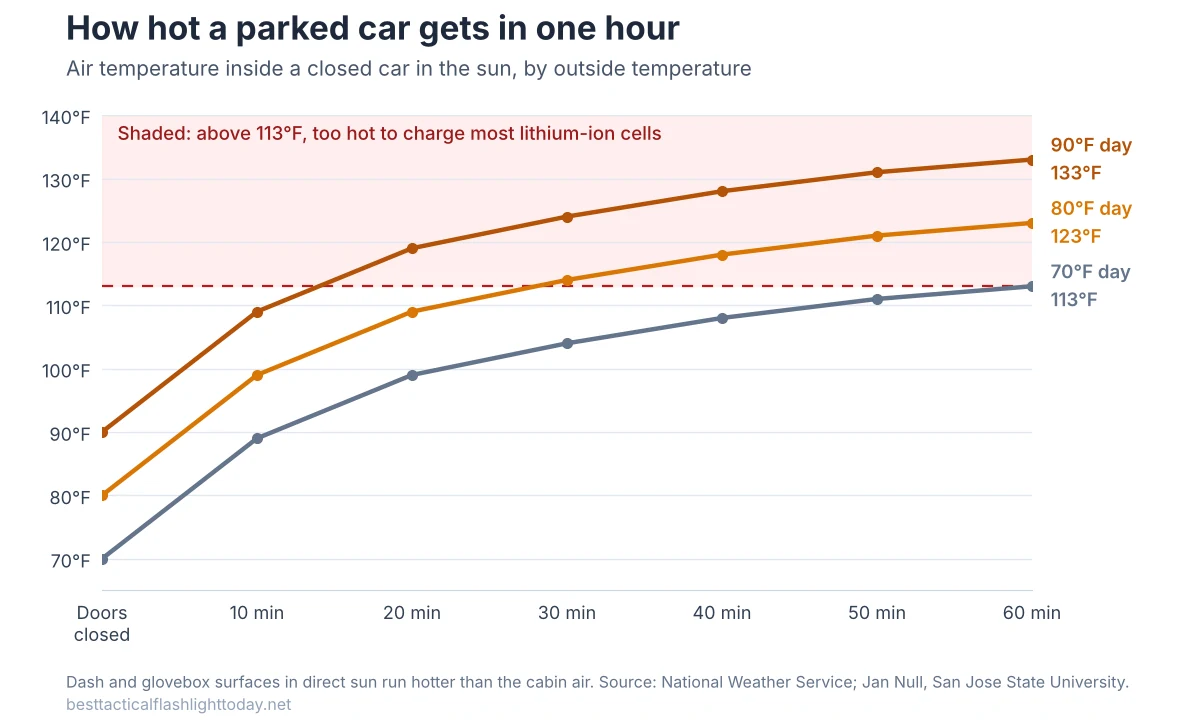
Cars are hard on batteries. On an 80°F afternoon the air inside a parked car gets close to 100°F in ten minutes, and a dark dashboard in full sun can top 180°F, hot enough to cook an egg on. January swings it the other way. A lithium-ion cell that’s been sitting in a frozen car can lose a good chunk of its power before you’ve even found the jack.
Here’s what I’d keep in the car instead. My top pick has red and blue flashers for when you’re stuck on the shoulder. The Maglite runs on a battery that doesn’t mind desert heat, the little Streamlight takes lithium cells you can forget about for years, and the Stinger rides in a 12V holder so it’s full every time you grab it. For the hands-on jobs there’s a floodlight that sticks under the hood, and there’s a cheap one with a seatbelt cutter for the second car. Further down, I’ll show you where to keep it and which battery suits the weather where you live.
Quick Picks: The Best Car Flashlights in 2026
Car Flashlight Comparison Chart
1. Nextorch P83: Best Overall
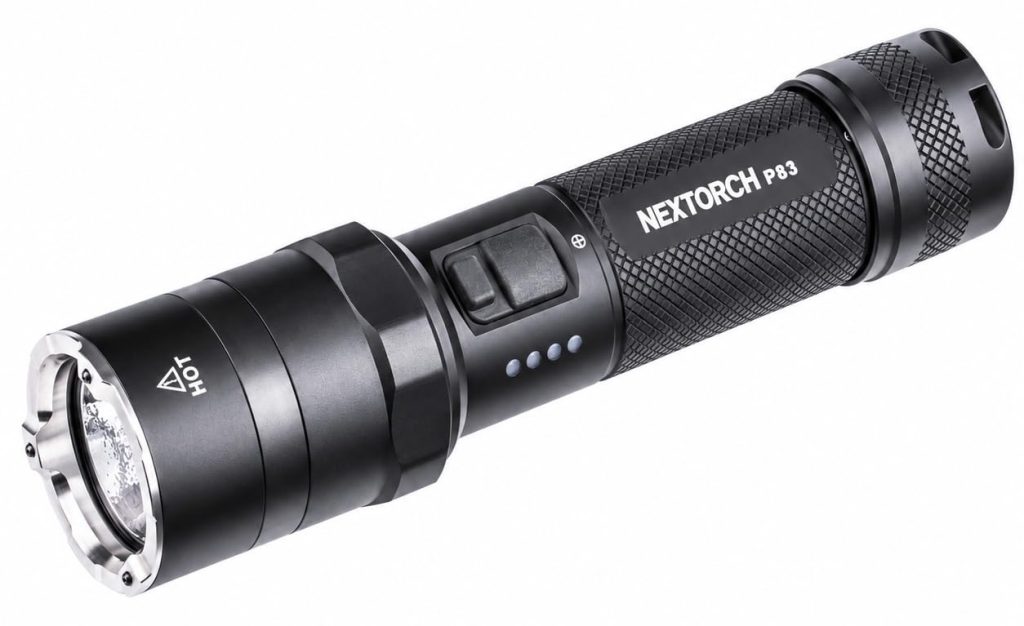
Why I chose it: Most of the time a car flashlight gets used on the side of a road, and the P83 is the light I’d want there. Besides a 2,100 lumen white beam, a set of red and blue LEDs in the head flashes on its own, so you can stand the light on the trunk lid while you work and give passing drivers something to notice. It suits commuters, rideshare drivers and anyone who drives back roads after dark.
Key specs
- 2,100 lumens on high with a 380 m beam, plus 350 and 25 lumen modes and a strobe
- Red, blue and red-and-blue flashing and steady modes at 2 lumens
- 18650 Li-ion battery (3,400mAh) included, USB-C charging, 4-LED charge gauge
- Up to 85 hours on the lowest mode
- IPX7 waterproof, ceramic strike bezel
Pros
- The hazard modes are bright enough to catch attention without blinding drivers
- The first press comes on at 350 lumens, which is right for close work like a tire change
- USB-C and a charge gauge make it easy to keep topped up
Cons
- The two side buttons take a few minutes of practice before you can reach the red and blue modes without looking
- Like any Li-ion light, it shouldn’t spend a Texas summer in the glovebox
Performance analysis: The white beam has real reach, enough to check a ditch or read a mile marker well down the road. Turbo is a short burst, as on every light this size, so for a long job I’d run it on the 350 lumen setting, which lasts for hours. The 2 lumen warning modes barely touch the battery, so you can leave them flashing behind the car while you wait for a tow. The ceramic bezel will break tempered side glass, but a car’s windows may not all be tempered (more on that in the buying guide below).
2. Maglite ML150LRX: Best for Hot Climates
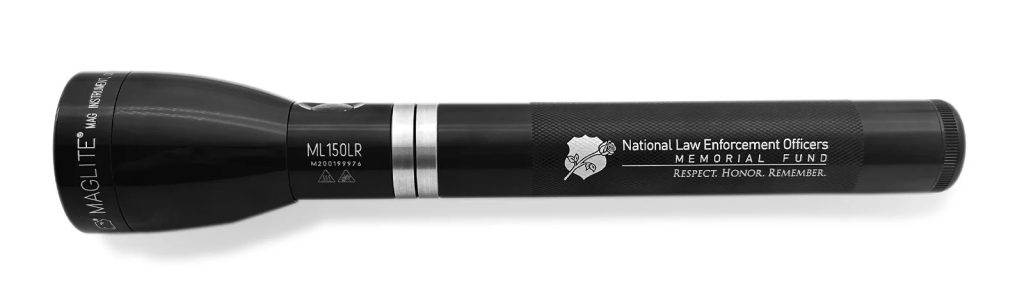
Why I chose it: This is the light for Phoenix, Las Vegas and the Gulf Coast. It runs on a lithium iron phosphate (LiFePO4) battery, a chemistry that holds up to heat and repeated charging much better than the lithium-ion cells in most flashlights. Maglite also built its charging cradle to live in a vehicle. The cradle runs off the car’s 12V system and grips the light tightly enough to hold it upside down on a rough road. It’s a good fit for trucks, work vans and anyone who wants the light mounted, charged and in the same spot every time.
Key specs
- 1,082 lumens on high, 138 on low, 25 on eco
- Runtime: 3.25 hours high, 18 hours low, 79 hours eco
- Beam focuses from a wide flood to a 458 m spot
- LiFePO4 rechargeable battery, about 2.5 hours from empty to full
- Charging cradle with a quick-release button, powered by 12V DC or 120V AC depending on the kit
- IPX4 water resistant, anodized aluminum body, about 10.7 inches long
Pros
- Heat-tolerant battery chemistry with a long service life
- Stays charged in its cradle, so it’s full whenever you grab it
- 79 hours on eco covers a very long wait
Cons
- It’s a mid-size light, so the cradle needs a permanent spot in the cab
- IPX4 handles rain, not a dunk in a flooded ditch
- Maglite sells it in several kits, and only some include the 12V cord a car needs
Performance analysis: The focusing head is the best thing about using it. Twist it wide to light up a whole wheel well, or tight to look down an embankment. At 1,082 lumens it isn’t the brightest light here, but its high mode runs more than three hours, which is longer than most compact lights manage. Even with a heat-friendly battery, I’d mount the cradle low and out of direct sun, along the side of the center console or under the dash.
3. Streamlight ProTac 2L-X: Best Set-and-Forget
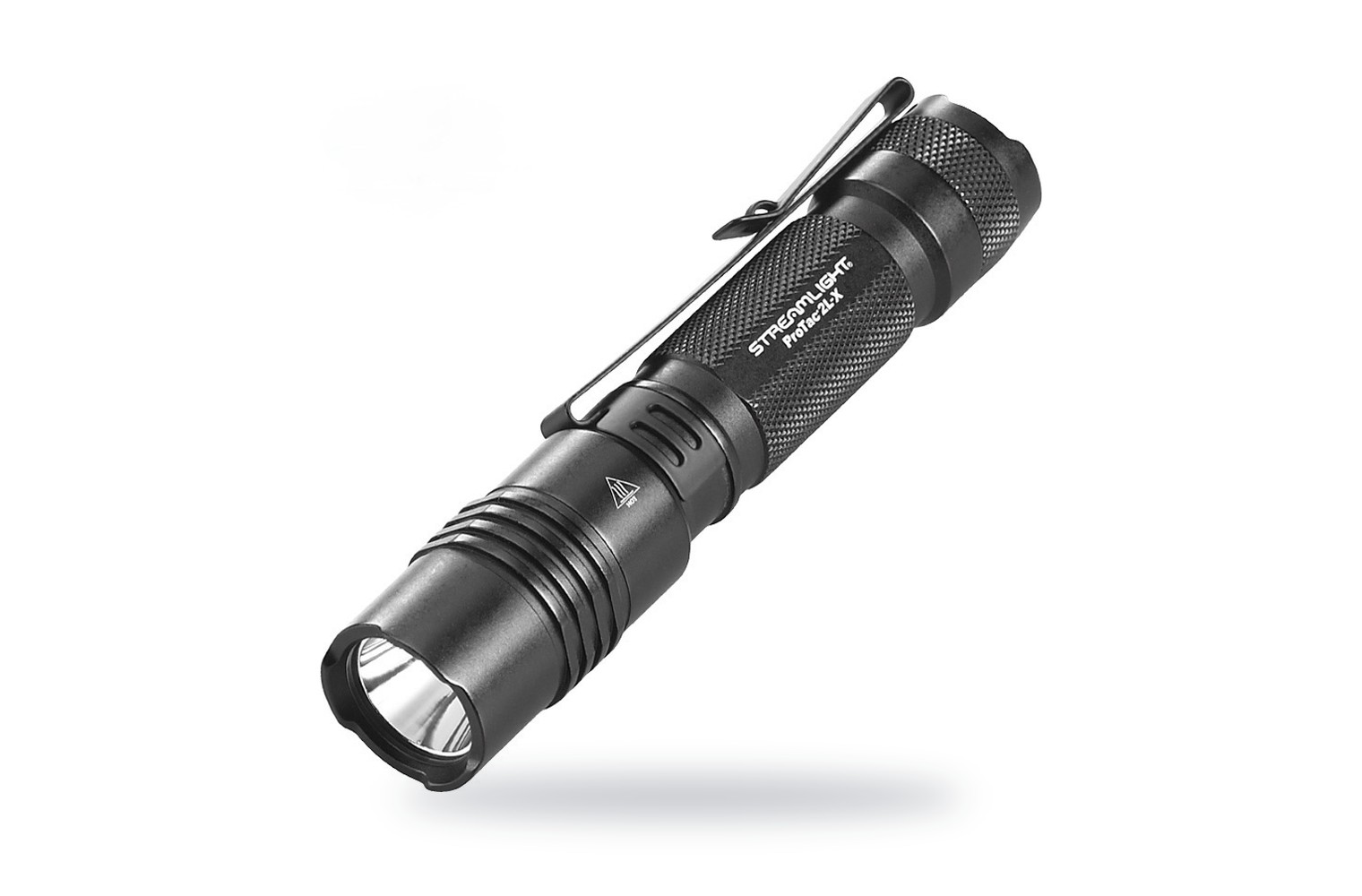
Why I chose it: A second car, a weekend truck or a vehicle that sits in the driveway for weeks needs a light that doesn’t care how long it’s been. The ProTac 2L-X ships with two CR123A lithium cells, which keep their charge for years in storage, don’t leak like alkalines and work in hard cold. The tail switch clicks mechanically, so nothing drains the cells while the light waits. If you’d rather recharge later, it also takes Streamlight’s USB rechargeable 18650 pack.
Key specs
- 500 lumens on high (165 m beam, 6,800 candela), 40 lumens on low
- Runtime: 2.75 hours high on CR123A, 3.25 hours on the rechargeable pack, 30 hours on low
- Runs on 2x CR123A (included) or one SL-B26 USB rechargeable pack
- Three switch programs, including high/strobe/low
- IPX7 waterproof, tested for 2 m drops
- 5.14 inches, 3.9 oz with CR123A cells
Pros
- Lithium primary cells are the best battery for a light that sits unused
- Small enough for a door pocket or the console bin
- Streamlight’s limited lifetime warranty
Cons
- 500 lumens is modest next to the bigger lights here
- No red or hazard mode
Performance analysis: This is the one I’d hand to someone who will put a light in the car and forget about it until something goes wrong. On low, 40 lumens for 30 hours is plenty to change a tire, find a dropped phone or walk to a gas station. Keep a spare pair of CR123A cells in the glovebox next to it. They take heat far better than alkalines, and our CR123A guide covers the rechargeable versions if you’d rather go that way.
4. Streamlight Stinger 2020 S: Best Always-Charged
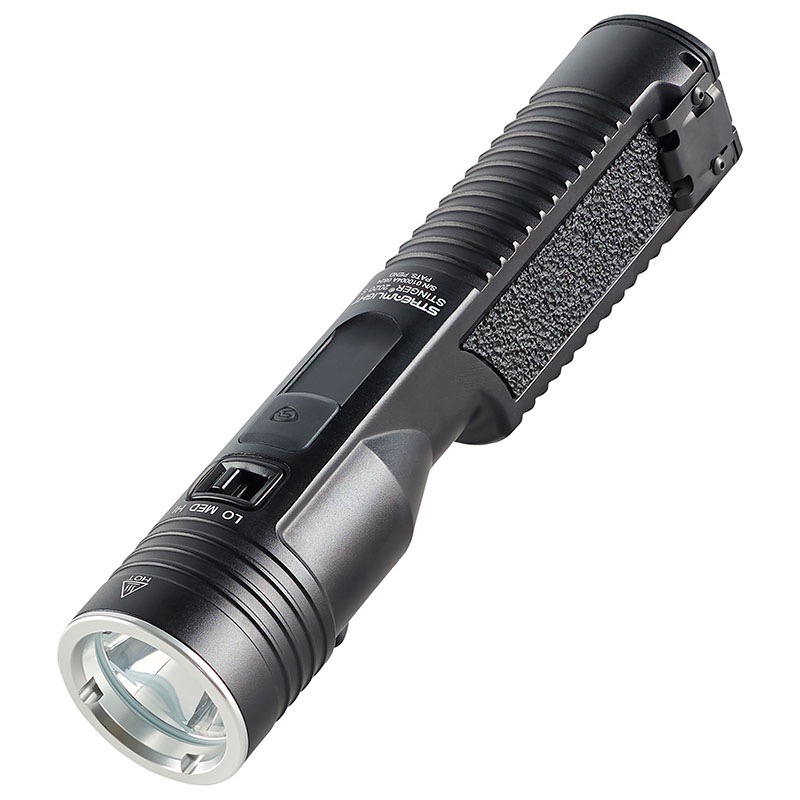
Why I chose it: Police cruisers have carried Stingers in a charging holder for decades, and the 2020 S is the current version, with a single head switch and a bigger 5,200mAh battery pack. Buy it with the 12V DC holder, mount the holder in the cab, and the light sits charged every time you reach for it. It’s the pick for plow drivers, rural commuters and anyone who wants a full-size light that never needs remembering. Our police flashlight guide covers the duty side of the Stinger family.
Key specs
- 2,000 lumens on high (315 m beam, 25,000 candela), 850 on medium, 100 on low
- Runtime: 2 hours high, 4 hours medium, 24 hours low, 3.25 hours strobe
- 5,200mAh Li-ion battery pack, also takes the original Stinger 2020 SL-B26 pack
- 12V DC or 120V AC holder, with PiggyBack charging options for a spare pack
- IPX7 waterproof, tested for 2 m drops, Borofloat glass lens
- 7.69 inches, 12.2 oz
Pros
- Always charged when it lives in its holder
- The mode selector stays where you set it, so the light comes on in the mode you want
- 24 hours on low gets you through a long night stranded
Cons
- The most expensive light in this guide
- At 12.2 oz it’s a handful, not a pocket light
- The holder needs a 12V socket or a hardwired connection
Performance analysis: The beam is the classic Stinger shape, a hot center with plenty of spill, which suits searching a shoulder or a field beside the road. The selector ring is the feature I like most for car use. Set it to low once and every press gives you 100 lumens for a tire change instead of 2,000 lumens in your eyes. As with the Maglite, mount the holder low and in the shade rather than up on the dash. If you’d rather charge from a USB port, the Fenix WF26R uses a similar mountable cradle that runs off a USB car adapter.
5. Klein Tools 56412: Best for Roadside Repairs
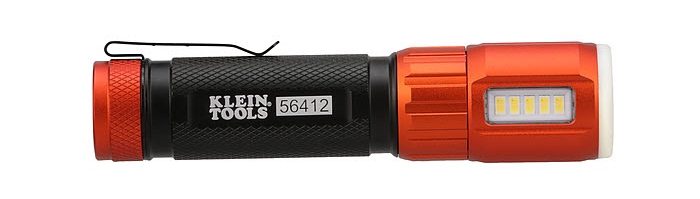
Why I chose it: Changing a tire or topping up coolant takes two hands, and holding a flashlight in your teeth gets old fast. The Klein 56412 has a floodlight built into the side of its barrel and a magnetic end cap, so you can stick it to a fender or the underside of the hood and aim the flood where you’re working. It’s built for people who do their own roadside fixes.
Key specs
- Flashlight: 500 lumens for 7 hours, 315 lumens for 10 hours
- Side floodlight: 375 lumens for 10 hours, 235 for 11 hours, 35 on eco for 30 hours
- Built-in Li-ion battery, USB-C charging through a twist collar, tri-color charge indicator
- Magnetic end cap, removable pocket clip, glow ring on the bezel
- Last-mode memory, IP66 dust and water rating
- 5.5 inches, 6.9 oz
Pros
- The side flood lights a whole wheel well evenly
- The magnet holds it hands-free on steel body panels
- The glow ring helps you find it in a dark car
Cons
- The 500 lumen beam won’t reach far down the road
- No red or hazard mode
- The magnet won’t grab aluminum or plastic panels
Performance analysis: For actual work around the car, this is the most useful light in the group. A tight spot beam makes harsh shadows inside a wheel well, while the side flood spreads light across the whole job. Runtimes are long for a light this small, and the 35 lumen eco flood will run through an entire night. Pair it with one of the brighter lights above if you also want reach, or with a rechargeable headlamp for jobs where nothing metal is handy.
6. Energizer Automotive Flashlight: Best Budget
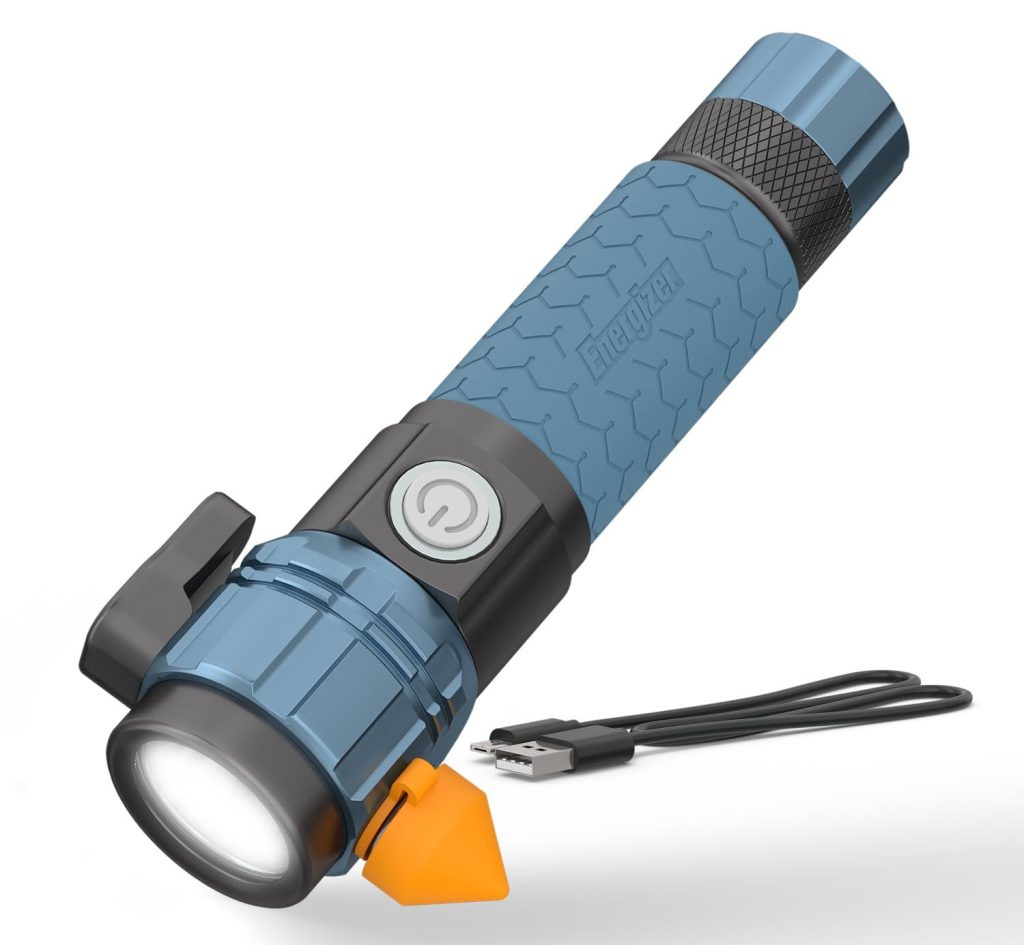
Why I chose it: Not every car needs an expensive light. The Energizer Metal Rechargeable Automotive Flashlight covers the basics for a fraction of the cost: 500 lumens, a magnetic base, a strobe, and a seatbelt cutter and glass breaker built into the body. It’s a sensible pick for a second car, a teenager’s first car or a stocking stuffer.
Key specs
- 500 lumens on high (200 m beam), low mode up to 7 hours, strobe
- Built-in Li-ion battery, micro-USB charging (about 4.5 hours)
- Magnetic base, seatbelt cutter, glass breaker
- Aircraft-grade aluminum body, IPX4, impact-resistant to 3 feet, shatterproof lens
Pros
- Hard to beat for the money
- The magnetic base turns it into a work light under the hood
- The seatbelt cutter is a useful extra in any car
Cons
- Micro-USB charging, so keep the included cable in the car
- Seven hours on low is short for a long wait
- IPX4 is splash resistance only
Performance analysis: It’s bright enough for a tire change and the magnet works well on a steel hood. Low mode only lasts about seven hours, so if you live somewhere you could be stuck for a whole night, add a battery lantern or a second light to the trunk. Treat the glass breaker as a bonus, and read the escape tool notes in the buying guide before you count on it.
Where to Keep a Flashlight in Your Car (and Which Battery to Use)
Most car flashlights that quit early were cooked. According to the National Weather Service, a closed car reaches 100°F in 25 minutes on a 73°F day, and most of that rise happens in the first half hour. Anything on a sunny dash, or in the glovebox right under it, gets hotter than that.
A few habits keep a car flashlight working:
- No alkaline batteries. They leak in heat, and the leak eats the contacts. Lithium primaries (CR123A, lithium AA), LiFePO4 and lithium-ion all do better.
- Under the front seat beats the glovebox. It stays out of the sun and is still in reach from the driver’s seat. Keep the light secured so it can’t roll under the pedals or fly forward in a hard stop.
- Watch for standby drain. Lights with electronic switches sip power while they’re off. Use the lockout mode if the light has one, or loosen the tailcap a quarter turn while it’s stored.
Then match the battery and the spot to where you live:
If your light charges from the 12V socket, let it charge while you’re driving with the cabin cooled, not in a car parked in the sun. And if a long winter wait worries you, the battery in your jump starter has the same cold-weather limits as your flashlight, so keep both in the cab rather than the trunk.
How to Choose a Car Flashlight
Battery first
Pick the battery for your climate and how often you drive, then pick the light. Lithium primaries suit a car that sits for weeks, and LiFePO4 handles heat best. For a daily driver whose owner will actually charge it, a Li-ion light with USB-C is the easiest choice. Our rechargeable flashlight guide goes deeper on charging and battery care.
Brightness and reach
For a tire change or a look under the hood, 300 to 500 lumens is plenty, and more just bounces glare back off the paint. You want 1,000 lumens or more for searching an embankment, reading a street sign or checking what’s moving in a field. Reach depends on candela as much as lumens, and our candela vs lumens guide explains the difference. The low mode matters too. A light that runs 20 hours or more on low will outlast a long wait for a tow.
Hands-free options
A magnetic tailcap or base lets you stick the light to a steel fender or the underside of the hood, and a flat or anti-roll body lets you stand it on the roof. If your car is mostly aluminum or plastic, a headlamp does the job better.
Being seen on the shoulder
A stopped car at night needs to be seen from far back. Red or red and blue flashing modes, like the Nextorch P83’s, help, but they add to your hazard lights and road flares rather than replace them. The car emergency kit guide covers flares and reflective triangles, and November’s early sunsets make all of this matter more, as our dark commute data shows.
Charging
USB-C is the easiest to live with because the same cable charges your phone. Micro-USB still works if you keep its cable with the light. A 12V cradle or holder (Maglite, Streamlight) keeps a mounted light full without anyone thinking about it.
Toughness
IPX4 means splash resistant. IPX7 means it survives a dunk in a puddle or a ditch. For a light that rides in a car for years, aluminum bodies and a rated drop height of 1 to 2 m are worth having.
Glass breakers and seatbelt cutters
A seatbelt cutter on a car light is handy to have. I wouldn’t bet my life on the glass breaker, though. In AAA’s tests, escape tools broke tempered side windows but none broke laminated glass, and about one in three 2018 models already had laminated side windows. The bottom corner of each window carries a label that says which type it is. AAA also suggests keeping a dedicated spring-loaded tool within reach of the driver, since extra features like a light don’t make an escape tool work better.
FAQ
What is the best flashlight to keep in a car?
For most drivers, a rechargeable light with a strong white beam and red flashing modes, like the Nextorch P83. If the car sits for weeks at a time, a light that runs on CR123A lithium cells, like the Streamlight ProTac 2L-X, is the safer choice because the cells hold their charge for years.
Is it safe to leave a flashlight in a hot car?
The flashlight will be fine. The batteries inside are what you need to worry about. Alkaline cells leak in heat, and lithium-ion cells age faster when they sit hot and shouldn’t be charged above about 113°F. Keep the light under the seat, out of the sun, and use lithium primaries or LiFePO4 if you live somewhere with long, hot summers.
How many lumens does a car flashlight need?
About 300 to 500 lumens covers a tire change, a jump start or a look under the hood. For searching a ditch or a field beside the road, 1,000 lumens or more with a focused beam helps. A good low mode for long waits matters as much as the top number.
Where should you keep a flashlight in your car?
Somewhere you can reach from the driver’s seat with your seatbelt on, out of direct sun and secured so it can’t roll around. Under the front seat or in the center console works for most cars. A second light in the trunk with your emergency kit is a good backup.
Bottom Line
If you buy one light for the car, make it the Nextorch P83. It’s bright and charges over USB-C, and its red and blue modes make a stop on the shoulder safer. In a hot state, the Maglite ML150LRX and its LiFePO4 battery will last longer, and for a car that sits for weeks, the Streamlight ProTac 2L-X on CR123A cells is the one that will still work when you finally need it. Whatever you pick, keep it under the seat rather than baking in the glovebox, and check it when the clocks change.
