
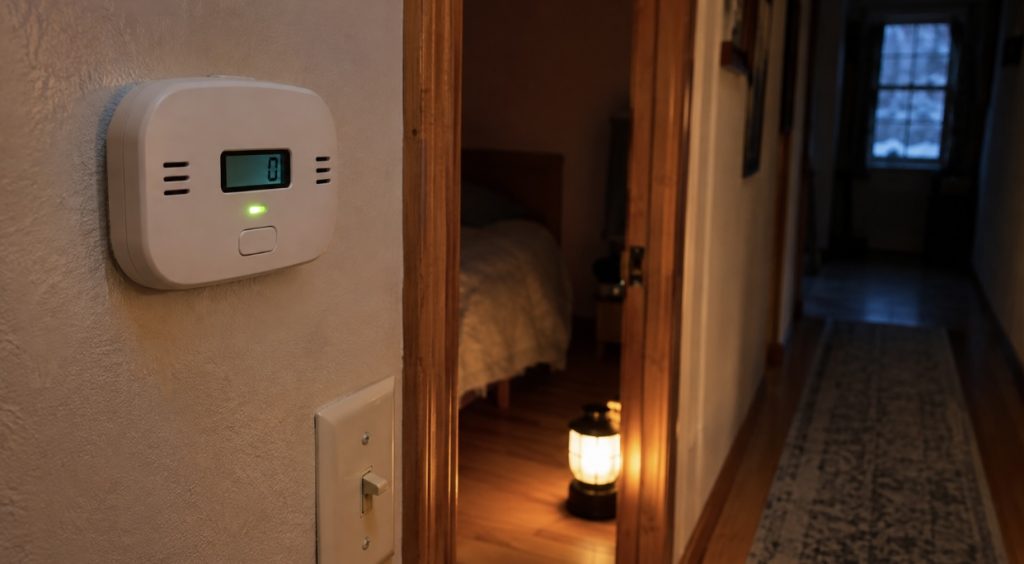
More than half of the US carbon monoxide deaths tied to household products happen between November and February. Furnaces run all day, snow drifts over vent pipes, and when a storm takes the power out, people fire up generators, propane heaters and fireplaces they haven’t used since last winter. CO has no smell and no color, and the first symptoms feel like the flu. For most families, an alarm is the only warning they get.
Plenty of the alarms already on American walls go quiet in a blackout. A plug-in unit with no battery inside stops working the second the grid drops, and that’s the night you’re most likely to need it.
All six detectors below keep sounding when the power goes out, and four of them don’t need the grid at all. There’s a hallway alarm you never have to touch for ten years, a plug-in with a live readout, one that also sniffs out propane and natural gas, a bedside unit you can pack for trips, a smart combo that alerts your phone, and a budget model cheap enough to put outside every bedroom. Further down, a planner maps out exactly where each alarm should go in your home.
Quick Picks: The Best Carbon Monoxide Detectors in 2026
Carbon Monoxide Detector Comparison Chart
How Many CO Alarms Do You Need? Plan Your Home
Tell the planner how many floors and bedrooms you have, whether the garage is attached, and what burns fuel in or around your house. It draws your home floor by floor, marks every spot an alarm belongs, and matches each spot to the right detector from this list. It also flags the placement mistakes that cause false alarms or missed warnings, like an alarm inside the garage or right beside the furnace.
1. Kidde C3010D: Best Overall
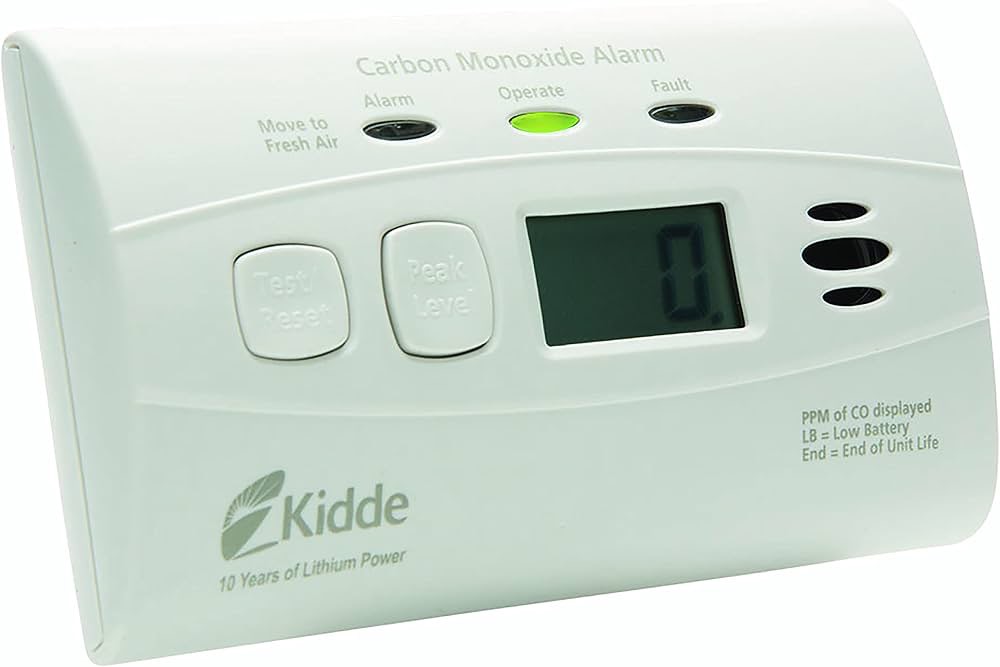
Why I chose it: This is the alarm I’d put in the hallway outside the bedrooms in almost any house. The lithium battery is sealed inside, so there’s no 9V to chirp at 3 a.m. and nobody in the family can borrow its batteries for the TV remote. It doesn’t need an outlet either, which means it goes exactly where it should instead of wherever the nearest socket happens to be. It’s the right pick for homes that lose power often, for rentals where you want an alarm tenants can’t disable, and for anyone who wants to mount it once and forget about it for a decade.
Key specs
- Power: sealed 10-year lithium battery
- Sensor: electrochemical
- Display: CO level in ppm, with peak level memory
- Alarm: 85 dB
- Operating range: 40°F to 100°F
- Warranty: 10-year limited
Pros
- No battery changes for its whole 10-year life
- Works anywhere, with or without an outlet nearby
- Peak memory shows whether CO built up while you were away
- The sealed battery can’t be pulled out and forgotten
Cons
- It doesn’t interconnect, so an alarm in the basement won’t set this one off upstairs
- When the battery reaches the end, the whole alarm gets replaced
Performance analysis: The sealed battery is the whole point here. In a five-day ice storm, the C3010D keeps sampling the air the same way it does on an ordinary Tuesday, with no outlet and no backup battery to run down. The display earns its place too. If you come home after a day of running the generator and something feels off, one press of the peak button tells you the highest CO level it saw while you were gone. Keep in mind the rated range starts at 40°F. In a long winter outage, a house that drops below that is colder than this alarm, or most alarms, are rated to work in, which is one more reason to keep at least one room heated safely.
2. First Alert CO615: Best Plug-In
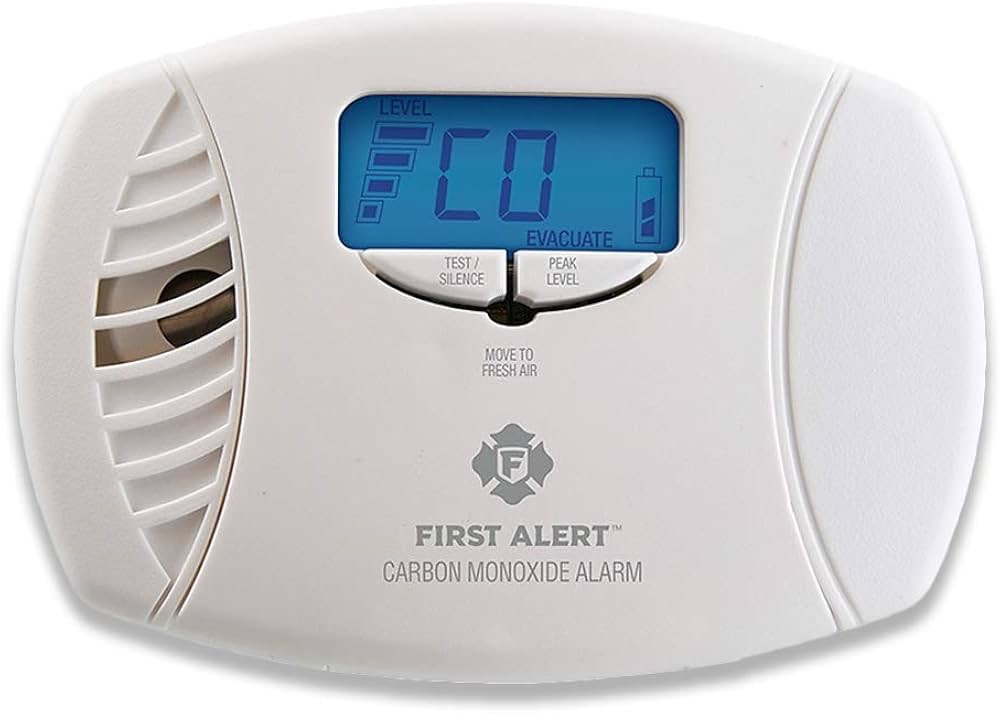
Why I chose it: A lot of people want a CO alarm they can just plug in, and the CO615 is the one I’d hand them. It runs off the wall outlet, so the two AA batteries inside sit there purely as backup. When the power drops, it switches over on its own and keeps watching. The backlit display shows the CO level at a glance, which helps in a dark house during an outage. It’s best for living rooms, family rooms and any spot with a free outlet near where people spend their evenings.
Key specs
- Power: 120V plug-in with 2 AA battery backup (included)
- Sensor: electrochemical
- Display: backlit digital CO readout
- Alarm: 85 dB at 10 feet
- Life: end-of-life warning at about 7 years
- Warranty: 7-year limited
Pros
- Batteries only work when the power’s out, so they last
- Backlit screen is easy to read at night
- Nothing to mount, just plug it in
- Separate signals for low battery and end of life
Cons
- Shorter rated life than the 10-year alarms on this list
- Needs an open outlet that isn’t hidden behind furniture
Performance analysis: Some people worry that an alarm at outlet height sits too low. It doesn’t matter for CO, because carbon monoxide mixes with the room’s air instead of sinking or rising the way people assume. What does matter is the outlet itself. Skip any outlet controlled by a wall switch, since someone will eventually flip it off, and skip spots behind a couch where the air doesn’t move. Swap the AAs every fall when the clocks change, so the backup is fresh going into outage season. At the 7-year mark the CO615 chirps three times in a repeating pattern, and that means the sensor is done, so replace the whole unit rather than the batteries.
3. Kidde Nighthawk KN-COEG-3: Best for Propane and Gas Homes
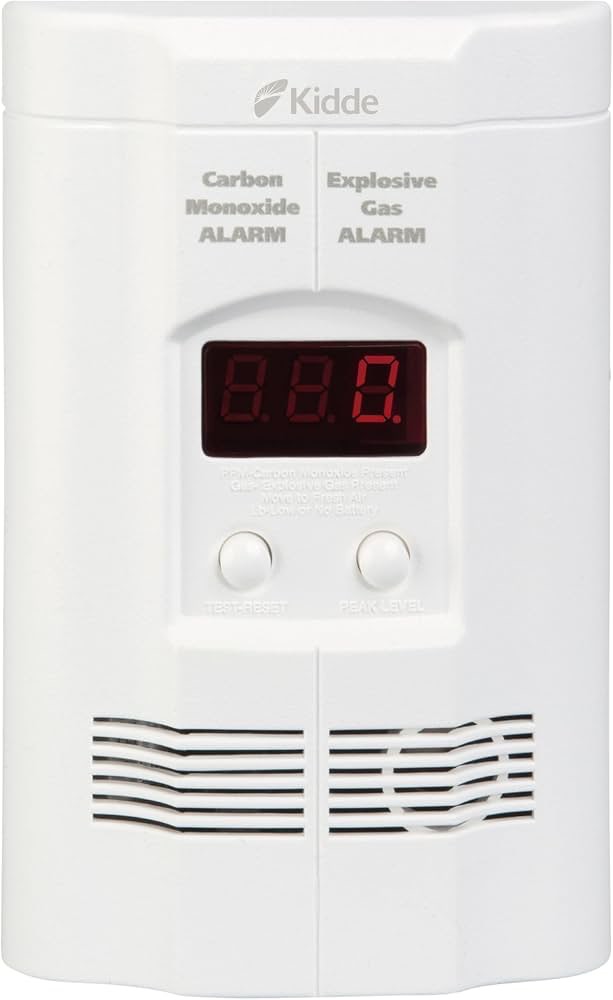
Why I chose it: A standard CO alarm can’t smell a gas leak. Carbon monoxide comes from burning fuel, while a propane or natural gas leak is unburned fuel escaping, and those take a different sensor. The Nighthawk carries both. An electrochemical sensor watches for CO, and a second sensor picks up natural gas and propane. If you run an indoor propane heater during outages, cook on a gas range or have a gas water heater, this is the alarm I’d plug in nearby.
Key specs
- Power: 120V plug-in with 9V battery backup
- Detects: carbon monoxide, natural gas (methane) and propane
- Display: CO from 30 to 999 ppm, peak level memory, shows GAS for a gas alarm
- Alarm: 85 dB, with different patterns for CO and gas
- Cord: 6-foot cord for mounting higher or lower than the outlet
- Life: replace after 7 years; 5-year limited warranty
Pros
- Two hazards covered from one outlet
- Different alarm sounds, so you know whether to ventilate or get out and call the gas company
- The cord lets you set the height the gas sensor needs
Cons
- The 9V backup is meant for short outages, not days
- After four minutes on battery it checks for gas only every eight minutes to save power
Performance analysis: Height matters here, and not because of the CO. Natural gas is lighter than air and drifts up, while propane is heavier and settles low, so the gas sensor works best placed the way the manual shows for your fuel. That’s what the cord is for. Be clear about what the backup battery does. A fresh 9V keeps the CO side running for at least 20 hours, but gas checks slow down to once every eight minutes after the first four minutes. For a multi-day outage, pair it with a sealed-battery CO alarm like the C3010D in the same area. Use it alongside the safety habits in my indoor propane heater guide, never as a reason to skip them.
4. First Alert CO710: Best Bedside and Travel Pick
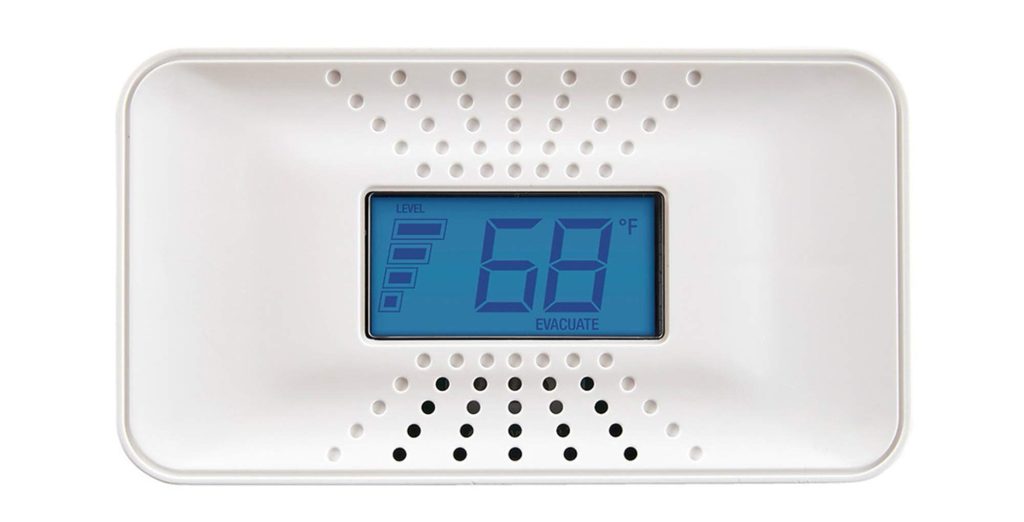
Why I chose it: The CO710 is built to sit on a nightstand, a dresser or a shelf instead of hanging on a wall, and its 10-year battery is sealed inside. That makes it the easiest alarm on this list to move. Put it next to the bed in a guest room with no outlet nearby, or drop it in a bag for a cabin rental, a hotel room or the camper. It’s a good fit for renters who can’t drill holes and for anyone who travels in winter.
Key specs
- Power: sealed 10-year lithium battery
- Sensor: electrochemical
- Display: backlit, shows temperature, current CO and peak CO
- Alarm: 85 dB
- Listing: UL 2034
- Warranty: 10-year limited
Pros
- No installation, it stands on its own
- Sealed battery for its full 10-year life
- Peak level feature records the highest CO it measured
- The temperature readout is handy during an outage
Cons
- A tabletop alarm can get knocked over or tucked into a drawer
- No interconnect with other alarms
Performance analysis: The temperature display sounds like a gimmick until the heat goes out. During a winter outage it tells you how fast the bedroom is cooling, and it tells you when the room is creeping toward the 40°F floor most home CO alarms are rated for. For travel, it gives you protection that many hotels and rentals don’t. Set it on a nightstand near the bed rather than inside a closet or behind curtains, where moving air can’t reach the sensor. At home, treat it as an extra, not as the only alarm on a floor.
5. First Alert SC5: Best Smart Pick
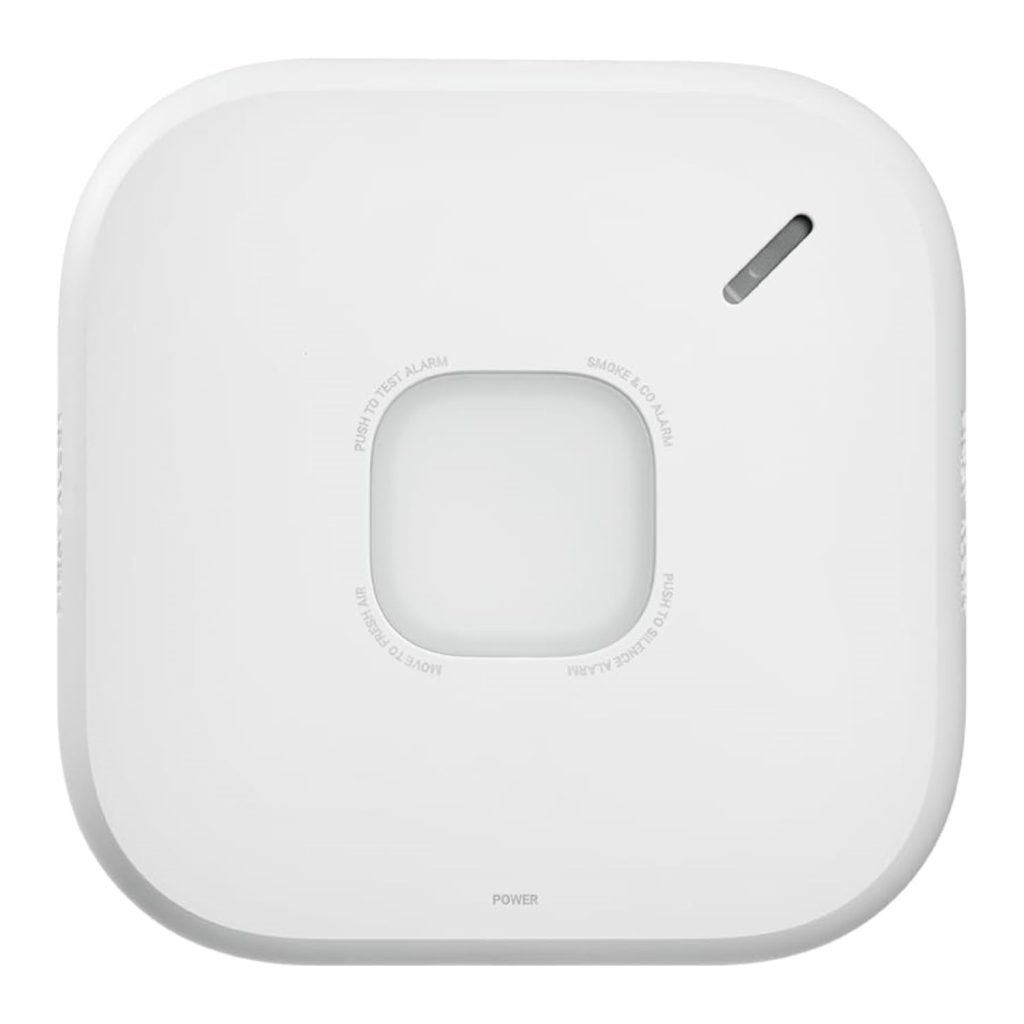
Why I chose it: Google stopped making the Nest Protect, and the SC5 is the alarm that took its place. It detects smoke and CO in one unit, sends alerts to your phone through the First Alert app, and works in the Google Home app. When it goes off, a voice tells you what the danger is and which room it’s in. Up to 18 compatible alarms link wirelessly, older Nest Protects included, so when one sounds, they all sound. It’s the right pick for smart homes, for Nest Protect owners replacing expired units, and for anyone who leaves a generator or heater running while they step out.
Key specs
- Detects: smoke (photoelectric) and carbon monoxide (electrochemical)
- Power: battery model, or hardwired model with sealed battery backup
- Alerts: phone notifications, voice alerts with type and location, 85 dB horn
- Interconnect: wireless, up to 18 compatible alarms
- Life: 10 years
- Warranty: 10-year limited
Pros
- Phone alerts when you’re away from home
- Voice names the hazard and the room
- Links with existing Nest Protect alarms
- One device covers smoke and CO
Cons
- App setup takes more steps than plugging in a basic alarm
- Phone alerts need your Wi-Fi and internet
Performance analysis: The voice alerts matter more than they sound. A groggy person at 2 a.m. reacts faster to a clear warning that names the room than to a generic beep. The phone alerts are what set it apart, with one honest catch for outage season. When the power is out, your router goes down with it, so phone alerts stop unless the router runs on a power station or UPS. The alarm still sounds in the house either way. If you rely on those alerts, keep the router and modem on a portable power station during outages.
6. Kidde KN-COB-LP2: Best Budget Pick
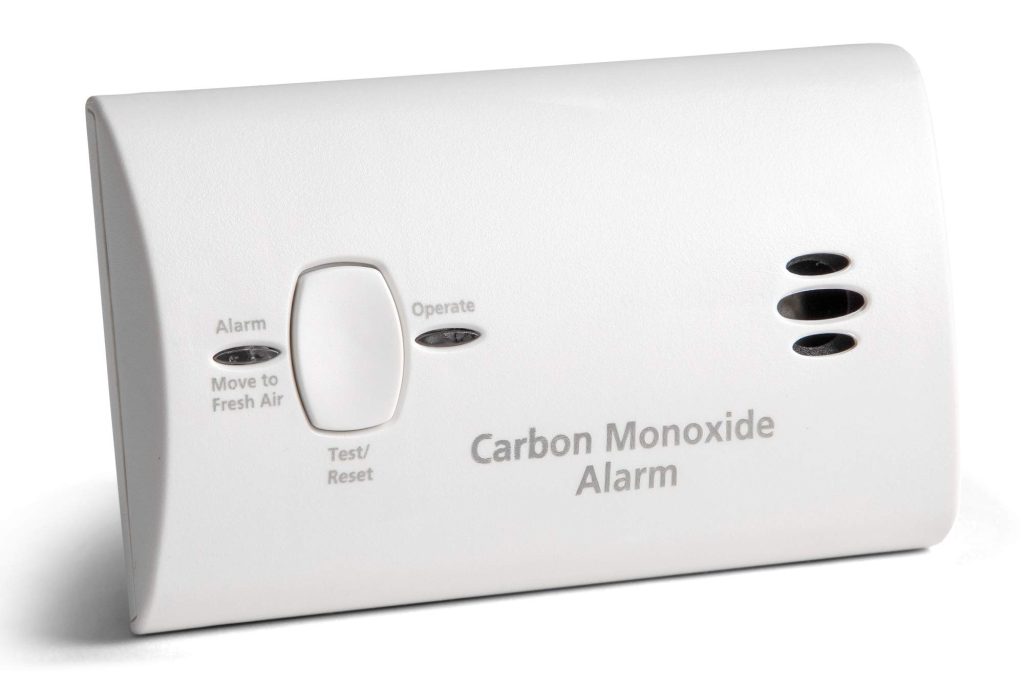
Why I chose it: Covering a whole house properly can take four or five alarms, and that’s where this one comes in. It runs on two AA batteries, sounds a full 85 dB horn and costs little enough to put one outside every sleeping area plus one in the basement. There’s no screen, just a green light that blinks to show it’s working and a red one for an alarm. It’s the pick for first homes, landlords outfitting several units and anyone filling gaps around a better alarm.
Key specs
- Power: 2 AA batteries (included)
- Sensor: electrochemical
- Alarm: 85 dB at 10 feet
- Indicators: green power light, red alarm light
- Life: 10 years, with end-of-life warning
- Warranty: 10-year limited
Pros
- Cheap enough to cover every floor and every sleeping area
- Works in any outage, no outlet needed
- The battery door won’t close without batteries in it
- Same 10-year life as alarms that cost more
Cons
- No display, so you can’t see a low CO reading
- The AAs need replacing about once a year
Performance analysis: The battery door is a small detail that saves lives. A lot of alarms end up dead because someone pulled the batteries to stop a chirp and never put them back. With this one, the door won’t shut on an empty compartment, which makes a missing battery obvious. Without a display, you get a loud horn and nothing else, so it works best in the bedroom hallways and basement, with a display model like the C3010D or CO615 where you spend your evenings. Write the install date on the back the day you mount it.
How a CO Alarm Decides When to Sound
A home CO alarm doesn’t go off the instant it detects a little carbon monoxide. Alarms listed to UL 2034 track your exposure over time, roughly the way your blood soaks up CO, and they have to sound within set windows:
- 70 ppm: between 60 and 240 minutes
- 150 ppm: between 10 and 50 minutes
- 400 ppm: between 4 and 15 minutes
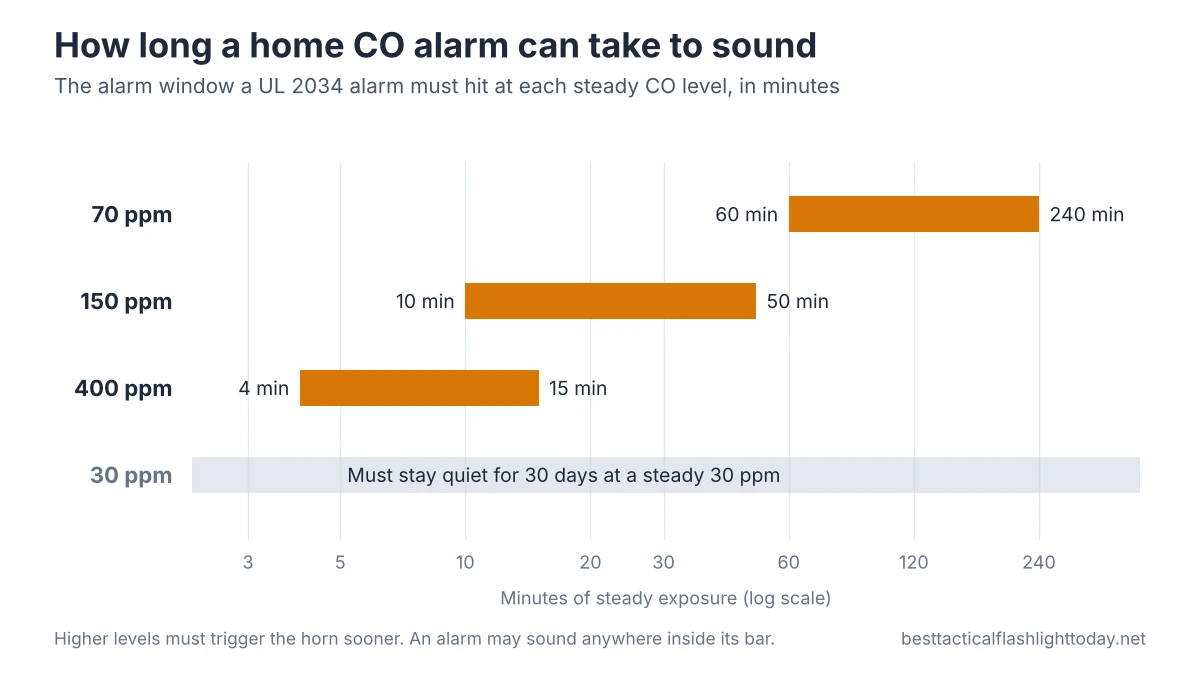
The higher the level, the faster the horn. These alarms are also built to stay quiet at a steady 30 ppm for 30 days, so a brief puff from lighting a gas stove doesn’t send everyone out into the snow. That also means a home alarm stays silent at low levels that can still cause headaches over several days.
A display closes some of that gap. The Nighthawk, for example, starts showing readings at 30 ppm, long before its horn sounds at 70. If any number shows up on the screen, something in the house is making CO, even with the horn quiet. Turn off fuel-burning appliances, open a window and have them checked.
You’ll also see low-level CO monitors that alert at single-digit readings. They aren’t UL 2034 listed, because they’re designed to warn below the standard’s limits, and their makers sell them as an addition to a listed alarm, never a replacement. They make sense in a home with an infant, someone pregnant, or someone with heart or lung disease.
CO Safety When the Power Is Out
Portable generators cause more consumer CO deaths than anything else, and most of those deaths happen at home. A single generator puts out as much CO as hundreds of cars. Here’s how to run outage gear without filling the house with it.
- Generators stay outside, at least 20 feet from the house, with the exhaust pointed away from doors, windows and vents. Never run one in the garage, the basement, a carport or on the porch, even with the doors open. Buy a model with a CO shutoff, like every pick in my portable generator for home guide and dual fuel inverter generator guide.
- Feed the house through a proper hookup, an interlock kit or a transfer switch, so you’re never tempted to bring the generator closer.
- Use only indoor-rated propane heaters inside, with a window cracked, and never leave one running while everyone sleeps. My indoor propane heater guide covers the safe models.
- Never cook or heat with a grill, camp stove or charcoal indoors, including the garage.
- Clear snow off the vents for the furnace, water heater and dryer after every storm. A buried vent pushes exhaust back into the house.
- Never warm up a car in an attached garage, even with the big door open.
Where CO alarms go
Put a CO alarm outside each separate sleeping area and on every level of the home, basement included. Use alarms that run on batteries or have a battery backup, and choose interconnected ones if you can, so one alarm sets off the rest. For extra coverage, add one inside each bedroom.
Height matters less than most people think. CO mixes with the air in the room, so an alarm doesn’t need to sit near the floor or the ceiling; follow the mounting directions in its manual. Keep alarms out of the garage, away from the spot directly beside a furnace, water heater or fireplace, and out of bathrooms, where steam causes trouble. Avoid dead air behind curtains and furniture, and spots right next to windows, doors and vents. Most home alarms are rated for 40°F to 100°F, so they don’t belong in an unheated garage or attic either.
What to Look For in a Carbon Monoxide Detector
A UL 2034 listing. Look for it on the box or the back of the alarm. It means the alarm passed the response-time tests above. Skip plug-in gadgets that promise readings from zero but show no listing anywhere.
Power that survives an outage. A sealed 10-year battery is the most reliable choice, because there’s nothing to forget and nothing to run down. A plug-in alarm is fine as long as it has battery backup. Never buy an AC-only plug-in for a home that loses power.
A digital display with peak memory. The screen shows CO before the horn sounds, and peak memory records the highest level since you last reset it. Put at least one display model where your family spends evenings.
Interconnection. With linked alarms, CO building up in the basement wakes the people sleeping upstairs. Most homes need a few alarms, so this matters more than it sounds.
Combo or CO only. A smoke and CO combo saves ceiling space, and the SC5 handles both well. A CO-only alarm doesn’t detect smoke, so it never replaces a smoke alarm.
A gas sensor if you burn propane or natural gas. CO alarms don’t detect leaks of unburned gas. If you have gas appliances or use a propane heater, add an alarm with an explosive gas sensor like the Nighthawk.
Rated life. Sensors wear out. These models last 7 or 10 years and warn you when they’re done. Write the install date on the back with a marker.
Chirps, Beeps and What to Do When It Sounds
Learn your alarm’s sounds now, while nothing is wrong. On the Kidde and First Alert models here, a real CO alarm is four quick beeps, a pause of about five seconds, then four more, repeating. A single short chirp about once a minute usually means a low battery. A repeating group of chirps, or an “End” or “Err” message on the screen, usually means the sensor has reached the end of its life, and a new battery won’t fix it. Every manual has a chart of its own signals, so keep it near the alarm.
If the alarm sounds:
- Get everyone outside or to an open door or window right away, pets included.
- Count heads so you know everyone is out.
- Call 911 or the fire department from the fresh air.
- Stay out until the responders tell you it’s safe to go back in.
Don’t go back inside to hunt for the source, and don’t assume it’s a false alarm because nobody feels sick. Headache, dizziness, nausea, weakness and confusion are the early signs, and they’re easy to mistake for the flu. If anyone in the house has them, tell the dispatcher.
Test every alarm once a month with its test button. Replace replaceable batteries at least once a year, and replace the whole alarm when it signals end of life or reaches the date on its label.
Portable CO Detectors for Campers, RVs and Rentals
Only 14 states require CO alarms in hotels, motels and rental units, so a winter cabin or a roadside motel may have none. A small battery alarm in your bag fixes that.
Be picky about which one. Lab tests have caught some cheap portable units taking 19 minutes to alarm at 400 ppm, and others taking more than four hours at 100 ppm, with screens that read low. Stick with a UL 2034 listed alarm with a sealed battery, like the CO710, rather than an unlisted travel gadget.
A home alarm isn’t designed to work inside a moving vehicle, so keep your camper’s built-in CO alarm working and treat a travel unit as protection for the room you sleep in. In a tent, skip the heater and the stove altogether and use a battery lantern or a rechargeable headlamp for light.
FAQ
Where should a carbon monoxide detector be placed?
Put one outside each separate sleeping area and one on every level of the home, basement included. Mount it where the manual says, since CO mixes with room air and height matters less than people think. Keep it out of the garage, the bathroom and the spot right beside a furnace or water heater.
Is a battery or plug-in carbon monoxide detector better?
For outages, a sealed 10-year battery alarm is the most reliable, because it never depends on the grid or a battery you forgot to change. A plug-in is fine as long as it has battery backup. An AC-only plug-in goes dark the moment the power does.
How long do carbon monoxide detectors last?
Most last 7 or 10 years, depending on the model. Near the end, they chirp or show an end-of-life message, and a new battery won’t stop it. Check the date on the back of yours, and replace any alarm that’s past its date or has no date at all.
What level of carbon monoxide sets off a detector?
A UL 2034 home alarm sounds within 60 to 240 minutes at 70 ppm, 10 to 50 minutes at 150 ppm, and 4 to 15 minutes at 400 ppm. It’s designed to stay quiet at a steady 30 ppm, which is why a display model helps you spot lower levels.
The Bottom Line
For most homes, the Kidde C3010D is the one to mount outside the bedrooms: a sealed battery, a live readout and ten years without touching it. Add the First Alert CO615 where you spend your evenings if you’d rather plug in, and the Kidde Nighthawk KN-COEG-3 near a propane heater or gas appliance. Pick the First Alert CO710 for the nightstand and your travel bag, the First Alert SC5 if you want phone alerts and smoke detection in one unit, and the Kidde KN-COB-LP2 to fill every remaining hallway on a budget. Then run your house through the planner above, and put them up before the first big storm of the winter. Keep them next to the rest of your power outage emergency kit plan, and check them every time the clocks change.
