
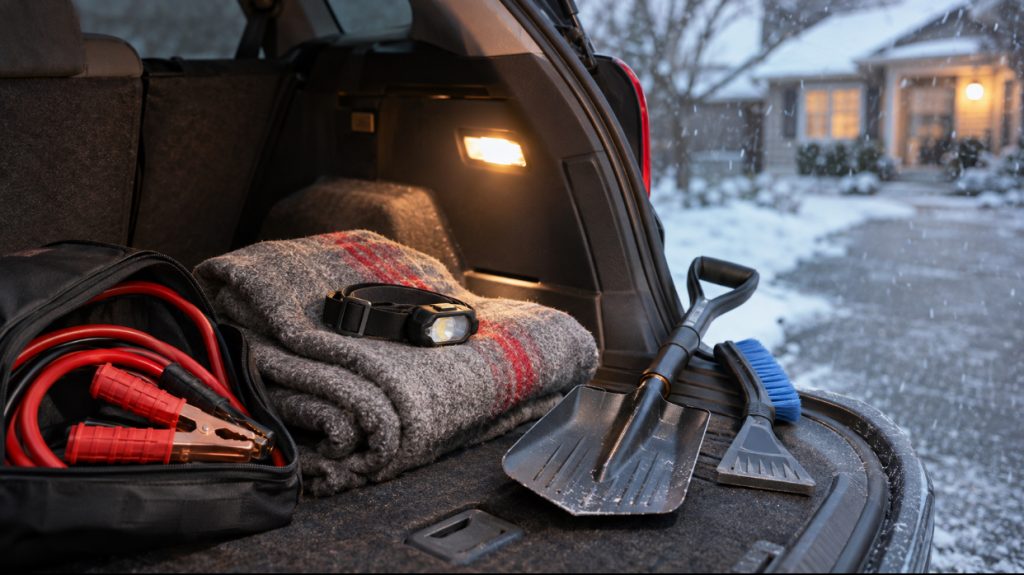
The worst place to learn what’s missing from your car kit is a ditch on a county road at 9 p.m., with snow piling up on the windshield and the nearest town twenty minutes behind you. Most people who end up there did have a kit in the trunk. It just held the wrong things: jumper cables and no second car, a foil blanket for a four hour wait, a flashlight with batteries that died two winters ago.
A good car emergency kit handles the everyday breakdowns, like a dead battery, a soft tire or a stop on a dark shoulder. In winter it also has to keep you warm and visible until help gets there. Very few ready-made kits manage both.
I’ve picked six kits that are worth the trunk space, from a winter kit built around a folding shovel and a fleece set to a budget bag with a real tool case. For each one I’ll show you what’s missing, and below the picks there’s a kit builder that turns your weather, your roads and your passengers into a checklist. There’s also a free printable version for the glovebox.
Quick Picks: The Best Car Emergency Kits in 2026
Car Emergency Kit Comparison Chart
Build Your Winter Car Kit
Tell the builder where you drive, who rides with you and which kit you have or are looking at. It builds your winter checklist, marks what that kit already covers and shows what to add. Tap items as you pack them, then print the list for the glovebox.
1. Everlit Survival Car Emergency Kit: Best Overall
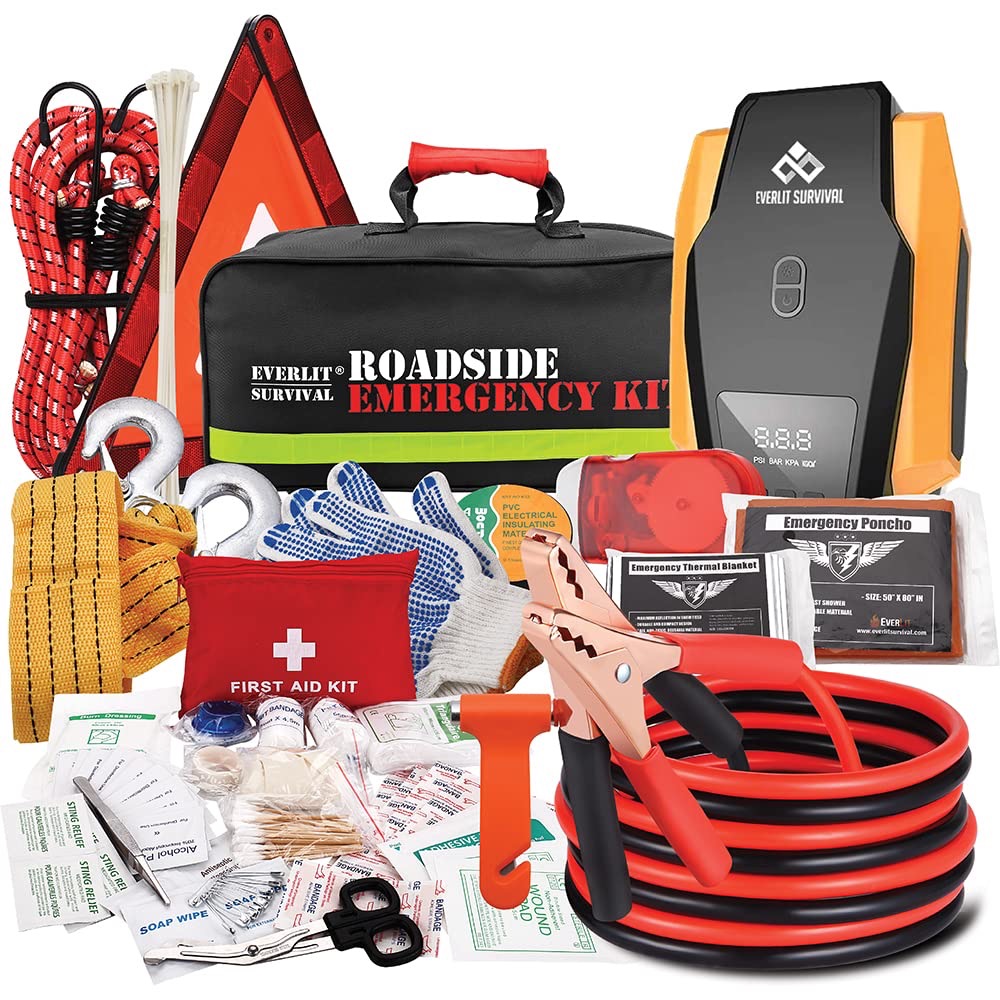
Why I chose it: The Road Guardian handles the two problems that strand most drivers, a dead battery and a tire that’s lost air, without you adding anything first. The 12 foot jumper cables reach a battery even when the other car can’t pull nose to nose, and the digital inflator lets you set your tire pressure and walk away while it runs. Its 108-piece first aid kit is the most complete of the six. It’s best for most drivers who want one bag that covers the whole year.
Key specs
- Jumper cables: 12 ft, 8-gauge
- Tire inflator: digital, with automatic shutoff
- Recovery: tow strap
- Safety: reflective warning triangle, glass breaker with seatbelt cutter
- Light and warmth: hand-crank flashlight, emergency blanket, rain poncho
- First aid: 108 pieces
- Size: 17 x 7 x 7 in, 8 lb
Pros
- Longest jumper cables of the six
- Inflator stops at the pressure you set
- Biggest first aid kit here
Cons
- No shovel, scraper or real winter warmth
- The hand-crank flashlight is weak for roadside work
Performance analysis: The inflator is the piece that earns its keep. A cold snap drops tire pressure a few psi overnight, and a pump with a preset shuts off before you overfill, so you can clear the windshield while it works. The cables are copper-clad aluminum, which is normal in kits like this and fine for cars and small SUVs. For winter, treat this kit as the base layer. Add a wool blanket, a folding shovel and a brighter light, and I’d be happy carrying it through a Minnesota January.
2. Lifeline AAA Severe Weather Road Kit: Best for Winter
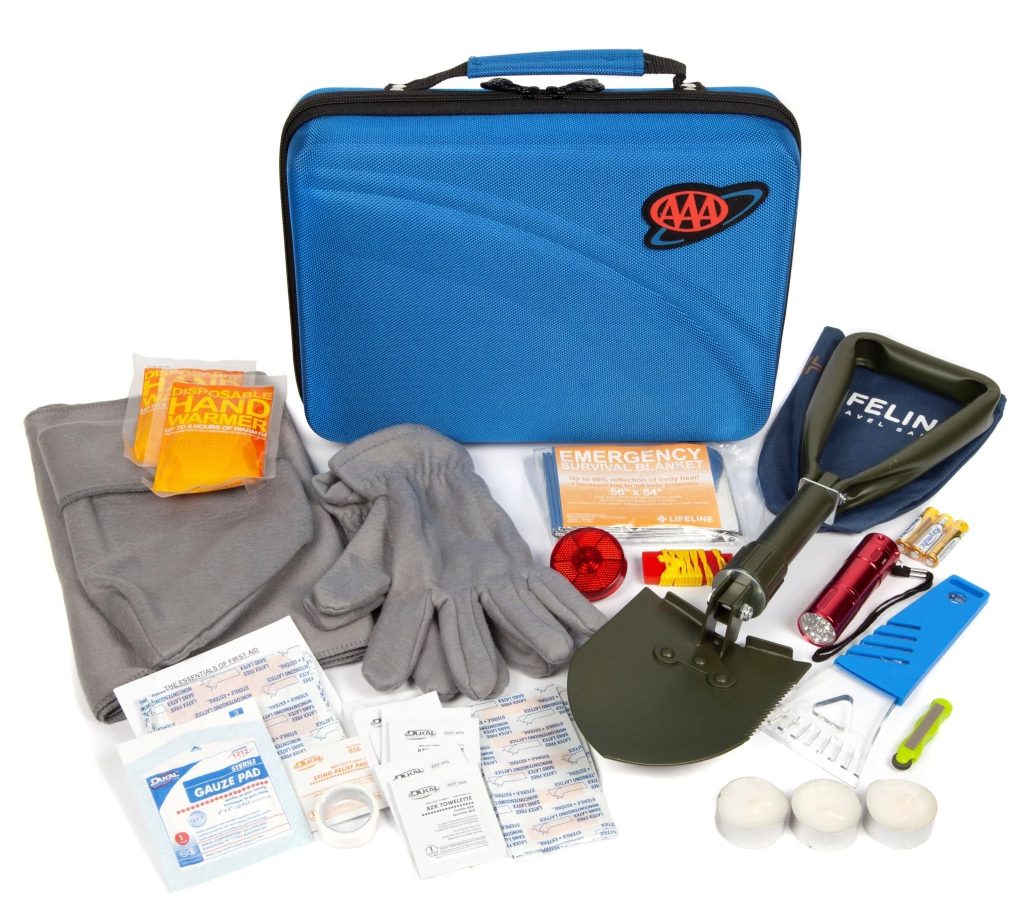
Why I chose it: This is the kit to buy if your winters bring real snow. Lifeline built it with AAA around the things you need when you’re stuck rather than broken down: a folding shovel with a sheath, an ice scraper, a fleece hat, gloves and scarf, two hand warmers, a survival blanket, candles, a fire starter and a clip-on LED strobe. It all packs into a hard-shell foam case that won’t get crushed under the groceries. It’s best for drivers in the northern Plains, around the Great Lakes and in the mountain West.
Key specs
- Dig and clear: folding shovel with sheath, ice scraper
- Warmth: fleece hat, gloves and scarf, 2 hand warmers, survival blanket
- Signal and light: LED safety strobe, 9 LED aluminum flashlight with batteries, whistle
- Fire: 3 emergency candles, quick-spark fire starter
- First aid: 45 pieces with a first aid guide
- Case: hard-shell foam, about 3.8 lb
Pros
- Real winter gear in a ready-made kit
- Hard case keeps everything from getting crushed
- The strobe makes a stopped car easy to spot
Cons
- No jumper cables, tire inflator or warning triangle
- The shovel is small for a car that’s been plowed in
Performance analysis: Pair this kit with a portable jump starter or a set of cables and you have the most complete winter setup on this page. The shovel won’t move a plow berm, but it will clear snow away from the tailpipe and the drive wheels, and that’s the digging that gets you out or keeps you safe while you wait. Use the candles carefully: crack a window, keep the flame away from fabric and never let one burn while you sleep. The fleece set is thin, so if you drive long rural stretches, add a wool blanket as well.
3. Lifeline AAA Excursion Road Kit: Best Organized
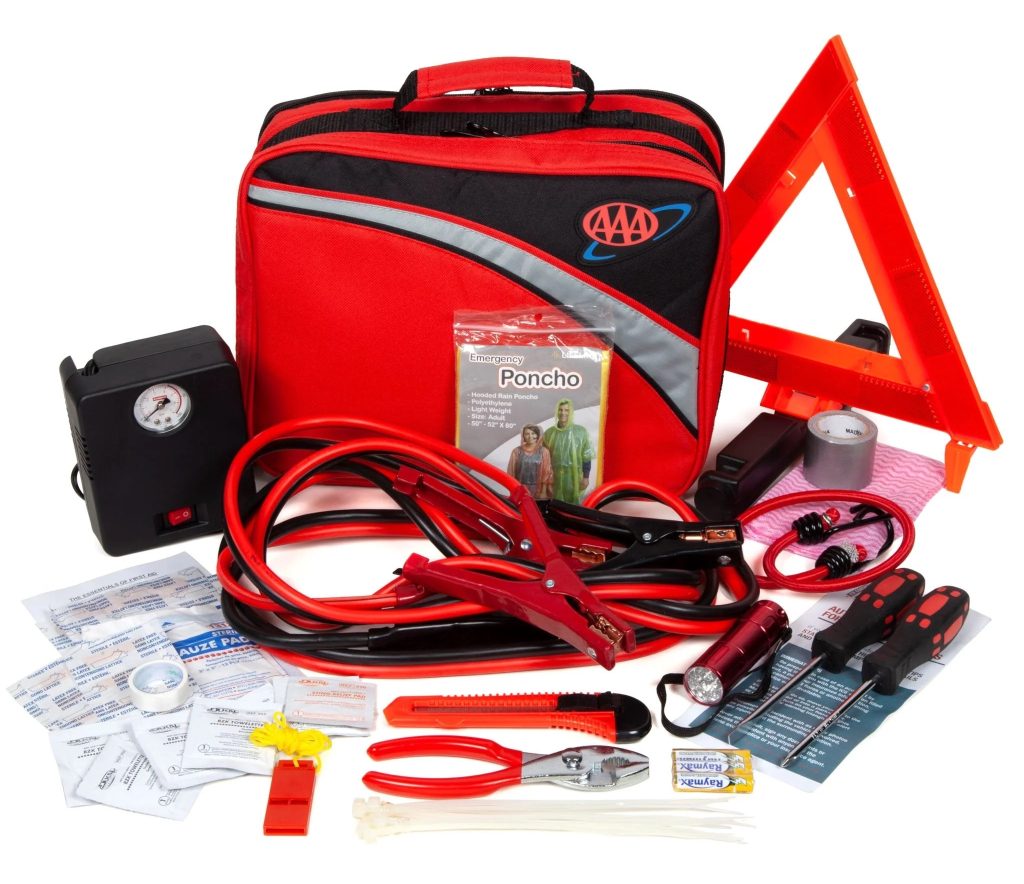
Why I chose it: The Excursion kit is the one I’d hand to a new driver. Everything has its own spot in a double-sided bag, so you can find the cables in the dark without dumping the whole thing on a wet shoulder. You get 10 foot 8-gauge booster cables, a tire inflator with a gauge, a warning triangle, a flashlight, pliers, two screwdrivers, a utility knife, duct tape and a 45-piece first aid kit. It’s best for commuters and families who want a tidy year-round kit.
Key specs
- Jumper cables: 10 ft, 8-gauge
- Tire help: air compressor with gauge
- Safety: emergency warning triangle, whistle, poncho
- Tools: pliers, Phillips and flat screwdrivers, utility knife, duct tape, bungee cord, cable ties, gloves
- Light: 9 LED aluminum flashlight with batteries
- First aid: 45 pieces with a first aid guide
Pros
- Best organization of the six
- Solid 8-gauge cables
- Inflator and triangle cover the common breakdowns
Cons
- The inflator is slow on a big tire
- No winter gear or blanket
Performance analysis: This kit covers the everyday breakdowns well. The pump is slow, so give it a few minutes to bring a soft SUV tire back up, but it will get you to a gas station. For winter it needs more help than any kit here: a blanket, hand warmers, a scraper and a shovel. Lifeline’s own Severe Weather kit fills almost exactly those gaps, and together the two make a complete kit.
4. First Secure Car Emergency Kit: Best for Flat Tires
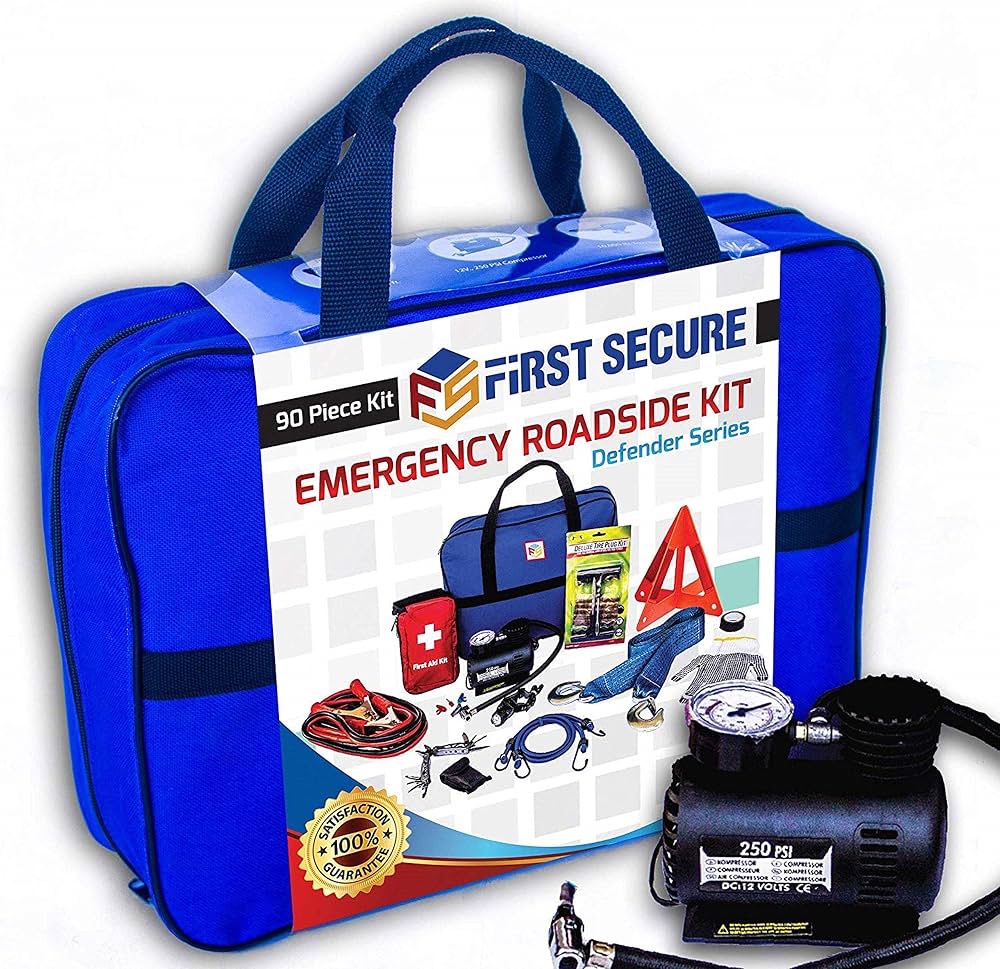
Why I chose it: If you drive long highway stretches or back roads where the nearest tire shop is an hour away, this is the kit I’d want. It’s the only one here with a tire plug kit, so you can seal a nail puncture and then pump the tire back up with the 250 psi compressor. The 11.8 foot tow strap is rated for 10,000 pounds, plenty for pulling a car or light truck out of a snowbank with help from another vehicle. It’s best for rural drivers, road trippers and anyone who has changed a tire in the rain.
Key specs
- Jumper cables: 10 ft, 8-gauge, 300 amp
- Tire help: 12V 250 psi compressor, 7-piece tire repair kit, pressure gauge
- Recovery: 11.8 ft tow strap rated to 10,000 lb
- Safety: reflective triangle, window breaker
- Tools and light: multi-tool, LED headlamp, work gloves, electrical tape, bungee cords, cable ties
- First aid: 48 pieces
Pros
- Plug kit fixes a puncture instead of only topping up air
- Strong tow strap
- Headlamp keeps both hands free
Cons
- The headlamp is dim and the multi-tool is basic
- No winter gear
Performance analysis: A plug kit takes a little practice, so open it in your driveway on a nice afternoon before you ever need it. Plugs are meant for punctures in the tread, never the sidewall, and they’re a repair that gets you to a shop, where someone should look at the tire. The compressor runs off the 12V socket, so keep the engine running while you pump. Add a brighter rechargeable headlamp and the winter basics, and this becomes the most capable kit here for long drives.
5. Thrive Roadside Emergency Car Kit: Best Tool Set
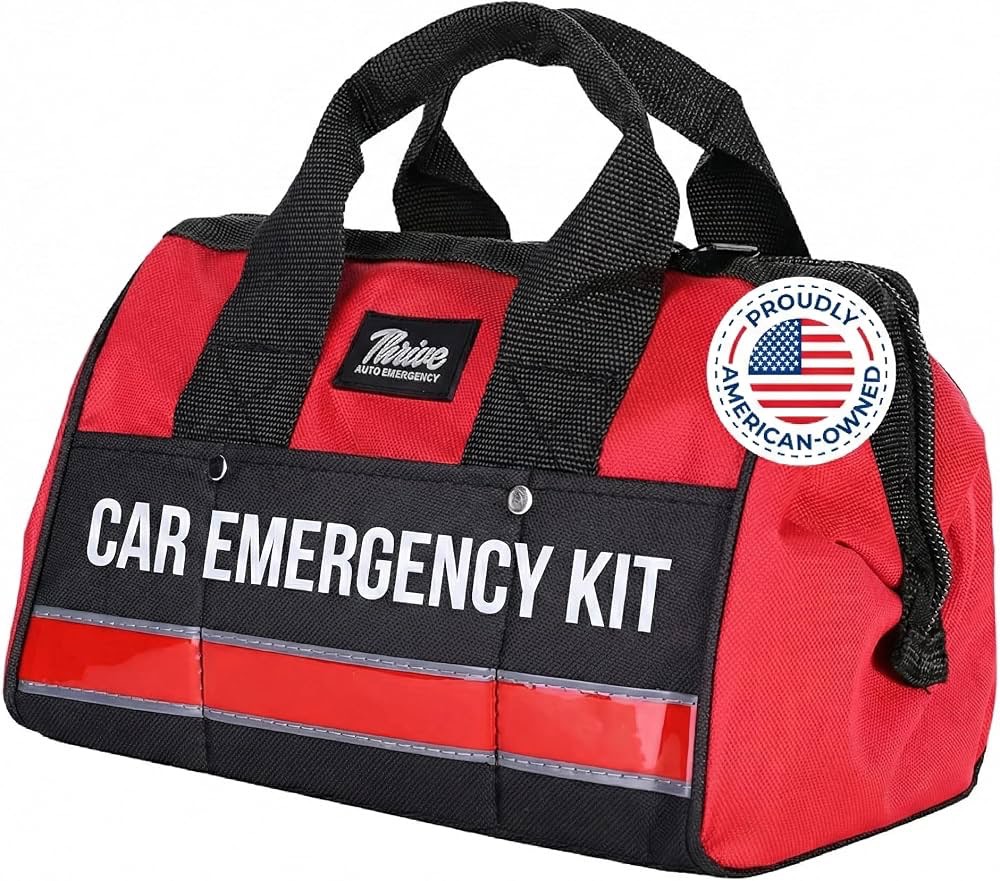
Why I chose it: Thrive packed more real tools into this bag than any other kit I looked at: a socket wrench with nine sockets, a screwdriver with seven bits, multi-function pliers and a box cutter. It also carries a reflective vest, a folding triangle, an ice scraper, a hand-powered flashlight, a HELP banner and 8 foot 8-gauge jumper cables, along with a 62-piece first aid kit. It’s best for drivers who’d rather tighten a loose battery terminal or hose clamp themselves than wait for a tow.
Key specs
- Jumper cables: 8 ft, 8-gauge
- Tools: socket wrench with 9 sockets, screwdriver with 7 bits, pliers, box cutter
- Be seen: reflective vest, folding triangle, HELP banner, whistle
- Weather: ice scraper, rain poncho
- Light: hand-powered flashlight
- First aid: 62 pieces in a 104-piece kit
Pros
- Best tool set here
- Vest and banner make you easy to see
- Water-resistant canvas bag with a reflective strip
Cons
- 8 foot cables are short if the cars can’t line up
- No inflator, blanket or shovel
Performance analysis: The vest is the item I’d point out to anyone who drives at night. Someone changing a tire on a dark shoulder in dark clothes is very hard to see, and a reflective vest lights up in headlights from far down the road. The ice scraper is thin, so keep a proper scraper in the door pocket too. Add an inflator and the winter layer and this bag covers a lot of ground.
6. LIANXIN 142-Piece Roadside Kit: Best Budget
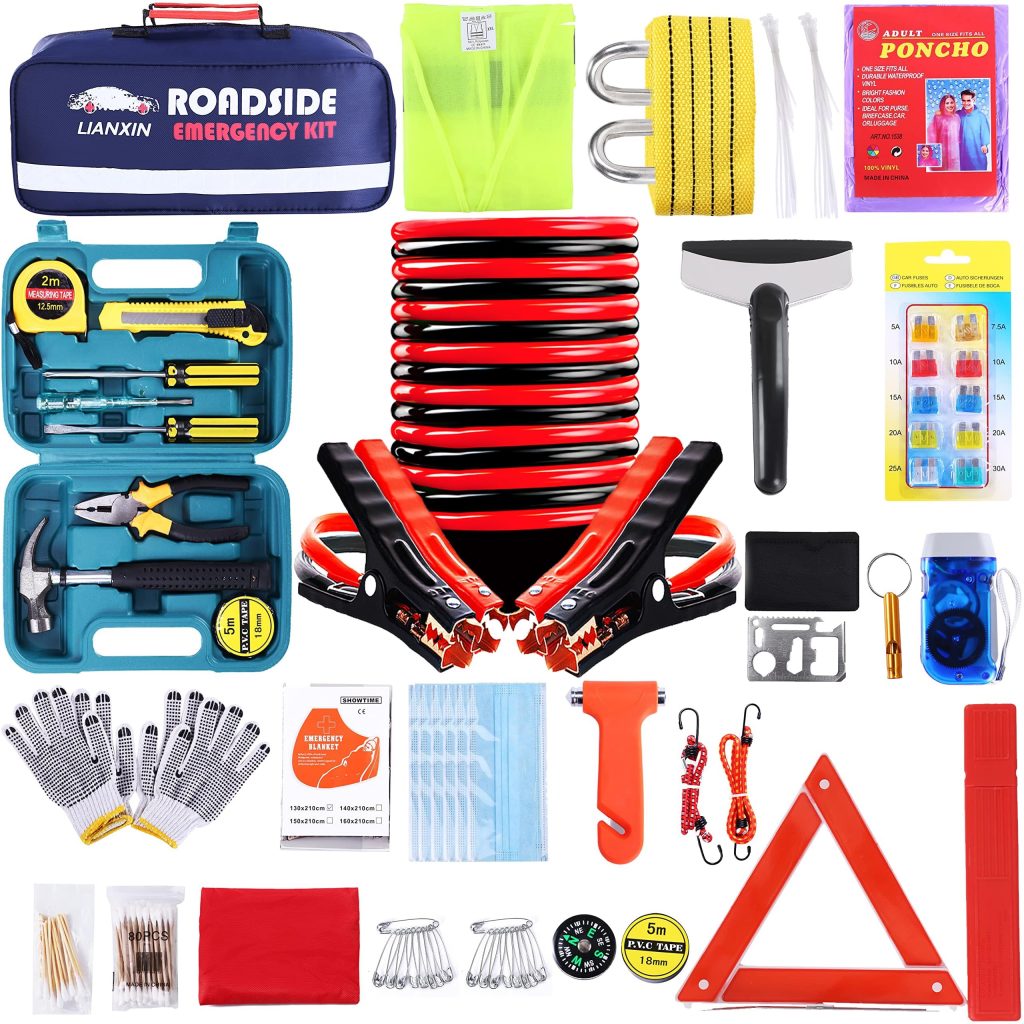
Why I chose it: LIANXIN’s 142-piece kit covers more winter basics than kits that cost a lot more. Along with UL-listed 8.2 foot jumper cables and a tow rope, you get a small folding snow shovel, an emergency blanket, a reflective vest and triangle, a hand-crank LED flashlight, a window breaker with seatbelt cutter and a 16-piece tool case. LIANXIN sells several kits with similar names, and this is the 142-piece version with the shovel. It’s best for a second car, a teenager’s first car or a tight budget.
Key specs
- Jumper cables: 8.2 ft, UL listed
- Recovery: tow rope, small folding snow shovel
- Be seen: reflective vest, warning triangle
- Light and warmth: hand-crank LED flashlight, emergency blanket, raincoat
- Tools: 16-piece tool case with hammer, pliers, screwdrivers and voltage tester
- Safety: window breaker with seatbelt cutter, compass
Pros
- Shovel and tow rope at the lowest price here
- A real tool case
- Vest and triangle included
Cons
- The first aid supplies are close to nothing
- Some tools are light duty
Performance analysis: Put a proper first aid kit in with it right away, because this one is mostly cotton swabs and safety pins. The 142 count leans on small pieces like those, which is true of most kits in this price range. The shovel and tow rope are what make it worth buying for winter. Add a wool blanket and some hand and foot warmers and it turns into a capable budget winter kit.
What Most Car Emergency Kits Leave Out
Every kit on this list arrives with gaps, and they follow a pattern. The roadside kits are built for breakdowns, so they skip winter gear. The one true winter kit skips the car tools. The chart shows what each kit covers out of the box.
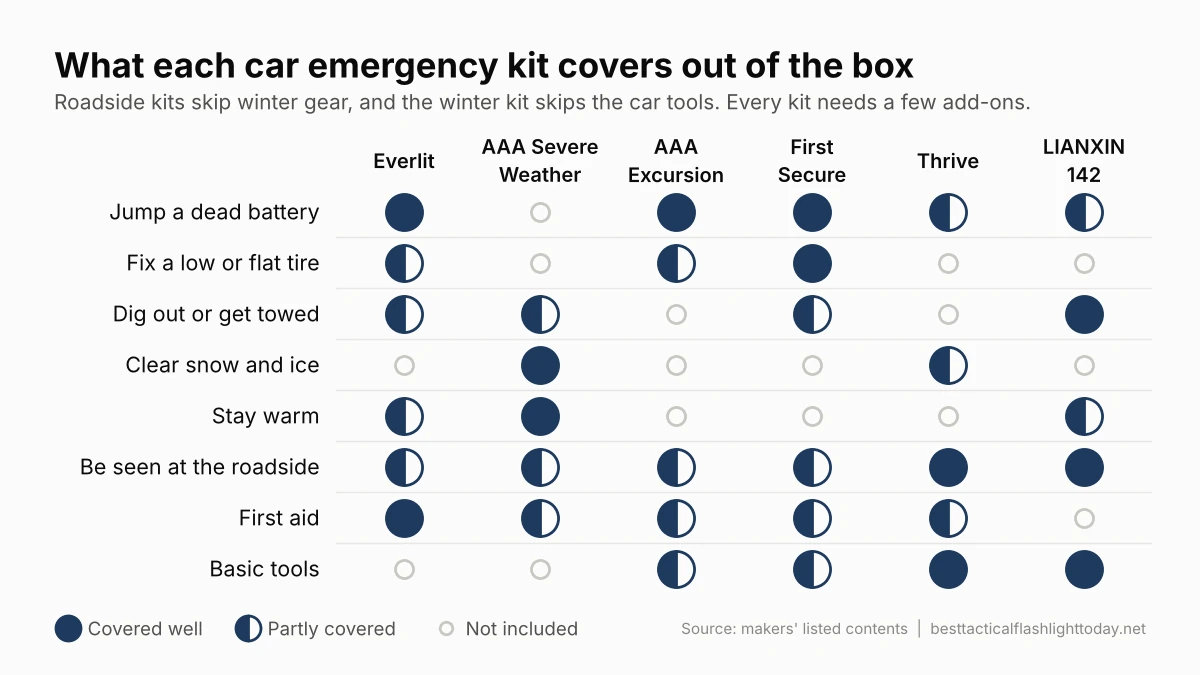
These are the add-ons I’d put with any of them:
- A portable jump starter. Cables only help once another driver stops. A portable jump starter gets you going on your own, which matters most on an empty road at night.
- A wool blanket or a winter sleeping bag. Foil blankets tear easily and do little once you’re damp. A wool blanket or a winter sleeping bag keeps you warm through a long wait with the engine off.
- Traction help. Traction mats or a bag of sand or cat litter under the drive wheels will get a lot of cars off packed snow.
- Hand and foot warmers. Kits that include them pack two at most. A box of hand and foot warmers lasts a whole winter.
- A headlamp. Clamps, tire changes and digging all need two hands. A rechargeable headlamp beats any flashlight in a kit.
- A hand crank radio. When the phone signal drops, a hand crank radio still brings in road and weather reports.
- Lithium batteries. Lithium AA batteries hold up in the cold far better than alkaline, and they keep for years in a glovebox.
Buying Guide: What to Look For in a Car Emergency Kit
Ignore the piece count. A 142-piece kit and a 66-piece kit can hold the same handful of useful items. Bandages, cable ties and safety pins are counted one by one, so the big number on the box mostly tells you how full the first aid pouch is. Read the contents list and count the things that solve a problem: cables, a pump, a shovel, a light, a triangle.
Check the jumper cables. Look for 8-gauge or thicker (a lower gauge number means thicker wire) and at least 10 feet, so the cables reach when the cars can’t park nose to nose on a narrow shoulder. In real cold, a portable jump starter is the better tool because it doesn’t depend on someone stopping.
Decide how much tire help you need. A 12V inflator handles a slow leak and the pressure drop that comes with a cold morning. A plug kit handles a nail. Only the First Secure kit gives you both, and that’s why it’s my pick for long rural drives.
Match the winter gear to your winters. If you drive where it snows, look for a shovel and an ice scraper first. Then look at warmth. A foil blanket is a start, but for a wait of several hours you want wool or a sleeping bag, plus a hat and gloves.
Look at the case. Hard cases protect what’s inside and stack neatly. Soft bags squeeze into a spare tire well. Either works as long as the contents are organized well enough to find things by feel in the dark.
Judge the first aid by what’s in it. A good car first aid kit has gauze, tape, antiseptic wipes and bandages in several sizes. If a kit’s medical supplies fit in your palm, add a separate first aid kit and keep it in the cabin.
How to Pack and Store a Winter Car Kit
Split it between the cabin and the trunk. If you slide off the road and the back of the car ends up in a snowbank, you may not get the trunk open. Keep the things that keep you alive in the cabin, under or behind a seat: a blanket, a hat and gloves, water, snacks, a light and a phone charger. Cables, the shovel and tools can ride in the trunk.
Keep water in the cabin. Bottles freeze solid in a trunk. Keep two or three in the cabin and leave a little room at the top of each so they don’t split.
Use lithium batteries. Alkaline cells lose much of their output in deep cold. Lithium AA and AAA cells handle cold far better, so use them in every flashlight and radio in the kit.
Check it twice a year. I check my kit when the clocks change in spring and fall, which is also when the drive home swings between daylight and dark (I dug into that in my dark commute lookup). Replace hand warmers past their date, swap the snacks and water, test every light and recharge anything with a battery.
If You Get Stranded in Winter
Stay with the car unless you can see a building close by. A car is much easier for rescuers to find than a person, and walking in blowing snow is how people get lost. The Massachusetts Department of Transportation’s winter guidance lays out the routine, and it’s the same one I’d follow:
- Call 911 if you can. Tell them where you are, who’s with you and what’s wrong, and don’t hang up until you know what happens next.
- Clear the tailpipe before you run the engine. Wet or blowing snow can plug the exhaust and push carbon monoxide into the car.
- Run the engine about 10 minutes an hour for heat, with a window cracked open on the side away from the wind.
- Turn on the dome light at night only while the engine is running, so you don’t flatten the battery.
- Tie a bright cloth to the antenna or a door handle so plows and rescuers can spot you.
- Move the blankets, food and water from the trunk into the cabin as soon as you know you’ll be there a while.
- Don’t push the car or shovel hard. Heavy work in the cold strains the heart, and sweat soaks the clothes that are keeping you warm.
- Never go to sleep with the engine running.
One more trick from North Dakota’s Vision Zero winter survival list: eat a high-calorie snack right before you try to sleep. Your body makes heat while it digests, the same reason winter campers eat before bed.
Car Emergency Kit FAQ
What should be in a car emergency kit?
At a minimum, jumper cables or a jump starter, a tire inflator, a warning triangle, a flashlight with spare batteries, a first aid kit, gloves, water and snacks. For winter, add a shovel, an ice scraper, a wool blanket, hand warmers and something for traction, like sand or cat litter.
Are AAA car emergency kits worth it?
Lifeline makes the AAA-branded kits, and they’re good quality for the money. The Excursion kit is the best organized kit I looked at, and the Severe Weather kit is one of the few ready-made kits with real winter gear. Neither covers everything, so plan on adding a few items to whichever one you buy.
Is it cheaper to build your own car emergency kit?
For the roadside basics, a ready-made kit is usually the better deal, since cables, a triangle and first aid supplies come bundled. The winter layer is where building your own pays off, because a good wool blanket, a sturdy shovel and a box of warmers beat the versions packed into most kits. For most people, a ready-made kit plus a few upgrades works best.
Where should you keep an emergency kit in your car?
Split it. Warmth, water, food and a light belong in the cabin, where you can reach them if the trunk is blocked by snow or a crumpled bumper. Cables, the shovel and tools can go in the trunk or the spare tire well.
The Bottom Line
For most drivers, the Everlit Survival Car Emergency Kit is the best place to start: long cables, a tire inflator that shuts itself off and the biggest first aid kit here. If you drive where it snows, add the Lifeline AAA Severe Weather Road Kit, or start with it and pair it with a portable jump starter. The First Secure Car Emergency Kit is the pick for long rural drives, the Lifeline AAA Excursion Road Kit is the tidiest year-round kit, the Thrive Roadside Emergency Car Kit has the best tools and the LIANXIN 142-Piece Roadside Kit covers the basics on a budget. Whichever you choose, print the checklist, fill the gaps and keep a good survival flashlight in the glovebox.
