
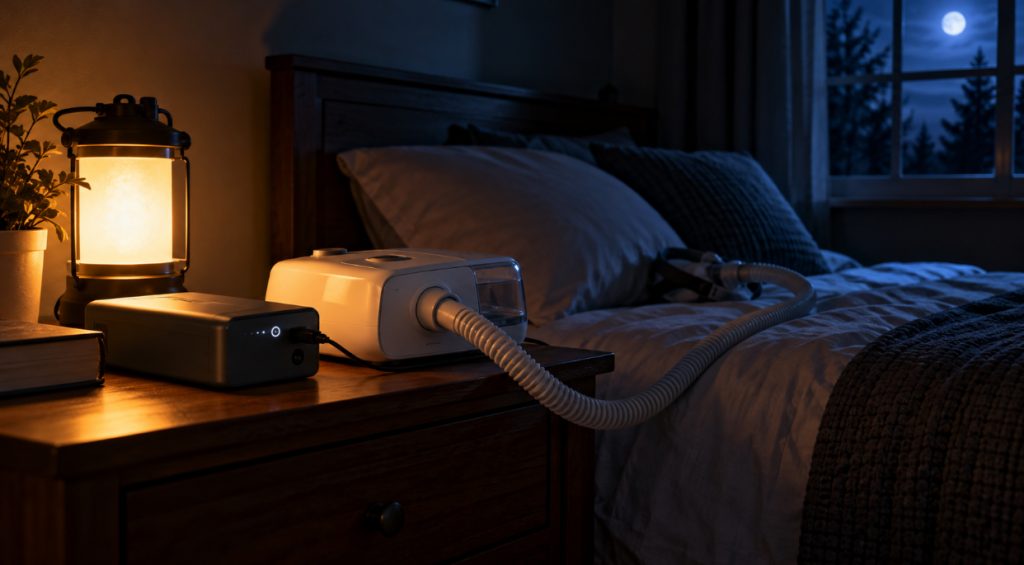
When the power goes out at 2 a.m., most people roll over and go back to sleep. If you use a CPAP, the air stops and you wake up, then spend the rest of the night without therapy. A storm that knocks out power for three days means three bad nights.
A CPAP battery backup fixes that, but only if it fits your machine and holds enough for the outage you’re likely to get. I compared three dedicated CPAP batteries and three portable power stations for the ResMed and Philips machines most people sleep with.
Further down, the How Many Nights? planner takes your machine, pressure and humidifier setting and shows how many nights each of the six would give you.
Quick Picks
CPAP Battery Backups Compared
How many nights each one gives depends on your machine and settings, which the planner below works out.
1. Medistrom Pilot-24 Lite: Best for ResMed Machines
Why I chose it and who it’s for
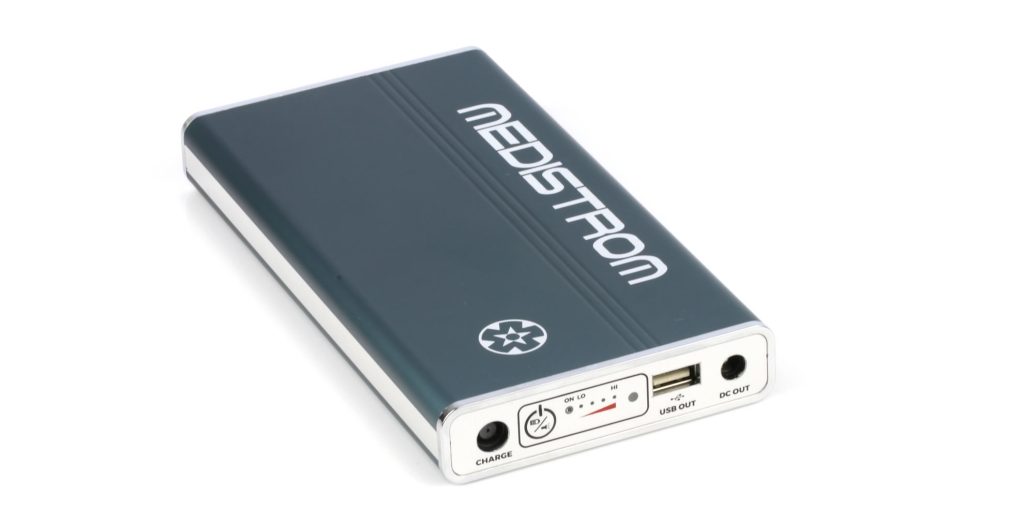
If you sleep with a ResMed and the outages where you live usually end by morning, the Medistrom Pilot-24 Lite is the simplest fix. It’s a flat 95 Wh battery that plugs straight into the machine’s DC input, so very little power is wasted.
It ships with cables for the AirSense 10 and AirMini. AirSense 11 owners need Medistrom’s AirSense 11 cable kit, which adds the output cable and a cord for charging from the AirSense 11 power supply. It’s 24V only, so DreamStation owners need Medistrom’s Pilot-12 Lite instead.
Key specs
- Capacity: 95 Wh lithium-ion (LG cells)
- Output: 24V DC, 3.75 A, plus one USB port
- Cables included: ResMed AirSense 10 and AirMini (AirSense 11 kit sold separately)
- Recharge: 2 to 3 hours with an AirSense 10 power supply
- Backup mode: switches over automatically when wall power drops
- Weight: 1.3 lb, with a built-in LED light
Pros and cons
Pros
- Lightest and smallest here, easy to keep on a nightstand
- DC connection wastes very little power
- Doubles as a travel battery you can use on a plane
Cons
- One night at most on a full-size machine
- 24V machines only
- AirSense 11 owners have to buy the cable kit too
Performance analysis
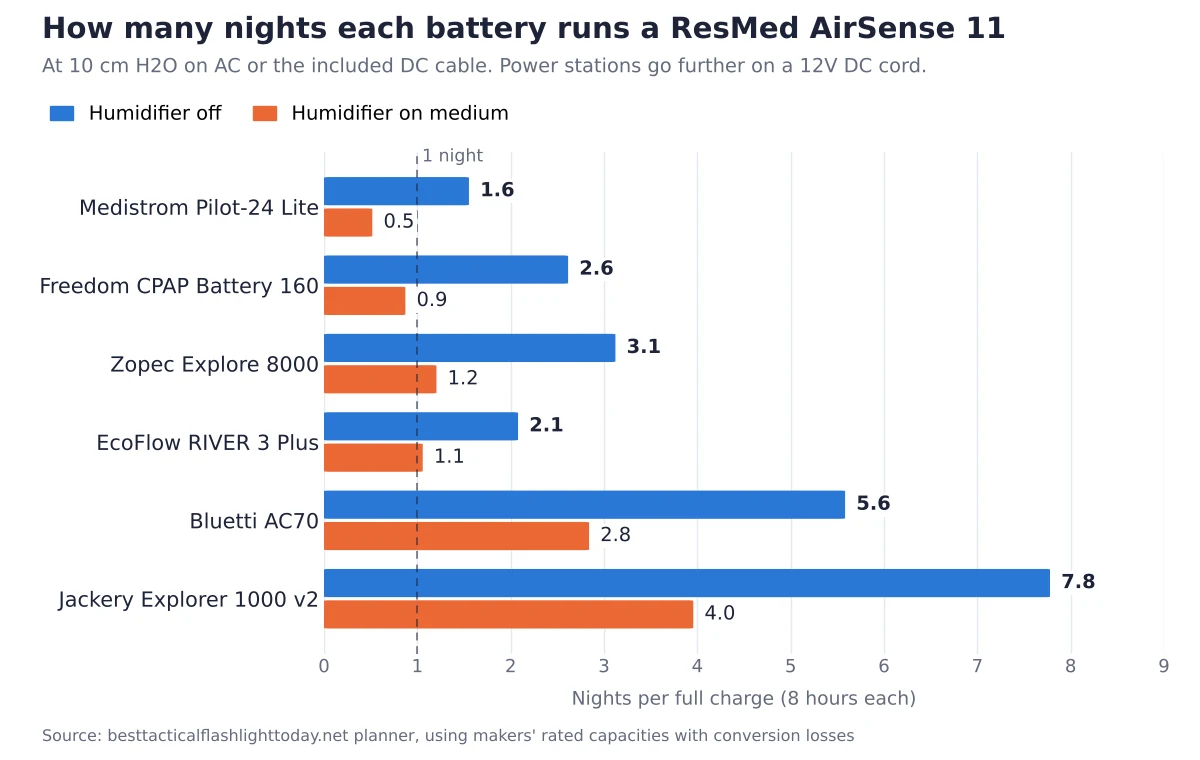
Medistrom rates it at 8 to 16 hours with the humidifier and heated tube off, depending on the machine and pressure, and 2 to 4 hours with them on. In my planner, an AirSense 11 at 10 cm H2O with the humidifier off gets about 12 hours, which covers one full night with a little to spare.
For a weekend outage, you’d need to recharge it in the car during the day, or step up to the Freedom below.
2. Freedom CPAP Battery 160: Best for Any Brand
Why I chose it and who it’s for
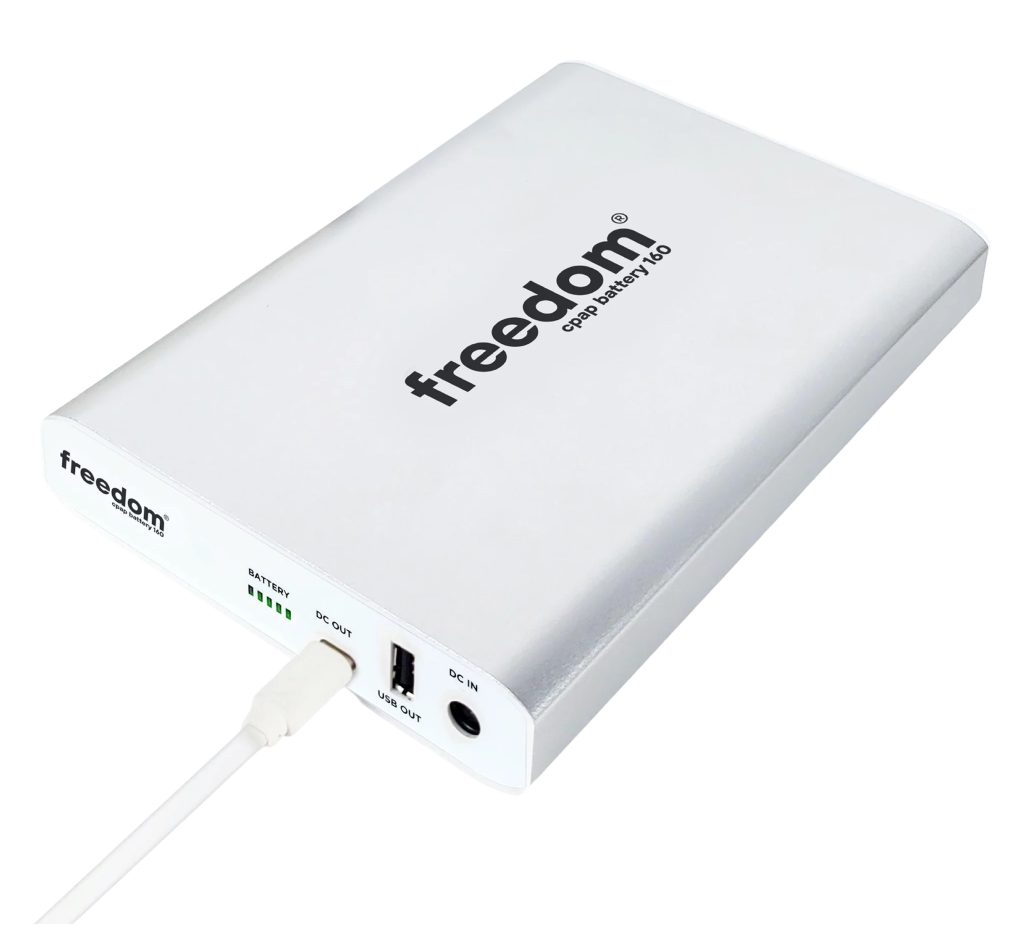
The Freedom CPAP Battery 160 from cpaphero is the one I’d buy if there’s more than one CPAP in the house or you might switch brands later. The box has a 24V cable for the AirSense 10, AirSense 11, AirMini and Luna G3 and a 12V cable for the DreamStation 1, DreamStation 2 and System One 60, plus its own wall charger.
At 160 Wh it holds about two thirds more than the Pilot-24 Lite and is still allowed in a carry-on bag.
Key specs
- Capacity: 160 Wh lithium-ion
- Output: 12V to 24V DC, 8 A max, set by the cable you use
- Cables included: 24V ResMed cable and 12V DreamStation cable, plus AC charger
- Maker runtime at 10 cm H2O, no heat: AirSense 11 30 h, AirSense 10 24 h, DreamStation 2 40 h
- Backup mode: bypasses the cells on wall power and takes over when it drops
- Weight: 2.13 lb
Pros and cons
Pros
- Works with ResMed and DreamStation machines out of the box
- Maker publishes runtimes for each machine
- Two can be linked with a bridge cable for longer outages
Cons
- Heated humidifier and tube can cut runtime by up to two thirds
- Loses about 30% of its capacity between 23 and 32°F
- Has to be unplugged from the machine to shut off fully
Performance analysis
cpaphero rates 30 hours on an AirSense 11 and 40 on a DreamStation 2, both at 10 cm H2O without heat. My planner is more cautious and puts the AirSense 11 at about 21 hours, or two and a half nights.
Watch the cold. The manual says capacity falls by about 30% below 32°F, so keep it in the warmest room during a winter outage.
3. Zopec Explore 8000: Best With a Humidifier
Why I chose it and who it’s for
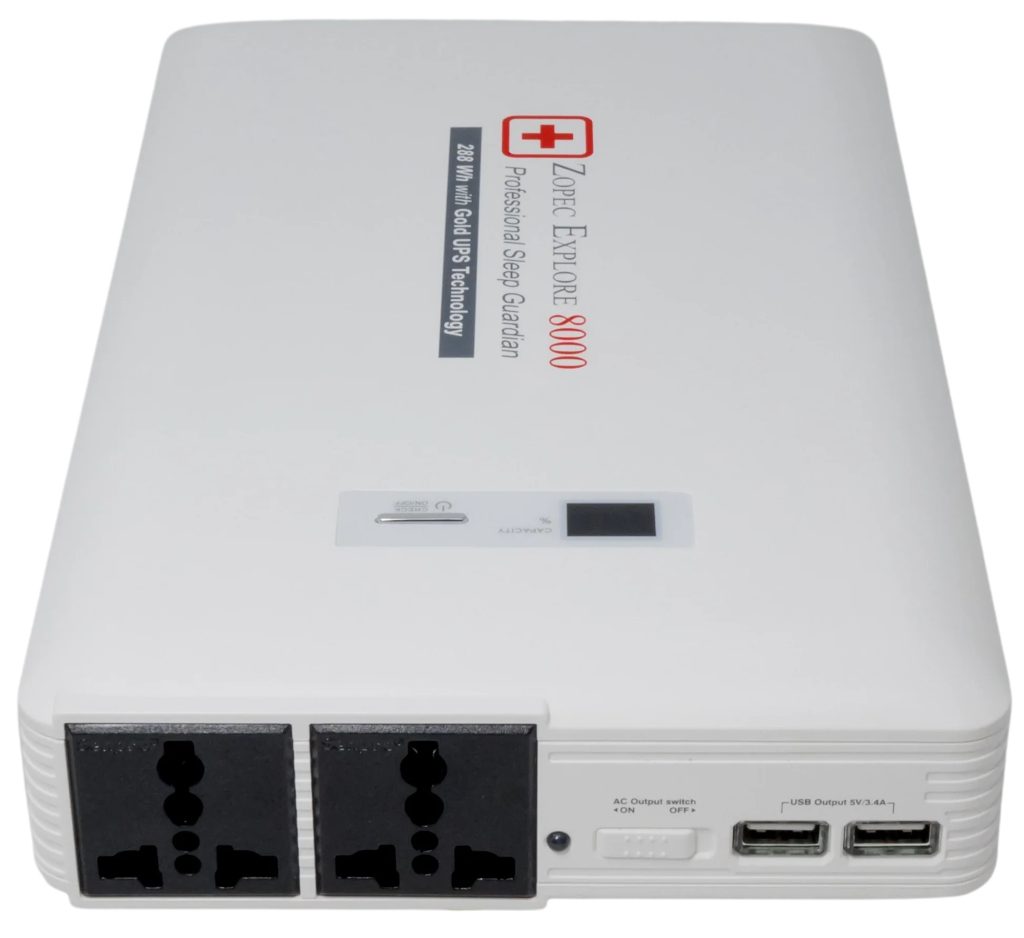
The Zopec Explore 8000 works differently from the two above. It has two real 110V outlets, so you plug in your machine’s normal power cord and plug the battery into the wall. When the power drops, it carries on without a gap. It works with any brand, including BiPAP machines.
Zopec rates it Gold for UPS protection, which in their terms means it keeps going with the heated humidifier on. It isn’t built for a heated tube, though. Zopec makes the larger Explore Oxygen for that.
Key specs
- Capacity: 288 Wh lithium-ion (Panasonic cells)
- Output: two 110V pure sine AC outlets, 250 W, plus USB-A and USB-C
- Backup: automatic switchover, rated for humidifier use, not a heated tube
- Maker runtime: about 24 to 32 hours CPAP only, 8 to 12 hours with the humidifier
- Recharge: under 8 hours, wall and car chargers included
- Weight: 4 lb, no cooling fan
Pros and cons
Pros
- Works with any brand through its own power cord
- Keeps the humidifier running through an outage
- Silent, with no fan to hear at night
Cons
- Not rated for a heated tube
- Slow to recharge
- Too big to take on a plane
Performance analysis
With the humidifier off, the planner puts an AirSense 11 at about 25 hours on it, a bit over three nights, which sits under Zopec’s own 24 to 32 hour range. Turn the humidifier to medium and that drops to about 10 hours, or one comfortable night.
It takes up to 8 hours to recharge, so plan on the car or a generator for long outages.
4. EcoFlow RIVER 3 Plus: Best Bedside Power Station
Why I chose it and who it’s for
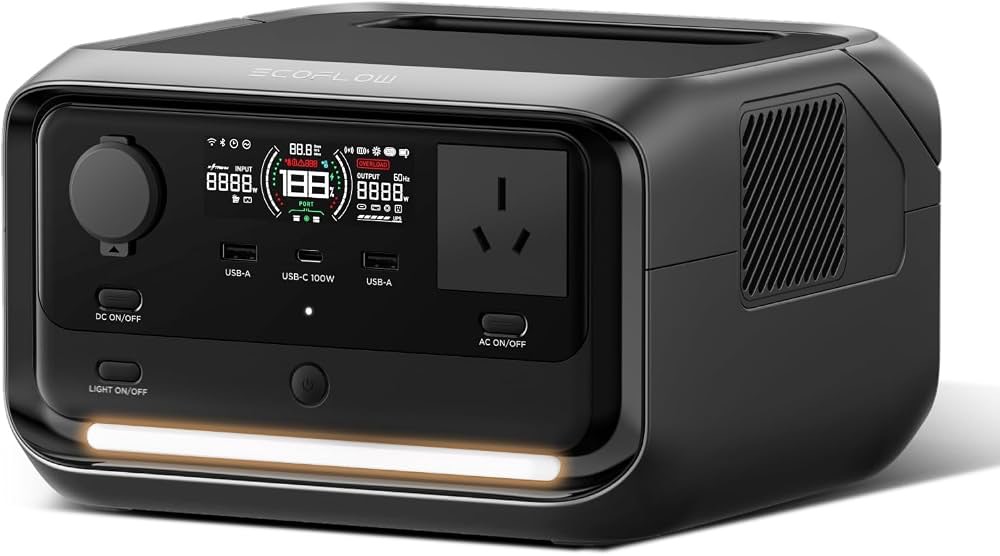
The EcoFlow RIVER 3 Plus is a small power station that works as a UPS for the bedroom. EcoFlow rates its switchover at under 10 ms, and StorageReview’s test met that, so a CPAP plugged into it keeps running straight through the moment the power cuts. It runs under 30 dB, so it can sit by the bed.
It also has three AC outlets and USB-C, so the router and phones can share it.
Key specs
- Capacity: 286 Wh LiFePO4, 3,000 cycles to 80%
- Output: 600 W AC (1,200 W X-Boost), 3 AC outlets, USB-C, 12.6V 10 A car port
- Switchover: under 10 ms
- Recharge: about 1 hour from AC, up to 220 W solar
- Noise: under 30 dB
- Weight: 10.4 lb
Pros and cons
Pros
- Fastest switchover here
- Quiet enough for the bedroom
- Runs the router and phones as well
Cons
- Its inverter uses some power just staying on
- Heavier than the CPAP batteries
- A DC cord for your machine costs extra
Performance analysis
On AC with the humidifier off, the planner gives an AirSense 11 about two nights. Run the machine from the 12V car port with a DC cord made for your machine instead, and that rises to about three and a half, because the inverter stays off.
For more on how it does with a fridge and other loads, see my guide to the best portable power station for home backup.
5. Bluetti AC70: Best Value for Multi-Day Outages
Why I chose it and who it’s for
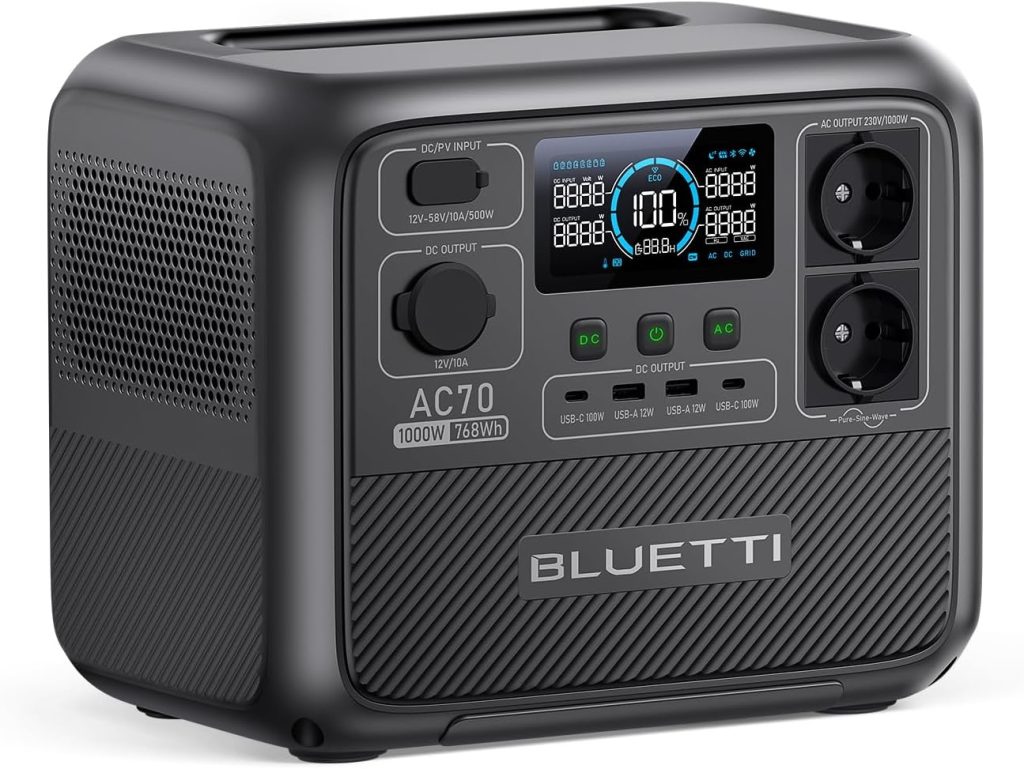
The Bluetti AC70 is where you move from one or two nights to most of a week. It holds 768 Wh of LiFePO4 and switches over in 20 ms, and the Bluetti app shows the live watt draw. If your CPAP is pulling more than you expected, you’ll see it before the battery runs out at 4 a.m.
It also gets 80% back in 45 minutes, which helps when you run a generator for a short while.
Key specs
- Capacity: 768 Wh LiFePO4, 3,000+ cycles to 80%
- Output: 1,000 W AC (2,000 W power lifting), 2 AC outlets, 12V 10 A car outlet, 2 x 100 W USB-C
- Switchover: 20 ms
- Recharge: 0 to 80% in 45 minutes (950 W turbo), up to 500 W solar
- Weight: 22.5 lb
- Warranty: 5 years
Pros and cons
Pros
- Close to three nights with the humidifier on
- App shows exactly what the CPAP is drawing
- Very fast recharge from a generator or the grid
Cons
- 20 ms switchover, so test your machine with it first
- Only two AC outlets
- At 22.5 lb, it’s better on the floor than the nightstand
Performance analysis
The planner gives an AirSense 11 about five and a half nights on AC with the humidifier off, and close to three with it on medium. Switch to a 12V DC cord and the humidifier-off figure climbs toward ten nights.
Most CPAP machines ride through a 20 ms gap without noticing, but some reset. Plug yours in, pull the AC70’s wall cord while the machine runs and watch what happens before you trust it overnight.
6. Jackery Explorer 1000 v2: Best for Long Outages
Why I chose it and who it’s for
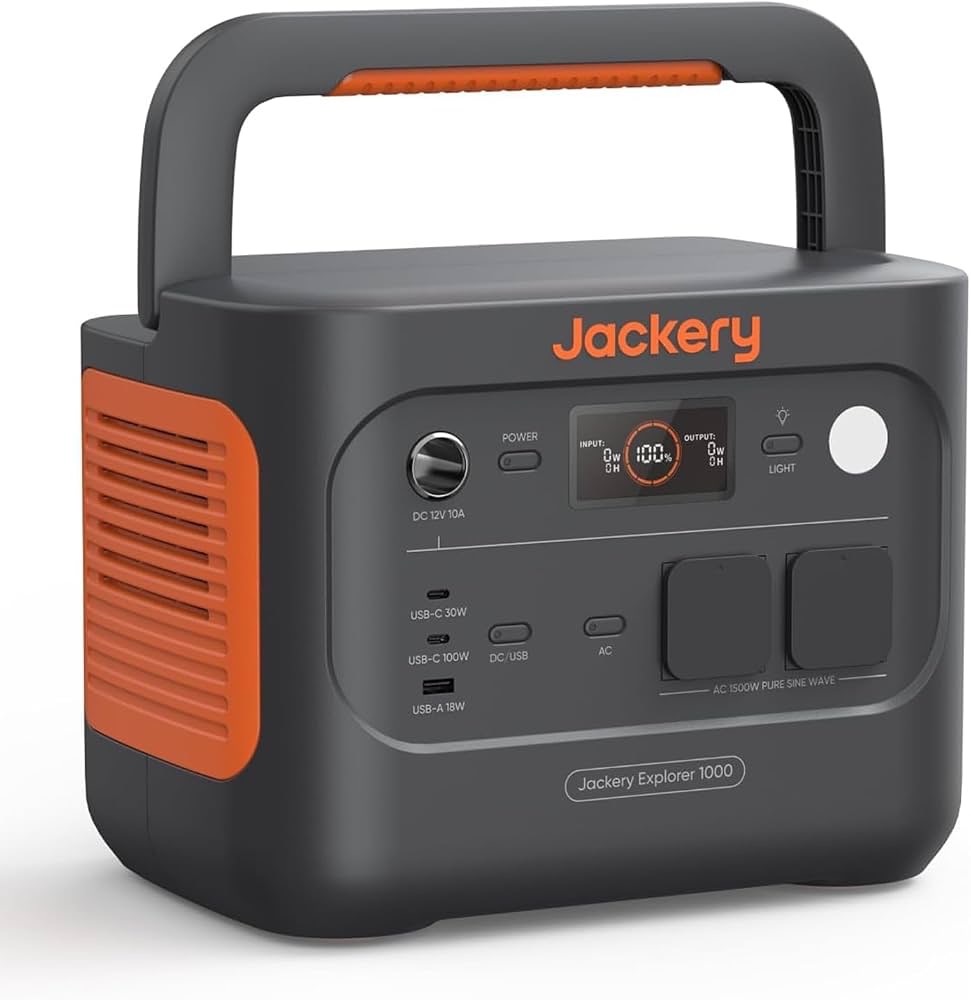
If your outages run for days, the Jackery Explorer 1000 v2 gives you about a week of CPAP nights on one charge with the humidifier off. It holds 1,070 Wh of LiFePO4, switches over in under 20 ms and still weighs only 23.8 lb.
Its emergency charge mode refills it in about an hour, so a short run of a dual fuel inverter generator each morning brings it back to full.
Key specs
- Capacity: 1,070 Wh LiFePO4, 4,000 cycles to 70%+
- Output: 1,500 W AC (3,000 W surge), 3 AC outlets, 12V 10 A car port
- Switchover: under 20 ms
- Recharge: about 1 hour in emergency mode, 1.58 hours standard, up to 400 W solar
- Noise: under 30 dB
- Weight: 23.8 lb
Pros and cons
Pros
- About a week of nights with the humidifier off
- Refills in an hour from a generator
- Enough output to share with a fridge or freezer
Cons
- More than you need if outages end by morning
- Heaviest pick here
- Uses some power just keeping its inverter on
Performance analysis
The planner puts an AirSense 11 at nearly eight nights on AC with the humidifier off and about four with it on medium. On a 12V DC cord, the humidifier-off figure goes past thirteen nights.
How Many Nights? CPAP Battery Planner
Pick your machine, pressure and humidifier setting, and how long an outage you want to cover. The planner works out how much power your setup uses in a night, then shows how many nights each of the six would give you and the smallest one that covers your outage.
Estimates use the makers’ rated capacities with allowances for conversion losses and mask leaks, so they come in under most makers’ own runtime claims. Test your setup at home before you rely on it.
How to Choose a CPAP Battery Backup
Check your machine’s voltage and plug first
ResMed machines run on 24V. The AirSense 11, for example, ships with a 24V, 65 W power supply, according to ResMed’s AirSense 11 user guide. Philips DreamStation machines run on 12V. A DC battery has to match the voltage and the plug, which is why the Pilot-24 Lite is ResMed only and the Freedom ships with two cables. A battery or station with an AC outlet avoids the question, since your machine’s own power cord plugs into it.
Size it in nights, not watt hours
Watt hours mean little until you know what your machine uses. Without the humidifier, a modern CPAP at 10 cm H2O uses so little power that a 95 Wh battery covers a night. With the heated humidifier and tube on, the same machine can use four or five times as much.
If outages where you live usually end by morning, one night is enough. If you get ice storms or hurricanes, plan for three to seven. My page on power outages by state shows how long they tend to last in your state.
Turn the heat down on battery
The blower uses very little power. Heating the water and the tube uses most of it. Turning the humidifier and heated tube off can double or triple your nights, and many people sleep fine without them for a night or two. If you get a dry mouth or nosebleeds without humidity, buy enough battery to keep it on.
Use a DC cord when you can
A DC cable feeds the machine directly. An AC outlet means the battery makes 120V and your machine’s power brick turns it back, and a power station’s inverter uses a few watts just staying on. That’s why a station run from its 12V car port, with a DC cord made for your machine, lasts much longer than the same station on AC.
Test the switchover before storm season
All six picks can sit between the wall and your machine and take over when the power drops. Set yours up the way you’ll use it, pull the wall plug while the machine runs and make sure therapy carries on. For outages longer than your battery, plan how you’ll refill it, from the car or a generator run outside. My power outage emergency kit guide covers the rest of the kit.
Tell your utility and keep a plan B
The FDA’s advice on medical devices during disasters is to tell your electric company and fire department that you use a device that needs power, and to check your machine’s settings after the power returns, since some reset. If you use a ventilator or your device keeps you alive, talk to your doctor about a plan that goes beyond a battery.
Frequently Asked Questions
How long will a battery run a CPAP machine?
With the humidifier and heated tube off, a 95 Wh CPAP battery runs most full-size machines for one night, and a 1,000 Wh power station runs them for about a week. With heat on, expect half that or less. The planner above works it out for your machine.
Can I run my CPAP on a portable power station?
Yes. Plug your machine’s normal power cord into the station’s AC outlet, or use a 12V DC cord made for your machine in the car port for longer runtime. Test it before an outage.
Can I use my CPAP without the humidifier during a power outage?
Most machines run fine with the humidifier off or the water tub empty, and turning it off is the biggest runtime gain on battery. If you get a dry mouth or nose without it, size the battery to keep humidity on, and ask your doctor if you’re unsure.
Does insurance cover a CPAP battery backup?
Usually not. Medicare and most insurance plans don’t pay for CPAP batteries. Many CPAP batteries are FSA and HSA eligible, though, so you can often pay with pre-tax money.
The Bottom Line
For a ResMed machine and outages that end by morning, the Medistrom Pilot-24 Lite is all you need. If the house has a DreamStation or more than one machine, get the Freedom CPAP Battery 160.
If you can’t sleep without the humidifier, the Zopec Explore 8000 keeps it running. The EcoFlow RIVER 3 Plus suits a bedside setup that also keeps the Wi-Fi on. For longer outages, the Bluetti AC70 covers most of a week, and the Jackery Explorer 1000 v2 covers a week or more.
Whatever you pick, test it once before storm season, and keep a good battery lantern and a rechargeable headlamp by the bed.
