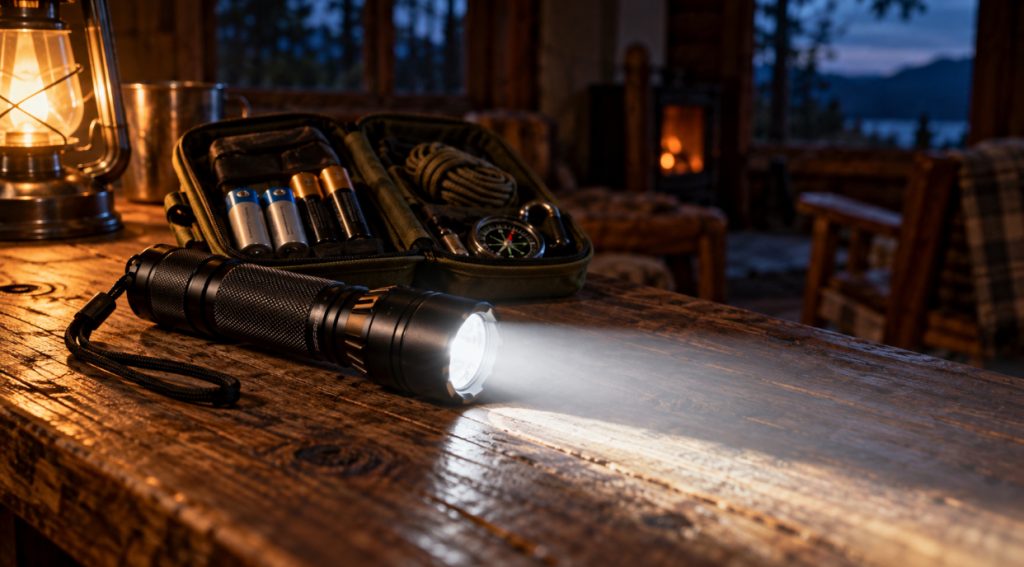
A survival flashlight gets judged on the day its battery dies. Every light on this list runs for hours on its main cell. What separates them is what happens next, when the grid is down and the power bank went flat two days ago.
That’s the test I built this guide around. Five of these six lights can switch to a second battery type, usually CR123A or AA, and keep working. The sixth earns its place with a firefly mode that stretches one charge across weeks.
If you already keep a drawer of batteries, use the battery matcher further down. Tick what you stock and it shows which of these lights will run on it. For lights built around the house, my emergency flashlight guide covers blackout picks, and our power outages by state data shows how long your area tends to stay dark.
James’s Top Picks
Quick Comparison
How I Picked These Lights
Backup power came first. A light that runs on one proprietary cell is fine for a walk to the mailbox and a liability on day four of an ice storm. Five of these lights accept a second, common battery type, and I checked each maker’s manual for what the light actually does on it, because most lose their top mode or some runtime.
After that I looked at the boring modes. Turbo numbers sell flashlights, but survival use happens between 5 and 100 lumens, so I weighed runtime at those levels more heavily than peak output. Every pick is rated IPX7 or better and comes from a brand that publishes ANSI FL1 figures and backs its lights in the US. The no-name zoom lights that dominate Amazon’s survival listings didn’t make it, since few of them publish honest runtime figures.
1. Fenix PD35R: Best Overall
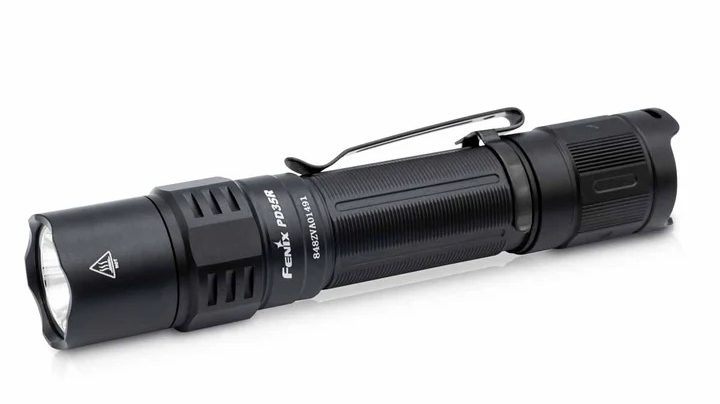
Why I chose it: The PD35R is the light I’d hand someone building their first serious kit. It charges over USB-C like any modern light, and Fenix rates it to run on two disposable CR123As when charging isn’t an option. That one feature covers the failure that strands most rechargeable lights. It’s best for anyone who wants a single light for the go bag and the nightstand.
Key specs
- Output: 1,700 / 1,000 / 350 / 50 / 10 lumens, plus strobe
- Runtime: 350 lumens for 4 h 45 min, 50 lumens for 38 hours, 10 lumens for 100 hours
- Beam: 31,200 candela, 353 meters
- Power: Fenix ARB-L18-3400 18650 (included) or 2x CR123A
- Charging: USB-C port in the body, about 3 hours
- Build: IP68 to 2 meters, 140 g with battery, 5.35 in long
Pros
- Real backup power from a battery sold almost everywhere
- Two tail switches, one for on and off and one for brightness and instant strobe
- Remembers your last mode
Cons
- On CR123As, Turbo is locked out and strobe drops to 1,000 lumens
- Fenix doesn’t publish runtimes for CR123A use
- The battery level indicator only reads Fenix cells
Performance analysis: Low at 50 lumens is the survival mode on this light. It’s enough to walk a trail or pitch a tarp, and Fenix rates it at 38 hours on the included cell. Eco at 10 lumens runs 100 hours, which is plenty for reading a map or finding your boots in a tent. On CR123As you keep every mode except Turbo, so the light behaves the way you learned it. Keep a pair of CR123As in the same pouch as the light, and top up the 18650 every four months, which is what Fenix recommends for stored lights. My best 18650 flashlight guide covers more single-cell options.
2. Streamlight ProTac HL-X: Best Tactical Survival Light
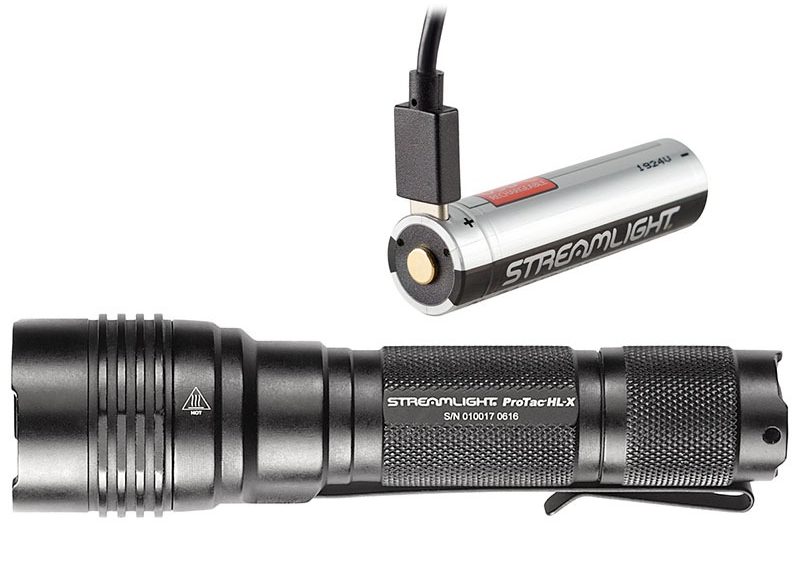
Why I chose it: Most tactical lights assume you’ll always have a charged battery. The HL-X doesn’t. Streamlight sells it as a rechargeable kit with its SL-B26 pack or as a CR123A kit, and either version runs on both. It also publishes full numbers for each power source, which is rarer than it should be: 1,300 lumens on the pack and 1,000 on CR123As. It’s best for anyone who wants one light that can also handle self-defense or a search of the property.
Key specs
- Output on the SL-B26 pack: 1,300 / 420 / 70 lumens, plus strobe
- Output on CR123As: 1,000 / 400 / 65 lumens
- Runtime: 70 lumens for 25 hours on the pack, 65 lumens for 20 hours on CR123As
- Beam: 35,000 candela, 374 meters on the pack
- Power: Streamlight SL-B26 rechargeable pack or 2x CR123A
- Build: IP68 to 2 meters, 2 meter impact tested, 162 g with CR123As
Pros
- Full output and runtime published for both batteries
- TEN-TAP lets you pick High only, High/Strobe/Low or Low/Medium/High
- Sealed to IP68 with every opening O-ringed
Cons
- The rechargeable side needs Streamlight’s SL-B26 pack, not any 18650
- No moon or eco mode below 65 lumens
- Heaviest handheld here at 176 g with the pack
Performance analysis: The drop from pack to CR123A is small. You lose 300 lumens at the top and about 5 hours on Low, and everything else stays the same. For a survival kit, set TEN-TAP to the Low/Medium/High program so the first click gives you 70 lumens instead of a blast that ruins your night vision. My best self defense flashlight guide goes deeper on that use.
3. Streamlight ProTac 2L-X: Best for Long-Term Storage
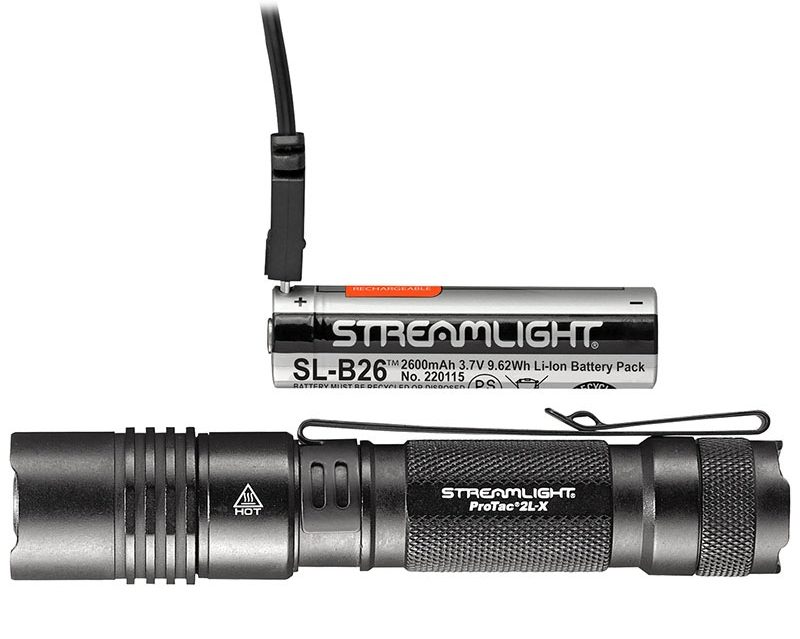
Why I chose it: The 2L-X is for the kit you pack and forget, like the go bag in the hall closet or the box behind the truck seat. Loaded with CR123A lithium cells, it needs nothing from you until the day you use it. Streamlight rates its 40 lumen Low at 30 hours on either battery type, so there’s no penalty for running primaries. It’s the best pick for a kit you open once a year.
Key specs
- Output: 500 / 40 lumens, plus strobe
- Runtime: 500 lumens for 2.75 hours on CR123As (3.25 on the SL-B26 pack), 40 lumens for 30 hours on either
- Beam: 6,800 candela, 165 meters
- Power: 2x CR123A or Streamlight SL-B26 pack, sold as either kit
- Build: IPX7 to 1 meter, 2 meter impact tested, 111 g with CR123As, 5.14 in long
Pros
- Same 30 hour Low on either battery
- Lightest of the CR123A picks
- TEN-TAP has a Low/High program that starts dim
Cons
- 500 lumens is modest next to the HL-X
- IPX7 rather than IP68
- Only two brightness levels
Performance analysis: Lithium primaries are the reason this light works in a forgotten kit. Energizer’s CR123A datasheet rates its cell for operation from -40°F to 140°F, which covers a January truck cab and a July attic. A lithium-ion pack wants topping up every few months; a CR123A doesn’t. Buy the CR123A version for a kit you rarely check, and add an SL-B26 later if you start carrying it daily. If CR123As are new to you, my CR123A rechargeable guide explains the voltage difference between primaries and rechargeables.
4. Nitecore MT2A Pro: Best AA Survival Light
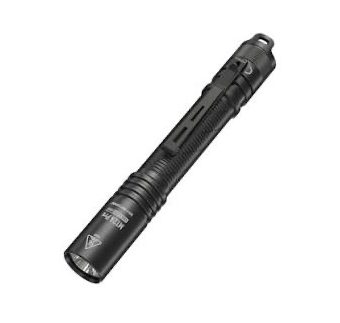
Why I chose it: AA is the battery you can find anywhere, in a gas station or the back of a TV remote. The MT2A Pro runs on its rechargeable pack for full output and on any two AAs once the pack is flat. At 40 grams it’s the lightest light here, so there’s no excuse to leave it out of a bag. It’s best for bug-out bags and anyone counting ounces.
Key specs
- Output on the pack: 1,000 / 300 / 50 lumens
- Output on 2x AA: 500 / 60 lumens
- Runtime: 50 lumens for 20 hours on the pack, 60 lumens for 11 hours on AAs
- Beam: 16,500 candela, 255 meters
- Power: Nitecore NL1416R pack with its own USB-C port (included) or 2x AA
- Build: IP68, 1 meter impact rated, 40 g, 5.62 in long
Pros
- Runs on the most common battery in the world
- Light enough to clip inside a pocket and forget
- Tail switch is easy to find with gloves on
Cons
- Only two modes on AAs
- No firefly or moon mode
- You charge the pack, not the light, so keep the cable with it
Performance analysis: On AAs the 60 lumen Low is the setting to live in, and Nitecore rates it at 11 hours per pair. A four-pack of lithium AAs is close to two full nights of steady light, and lithium cells hold up far better than alkalines in a cold pack. My best AA flashlight guide covers bigger AA lights if you want more runtime.
5. Fenix HM61R V3.0: Best Hands-Free
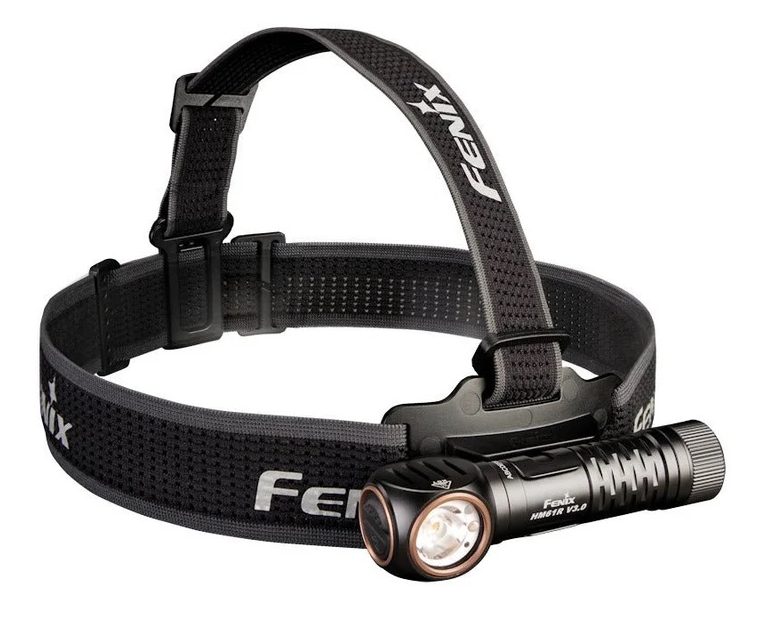
Why I chose it: Half of survival work needs both hands, from splitting kindling to changing a tire in the rain. The HM61R V3.0 is a headlamp that unclips into a right-angle flashlight with a magnetic tail, so it can stick to a car hood or hang off your chest strap. Fenix lists CR123A and 16340 cells as usable backups. It’s best for camp chores and vehicle repairs.
Key specs
- Spotlight: 1,800 / 600 / 150 / 30 lumens
- Floodlight: 200 / 30 / 5 lumens, 90 CRI
- Red light: 70 / 15 / 3 lumens, plus red flash
- Runtime: 30 lumen flood for 57 hours, 5 lumen flood for 300 hours, 3 lumen red for 222 hours
- Power: Fenix 18650 (included), 2x CR123A or a 16340
- Build: IP68, 2 meter impact rated, USB-C charging in about 2.5 hours, 167.6 g with headband
Pros
- Spot, flood and red light in one head
- Magnetic base turns it into a work light anywhere there’s steel
- Plain USB-C charging, replacing the V2.0’s proprietary magnetic cable
Cons
- Fenix says CR123As give fewer levels and shorter runtime, but doesn’t publish the figures
- The spotlight dims itself near close objects until you switch that sensor off
- Heavier than a basic camping headlamp
Performance analysis: The floodlight is why this pick works. Its 30 lumen setting lights a camp kitchen evenly for 57 hours, and the high CRI beam makes it easier to tell a red wire from a brown one. The 3 lumen red runs 222 hours and lets you check on sleeping kids without waking them. If the spotlight keeps dimming during close work, hold the mode switch for 6 seconds with the light off to turn the proximity sensor off.
6. ThruNite TN12 V6: Best Value
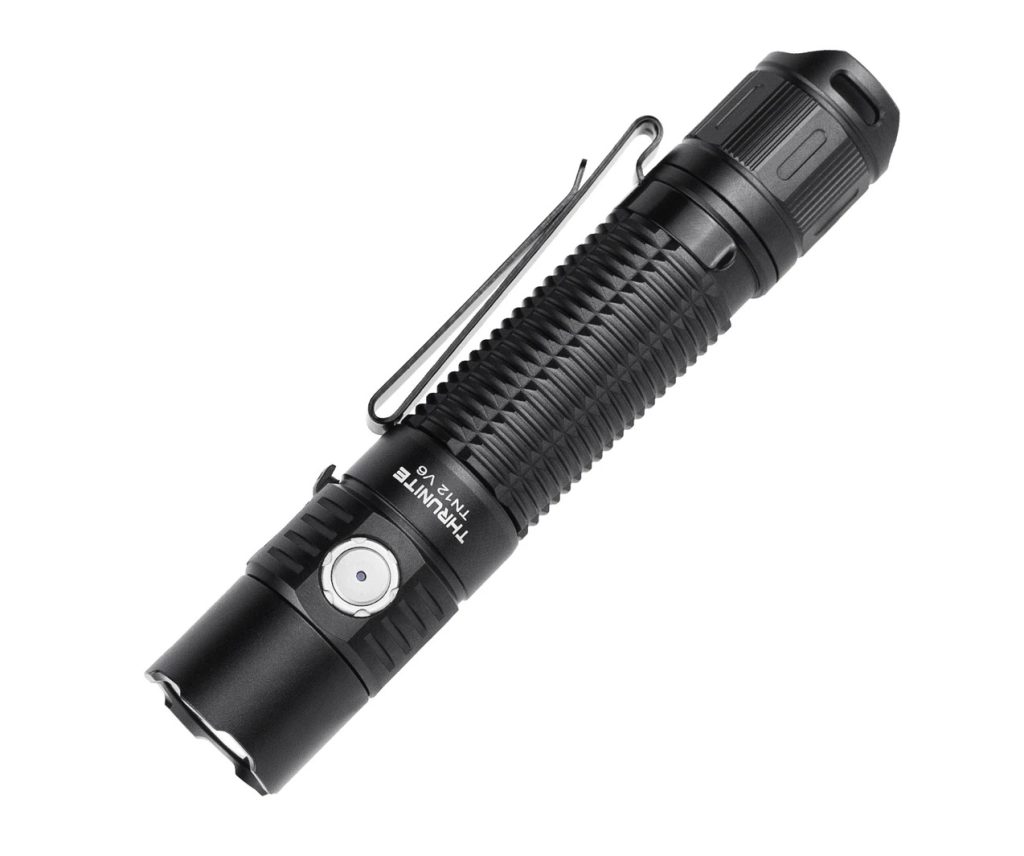
Why I chose it: The TN12 V6 is the one pick without a backup battery type. ThruNite lists it for 18650 only, and I’d rather say that up front. What it has instead is a 0.5 lumen firefly mode rated for 41 days on one charge, enough to keep a marker light glowing in a shelter for weeks. It’s best as a second light, or as a budget first light paired with a spare 18650.
Key specs
- Output: 1,950 lumens for 60 seconds then 680, plus 600 / 125 / 25 / 0.5 lumens
- Runtime: 125 lumens for 13.5 hours, 25 lumens for 45 hours, 0.5 lumens for 41 days
- Beam: 16,800 candela, 259 meters
- Power: ThruNite 3,400 mAh 18650 (included)
- Charging: rubber-sealed USB-C port in the head
- Build: IPX8, 1.5 meter impact rated, 6061-T6 aluminum
Pros
- The longest low mode on this list
- Tail switch for on and off, side switch for modes
- Remembers your last mode
Cons
- No second battery type
- Turbo holds full output for only a minute
- The side switch does nothing until the tail switch turns the light on
Performance analysis: Treat the 25 lumen Low as your working mode. A spare 18650 doubles everything, and ThruNite sells one with USB-C built in, so it charges from the same cable. If 18650 cells are new to you, my 18650 vs 21700 guide covers safe handling and storage.
Which Batteries Do You Already Keep?
Before you buy, open your junk drawer. A survival light that runs on batteries you already stock beats a brighter one that needs a cell you’ll have to order. Tick the batteries you keep and the matcher below shows which of these lights run on them, how bright they get and how long they last.
AA batteries run the Nitecore MT2A Pro. CR123A cells run the Fenix PD35R, both Streamlights and the Fenix HM61R V3.0. A standard 18650 runs the PD35R, TN12 V6 and HM61R V3.0, while the Streamlights need Streamlight’s own SL-B26 pack.
How much runtime you give up on backup power
The chart shows hours of light at each pick’s walking-around setting, on its main battery and on its backup, where the maker publishes it. Brightness differs a little between lights, so the lumen level sits next to each name.
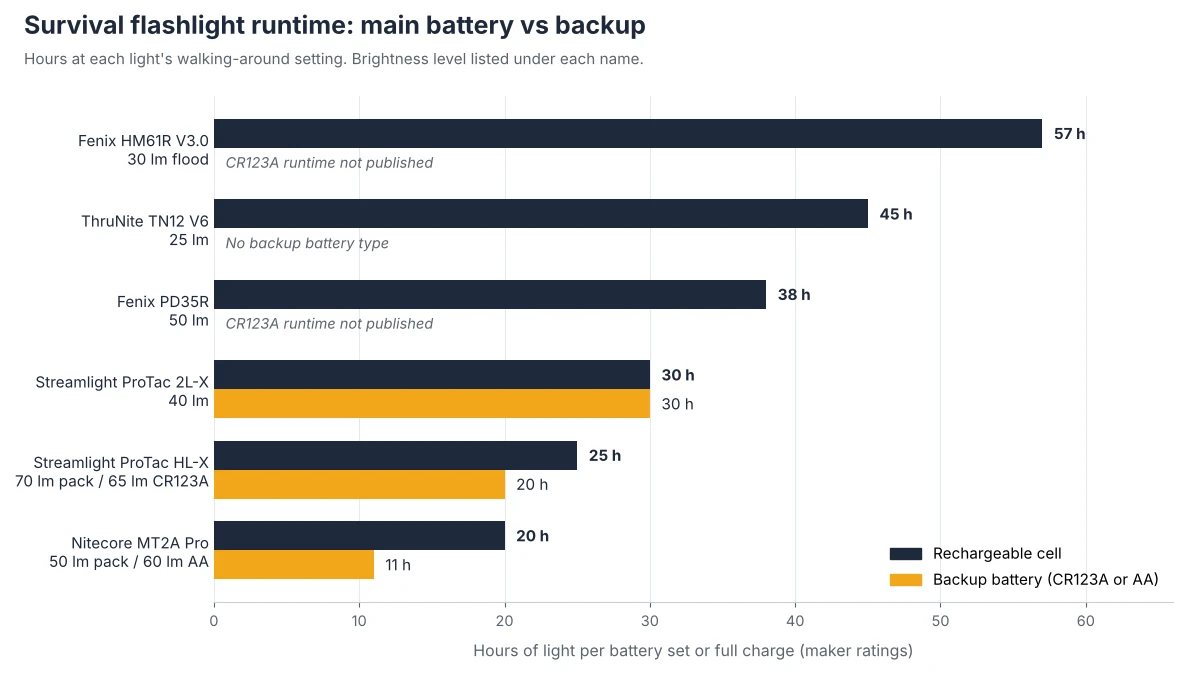
Where the figures exist, the penalty is smaller than most people expect. The ProTac 2L-X loses nothing on CR123As, the HL-X gives up 5 hours, and the MT2A Pro runs a little over half as long on AAs. Fenix says its lights run shorter on CR123As without publishing numbers, so keep at least two spare sets for the PD35R or the HM61R.
What to Look For in a Survival Flashlight
Backup power you can actually find
The government’s own basic emergency kit list puts extra batteries right next to the flashlight, and that pairing is the whole idea. AA cells are the easiest to replace, since they’re in every store and half the devices in your house. CR123As are harder to find in a hurry but store better than anything else. A light that takes a rechargeable cell plus one of those two gives you the convenience of USB-C and a fallback when the power bank dies. Be wary of lights that only run on their maker’s own pack, because one lost or dead pack takes the light out of service. If you’re building the home side of that kit, my power outage kit guide works out how many lights, batteries and gallons of water your household needs.
A low mode that stretches the battery
In a real emergency you’ll spend most of your time below 50 lumens. That’s enough to walk around camp or read a map, and it’s where runtime turns from hours into days. Check the low and eco ratings before the turbo number. Under the ANSI FL1 standard, a rated runtime runs until output falls to 10 percent of where it started, so treat the figure as the outer limit rather than a promise of full brightness.
Batteries that work in the cold
Lithium-ion cells lose usable capacity as they get cold, which is why a light in a frozen truck can die early. Lithium primaries like CR123A and lithium AA hold up far better. In winter, carry your working light in an inside pocket and keep the spares in your kit on lithium primaries.
Store and rotate your batteries
- Top up stored lithium-ion lights every few months; Fenix recommends every four
- Never leave alkalines in a stored light, since they can leak and ruin the contacts
- Lock the light out or loosen the tail cap a quarter turn so it can’t switch on in a pack
- Check the whole kit once a year, and replace any cell that’s swollen or dented
FAQ
Why do you need a flashlight in a survival kit?
Most emergencies that knock out power run past sunset, and a flashlight is the safest light you can carry. It lets you move around and signal for help without the fire risk of candles. Pack spare batteries with it, because a light with a dead cell is just weight.
What is the best battery for a survival flashlight?
A rechargeable 18650 or 21700 is the best everyday power, as long as the light also takes a battery you can store or buy. CR123A lithium cells store best and handle cold well. AA cells are the easiest to find after a disaster. The Fenix PD35R and Nitecore MT2A Pro cover one of each.
How many lumens does a survival flashlight need?
For most survival tasks, 30 to 70 lumens is plenty, and it’s where the long runtimes live. Around 300 to 500 lumens helps when you’re scanning a tree line or searching for someone. Anything above 1,000 lumens is a short burst, so judge a light by its low and medium modes.
Is a hand crank flashlight good for survival?
Only as a backup. Cranking gives a few minutes of dim light per effort, which is fine when nothing else works and tiring as a main light. A crank or solar weather radio with a built-in light is the more useful version, like the Midland ER310 in my emergency guide, and it belongs in the kit next to a real flashlight.
Bottom Line
If you buy one survival flashlight, make it the Fenix PD35R. It charges over USB-C and keeps working on two CR123As when you can’t charge it. If it may double as a defensive light, the Streamlight ProTac HL-X gives you 1,000 lumens even on primaries.
For a kit that sits untouched for years, load the ProTac 2L-X with CR123As. Put the 40 gram MT2A Pro in every bag, and add the HM61R V3.0 when you need both hands. On a tight budget, the ThruNite TN12 V6 plus a spare 18650 is a strong start. Whichever you choose, run the battery matcher and buy the spares before you need them.
