
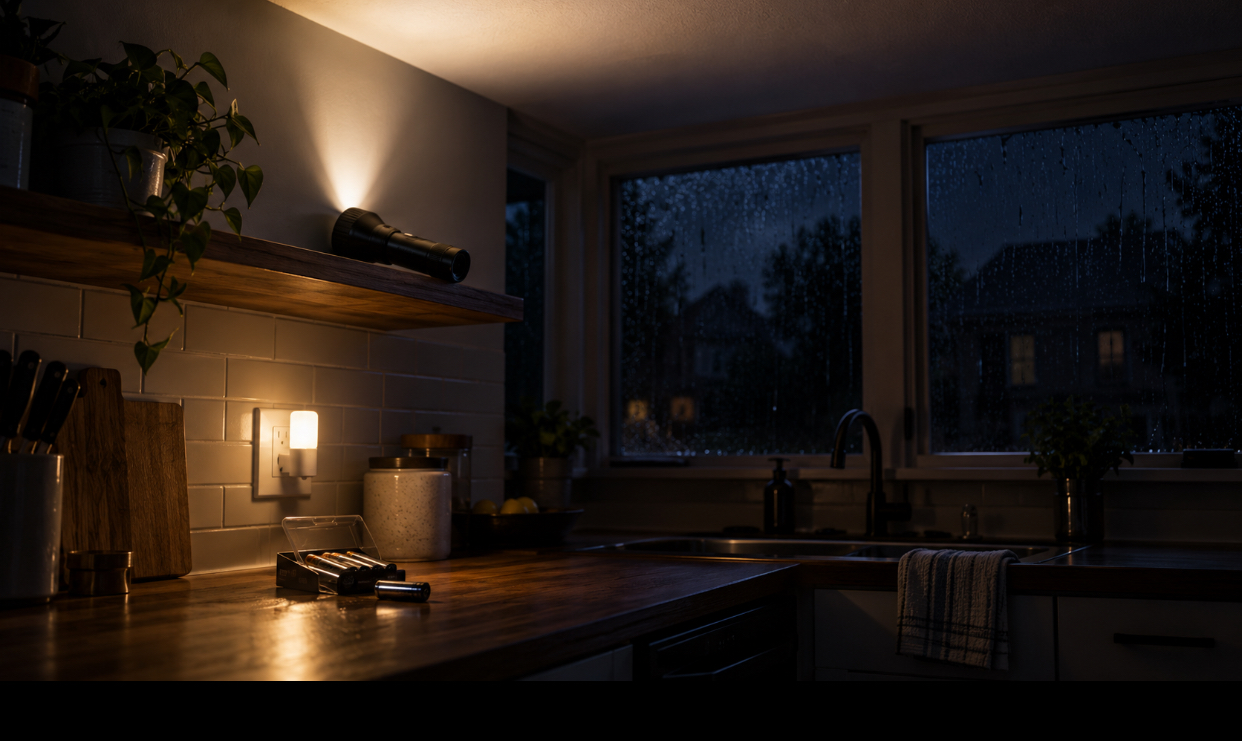
When the power goes out at night, the light that helps you most isn’t the brightest one in the house. It’s the one you can find in the dark that still has something left on the third night.
That’s the bar every pick on this list had to clear. An emergency flashlight spends most of its life in a drawer, so I weighed what it runs on and how well it stores as heavily as how bright it gets. Five of these seven lights take AA, AAA or CR123A batteries, or can fall back on them when their rechargeable cell is flat. The other two do jobs a normal flashlight can’t. One switches itself on the moment the power cuts, and one keeps working with no batteries at all.
Before you buy, check how long outages tend to run where you live. Our power outages by state data ranks every state by hours without power, and the planner further down turns your state’s number into a battery shopping list.
James’s Top Picks
Quick Comparison
How I Picked These Lights
I started with power. A light that only charges from the wall becomes a gamble on day two of an outage, so every handheld pick runs on AA, AAA or CR123A cells, or can fall back on them. The Energizer plug-in is the one exception, and it earns its place because it’s always charged when the outage starts.
Next came runtime at a level you’d actually use indoors. I looked at the 20 to 200 lumen modes rather than the turbo number on the box, and I only kept lights from brands that rate output to the ANSI FL1 standard and back it with a real warranty. The no-name multipacks promising 1,000 lumens on three AAAs didn’t make it.
1. ThruNite Archer 2A C: Best Overall
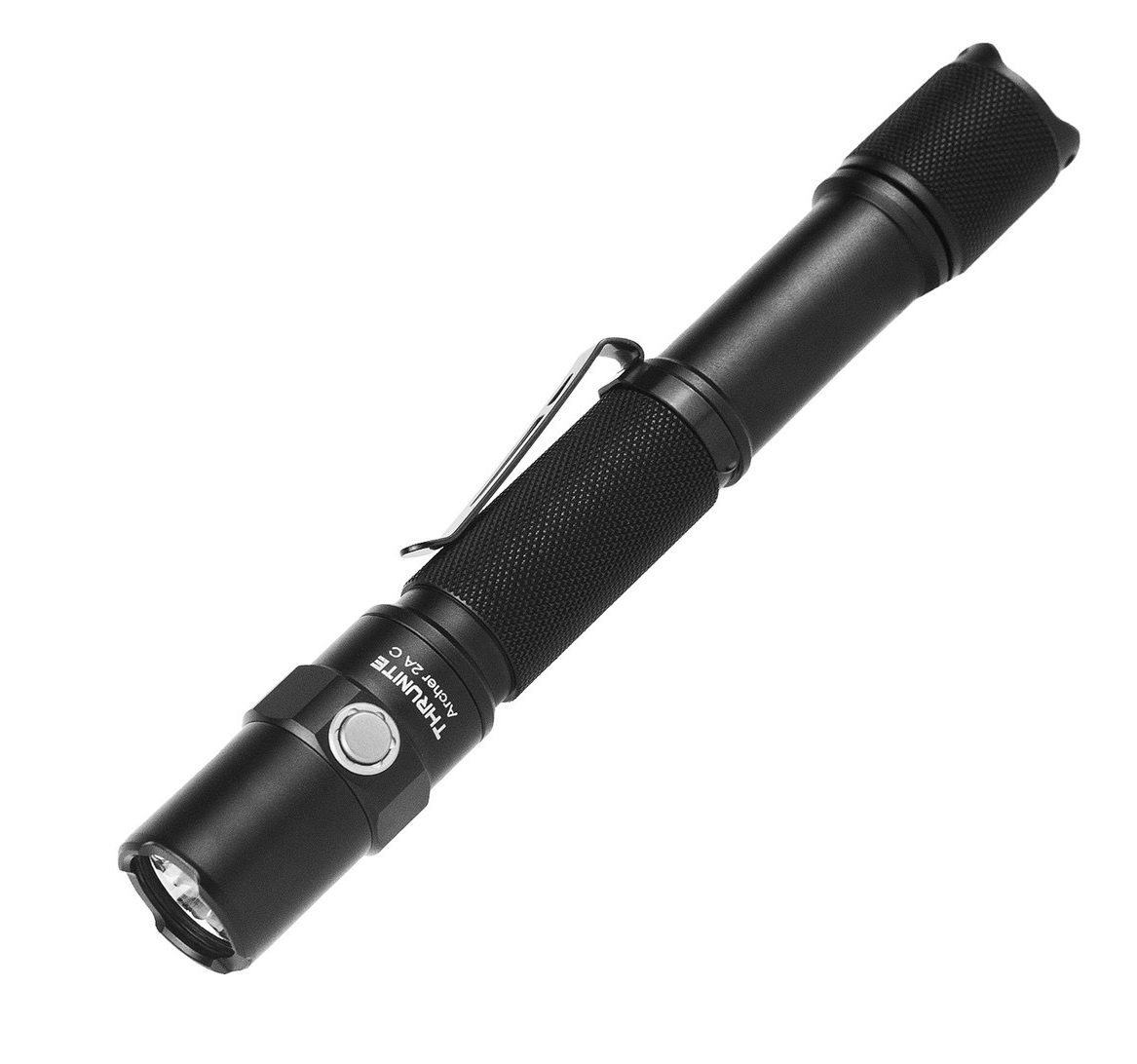
Why I chose it: The Archer 2A C fixes the one real problem with rechargeable emergency lights. Day to day it runs on a USB-C rechargeable pack, so you aren’t buying batteries for a light you use to take the dog out. When an outage drags on and the pack is flat, you unscrew the tail and drop in two AA batteries from the junk drawer. It’s best for most households, especially if you’ll use the light every day and want it charged when the power goes.
Key specs
- Output: 1,018 / 213 / 20 / 0.3 lumens on the included pack, 500 lumens max on AA
- Runtime on the pack: 213 lumens for 5.5 hours, 20 lumens for 37 hours, Firefly for 27 days
- Beam: 7,000 candela, 167 meters
- Power: ThruNite 1,600 mAh USB-C pack (included) or 2x AA
- Water rating: IPX8
- Switches: tail switch for on and off, side switch for brightness
Pros
- AA backup means a flat pack never leaves you in the dark
- Firefly mode is dim enough to leave on all night as a marker
- The pack charges itself over USB-C, so there’s no separate charger to keep track of
Cons
- The pack is an unusual long cell, so a standard 14500 won’t replace it
- Output tops out at 500 lumens on AA
Performance analysis: The 213 lumen medium is the mode you’ll live in during an outage. Aim it at a white ceiling and it lights a kitchen well enough to cook by, and it runs 5.5 hours per charge. Drop to the 20 lumen low for moving between rooms and you’re looking at 37 hours. If you’d rather skip the pack and just run AAs, the Archer 2A V3 below is the same idea for less money.
2. ThruNite Archer 2A V3: Best Under $50
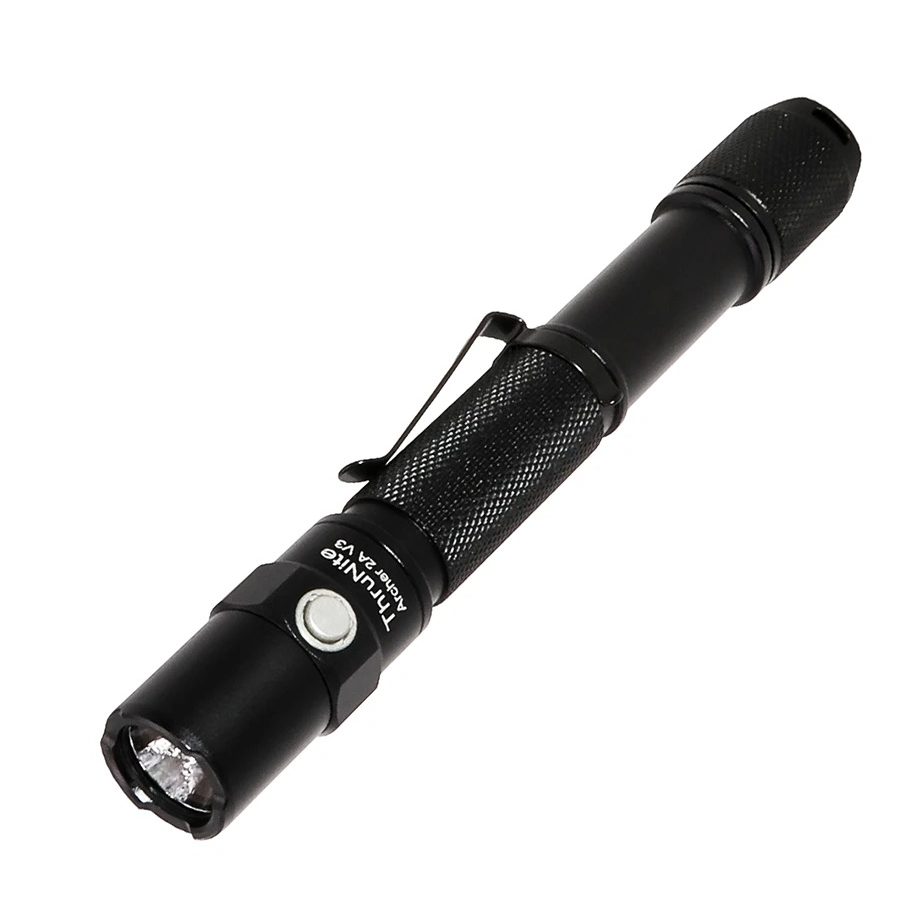
Why I chose it: The V3 is the older, simpler sibling of the 2A C, and for plenty of people it’s the better emergency light. It runs on two AA batteries and nothing else. There’s no pack to keep charged and no port to fail, so a fresh set of lithium AAs can sit in it for years. It’s the lowest cost light here that I’d trust as someone’s only flashlight, and it’s the one to buy if you want a light in every room.
Key specs
- Output: 500 / 70 / 17 / 0.2 lumens
- Runtime: 70 lumens for 11 hours, 17 lumens for 51 hours, Firefly for 15 days
- Beam: 2,200 candela, 93 meters
- Power: 2x AA (alkaline, lithium or NiMH)
- Water and drop: IPX8 to 2 meters, 1 meter drop rating
- Warranty: 2 years
Pros
- Nothing to charge, ever
- The 17 lumen low is a good all-night level and lasts more than two days
- Same two-switch layout as the 2A C, so it’s easy to learn
Cons
- 500 lumens max, about half what the 2A C makes
- Real runtime can fall short of the rating; one independent test measured about 33 hours on low with NiMH cells against the 51 hour claim
Performance analysis: The 70 lumen medium is the level I’d use for most of an outage. It’s enough to walk the house and read the labels in a breaker panel, and at 11 hours per pair of AAs, a four-pack gets you close to two full nights. Load it with lithium AAs for storage. If AA power is your priority, my best AA flashlight guide has more options.
3. Streamlight ProTac 1L-1AA: Best Set-and-Forget
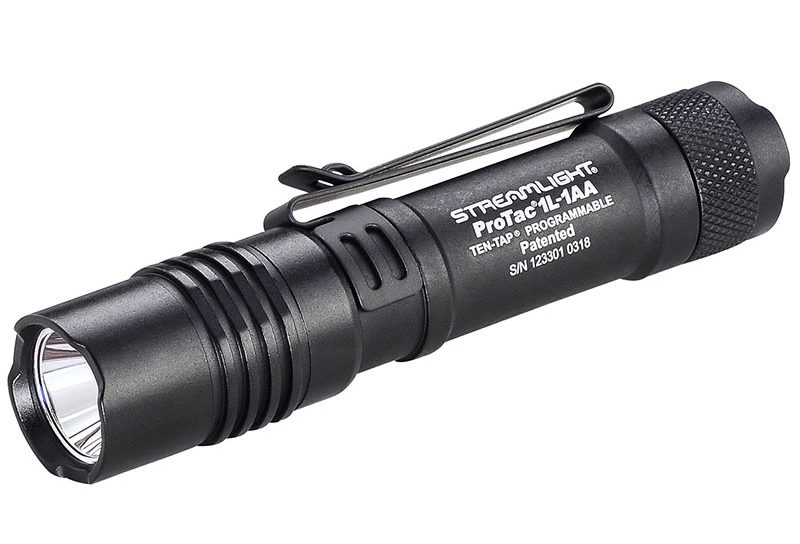
Why I chose it: This is the light for places you don’t check often, like the glove box, the go bag or the drawer by the back door. It runs on one CR123A lithium cell, one of the best-storing batteries you can put in a flashlight, and if that cell runs out it takes a single AA instead. Both batteries come in the box, and Streamlight covers it with a limited lifetime warranty.
Key specs
- On CR123A: 350 lumens for 1.5 hours, 40 lumens for 14 hours
- On AA: 150 lumens on high; 40 lumens for 7.5 hours on alkaline or 14 hours on lithium
- Beam: 6,400 candela, 160 meters on CR123A
- Power: 1x CR123A or 1x AA (one of each included)
- Water and impact: IPX7, 2 meter impact tested
- Size: 4.25 in, 2.5 oz with CR123A
Pros
- Runs on two battery types, and both ship with it
- Regulated output holds steady instead of slowly fading
- TEN-TAP programming lets you set it to start on low
Cons
- Only two brightness levels
- 14 hours on low is shorter than either Archer’s low mode
Performance analysis: Out of the box it comes on in high. Before it goes in a kit, use Streamlight’s TEN-TAP programming to switch it to the low-first setting, so whoever grabs it in a dark hallway gets 40 lumens instead of a 350 lumen blast. If you run it on AA, use a lithium cell. Streamlight rates the 40 lumen low at 14 hours on lithium AA against 7.5 on alkaline, so the lithium cell nearly doubles it.
4. Fenix PD32R: Simplest for the Family
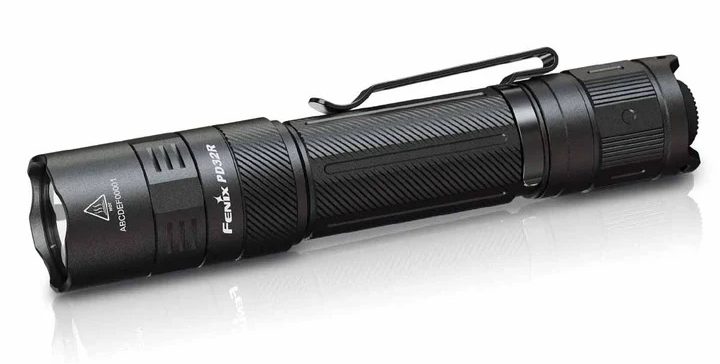
Why I chose it: Most flashlight interfaces make sense to the person who bought the light and nobody else. The PD32R has one tail switch. Press it to turn the light on and tap it to change brightness, and that’s the whole manual. It’s the light I’d leave for someone who isn’t into flashlights, like a parent or a teenager home alone during a storm. It runs on an included rechargeable 18650 and takes two CR123A cells as a backup.
Key specs
- Output: 1,400 / 350 / 100 / 20 lumens
- Runtime: 100 lumens for 16 hours 20 minutes, 20 lumens for 70 hours
- Beam: 29,588 candela, 344 meters
- Power: Fenix ARB-L18-3400 18650 (included) or 2x CR123A
- Charging: USB-C under a retractable metal shroud
- Water and drop: IP68 to 2 meters, 2 meter drop rating
Pros
- One switch with nothing to memorize
- Over 16 hours at 100 lumens, the longest medium mode on this list
- The charge port is fully sealed
Cons
- On CR123A cells, output tops out at 800 lumens and low runs about 30 hours
- The battery indicator only works with Fenix cells, and flat-top cells won’t fit
Performance analysis: The 100 lumen medium is what earns the PD32R its spot. It’s the right brightness for a whole evening indoors, and Fenix rates it at 16 hours 20 minutes on the included cell, enough to cover a long winter night with plenty left. My best 18650 flashlight guide covers it alongside five other single-cell lights.
5. Energizer Weatheready Plug-In (3-Pack): Best Auto-On Emergency Light for Home
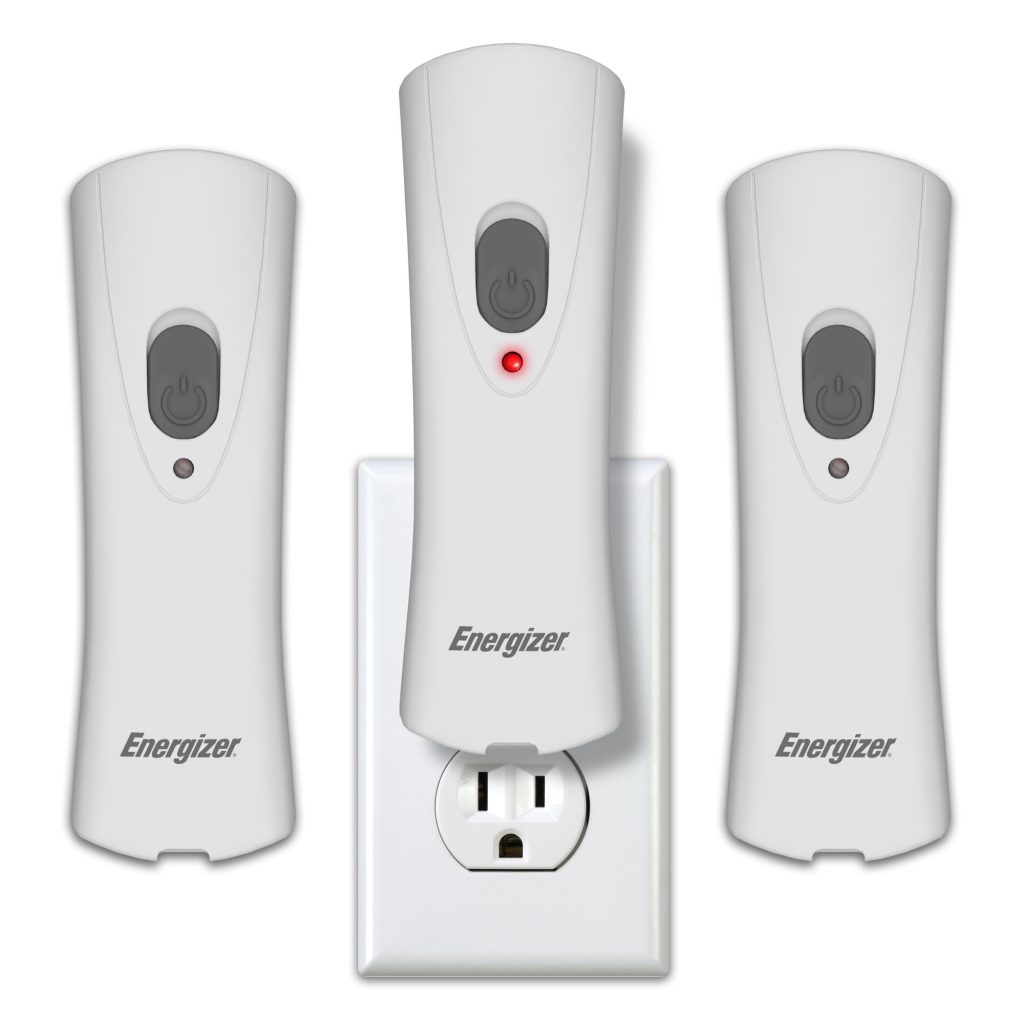
Why I chose it: These are the house emergency lights to plug in now: when the power fails, the built-in battery backup switches them on by itself.This is the only pick that runs on a built-in battery and nothing else, and it earns the spot anyway. You leave it plugged into a wall outlet with its switch set to on. It stays charged, and the moment the power cuts, it lights up on its own. At 2 a.m. in a dark hallway, a light that’s already on beats the best flashlight sitting in a drawer you can’t find. It’s best for homes with kids or older relatives, and the three-pack covers a hallway, a bedroom and the kitchen.
Key specs
- Output: 40 lumens, 30 meter beam
- Runtime: about 3 hours per charge
- Power: built-in NiMH battery, charged by the outlet it’s plugged into
- Design: the prongs fold away so it works as a handheld light
- Durability: 1 meter impact rating
Pros
- Turns on by itself when the power fails
- Always charged, because it lives in the wall
- Easy to find in the dark, since it’s already lit
Cons
- 40 lumens for about 3 hours, so it’s a first-hour light, not an all-night one
- The battery can’t be replaced
Performance analysis: Think of these as the lights that get you to your real flashlight. They come on, you see where you’re going, and you grab the Archer or the PD32R. Charge them for about 12 hours before you count on them, and leave the slide switch on while they’re plugged in. If the switch is off, they charge but stay dark when the power fails. For lights a child can carry, see my best flashlight for kids picks.
6. Petzl Tikka: Best Hands-Free
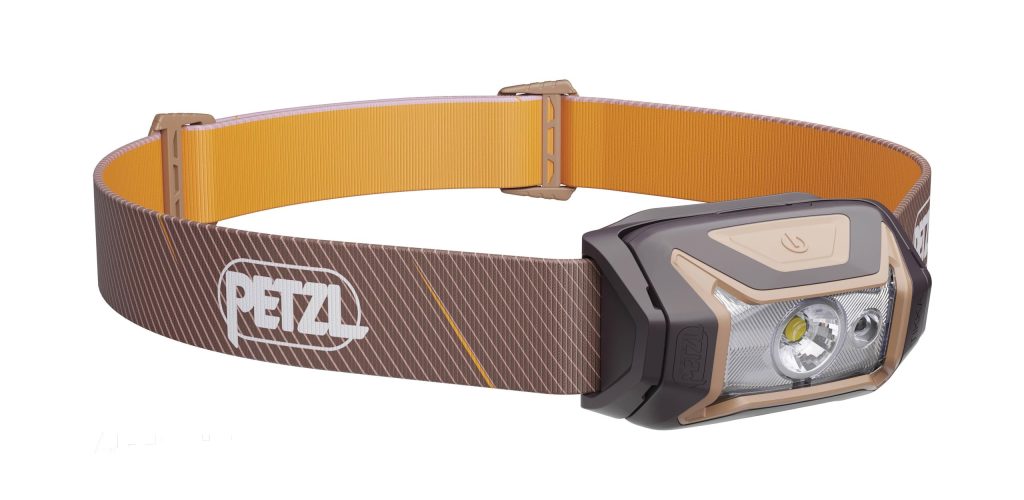
Why I chose it: Holding a flashlight in your teeth while you light a camp stove or reset a breaker gets old fast. A headlamp puts the light wherever you look and leaves both hands free. The Tikka runs on three AAA batteries, which come in the box, and it also takes Petzl’s CORE rechargeable pack. It’s best for cooking, repairs and looking after kids or pets in the dark, and Petzl backs it with a 5 year warranty.
Key specs
- Output on 3x AAA: 350 / 100 / 7 lumens
- Runtime on AAA: 100 lumens for 12 hours, 7 lumens for 110 hours
- Red light: 2 lumens for 60 hours, plus a red strobe
- Power: 3x AAA (included) or Petzl CORE pack (sold separately, 450 lumens max)
- Weight and rating: 94 g, IPX4
- Extras: lock function, battery level indicator, glow-in-the-dark reflector
Pros
- Both hands stay free
- Red light lets you check on sleeping kids without waking them
- The storage pouch turns it into a small lantern
Cons
- IPX4 handles rain, not a dunk
- AAAs hold less energy than AAs, so keep spares
Performance analysis: The 100 lumen standard mode is the one that matters. The beam is wide and even, which is what you want at arm’s length over a pot or a breaker panel, and it runs 12 hours on a set of AAAs. If you’d rather start rechargeable, the Tikka Core ships with the CORE pack and still takes AAAs. For more small lights that run on these cells, see my best AAA flashlight guide.
7. Midland ER310: Best No-Battery Backup
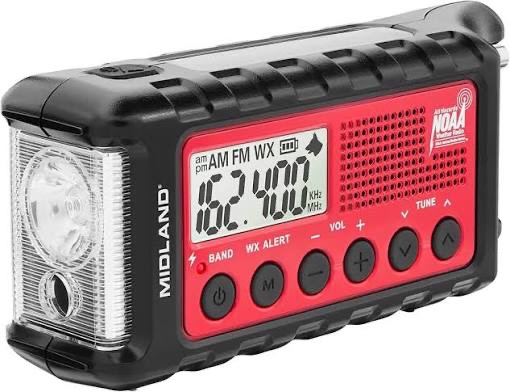
Why I chose it: Every other light here eventually needs a battery or a wall outlet. The ER310 doesn’t. Its internal pack recharges from a hand crank, a solar panel or USB, and if all of that fails it runs on six AA batteries. It’s also a NOAA weather radio with alerts, which is the piece of gear you want most when the power is out and your phone is running low. It’s best for multi-day outages and anyone in hurricane or ice storm country.
Key specs
- Light: 130 lumens with low and high modes, plus an SOS beacon
- Power: 2,600 mAh rechargeable pack, hand crank, solar panel, USB, or 6x AA backup
- Radio: AM, FM and all 7 NOAA weather channels with alerts
- Battery life: up to 32 hours of normal radio use on a full charge
- Crank rate: 1 minute of cranking gives up to 9 minutes of radio
- Extras: USB output to top up a phone
Pros
- Keeps working when batteries and outlets are both gone
- Weather alerts without a phone signal
- Can put a little charge into a phone in a pinch
Cons
- Cranking and solar are slow, so they’re backup charging, not a main power source
- Too bulky to carry around the house like a flashlight
Performance analysis: Charge the ER310 from the wall before storm season, keep it topped up, and treat the crank and the solar panel as reserves. Midland rates an hour of good sun at up to 45 minutes of radio and a minute of cranking at up to 9. The 130 lumen light is a utility light rather than a main flashlight, so pair it with one of the handheld picks above.
How Many Batteries Do You Need?
A runtime number only means something next to the length of the outage you’re planning for. Pick your state and a light in the planner below. It uses the same light plan as our power outages by state page: 2, 3 or 5 nights, depending on how many hours a year your state averages without power. You set how many hours a night you’ll actually run the light, and it tells you how many battery sets or full charges to keep on hand.
The outage planner is loading. If it doesn’t appear, plan for 2 nights if your state averages under 4 hours without power a year, 3 nights for 4 to 9 hours, and 5 nights for 9 hours or more. Find your state’s figure on our power outages by state page.
The planner uses each maker’s rated runtime, and real runtime usually comes in a little shorter, especially on alkaline cells in the cold. It also plans for one light, so double the batteries if two people will each carry one. Treat the result as a minimum. Batteries are only one part of the job, so once your lights are sorted, build a full power outage emergency kit with water, a radio and backup power for your phones. If hurricanes or ice storms hit where you live, plan for the top of the range.
Print the free first-10-minutes card for your fridge door. One page in English and Spanish, no email needed.
Runtime at the brightness you’ll actually use
The chart shows how long each light runs on one battery set or one charge at the mode you’d use around the house. Brightness differs a little from light to light, so the lumen level sits next to each name. The Midland isn’t on it because Midland only rates its radio runtime.
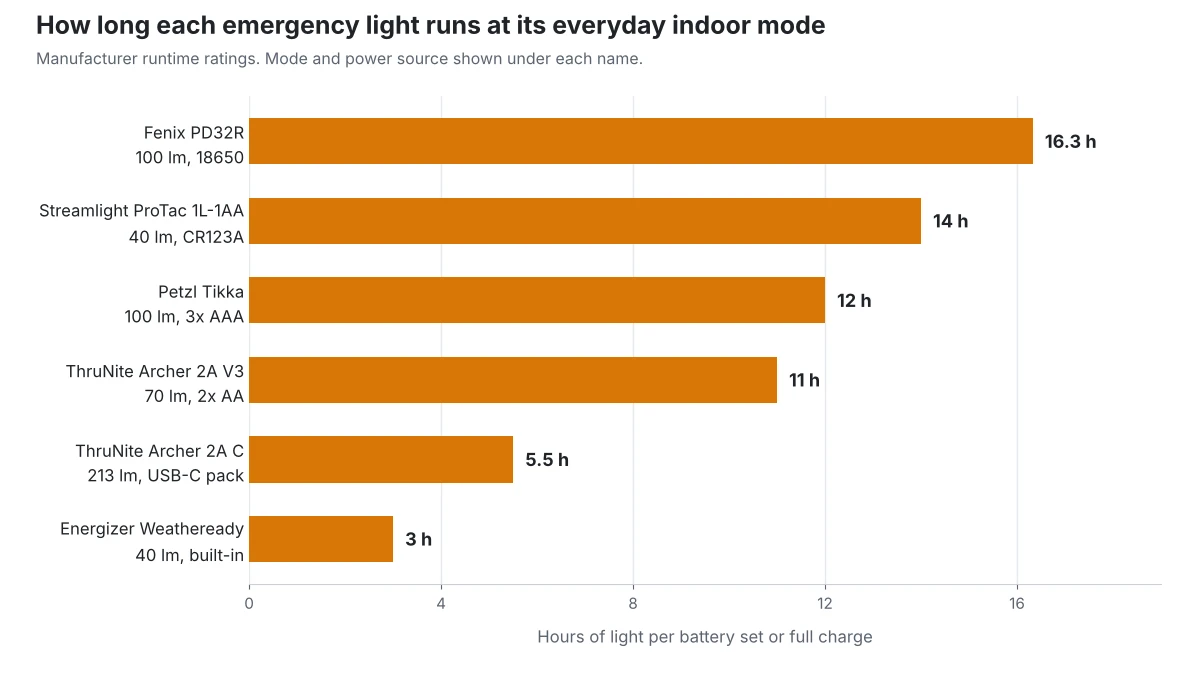
Low modes stretch things much further. The Archer 2A V3 is rated for 51 hours at 17 lumens, the PD32R for 70 hours at 20 lumens and the Tikka for 110 hours at 7 lumens.
What to Look For in an Emergency Flashlight
Batteries you can actually get
AA cells are the safest bet. They’re in remotes, smoke alarms and every store that sells anything, so you can always scrounge a pair. CR123A cells are harder to find in a hurry but store better than anything else, which makes them ideal for kits you rarely open. The best setup is a light that takes both a rechargeable cell and a common battery, like the Archer 2A C or the PD32R.
Runtime at a level you’ll use
Ignore the turbo number. Indoors you’ll spend nearly all your time between 20 and 200 lumens, so check the runtime at those levels. Under the ANSI FL1 standard, a rated runtime runs until output falls to 10% of where it started, which means a “3 hour” high mode spends much of that time well below full brightness.
A light that starts low
If your light comes on at 1,000 lumens in a dark bedroom, it will blind whoever is holding it. Look for a light that starts on low or remembers the last mode you used, and set it up before it goes in the drawer. The ProTac’s low-first setting and the Archer 2A C’s mode memory both handle this.
Store your batteries the right way
Alkaline batteries are the most common cause of dead emergency lights, because they can leak and corrode the contacts while they sit. Lithium AAs fix that. Energizer rates its Ultimate Lithium AA for a 25 year shelf life at room temperature and for use from -40°F to 140°F, which also covers a cold garage or a hot car.
A few habits keep a kit ready:
- Store spare batteries in their packaging or a plastic case, not loose in a drawer
- If you leave batteries in a light, loosen the tail cap a quarter turn so nothing drains them
- Top up rechargeable lights every few months, since lithium-ion cells slowly lose charge in storage
- Check the whole kit once a year, at the start of hurricane or winter storm season
A flashlight is also the safer choice over candles. The CDC recommends flashlights or other battery-powered lights instead of candles during outages, because home fires are a real risk when fire crews may have trouble reaching you. For the rest of a grab-and-go kit, my best survival flashlight guide covers rugged lights built for it.
FAQ
What is the best emergency flashlight?
For most homes, the ThruNite Archer 2A C. It charges over USB-C for everyday use and runs on two AA batteries when the charge is gone, so it can’t strand you during a long outage. If you’d rather have nothing to charge at all, the Archer 2A V3 runs on AAs alone.
How many lumens do you need for a power outage?
Less than you’d think. 20 to 100 lumens is enough to move around the house, and 100 to 200 lumens is plenty for cooking or reading a breaker panel. A 1,000 lumen light mostly creates glare indoors and burns through batteries, so runtime at those lower levels matters far more than peak output.
Is a rechargeable or battery flashlight better for emergencies?
A light that does both is best. Rechargeable cells are cheap to run and handy day to day, but once an outage outlasts your power banks, you need something you can feed with store-bought batteries. If you go rechargeable, pick one with a battery backup, like the lights in my best rechargeable flashlight guide.
Should you store batteries in a flashlight?
Not alkalines, since they can leak and ruin the contacts. Lithium AA and CR123A cells are fine to leave in, but loosen the tail cap a quarter turn so the light can’t drain them, and check them once a year.
Bottom Line
If you buy one emergency flashlight, make it the ThruNite Archer 2A C. It’s a rechargeable light that never leaves you stuck, because it runs on AAs when the pack is flat. On a tighter budget, or if you want a light in every room, the Archer 2A V3 does the same job on AAs alone. Put the Streamlight ProTac 1L-1AA in the car and the go bag, and give the Fenix PD32R to whoever in the house wants one simple switch.
Then fill the gaps with the Energizer Weatheready plug-ins for the hallways, the Petzl Tikka for hands-free work and the Midland ER310 for when batteries and outlets are both gone. Run your state through the planner above and buy the batteries it calls for before the next storm. To light a whole room rather than a path, add one of the picks from our best battery lantern guide.
